
When a Customer Changes the BOM Mid-Build: What the Industrial PC and PCBA Lines Freeze First
Engineering Change Control: Specification revisions rarely arrive during calm scheduling windows. They land after first-article sign-off—when a component goes end-of-life, a supervisor requests a brighter status indicator, or field feedback calls for a different connector seal. Once production moves past initial build milestones, the central operational question is which manufacturing stage can still absorb the revision and which stage has already frozen around the original bill of materials (BOM).
Examining a mid-build change across three distinct disciplines—board layout and industrial PC platforms, PCB/PCBA fabrication and SMT assembly, and box-build assembly and serialization—shows how freeze points dictate cost, lead time, and traceability. Knowing which freeze has already passed is what keeps a mid-build revision controlled rather than disruptive.
Why One ECN Triggers Multiple Freezes After First-Article Approval
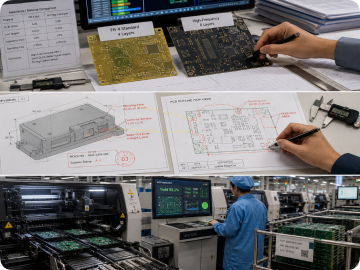
First-article inspection confirms that a build matches design intent. After approval, an engineering change notice (ECN) means different things on different parts of the floor: a netlist or routing constraint on the board line, a feeder setup and inspection update on the SMT line, and updated labels, test scripts, and cartons on the box-build line.
Cost escalates when teams assume those checkpoints move in lockstep. Between the last pre-change unit and the first post-change unit, kits, work orders, and labels can overlap if freeze status is not verified first. Identifying which freeze is already locked determines whether a change is a straightforward drawing revision, a formal requalification, or a targeted lot hold.
First Freeze: Board Revision & Long-Life Industrial PC Platforms
Industrial computing platforms are selected specifically for long-term mechanical and interface stability. When a processor, power regulator, or peripheral component goes end-of-life mid-build, a substitute matching the physical footprint can still alter signal timing, thermal behavior, or power-up sequencing—requiring re-validation around the replacement part.
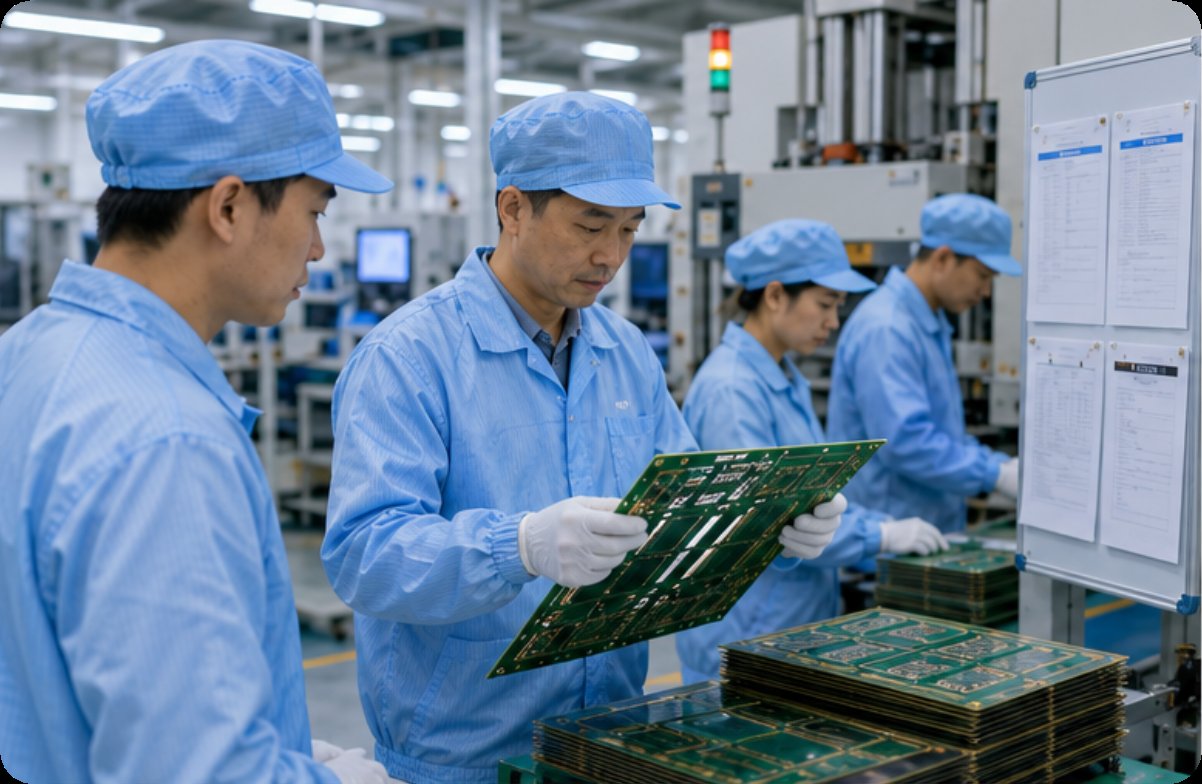
In Industrial Computing IPC Motherboard Manufacturer programs, freezing the board layout early protects core architecture—including layer stack-up, high-density interconnect rules, and blind/buried via structures across multi-layer boards (such as 1-to-36-layer designs). Post-tape-out substitutions should be verified through quick-turn samples and design-for-manufacture (DFM) checks before volume commitment rather than relying on informal "pin-compatible" assumptions.
Second Freeze: SMT Placement, Requalification & Quality Records
On Quick Turn PCB Prototyping & Board Manufacturing and High Precision SMT Assembly Lines Factory lines, swapping a part mid-run is a process requalification, not just a purchasing update. Even an equivalent passive or active part from another manufacturer can affect feeder setup, nozzle pickup, solder wetting, or automated optical inspection thresholds.
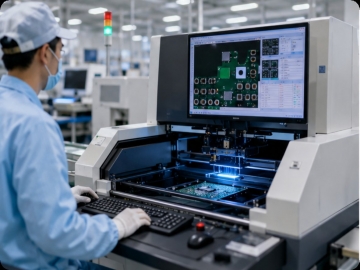
Running surface-mount and through-hole assembly under documented SOPs, self-inspection, QC checks, and quality systems such as ISO 9001, ISO 13485, and IATF 16949 means every substitution requires first-article verification and auditable approval records. Much of a mid-build swap's cost comes from inspection and documentation time rather than unit part price alone—making pre-planned change windows essential to holding schedule.
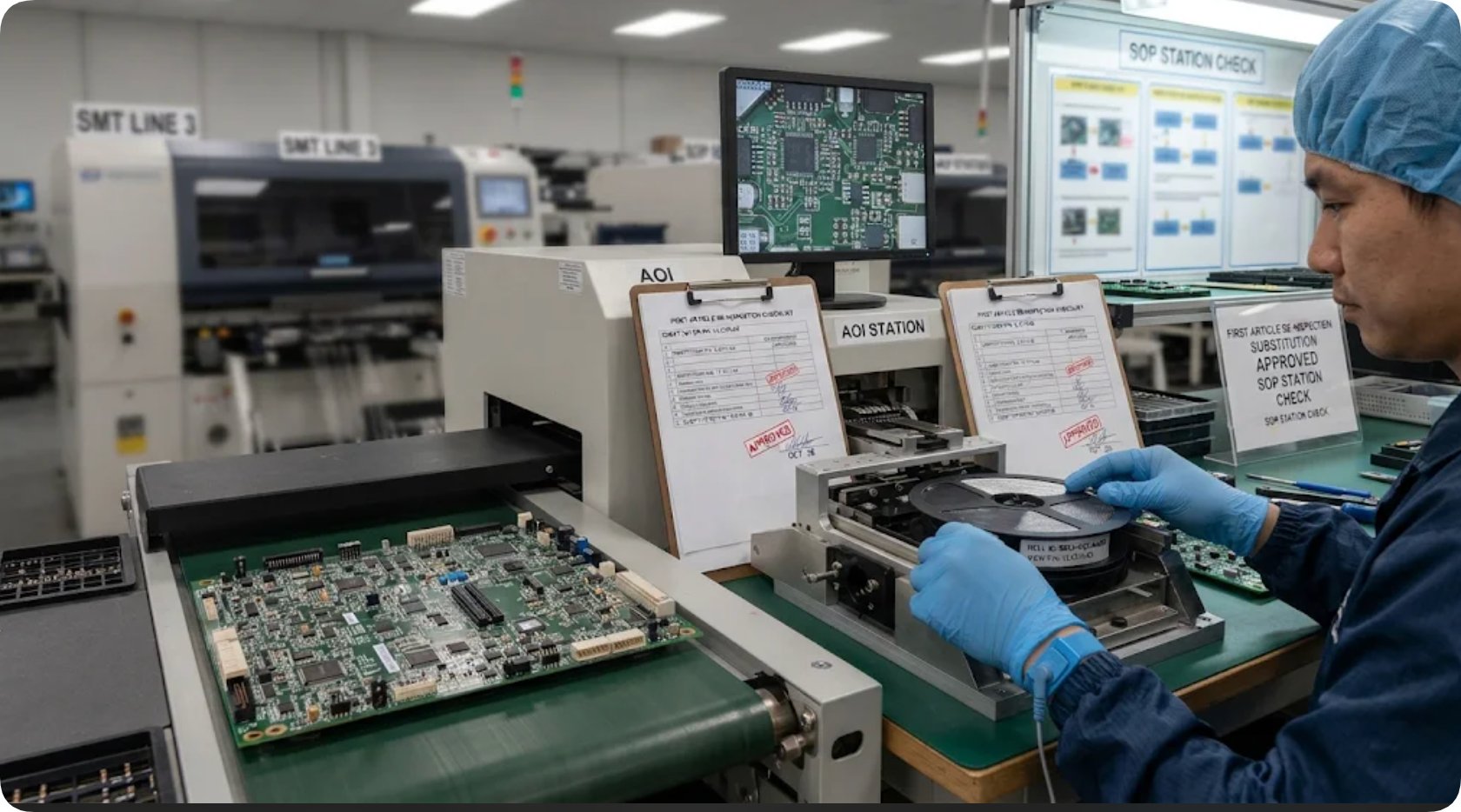 Assembly & process freeze: re-verifying feeders, first articles, and inspection records on swapped BOM items.
Third Freeze: Box-Build Serialization, Testing & Carton Alignment
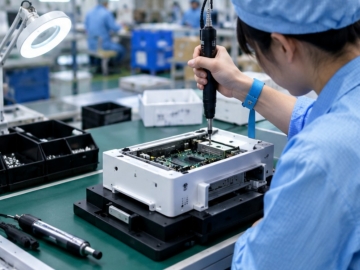
Within a Box Build Product Assembly & Packaging Service workflow, serialization and pack-out freeze last in calendar time—right when serial labels, functional test scripts, and outer cartons are finalized. If a revision occurs after labeling without synchronizing test software and carton markings, units can leave with mismatched revision data.
Barcode-driven traceability linking each serial number to build status, test logs, and carton contents lets teams isolate affected units quickly instead of freezing entire shipments blindly. Because box-build sits closest to customer delivery, discrepancies here are the most visible in the field.
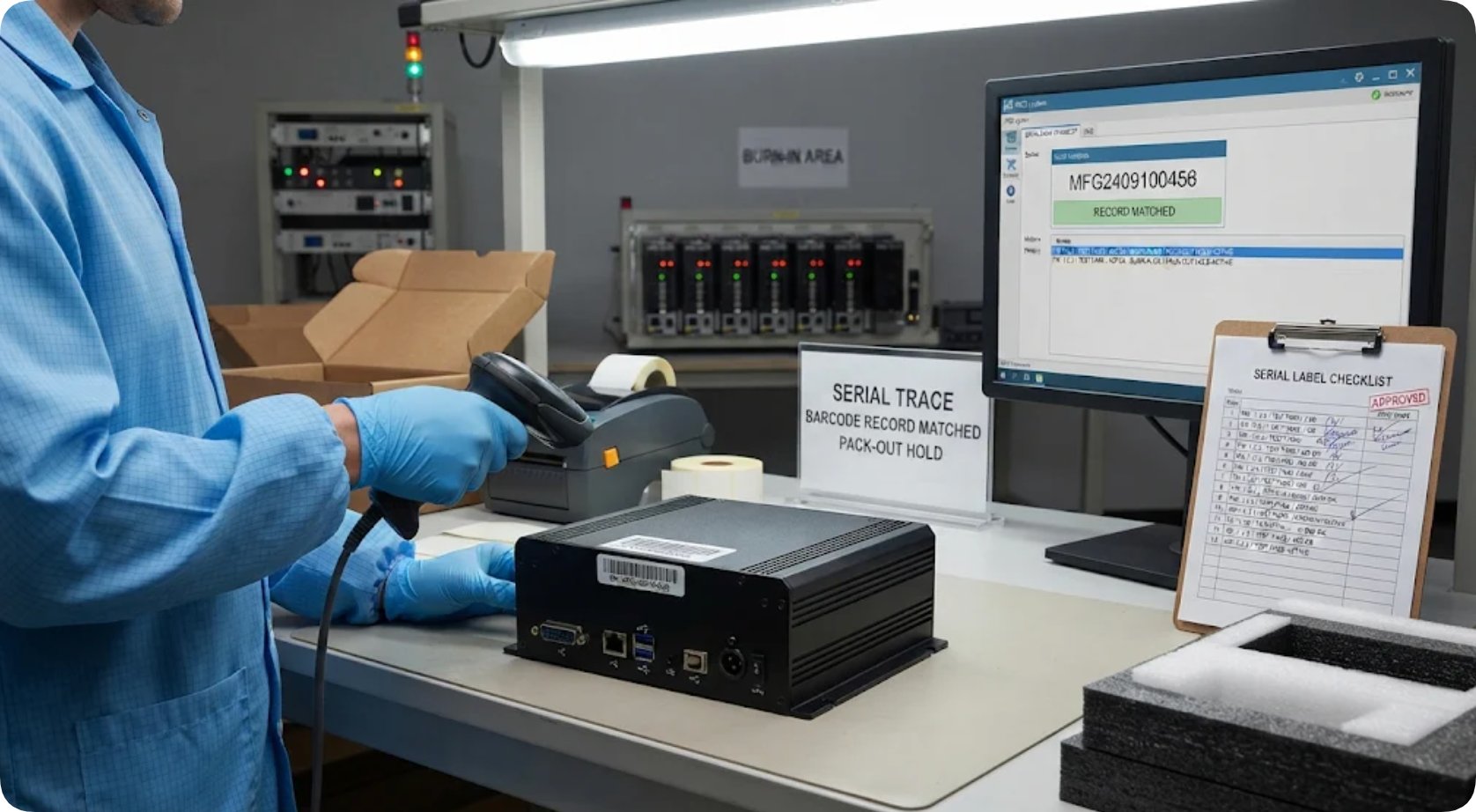 Box-build & serial freeze: aligning serial barcodes, test scripts, and carton records prior to dispatch.
Cross-Line Traceability & Cost Escalation by Freeze Stage
In Turnkey EMS Electronic Manufacturing Services operations, board fabrication, SMT work orders, and box-build serial logs capture complementary data tied together by a shared change identifier. Even reliability workflows—such as those covered in our PCBA Aging Test & Reliability Testing Service—depend on clear revision tracking so test results match the exact hardware build tested.
| Stage When Change Arrives | Freeze Owner | Required Rework / Verification | Scope Affected |
|---|---|---|---|
| Before board sign-off | Board / layout | Drawing & DFM update; quick-turn sample validation | Engineering samples |
| After fabrication, before placement | SMT assembly process | Feeder check, first-article inspection, work-order log | Active work order |
| After test, before packing | Box-build & test script | Test-script alignment, serial & carton reconciliation | Current carton / lot |
| After shipment | Traceability system | Serial lookup, targeted rework or field action | Prior-revision units |
Engineering buyers can audit change-control maturity quickly by requesting build records for a past serial number—verifying whether board, assembly, and pack-out histories link cleanly. For related perspectives on multi-stage manufacturing workflows, see Custom Smart Home Products PCB and Shell Mold: The Delivery Ledger.
Frequently Asked Questions
1. Does substituting a component after PCB fabrication require first-article requalification on the SMT line?
Yes. Swapping a component mid-build requires feeder verification, first-article inspection, and documented substitution approval against the work order so solder wetting, placement, and inspection remain controlled.
2. Does the box-build stage freeze last in schedule while carrying high customer visibility?
Yes. Serialization, final test scripts, and carton labeling lock at the end of the build flow, meaning any mismatch between label, test record, and hardware revision directly impacts delivered units.
3. Should end-of-life parts on long-life industrial boards go through sample and DFM validation?
Yes. Qualifying replacements via quick-turn samples and DFM reviews protects board layout stability, thermal behavior, and long-term platform reliability before full volume runs resume.
4. Does linking a single change identifier across board, SMT, and box-build records strengthen traceability?
Yes. A unified change ID tied to serial numbers enables rapid lookup of exact build, test, and shipping histories so only affected units require targeted containment or rework.
Effective BOM change control protects both build velocity and audit traceability—freezing platform architecture early, validating SMT substitutions rigorously, and keeping serial records accurate through box-build shipping.
Tags: product assembly /industrial PC ODM / BOM change / change control /
Next: No more...