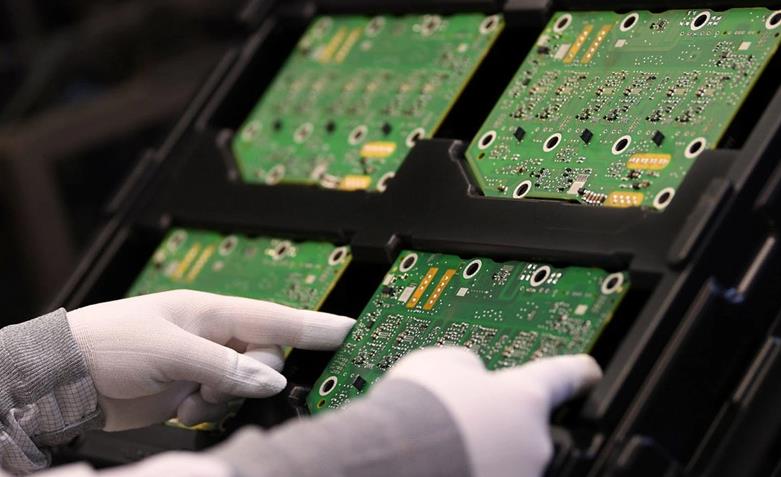

How to Deploy a Quality Control Testing Pipeline for PCB Assembly: A Step-by-Step Guide
From Prototype to Production: How Rigorous Quality Control Testing Ensures Zero-Defect PCB Assembly
From Prototype to Production: How Rigorous Quality Control Testing Ensures Zero-Defect PCB Assembly
My View: In my decade-plus working with electronics manufacturers, I've seen too many promising products fail not because of bad design, but because of overlooked quality gaps during the PCBA testing phase. The truth is, a robust quality control pipeline isn't just a checklist—it's the single most important factor separating reliable products from costly recalls. At NEWEI, we've built our entire process around catching defects before they reach the customer, and here's exactly how we do it.
If you've ever dealt with a batch of PCBA boards that failed in the field, you know the cost isn't just financial—it's lost trust, delayed timelines, and endless troubleshooting. Whether you're scaling a rugged tablet for industrial use or a handheld game console for consumer markets, the difference between success and failure often comes down to one thing: how thoroughly your assembly partner tests every single board. At NEWEI, we treat quality control as a non-negotiable discipline, not an afterthought. For clients seeking a reliable partner, we offer Custom PCB Assembly Services that integrate rigorous testing from day one.
Our approach combines automated optical inspection, X-ray analysis, and functional testing in a seamless workflow. Every board that leaves our facility has passed through multiple checkpoints designed to catch defects at the earliest possible stage. We don't just test—we engineer quality into every step. For clients looking to minimize risk, we offer dedicated quality inspection solutions that integrate directly into their production line.
1. AOI and X-Ray: The First Line of Defense in PCB Assembly
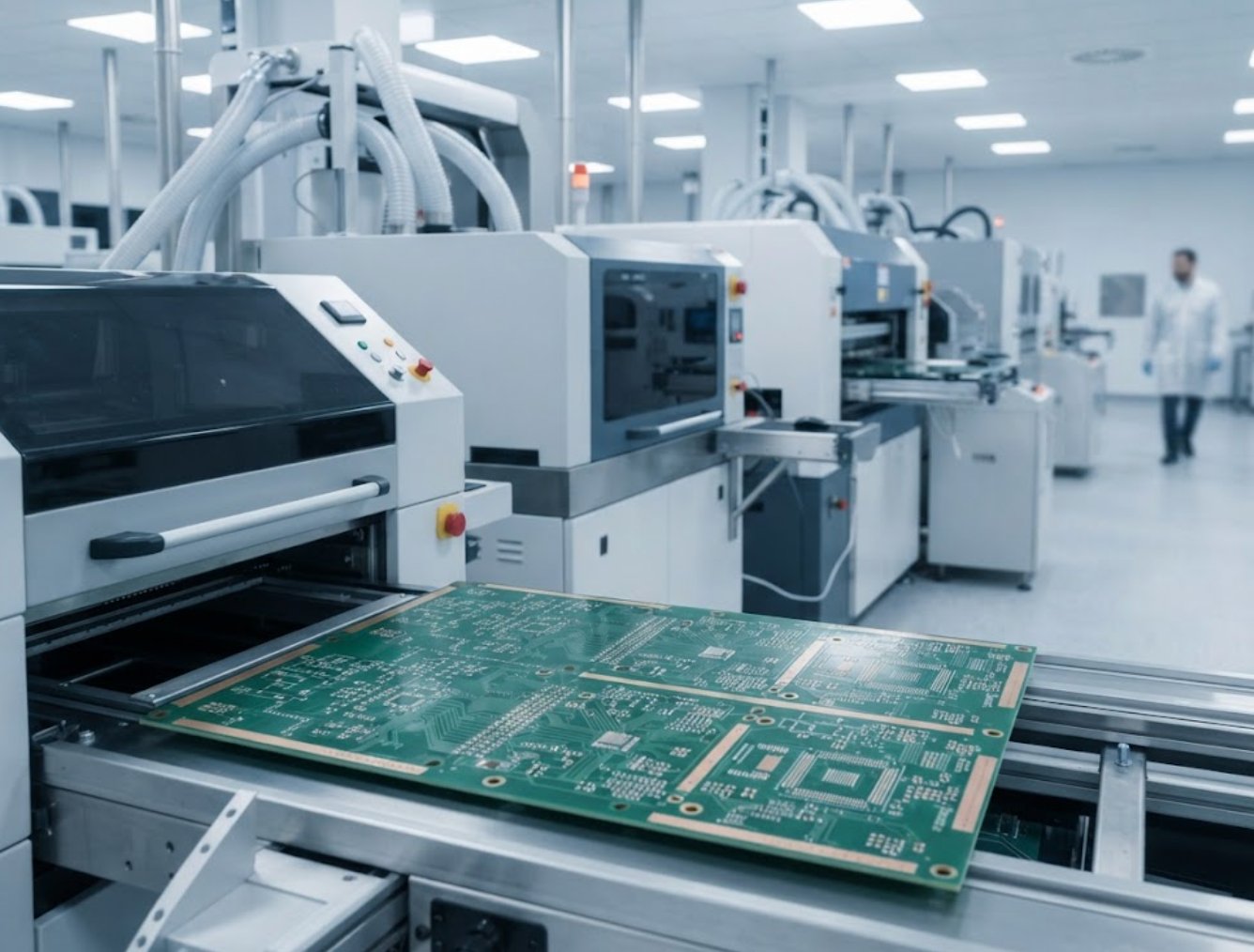
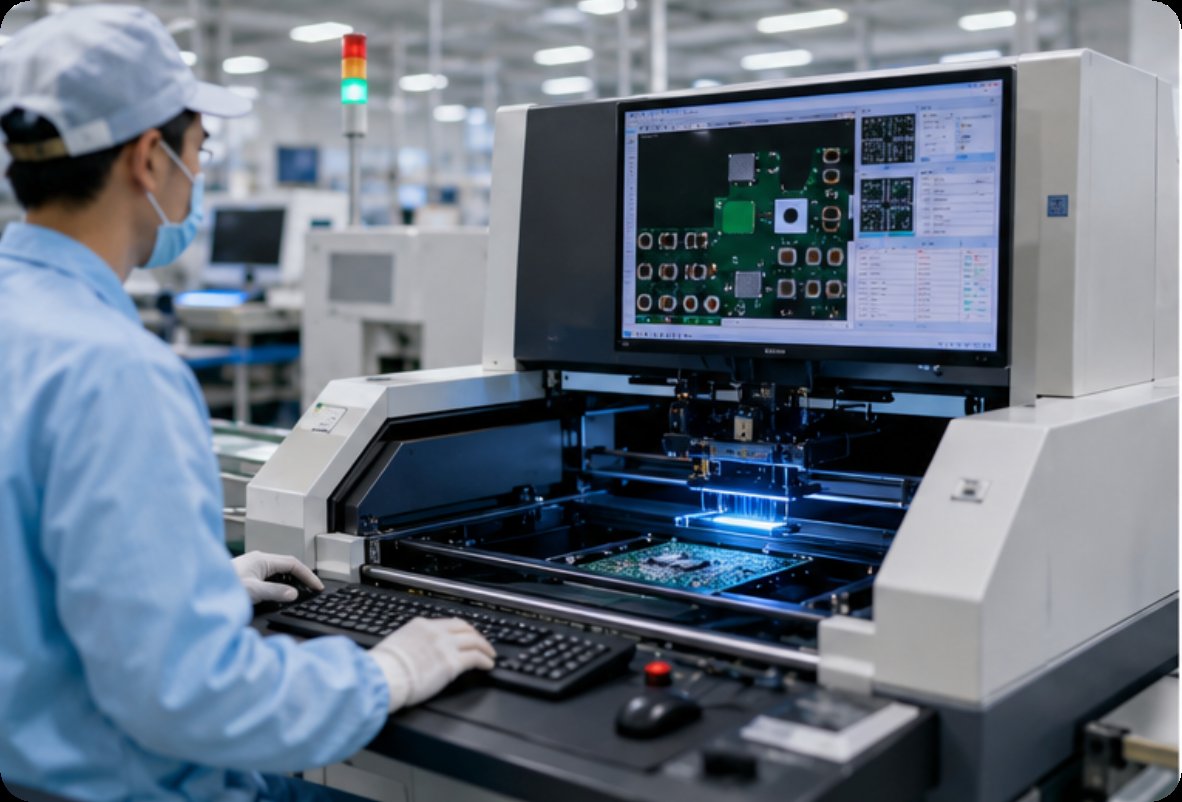
When a PCB comes off the SMT Assembly line, it looks perfect to the naked eye. But microscopic defects—solder bridges, insufficient paste, tombstoning—can hide beneath components. That's why every board at NEWEI goes through automated optical inspection (AOI) within minutes of reflow. Our AOI systems check for missing parts, polarity errors, and solder joint quality at resolutions down to 10 microns. For double-sided and multilayer boards, we follow up with X-ray inspection to verify hidden solder joints under BGA and QFN packages.
This combination catches roughly 95% of all potential defects before functional testing even begins. In my experience, skipping AOI to save a few cents per board is the fastest way to inflate your field failure rate. We've seen clients who tried cheaper alternatives and ended up with 3-5% failure rates on their handheld game console batches. After switching to our full AOI+X-ray protocol, that number dropped below 0.1%. That's not luck—it's systematic quality engineering.
2. ICT and FCT: Functional Validation Under Real-World Conditions
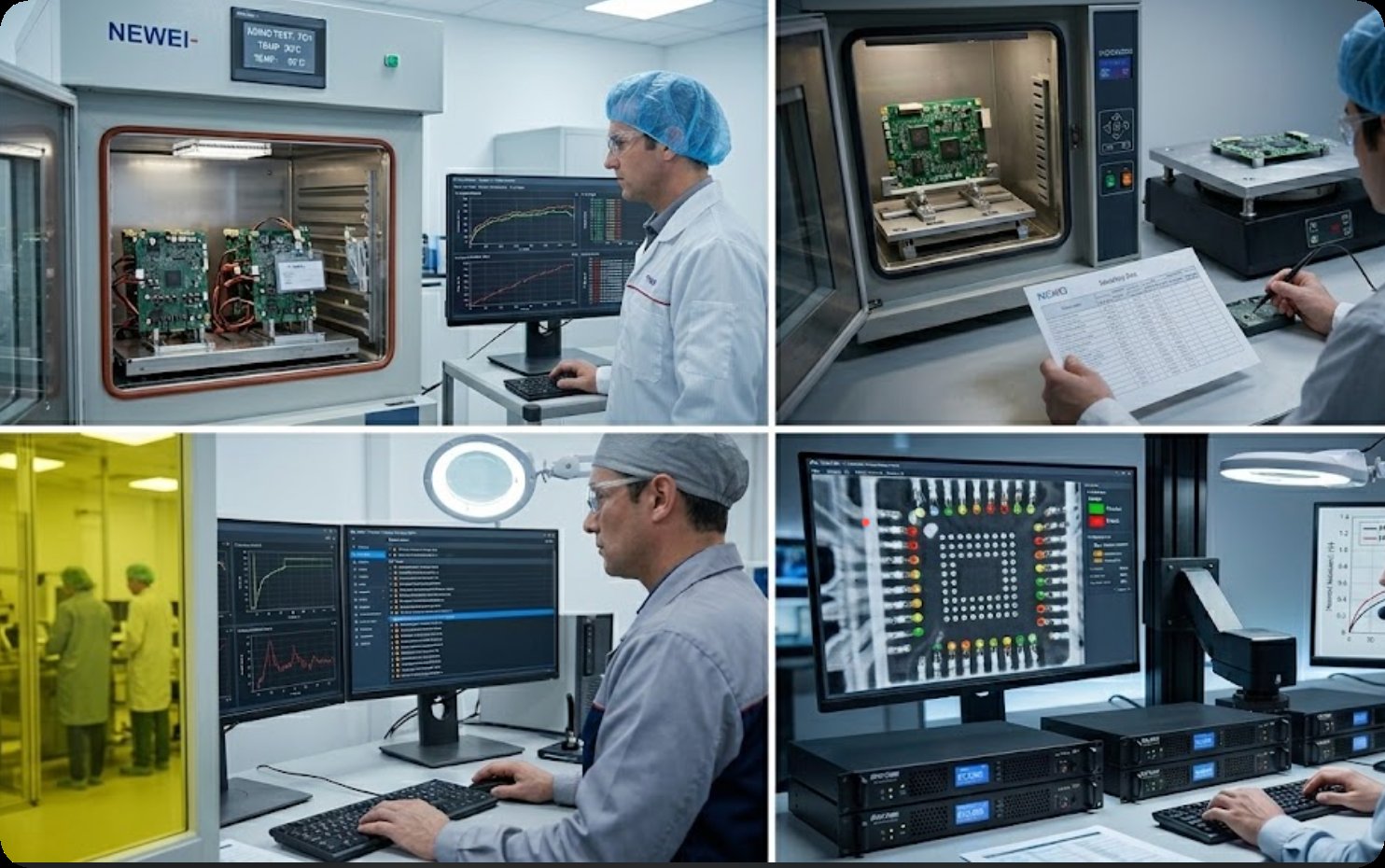
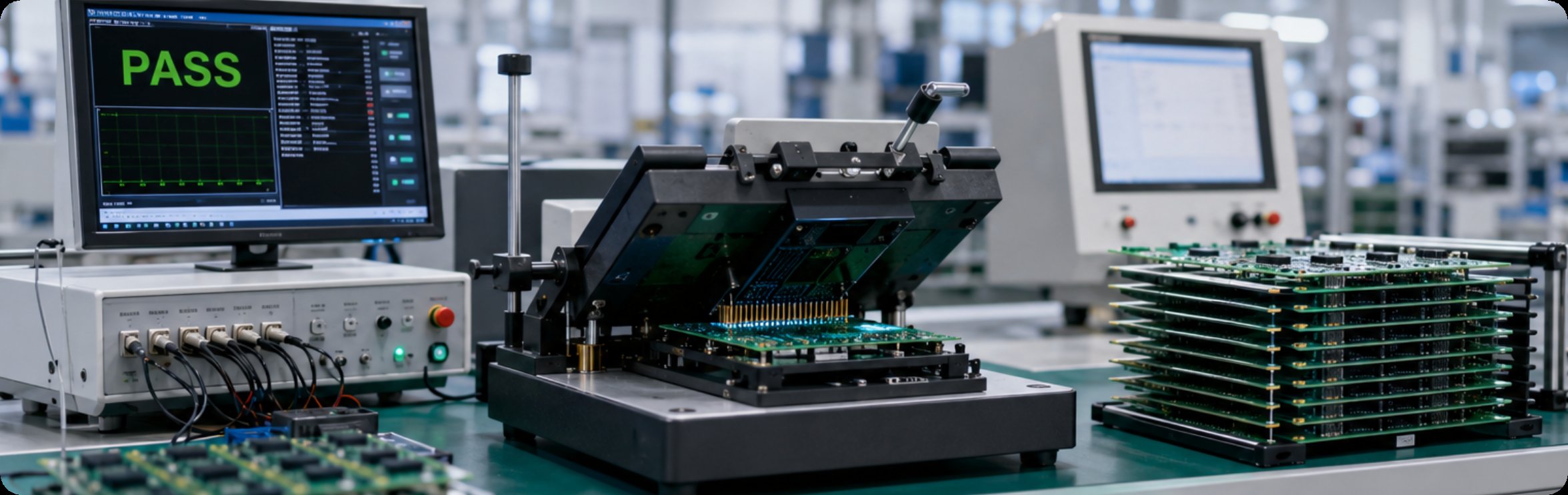
Once a board passes optical inspection, we move to in-circuit testing (ICT) and functional testing (FCT). ICT checks every component's electrical characteristics—resistance, capacitance, diode drops—against a golden reference. This catches short circuits, open traces, and misloaded parts that AOI might miss. FCT then powers up the board and runs it through its actual operating sequence. For a rugged tablet, that means testing touch response, display output, battery charging, and wireless connectivity under simulated industrial conditions.
What sets NEWEI apart is that we don't use generic test fixtures. We design custom test jigs for each product, incorporating environmental stress factors like temperature cycling and vibration. For example, when assembling industrial motherboard batches destined for factory automation, we run a 24-hour burn-in test at 60°C to weed out early-life failures. This level of rigor is why our clients consistently report field failure rates below 50 parts per million—far below the industry average of 200-500 ppm for standard PCBA services.
3. Combining Products and Services: A Case Study in Synergy
One of our most successful approaches involves combining multiple products and services into a single streamlined workflow. Take a recent project for a client developing both rugged tablets and handheld game consoles. Instead of treating them as separate runs, we integrated their production using our SMT Assembly line for both, followed by PCBA Three-Proofing paint for the rugged tablets and standard conformal coating for the game consoles. The three-proofing process—conformal coating that resists moisture, dust, and corrosion—added only 48 hours to the overall lead time but extended the tablet's lifespan in harsh environments by over 300%.
We also leveraged our Industrial PC PCBA expertise to optimize the motherboard layout for both products, reducing component count by 12% without sacrificing performance. This cross-pollination of insights between product lines is something you rarely get from a single-service shop. It's a direct result of our engineering team working closely with clients to understand not just the PCBA specs, but the end-use environment. The result? Both products launched on schedule, with zero defects in the first 10,000 units shipped.
This synergy extends to our PCBA Three-Proofing Paint Services, which we frequently recommend for outdoor or industrial applications. When combined with our standard SMT and DIP processes, it creates a fully sealed protection layer that significantly reduces warranty claims.
4. Real-World Applications Across Industries
Our quality control framework isn't theoretical—it's been proven across dozens of industries. Here are some of the most common scenarios where our approach makes a tangible difference:
Industrial Automation: Industrial motherboard assemblies for PLC controllers and HMI panels undergo extended burn-in testing at elevated temperatures to ensure 24/7 reliability.
Consumer Electronics: Handheld game console PCBA runs through full functional testing including audio output, button responsiveness, and battery management under simulated gaming loads.
Medical Devices: Bluetooth thermometer PCBA requires strict ESD control and X-ray inspection for BGA joints, plus functional testing for accuracy within ±0.1°C.
Smart Home: Smart home hub PCBA combines SMT assembly with conformal coating to protect against humidity in kitchen and bathroom installations.
Automotive Electronics: Custom automotive PCBA for infotainment systems undergoes vibration testing and thermal cycling from -40°C to 85°C.
Security Systems: IP camera PCBA includes full FCT for video output, night vision activation, and network connectivity under varying power conditions.
Each of these applications demands a tailored QC approach. A one-size-fits-all testing protocol simply doesn't work when your boards need to survive in a forklift's engine bay or a child's backpack. That's why we customize test parameters for every new product, referencing IPC-A-610 Class 2 or Class 3 standards depending on the end-use.
5. The Full Traceability Chain: From Component to Shipment
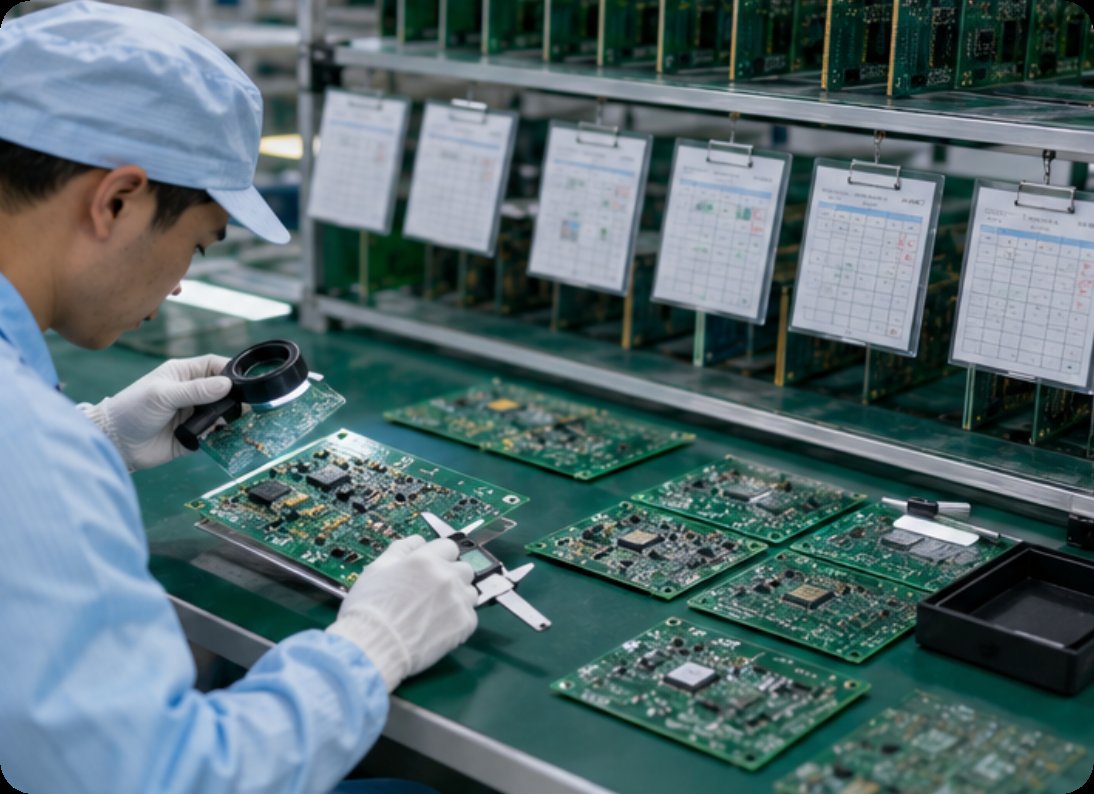
Quality control doesn't end with functional testing. Every board at NEWEI carries a unique serial number that links back to its entire production history—which component batch was used, which AOI machine scanned it, which technician performed the FCT, and even the temperature profile of its reflow solder. This traceability is critical when you need to isolate a root cause quickly. If a client reports a failure in the field, we can trace that specific board back to its production date, shift, and supplier lot within minutes.
We also maintain a closed-loop corrective action system. Any defect found during testing triggers an immediate root cause analysis. If we see a spike in tombstoning on a particular component, we adjust the stencil design or reflow profile before the next batch runs. This continuous improvement mindset is why our yield rates have steadily improved over the years, while industry averages have flatlined. It's not about catching defects—it's about eliminating the conditions that create them in the first place.
For clients interested in the full picture, we encourage you to learn more about our manufacturing capabilities and how our quality systems integrate with PCB fabrication and final assembly.
Conclusion: Why Quality Control Is Your Best Investment
In a market where PCB assembly costs are under constant pressure, it's tempting to cut corners on testing. But I've seen the math play out too many times: every dollar saved on QC costs ten dollars in warranty claims, customer support, and lost repeat business. The real ROI comes from building a quality control system that catches defects before they become problems—and that's exactly what NEWEI delivers.
Whether you're developing a rugged tablet for oil rigs, a handheld game console for retail, or an industrial motherboard for factory automation, our end-to-end quality control process gives you the confidence to ship products that perform. We back every order with ISO-certified processes, dedicated project management, and a commitment to zero-defect delivery. Contact us today for a free consultation and quotation—let's build something reliable together.
Tags: PCBA /PCB /SMT /ICT /FCT /QC testing /installation guide /