
Precision PCB Assembly and Electronics Manufacturing: How Advanced SMT Assembly and PCBA Drive Product Reliability
Why Precision PCB Fabrication and SMT Assembly Are the Backbone of Rugged Electronics Manufacturing
My View: Having spent over a decade in electronics manufacturing, I've seen too many product launches fail not because of bad design, but because the bridge between prototype and mass production was weak. The real competitive edge today isn't just about having a great idea—it's about having a manufacturing partner who can execute PCB fabrication and SMT assembly with surgical precision. When you're dealing with complex products like industrial motherboards and rugged tablets, every micron counts. The companies that win are the ones that treat their PCB assembly partner as an extension of their own engineering team.
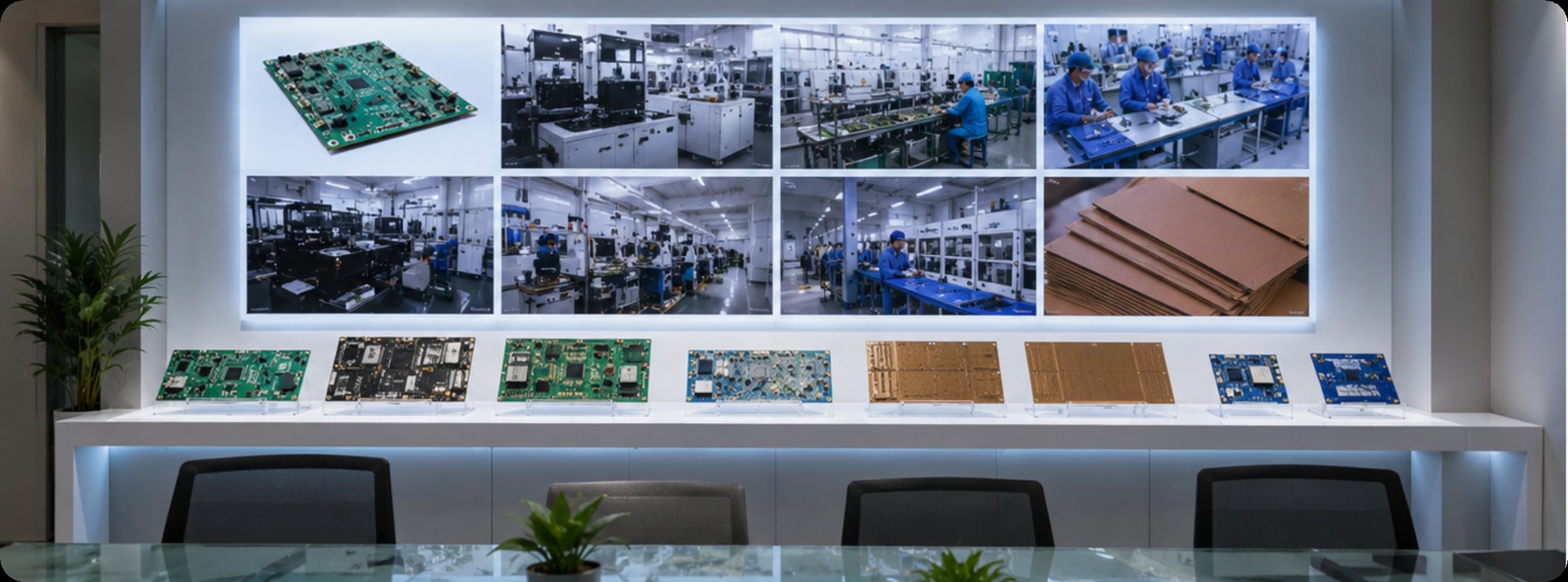
In the fast-paced world of electronics, the gap between a concept and a reliable product is often defined by how well you can execute PCB Assembly (PCBA). Whether you're developing an industrial mini PC for a factory floor or a rugged tablet for field operations, the quality of your printed circuit board and the precision of its component placement will make or break your device. At NEWEI, we've built our entire process around solving the most common, yet most painful, manufacturing challenges—starting from raw material control all the way through to final functional testing. For those seeking a trusted partner, our Custom PCB Assembly Services provide the exact level of control needed to turn complex designs into field-ready products.
This article dives deep into the technical nuances of PCB assembly and electronics manufacturing, focusing on how advanced process control and multi-product integration can dramatically improve your time-to-market and product reliability. We'll explore real-world applications and the specific dedicated technical capability solutions that ensure every board meets the highest standards.
Overcoming the Core Challenges in PCB Assembly and SMT Manufacturing
Overcoming the Core Challenges in PCB Assembly and SMT Manufacturing
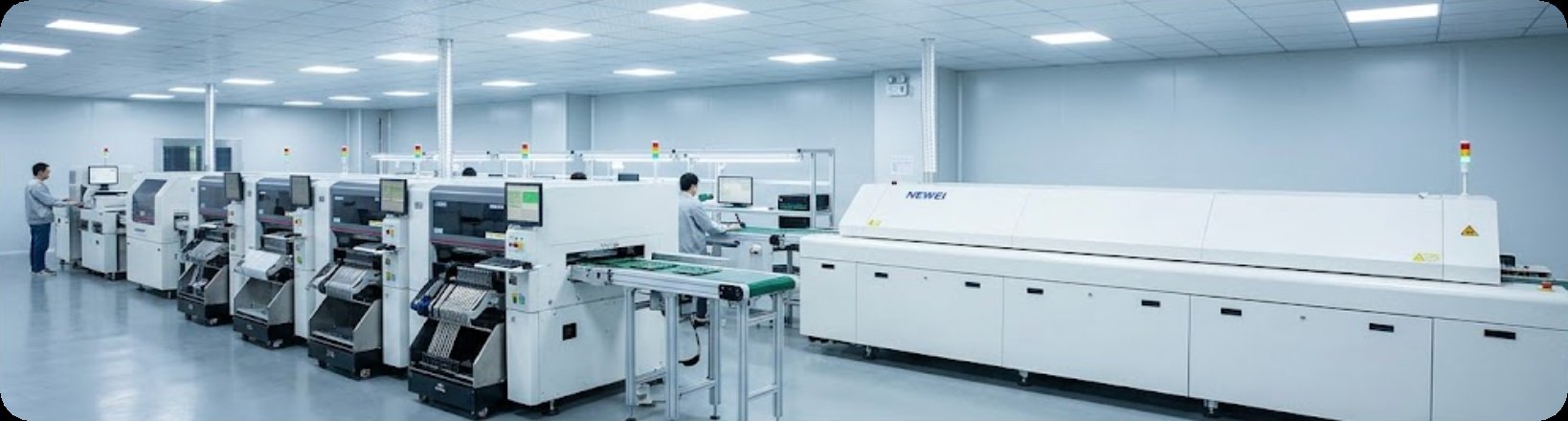
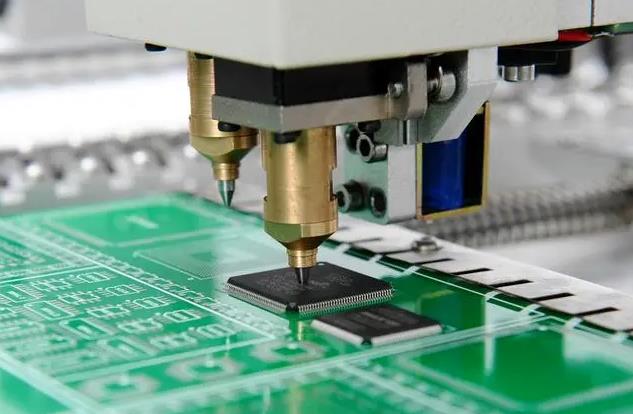
The electronics manufacturing industry is under constant pressure. Supply chain volatility, rising material costs, and the demand for smaller, more powerful devices are pushing manufacturers to their limits. One of the biggest technical hurdles we encounter daily is the assembly of ultra-fine pitch components—think 0201 chip resistors or complex BGA packages on multi-layer PCBs. A single misalignment in the solder paste printing process can lead to cold joints or bridging, resulting in field failures that cost thousands in warranty claims.
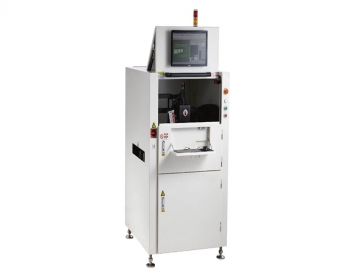
This is where the combination of PCB fabrication expertise and high-speed SMT assembly becomes critical. At NEWEI, we address this by integrating automated optical inspection (AOI) at every stage. Our lines are equipped to handle boards with trace widths as small as 3 mils, ensuring that even the most demanding industrial motherboard manufacturing projects achieve a first-pass yield of over 99.5%. The key is not just having the equipment, but having the process discipline to maintain it.
How Advanced PCB Fabrication Supports Complex Product Integration
One of the most common questions we get from clients is: "Can you handle the full spectrum of our product line?" This is especially relevant for companies that manufacture both an industrial mini PC and a rugged tablet for the same end-user. These two products, while sharing some core electronics, have vastly different physical and thermal requirements. The mini PC needs a robust, multi-layer board that can handle high-speed data processing and heat dissipation in a confined space. The rugged tablet, on the other hand, requires a more compact PCB with rigid-flex sections to fit into a slim, waterproof chassis.
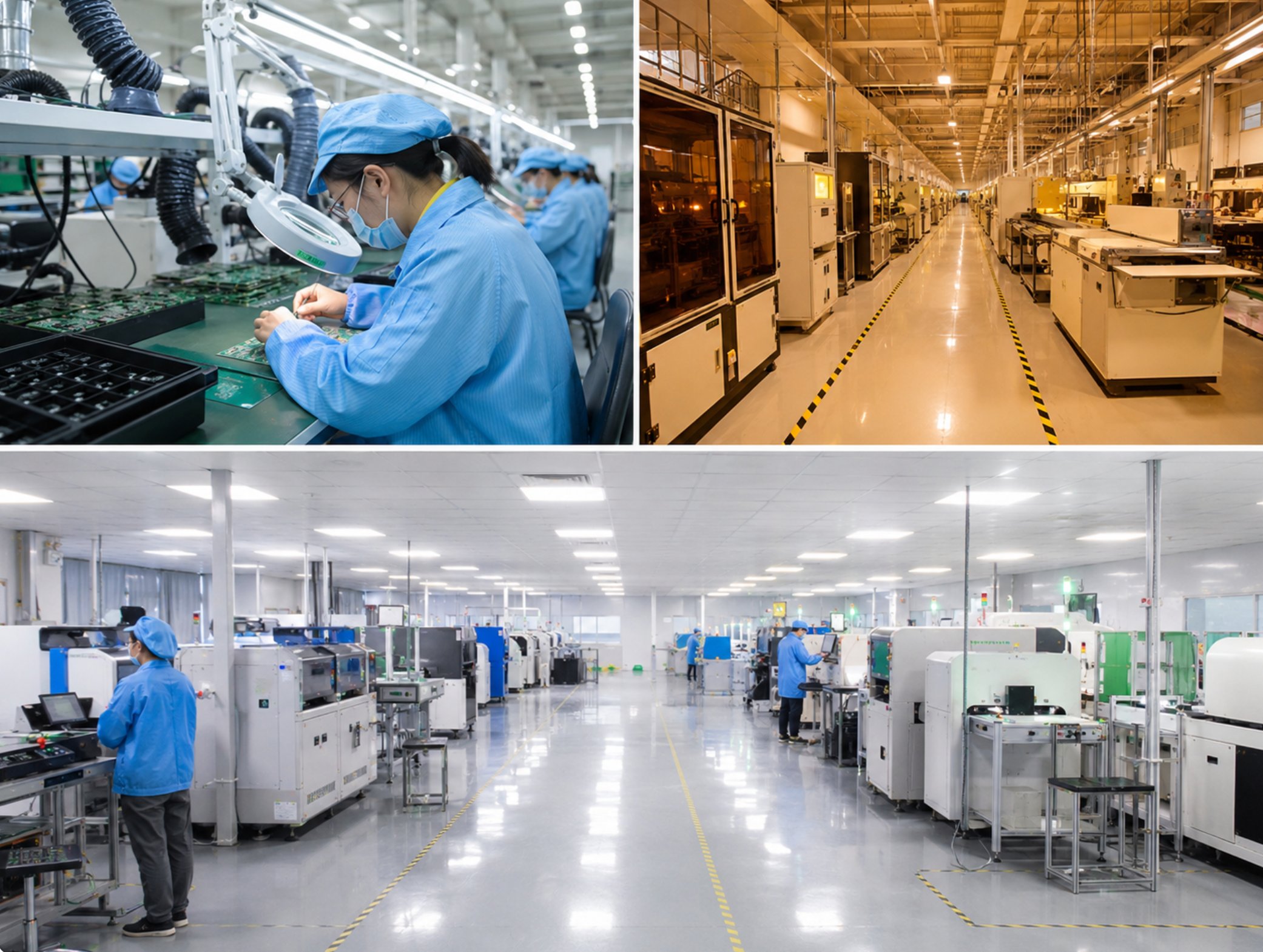
Our PCB assembly process is designed to handle this diversity without compromising efficiency. For instance, when we run a batch for custom mini computer boards, we use a specific solder paste profile optimized for larger thermal masses. Immediately after, we can switch to a line configured for a waterproof tablet assembly, adjusting the reflow oven parameters for thinner, more heat-sensitive boards. This flexibility is a direct result of our investment in modular SMT Assembly lines that can be reconfigured in under 30 minutes.
The synergy between PCB fabrication and assembly is most visible here. We don't just place components; we collaborate with our clients during the design for manufacturability (DFM) phase to optimize pad layouts, via placements, and thermal relief patterns. This proactive approach reduces the need for costly re-spins and ensures that the transition from prototype to mass production is seamless.
The Role of Conformal Coating in Rugged Electronics
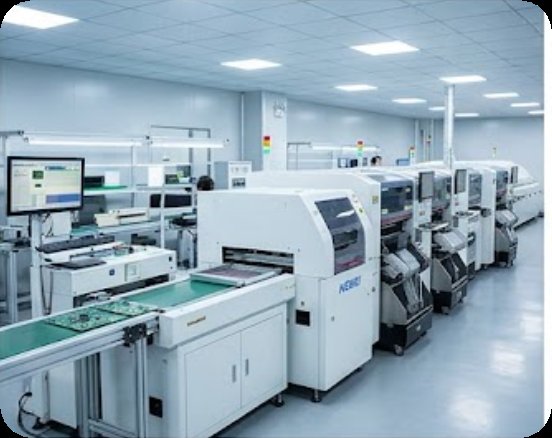
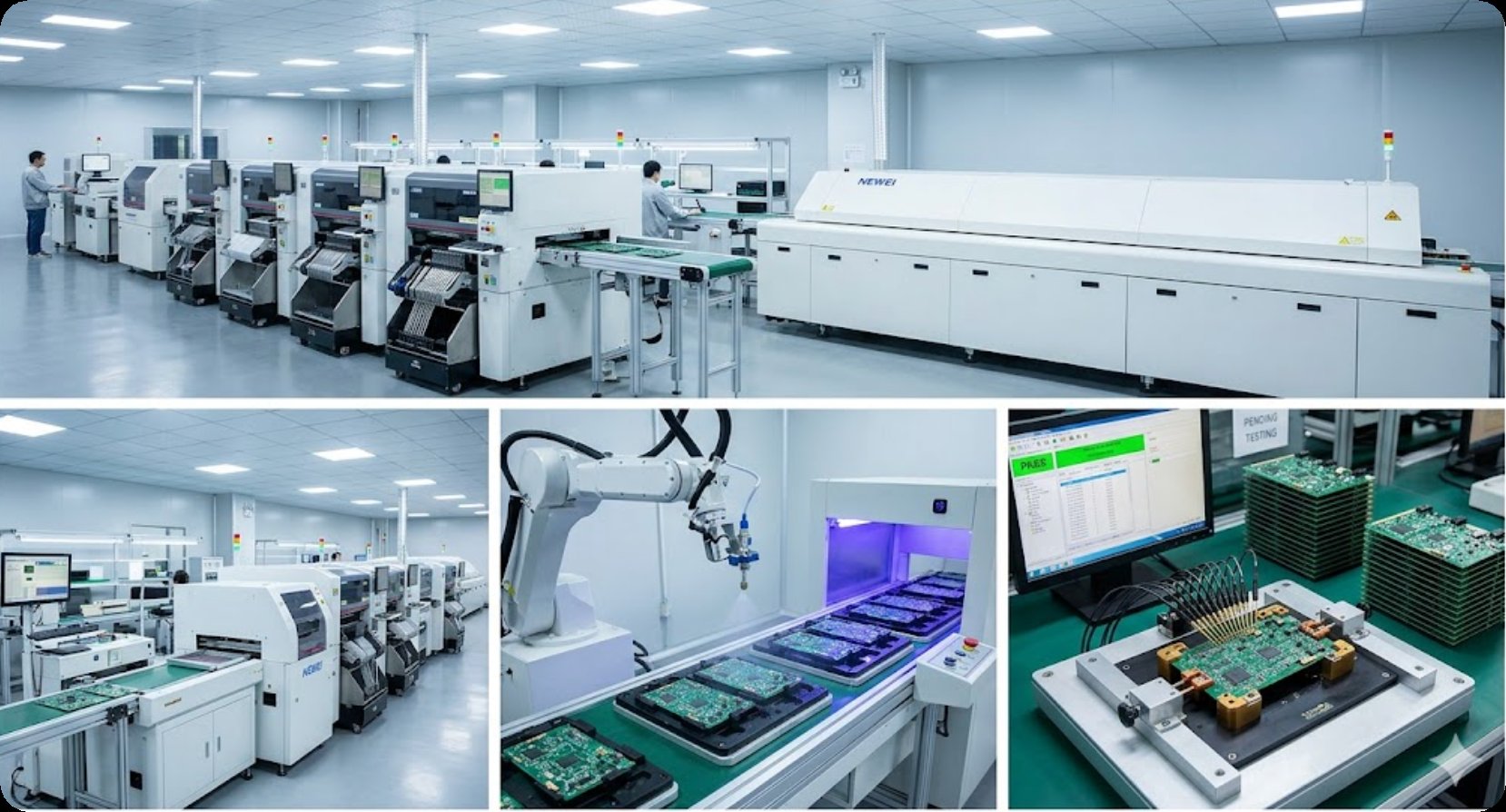
For products like the rugged tablet and industrial PDA, environmental protection is non-negotiable. After the SMT assembly and wave soldering are complete, the boards undergo a selective conformal coating process. This is not a simple spray-and-go step. We use robotic applicators to apply PCBA three-proofing paint precisely to areas that need protection from moisture, dust, and chemical corrosion, while leaving connectors and test points exposed. This level of precision is critical for maintaining signal integrity in high-humidity environments, such as food processing plants or outdoor construction sites.
Combining Industrial Motherboards and Handheld PDAs: A Case Study in Multi-Product Manufacturing
Let's look at a real scenario to understand how this all comes together. A client of ours needed two distinct products manufactured simultaneously: a high-performance industrial motherboard for an automation controller and a handheld PDA terminal for warehouse logistics. The motherboard required a 12-layer PCB with embedded components and strict impedance control for high-speed PCIe lanes. The PDA required a smaller, 6-layer board with a Bluetooth module and a barcode scanner interface.
By engaging NEWEI for both projects, the client benefited from consolidated component procurement. We sourced the common passive components and connectors in bulk, reducing per-unit costs by nearly 15%. On the manufacturing floor, the PCB fabrication for the industrial motherboard was prioritized due to its longer lead time, while the PDA boards were processed in parallel using a dedicated SMT assembly line optimized for smaller form factors. Both products underwent the same rigorous aging test protocols, ensuring that the warehouse PDA could withstand 24/7 operation and the industrial motherboard could handle the thermal stress of a sealed control cabinet.
This multi-product approach is a hallmark of electronics manufacturing services done right. Instead of treating each product as an isolated project, we create a unified manufacturing plan that leverages economies of scale and shared quality control metrics. The result? A 20% reduction in overall production time and zero defects reported in the first six months of deployment.
Real-World Applications: Where Precision PCB Assembly Makes the Difference
The true test of any manufacturing process is how it performs in the field. Here are five specific scenarios where our approach to PCB assembly and electronics manufacturing has directly contributed to client success:
Automated Warehouse Logistics: A handheld PDA terminal used for inventory scanning in a cold storage facility. The boards required a special conformal coating to prevent condensation damage, and the SMT assembly process had to ensure all wireless components were perfectly grounded to maintain Bluetooth range.
Industrial Automation Control: An industrial mini PC acting as a gateway in a steel mill. The PCB fabrication used high-Tg materials to withstand ambient temperatures exceeding 60°C, and the assembly included redundant power management ICs for fail-safe operation.
Field Service Diagnostics: A rugged tablet used by utility workers for inspecting power lines. The device required a custom PCBA that integrated a sunlight-readable display driver and a high-capacity battery management system, all within an IP67-rated housing.
Retail Point-of-Sale Systems: A custom PC computer designed for a high-traffic retail environment. The PCB assembly focused on ESD protection and robust connector mounting to withstand constant plugging and unplugging of peripherals.
Medical Diagnostic Equipment: A portable diagnostic device that relied on a custom mini computer for data processing. The electronics manufacturing process included 100% functional testing for every board, with a dedicated traceability system for all critical components.
Each of these applications demanded a different combination of PCB fabrication techniques, SMT assembly parameters, and quality checks. The common thread was a manufacturing partner who understood the end-use environment and could adapt the process accordingly. When you learn more about our manufacturing capabilities, you'll see that we don't just build boards—we build solutions that survive the real world.
Conclusion: Why Partner with NEWEI for Your Next Electronics Project
The electronics manufacturing landscape is not getting any easier. Component lead times remain unpredictable, and the demand for higher performance in smaller packages continues to grow. The companies that will thrive are those that treat their PCB assembly and SMT assembly process as a strategic asset, not just a cost center. At NEWEI, we've invested in the people, processes, and technology to turn your design challenges into production realities.
From the initial PCB fabrication of a complex industrial motherboard to the final assembly of a rugged tablet, we offer a single point of accountability. Our ISO-certified facility, combined with a dedicated project manager for every client, ensures that your project receives the attention it deserves. Whether you need a quick-turn prototype or a high-volume production run, our team is ready to deliver.
Ready to discuss your specific manufacturing needs? Contact NEWEI today for a free consultation and quotation. Let us show you how our SMT Assembly and PCB Assembly expertise can accelerate your product launch and reduce your total cost of ownership.
Tags: PCBA /PCB /SMT /conformal coating /
Prev: How to Deploy a Quality Control Testing Pipeline for PCB Assembly: A Step-by-Step Guide
Next: Why Your PCB Assembly Line Keeps Failing—And How to Fix It With the Right Factory Culture