
PCB Fabrication, Custom Industrial PC PCBA ODM and Product Assembly: What Each Milestone Confirms
Procurement teams treat a manufacturing contract as one long decision, but a factory experiences it as a sequence of doors that close behind you. The version of the Gerber you hand over at inquiry, the stackup a cam engineer confirms before etching, the stencil that gets cut for a trial run, the steel that a mold shop starts machining — each of these freezes a set of choices, and the price of undoing them rises with every door. A buy sheet that ignores this sequence asks the wrong questions at the wrong time, and both sides pay for the confusion.
This article walks one order through the five milestones where a commitment hardens, from the first upload of CAD data to the last torque check on a finished enclosure. The services involved are PCB Fabrication, a Custom Industrial PC PCBA ODM program and benchwork-level Product Assembly, and the same logic applies whether your order touches one of them or all three. The point is not to add paperwork; it is to move each question to the stage where answering it is still cheap.
Before the Gerber Arrives
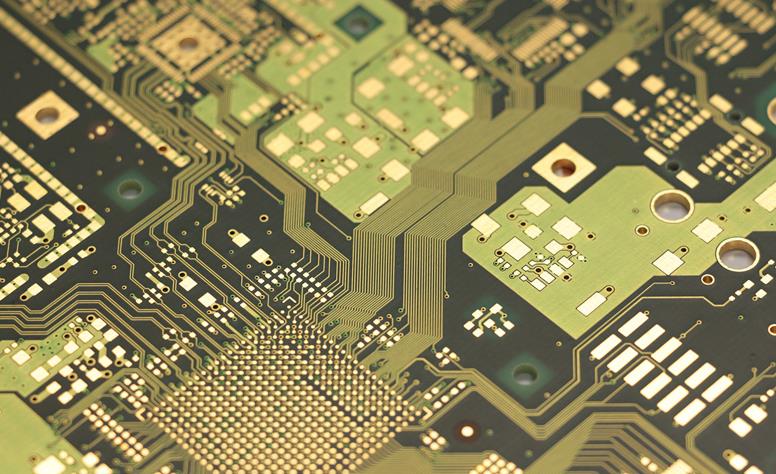
The cheapest milestone is the one before money moves. At this point a fabricator has committed nothing: no copper etched, no laminate ordered, no drill files processed. This is where the buy sheet should settle the questions that become expensive later — board class, layer count range, surface finish family, and whether the design intends controlled impedance. A file set sent without a stackup table forces the factory to guess dielectric heights, and a guess that survives into fabrication is one of the hardest errors to reverse.
Quotation mechanics matter here too. A request that arrives as a bare BOM with no Gerber cannot be priced on process capability; it can only be priced on a component list. Newei's PCB Fabrication page asks for the Gerber file specifically because layer count and process detail determine which production route an order takes — the page states support for 1 to 36 layer multilayer boards, HDI, blind and buried vias, and gold fingers, and each of those routes has different setup work behind it. Replies go out within roughly an hour during working hours, which is fast enough to iterate on scope while the conversation is still open.
The 24-Hour Sample Window and Its Revision Rules
Fast-turn sampling compresses the first real commitment into a single day. A 24-hour quick-turn service is genuinely useful, but it changes the character of the revision decision: when a board comes back the next morning with a wrong trace width, the temptation is to fire off a corrected file immediately. The discipline that protects the budget is to treat every sample revision as a formal event — a named revision, a diff note, and an explicit check of whether the fix touches any layer already verified.
The process capability numbers printed on the fabrication page define the outer boundary of what a revision can ask for. Maximum layer count 40, board thickness from 0.4 to 8.0 mm, minimum line width and spacing 0.065 mm, drilling accuracy plus or minus 0.025 mm, PTH aperture tolerance plus or minus 0.03 mm. A revision that stays inside these limits is a file change; one that crosses them — say, requesting a 0.05 mm line width after the fact — is effectively a new order wearing an old name. The buy sheet should record the capability envelope at sampling time so nobody discovers it during revision three.
Small-Batch Runs and the Numbers They Confirm
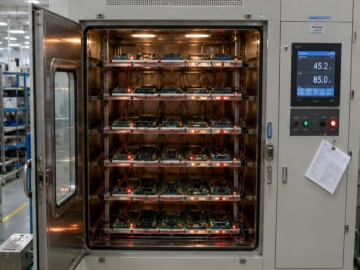
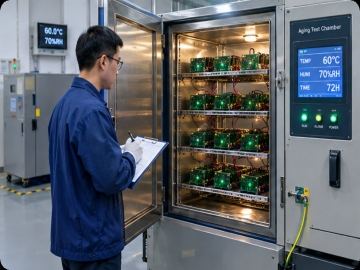
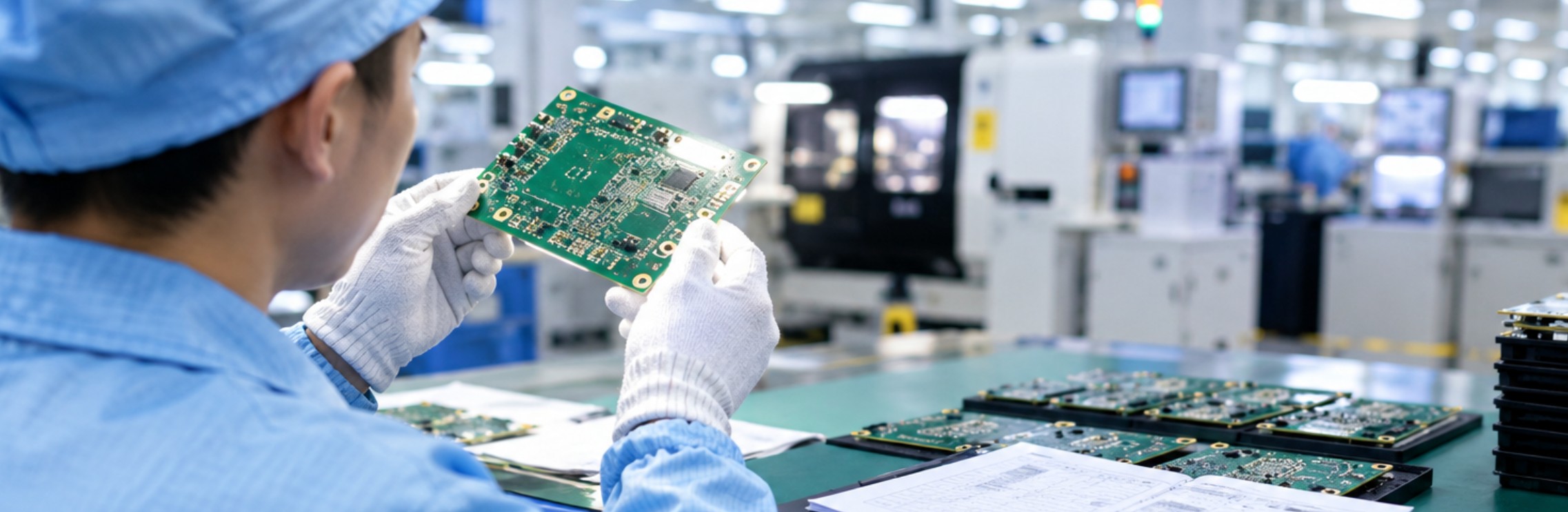
The small-batch milestone is where design intent meets production reality, and the numbers it confirms are yield numbers, not spec-sheet numbers. A pilot quantity of boards run through the real line reveals whether the paste aperture design works with the chosen stencil, whether the reflow profile suits the thermal mass of the actual layout, and whether the AOI escape rate stays inside the agreed threshold. None of these questions can be answered from the Gerber alone, which is why skipping the small-batch stage to save two weeks usually costs more than it saves.
This is also the stage where test coverage gets fixed. The fixture count, the flying-probe versus bed-of-nails decision, and the functional test scope for something like an industrial PC board all harden here, because the fixture that gets built for the small batch is the fixture that runs at volume. Changing test strategy after volume start means rebuilding fixtures mid-run — a disruption that hits delivery dates before it hits invoices.
The Stage-by-Stage Sheet at a Glance
| Milestone | What the buy sheet confirms | What reopening it costs |
|---|---|---|
| Drawing handover | Gerber revision, BOM version, stackup, surface finish family | Nothing yet; the cheapest moment to change course |
| 24-hour sample | Layer count, line width, hole tolerance against published capability | Out-of-envelope changes restart sampling as a new order |
| Small batch | Yield, AOI escape rate, test fixture scope | Fixture rework and a fresh qualification run |
| Tooling | Parting line, texture, draft angle on every shell | Steel changes; the most expensive door to reopen |
| Volume ramp | Torque specs, operator certification, OBA sampling plan | Line requalification and schedule slip |
Read as a whole, the sheet says one thing: every row's cost column grows as you move down. The buy sheet's job is to make sure each row gets signed at its own milestone, not retroactively at the end.
Tooling Starts and Re-Opens Stop Being Free
Shell mold tooling is the point of no return in most EMS orders. Once a mold shop machines steel against a 3D model, a cosmetic change is no longer a document edit — it is new electrodes, new machining hours, and sometimes a new mold. The buy sheet should therefore close every enclosure question before tooling start: parting line position, surface texture callouts, draft angles, and the identity of whoever signs off the DFM report. A mold opened against an unsigned report leaves the factory holding the risk of every later disagreement.
Change requests after tooling start also have a calendar cost that rarely appears in any quotation. Steel rework runs in days, not hours, and it serializes behind everything else the mold shop has queued. Orders that treat the tooling milestone as a formal sign-off with named approvers avoid the specific failure mode where marketing changes a port location three weeks before shipment and everyone renegotiates the delivery date instead.
Pilot Run Milestones on the ODM Line
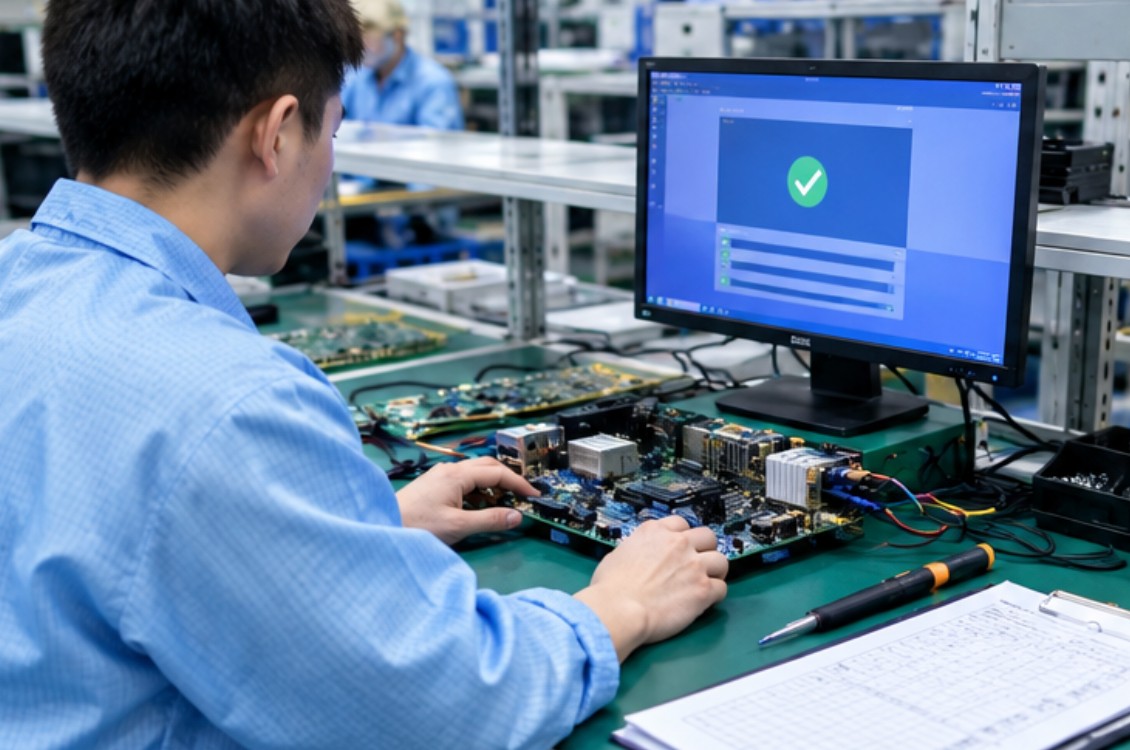
An ODM program adds a milestone that pure build-to-print work does not have: the pilot run on the ODM line itself, where firmware, drivers and mechanical fit meet each other for the first time. Newei's Custom Industrial PC PCBA ODM line covers roughly thirty board and system designs in production — Mini ITX, 3.5-inch, Nano ITX and ATX form factors across Alder Lake, Kaby Lake and Elkhart processor families — and the pilot run is where a customer's custom variant of one of these platforms proves it boots, images and survives its thermal budget.
The buy sheet items that belong to this milestone are the ones nobody can inspect from a schematic: the driver package version that ships on the unit, the BIOS setting set that gets frozen into the flash image, and the label and serial number format printed on each board. These details are cheap to specify at pilot and expensive to retrofit at volume, because changing a flash image or a label layout mid-ramp means touching every unit already built.
The Benchwork Stage and Its Final Confirmations
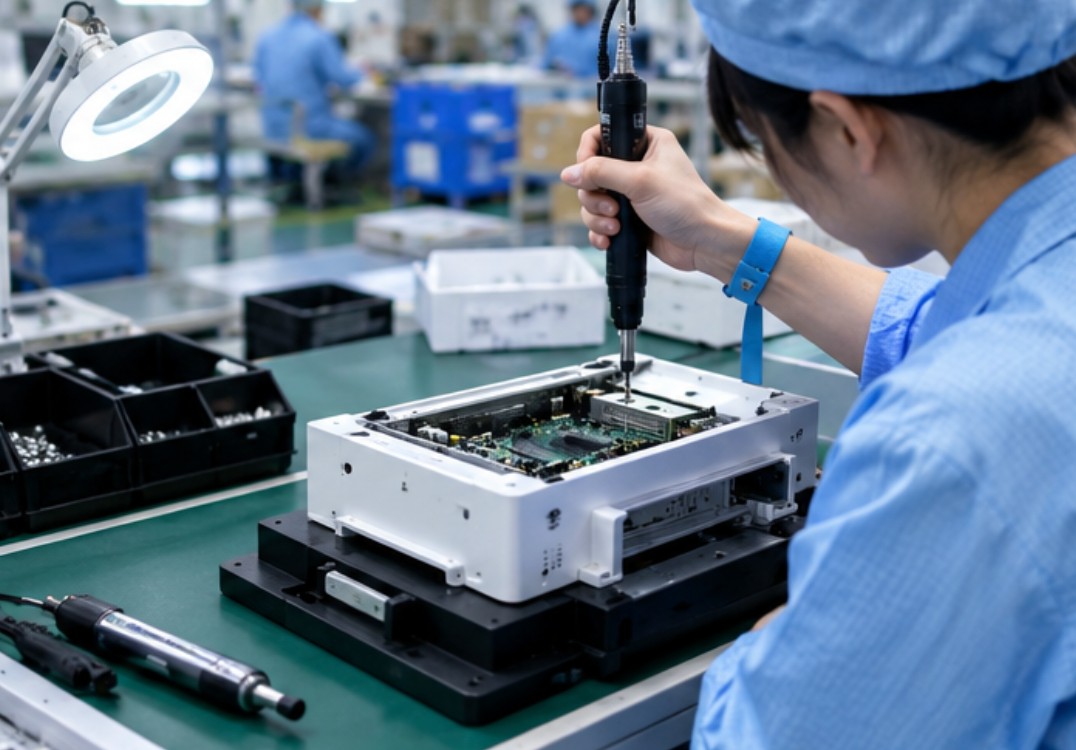
Benchwork-level assembly is the last door, and its milestone confirms the human-side numbers. Newei's Product Assembly operation runs on 95 percent skilled workers with one person per position, strict SOP coverage of work techniques and tooling, 100 percent online QC inspection backed by AQL sampling from QA, and a final OBA unboxing check before packaging. Two people audit the full assembly process and analyze defects as they occur, and the line enforces strict material-area segregation to prevent mixed stock. The buy sheet confirms which of these controls apply to the order and at what sampling level — not because they are optional, but because the AQL level and OBA scope are contract terms, not habits.
Torque specs and connector seating checks also belong to this row. A box-build order that never states its torque values leaves every operator on personal judgment, and personal judgment varies across shifts. The milestone fix costs one line in the buy sheet; the volume-scale fix costs a containment action.
Questions That Travel With the Order
Working the milestones in order changes the texture of the supplier conversation. Early questions become capability questions — what the line can hold within tolerance; middle questions become planning questions — what the fixtures and molds will commit to; late questions become contract questions — what sampling and acceptance the shipment carries. A buy sheet sorted this way reads less like a wish list and more like a schedule of decisions, each assigned to the stage where it can still be made cheaply.
The practical takeaway for a buyer evaluating EMS Electronic Manufacturing partners is to ask not just what a factory can build, but what it locks at each milestone and who signs the lock. The answer separates partners that surface problems at the Gerber stage from partners that surface them at the packing line — and the difference, once an order is deep enough, is the whole margin.
Frequently Asked Questions
1. What files should accompany an RFQ so the fabrication milestone stays cheap?
Send the Gerber together with the BOM and a stackup declaration. Newei's PCB page asks for exactly this package and quotes from it; inquiries with complete files get answers in about an hour during working hours, while a bare BOM alone cannot be priced against process capability.
2. How fast is the sampling service, and what does a revision do to it?
The quick-turn service reaches 24 hours for standard builds. A revision that stays inside the published capability envelope — 40 layers maximum, 0.065 mm minimum line width, drilling accuracy of plus or minus 0.025 mm — is a file change; one that crosses the envelope restarts sampling on new terms.
3. Why does shell mold tooling get its own sign-off row?
Because machined steel turns document changes into physical rework. Parting line, texture and draft angle must be closed in the DFM report before tooling start, with a named approver, or every later change competes with the mold shop's existing queue in days-long rework cycles.
4. What does the assembly milestone lock that earlier stages cannot?
The human-side terms: AQL sampling level, OBA unboxing scope, torque values per fastener and the material-segregation rules that prevent mixed stock. These are contract parameters confirmed at ramp — Newei runs 100 percent online QC with QA spot checks against the agreed AQL, and two-person audit of the full assembly process.
Tags: product assembly / custom industrial pc PCBA ODM /
Next: No more...