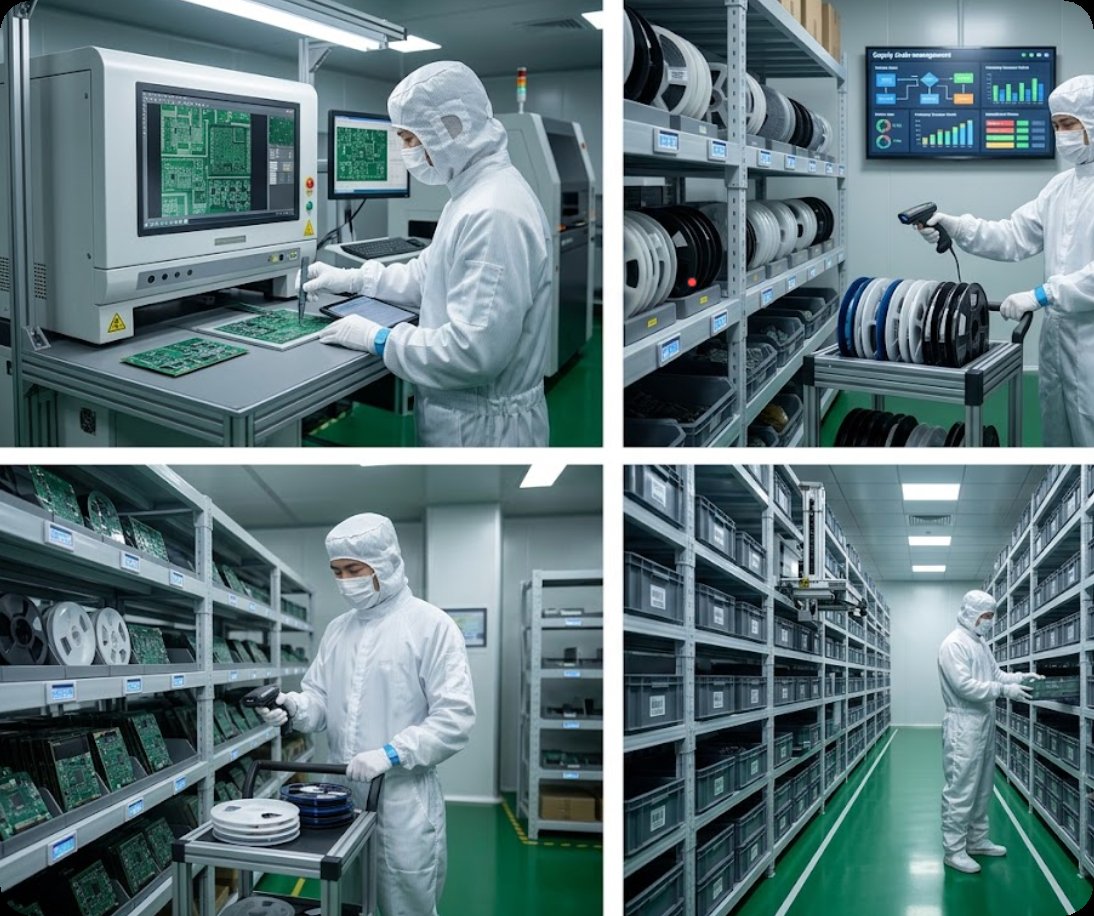

From Final Test to the Truck: The Numbers an EMS Electronic Manufacturing Order Posts at the Packing Line
My position after watching hundreds of orders close: the last data a batch earns is not the electrical test at the end of the line, it is everything recorded after that, at the packing bench. A carton that survives ten controlled drops, a bag whose indicator card stayed pale, a pallet label whose counts match the packing list — those are the numbers a receiving dock actually checks. Orders that skip this stage do not fail loudly. They fail in a warehouse three weeks later, and by then the trail has gone cold.
The Last Data a Batch Earns Before the Carton Closes
Packing looks like the quietest corner of any factory tour, and that is exactly why it deserves measurement. Every unit has already passed its electrical gates, so nothing downstream can improve the boards — only protect them or damage them. A folded carton crease in the wrong place, a desiccant pouch forgotten, a foam insert reused one time too many: none of these shows up on a test report, and all of them reach the customer.
So the packing stage runs its own record, separate from production paperwork. One recent order — a mixed batch of controller boards and finished units heading to a European distributor — generated four documents between final test and the truck: the outgoing inspection sheet, the drop log for the shipping carton design, the seal and moisture record for the barrier bags, and the pallet manifest. Each one is short. Each one answers a question a receiving team asks without calling anyone.
This is where product assembly and packing services earn their keep, because the finished unit, its enclosure, and its carton have to be treated as one object from here onward.
| Record | What it measures | Created at | Who relies on it |
|---|---|---|---|
| Outgoing inspection sheet | Sampled units against the agreed AQL and cosmetic classes | FQC bench | Customer quality department |
| Carton drop log | Corner, edge and face drops on the packed design at full weight | Packing-area test rig | Packaging engineer, distributor |
| Seal and moisture record | Bag type, desiccant count and indicator card reading per carton | Vacuum sealing station | Receiving warehouse |
| Pallet manifest | Carton counts, scale-verified weights and batch identifiers | Loading dock | Receiving dock, freight forwarder |
FQC Sampling Reads the Batch the Way the Receiver Will
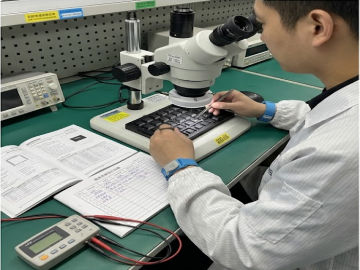
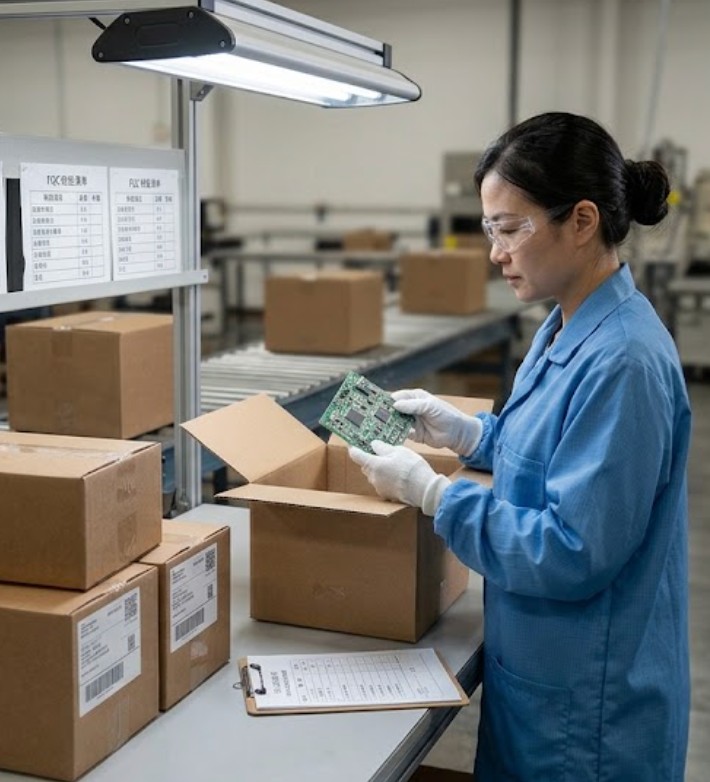
Outgoing inspection is not a re-run of in-process testing. The inspector samples from packed or ready-to-pack units and looks at the order the way a customer's warehouse will: cosmetic condition of the enclosure, accessory counts, label placement, and the fit of the unit in its insert. The sampling level and the acceptance number are agreed before the order starts, commonly an AQL of 2.5 for major defects on consumer-class assemblies and tighter for medical or automotive programmes.
The record matters more than the pass. A sheet that says "sampled 50, found zero majors, carton integrity verified" tells the customer's quality department the batch was read with the same lens they will use. When the same sheet starts reporting recurring minors — a scuffed bezel, a cable tie in the wrong corner — that trend is the earliest warning the line gets, and it arrives while the order is still on our floor instead of in a claim.
Drop Testing the Carton, Not the Board
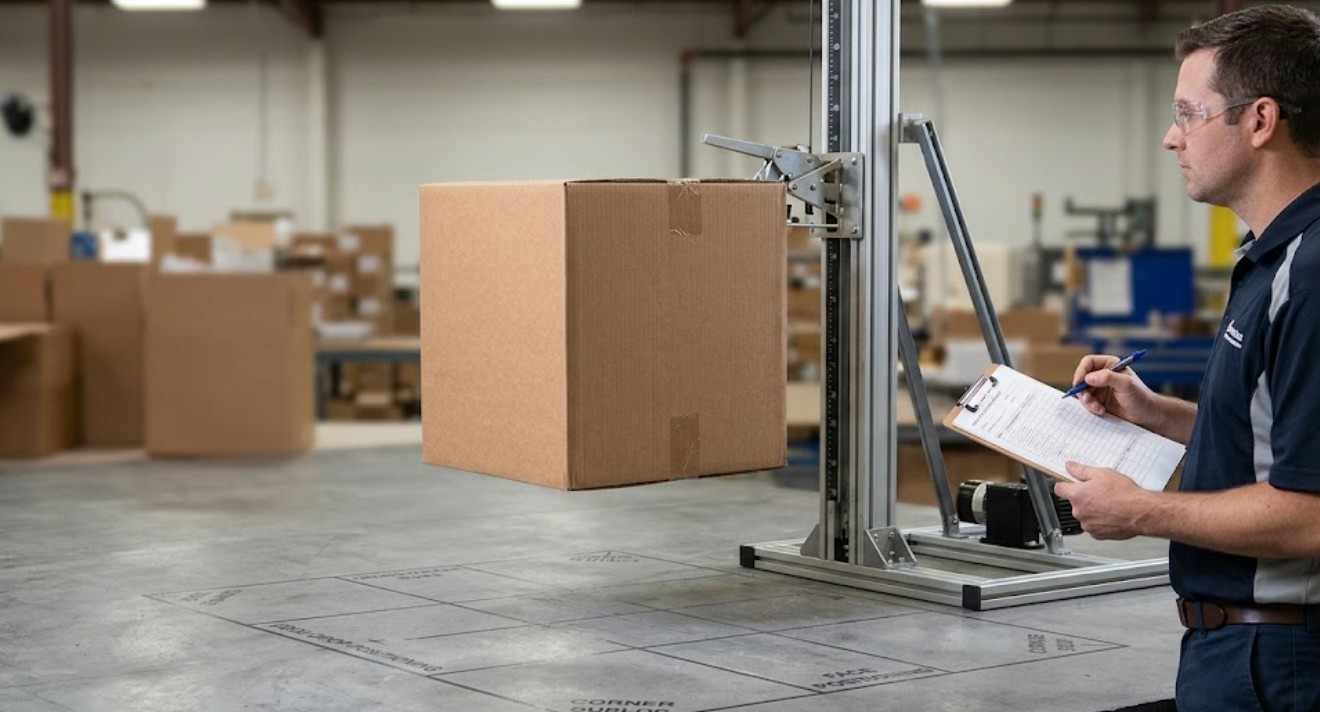
The boards were never going to be dropped; the box is. So the drop program targets the shipping carton as designed — with product, inserts, and accessories at full packed weight. A standard sequence covers drops onto a corner, an edge, and a face at the height matched to the carton's weight class, then the carton is opened and every unit is inspected and powered again. The point is not drama footage. It is evidence that the packaging design, not luck, carries the shipment.
New carton designs always go through this before the first shipment, and the log follows the order file. On a recent consolidation order mixing bare boards with boxed units, the drop run exposed a loose accessory rattling inside a compartment — harmless electrically, but a scuff generator across a nine-hour truck leg. The insert was revised and retested before anything shipped, which cost an afternoon and saved a claims conversation.
Molded Enclosures Face the Light Before They Face Foam
Cosmetic failures dominate outgoing rejections, and most of them live on plastic parts. An enclosure that passed functional testing can still carry a flow mark, a gate shadow, or a scratch from a tote it rode in between processes. Under packing-line lighting, inspectors hold every molded housing at an angle and read its surface before the unit ever meets a foam insert, because after the bag is sealed, that surface is the first thing the customer sees.
Keeping this check close to the molding source shortens the loop. When housings come through our shell mold services, the tooling, material, and finish decisions are made under the same roof as the inspection, so a gloss mismatch between two cavities becomes a tooling note in hours rather than a rejected batch in a warehouse abroad. Units scheduled for conformal-coated boards get the same treatment — the housing is the coating's last line of defense, so its condition is part of the protection argument, not a cosmetic extra.
Wave-Soldered Boards Get One More Look After the Wash
Through-hole assemblies carry a specific risk into packing: they are the boards most likely to have traveled through washing, drying, and manual touch-up on their way to the box. Flux residue that survives cleaning does not fail an electrical test on day one. It sits under a connector, absorbs humidity in a sea container, and becomes a reliability finding in month six — long after the carton has been recycled.
So the packing bench adds a short re-look for these boards before bagging: an inspection pass over the solder side of any assembly that came through our DIP assembly services, checking the wave-soldered joints and the cleaned areas around them under magnification. Four wave lines and a washing machine mean the process is industrial, but the check at the end is human and specific: no white residue, no lifted component bodies, no flux pooling where a bag will press against the board for weeks.
The Vacuum Bag and the Card That Proves It Held
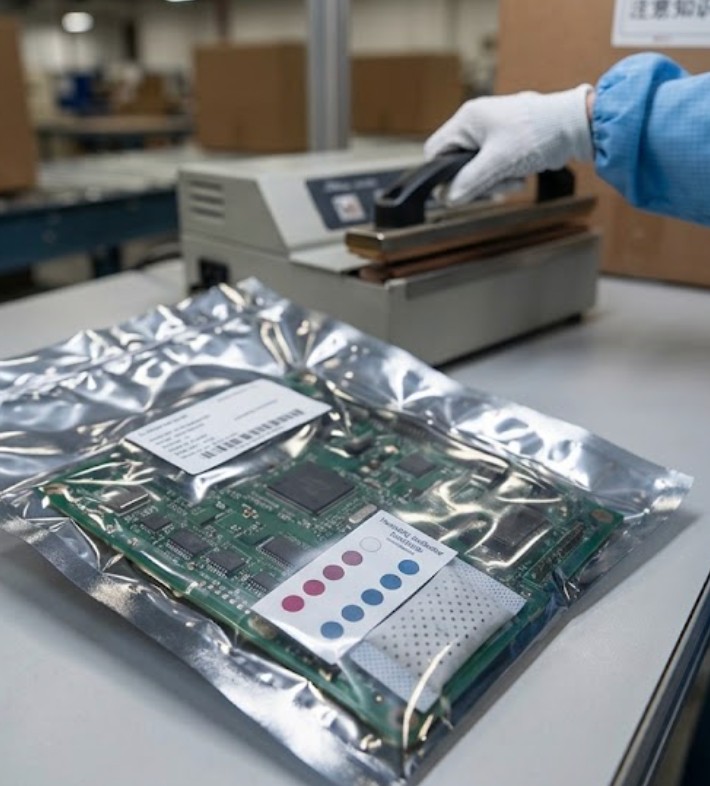
Moisture is the quiet claim generator in electronics shipping, and the defense is boring and mechanical: boards go into moisture-barrier bags with desiccant, the bags are vacuum-sealed, and a humidity indicator card rides inside every one. The card is the receipts. If its spots stay dry, the seal held; if any spot has darkened at the receiving end, the customer knows the bag was compromised before opening it — and knows to bake the boards before assembly instead of gambling on them.
The record keeps both sides honest. Our seal log notes bag type, desiccant count, and card reading at sealing time, carton by carton. A customer opening a shipment three continents away can compare the card in the bag against that log and know the seal was verified at origin. It is a small document, but it has ended more humidity disputes in one email than any warranty clause could.
What the Pallet Label Owes the Receiver
The last numbers are the ones printed on the outside. A pallet label that carries order number, carton count, gross and net weight, and the batch identifiers from the inspection sheets turns the receiving dock into a ten-minute job. A label that guesses any of those figures turns it into a phone call. Weights are taken from the scale, not calculated; carton counts come from the manifest, not memory; and the batch references match the documents inside the boxes one-to-one.
That traceability is the reason the whole chain holds together. An EMS Electronic Manufacturing order touches design, procurement, placement, testing, and packing, and each stage leaves a document. The pallet label is simply the index to all of them, and when a distributor or an end customer wants to trace a unit back to its inspection record months later, the index is what makes that possible. For teams planning their next build, learn more about our manufacturing capabilities — and ask any supplier, including us, what their packing bench records. The answer says more about how an order will actually arrive than any datasheet will.
Frequently Asked Questions
1. Does every order get drop tested, or only new carton designs?
The full drop sequence runs on every new carton design and any change to inserts, accessories, or packed weight that would alter how the box behaves. Repeating the entire program on an unchanged, validated carton adds cost without information, so repeat orders ship on the existing design log. What never gets skipped is the outgoing inspection, which verifies carton condition and packed contents on every batch regardless of history.
2. What is actually inside the moisture-barrier bag besides the board?
A desiccant pouch sized to the bag volume and a humidity indicator card, both placed before the vacuum seal. The card lets the receiving side verify at a glance that the interior stayed dry in transit, and the desiccant handles the residual moisture the vacuum does not remove. For moisture-sensitive components the bagging follows the floor-life rules set at material intake, so the clock starts from baking, not from bagging.
3. Can customers define their own outgoing inspection criteria?
Yes, and many do. The sampling plan, the AQL level, the cosmetic classes, and the specific checks on the packing bench can all be written into the order before production starts. The record we return then matches the customer's own receiving inspection, which is the whole point: both parties are reading the batch with the same lens, and any dispute has a pre-agreed document to fall back on rather than two opinions.
4. How are cosmetic defects on enclosures judged consistently?
By classification, not taste. Approved samples and written cosmetic classes — what counts as a major on a visible surface versus a minor on a hidden one — are agreed at order confirmation, and inspectors judge against those references under defined lighting. When housings come from our own molding chain, a borderline finding loops straight back to the tool or the material batch the same day, so the classification keeps improving instead of accumulating arguments.
Tags: shell mold / DIP assembly /EMS manufacturing / packing and delivery QC /
Prev: Aging Bench Numbers Before Shipping: What Custom Industrial PC PCBA ODM Work Must Prove on Test
Next: No more...