
PCB and SMT Incoming Inspection and Supply Chain Evolution: Technology Advances in Material Control
How Incoming Quality Control Evolves with PCB Assembly and Industrial Motherboard Manufacturing
How Incoming Quality Control Evolves with PCB Assembly and Industrial Motherboard Manufacturing
My View: The biggest lie in electronics manufacturing is that inspection slows down production. In reality, a weak incoming quality control (IQC) system is the fastest way to kill your yield. Over the last decade, I’ve watched the industry shift from reactive checks to predictive analytics—and the companies that embrace this evolution are the ones shipping 99.99% defect-free boards. At NEWEI, we treat IQC not as a gate, but as a continuous feedback loop that feeds directly into our Custom PCB Assembly Services. If you are still relying on visual inspection and trust-based supplier relationships, you are already behind.
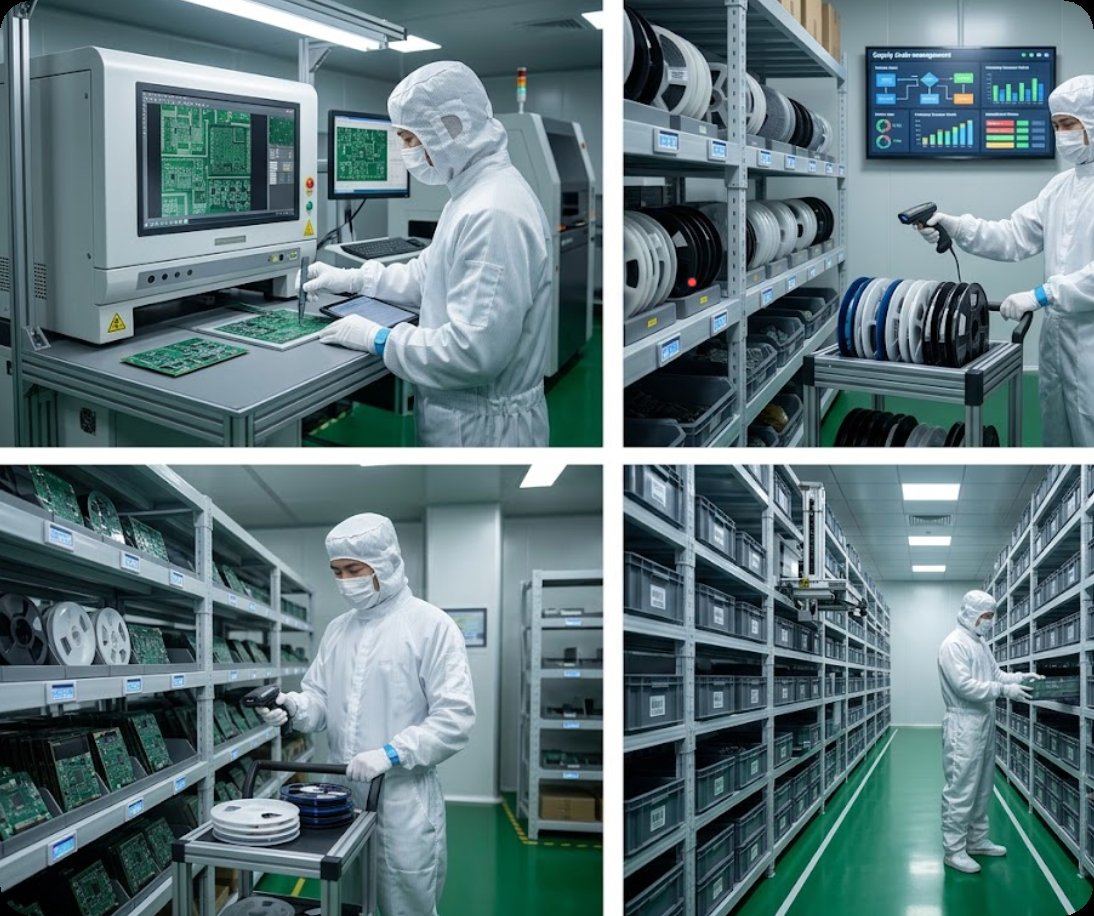
The electronics supply chain has never been more volatile. Component shortages, counterfeit parts, and fluctuating lead times are the new normal. For companies involved in PCB assembly and industrial motherboard manufacturing, the first line of defense is no longer just a magnifying glass and a checklist. It is a sophisticated, technology-driven incoming quality control process that begins the moment a shipment arrives at the dock. Whether you are building a custom Mini PC for an edge computing application or a rugged tablet for field service, the quality of your final product is determined long before the first solder joint is made.
The Technology Shift in Component Inspection
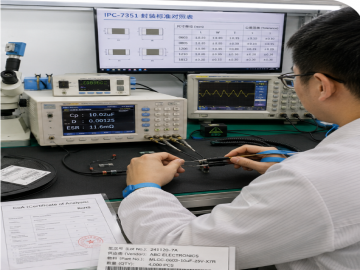
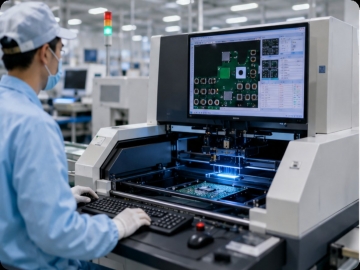
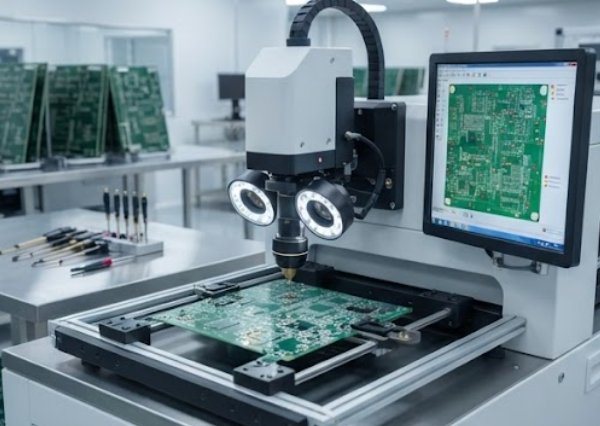
Traditional IQC relied heavily on manual sampling and visual checks. Today, that approach is obsolete for high-reliability applications. Modern facilities like NEWEI deploy automated optical inspection (AOI) at the receiving stage, combined with X-ray fluorescence (XRF) analyzers to verify material composition and detect counterfeit coatings. For critical components used in industrial motherboard assembly, we integrate 3D measurement systems to check package coplanarity and ball grid array (BGA) alignment before any component enters the warehouse. This technical evolution means that a batch of capacitors or a shipment of FPGAs can be fully characterized in minutes, not hours, with data logged directly into a traceability system.
Supplier Qualification as a Continuous Process
In the past, supplier audits were annual events. Now, the best contract manufacturers treat supplier qualification as a living data stream. At NEWEI, we rate every supplier on a scorecard that includes delivery performance, defect rates, and response time to corrective actions. For high-stakes components like the main chipsets used in our FP67A0 Industrial Panel PC Motherboard, we require both manufacturer and distributor certifications. This continuous vetting process reduces the risk of a bad lot reaching production. It also means that when a customer asks for a custom PC computer with specific industrial-grade capacitors, we already know which suppliers can deliver consistently.
Anti-Static Warehousing and Material Traceability
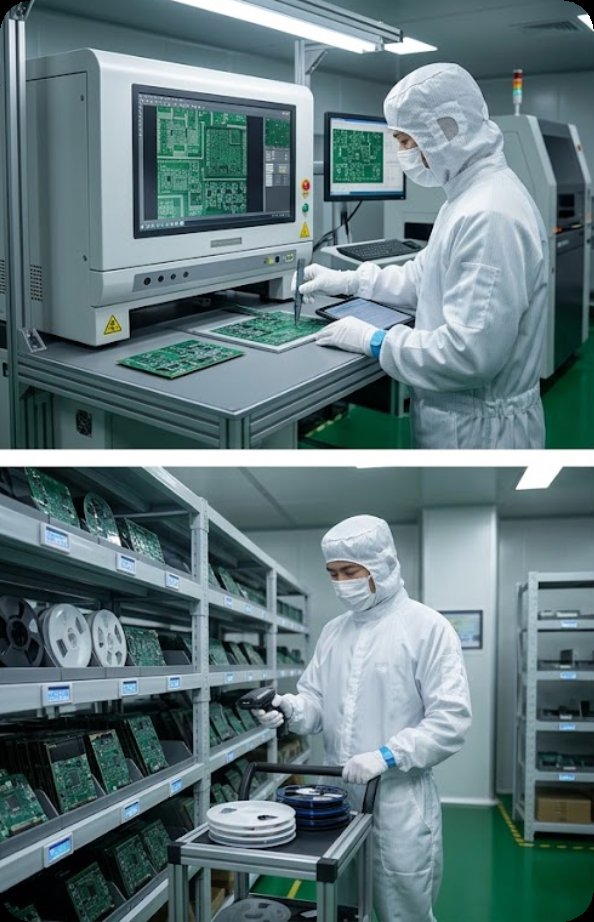
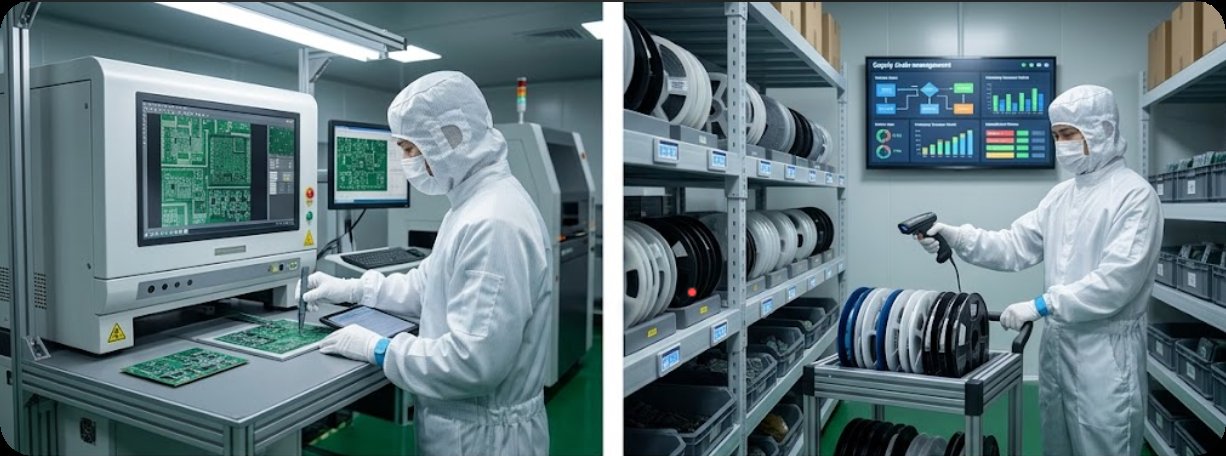
Some of the most subtle defects come from poor storage conditions. Electrostatic discharge (ESD) can damage sensitive components like FPGAs and memory modules without leaving visible marks. That is why NEWEI’s warehouse operates under strict ESD control, with humidity and temperature monitoring linked to an alarm system. Every reel of components, every tray of BGAs, and every batch of custom PCBA boards is assigned a unique lot code that ties back to the incoming inspection report. If a downstream test reveals an anomaly, we can trace the affected components back to their original shipment within minutes—not days.
How Multi-Product and Multi-Service Synergy Strengthens IQC
One of the most powerful aspects of working with a full-service EMS provider is the ability to combine multiple products and services into a single quality framework. At NEWEI, we often see projects that require both an industrial motherboard (like the FT-J6413-V1.1 Industrial Edge G
ateway Board) and a rugged tablet for the same end customer. The IQC process for these two products shares the same component library, the same supplier scorecards, and the same traceability database. This means that a capacitor approved for the motherboard is automatically cleared for the tablet. By integrating SMT Assembly with EMS Electronic Manufacturing, we eliminate redundant inspections while catching issues that a single-product line might miss. For example, if a batch of connectors fails the pull test during motherboard assembly, we flag the same part number for the tablet line before any units are built.
Real-World Applications Across Industries
The evolution of IQC is not an academic exercise; it has direct impact on product reliability in the field. Here are some scenarios where NEWEI’s approach makes a difference:
Smart Manufacturing: An industrial mini PC controlling a robotic arm must withstand vibration and temperature swings. Our IQC process verifies that all electrolytic capacitors meet extended life ratings, reducing field failure rates.
Medical Devices: A bluetooth thermometer used in hospitals requires FDA-compliant traceability. Every component lot is documented and stored for 10 years.
Retail & Signage: A digital signage motherboard P1H6 deployed in outdoor kiosks must resist humidity. We inspect conformal coating thickness on incoming connectors.
Telecommunications: A network appliance motherboard for 5G edge nodes must meet tight impedance tolerances. Our IQC includes TDR (time-domain reflectometry) sampling on PCB laminates.
Automotive: A custom portable projector PCBA used in head-up displays (HUD) requires AEC-Q200 certified passive components. We verify certificates for every shipment.
Consumer Electronics: A smart bracelet PCBA board needs consistent battery connector performance. Our pull-test data feeds back into connector supplier selection.
From Incoming Inspection to Production Feedback Loop
The most advanced IQC systems don’t just reject bad parts—they learn from them. At NEWEI, inspection data is fed into a statistical process control (SPC) system that tracks defect trends by supplier, component type, and date code. If a particular batch of resistors shows a drift in resistance values, the system automatically flags all downstream assemblies using that same lot. This proactive approach prevents rework and scrap. When combined with our PCB Fabrication capabilities, it creates a closed-loop quality system that covers everything from raw material to final assembly.
Conclusion: Why a Technology-Driven IQC Strategy Wins
The days of hoping that suppliers ship perfect parts are over. In a market where end customers expect zero defects and immediate delivery, the only sustainable approach is to build a quality system that starts at the receiving dock and never stops. NEWEI’s investment in automated inspection, supplier data management, and multi-product traceability is not just about meeting standards—it is about exceeding them. Whether you need a single industrial computing PCBA prototype or a high-volume run of custom handheld PDA terminals, our IQC process ensures that only verified, qualified components reach your assembly line.
Ready to strengthen your supply chain from the first component to the last shipment? Contact NEWEI today for a free consultation and quotation. With ISO-certified manufacturing, worldwide shipping, and dedicated project manager support, we help you build products that last. And if you want to dive deeper into how we combine PCB fabrication with advanced IQC, learn more about our manufacturing capabilities.
Tags: PCBA /PCB /SMT /incoming inspection /supply chain /evolution /material control /
Prev: SMT and PCB Packaging and Delivery Compliance: Standards for Outbound Shipping of PCBA Products
Next: NEWEI Customer Case Study and Industry Trends: PCB, PCBA and SMT Assembly Success Stories