
Electronic Component Procurement and Shell Mold: How Both Streams Reach a Peak-Season Pack-Out Bench Together
Peak-Season Convergence Reality: During peak manufacturing windows, shipping schedules rarely slip because a single assembly line ran too slowly. Delays happen when three independent production streams fail to converge on the same pack-out bench on the same day. A batch of industrial controllers can sit half-assembled with tested PCBs ready, enclosures still waiting in a tooling queue, and connector kits sitting in a receiving cage several aisles away. Evaluated in isolation, each supplier may report green status while the sealed carton misses dispatch.
Effective Box Build Product Assembly & Packaging Service requires planning backwards from final kitting and sealing. A box cannot close until electronic components, enclosures, and fabricated boards meet at the same table with verified quality records. Examining how each stream operates clarifies how buyers prevent last-minute bottlenecks.
Why Finished Goods Wait on the Slowest of Three Clocks
A completed assembly is only as ready as its slowest input. Printed circuit boards, custom enclosures, and sourced components run on separate supply chains governed by distinct schedules: board fabrication depends on stack-up cycles and test throughput; enclosures depend on mold availability and injection press slots; purchased components depend on vendor allocation, transit times, and incoming inspection queues.
In routine months, safety stock and schedule slack absorb timing differences. During peak demand, buffers tighten across every link at once, turning minor schedule drift into missed ship dates. Expediting an already-early board batch only adds work-in-process inventory to the floor; true schedule protection requires identifying the true critical-path constraint for each order and safeguarding its completion date.
The Component Stream: Allocation Priority and Closed IQC Records
Reliable BOM Electronic Component Sourcing & Procurement starts well ahead of production kitting. Multi-year partnerships—spanning five to ten years with original manufacturers and authorized agents—deliver critical value during tight supply cycles: technical engineering support and guaranteed allocation priority. Structured supplier audits, sample qualification, small-batch verification, and annual quality reviews keep sourcing channels resilient when spot markets tighten.
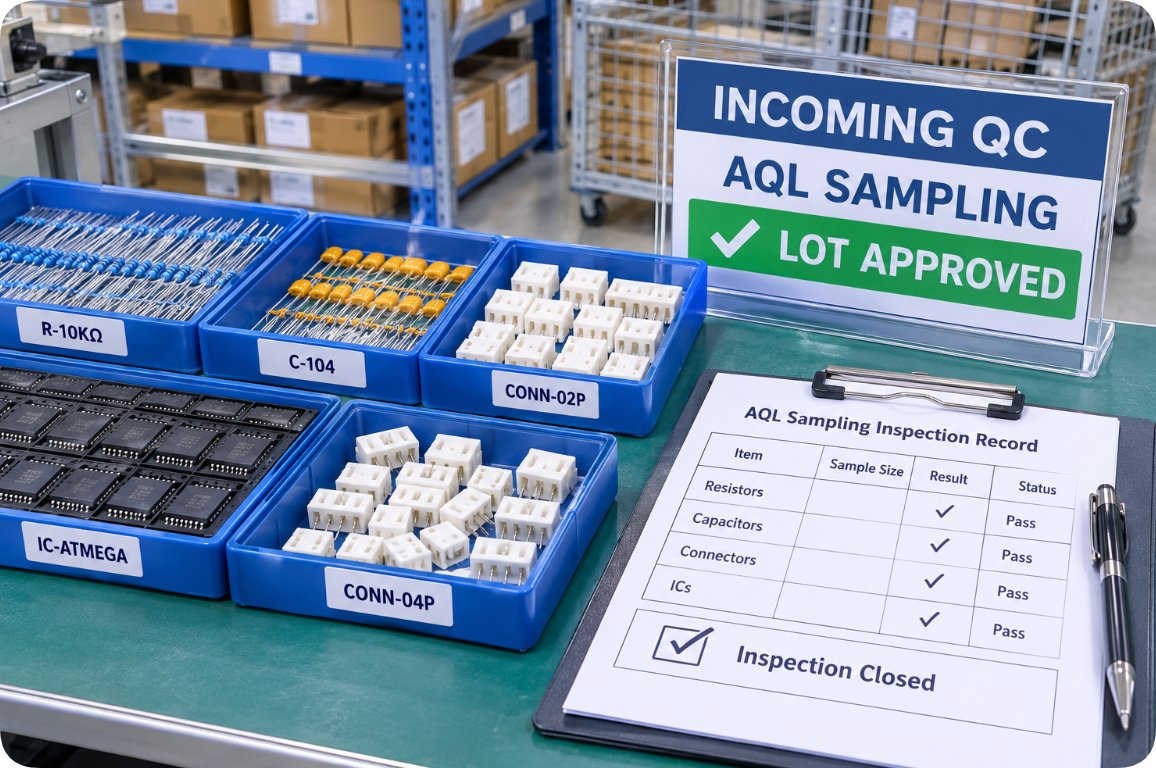 Incoming verification: sampling and lab inspection confirm component readiness before kitting begins.
Long-term sourcing history never replaces verification. Every critical component must pass incoming quality control (IQC) under agreed sampling plans using calibrated inspection instruments and laboratory testing. A shipment sitting on site with an open non-conformance or pending check is a hold, not usable kit inventory. Parts reach pack-out readiness only when physical stock is present and inspection records are closed.
The Enclosure Stream: Managing Tooling Slots and Revision Alignment
Plastic & Metal Enclosure Injection Mold Manufacturing frequently turns into a hidden bottleneck when treated as a late-stage cosmetic step. Custom housings—spanning polypropylene, nylon, polyetherimide, and stainless steel—require dedicated mold scheduling, sampling, small-lot validation, and press time. Peak-season adjustments to color, surface texture, or mounting bosses can reset queue priority if not controlled early.
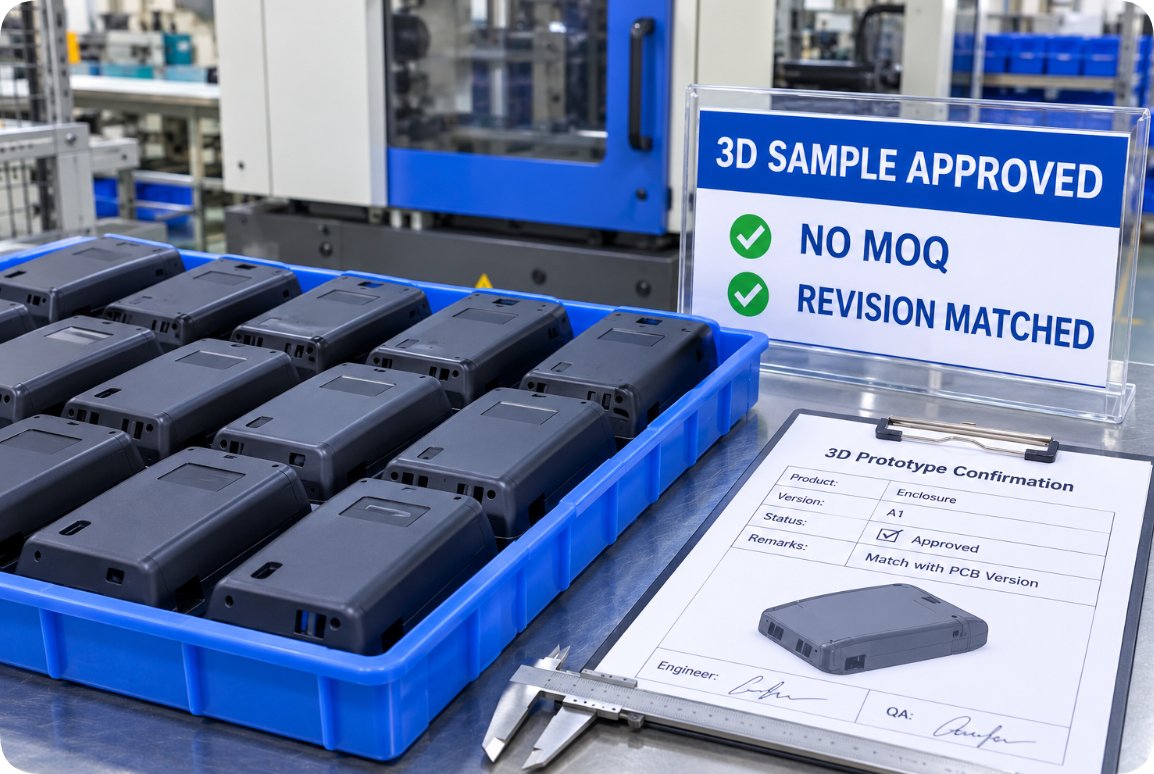 Enclosure readiness: molded shells staged in protective trays after fit and revision verification.
Flexible prototyping—including 3D sampling, iterative part verification, and low- or no-minimum-order pre-production runs—helps teams validate mechanical fit before committing to full volume molds. Coordinated procurement and buffer stock help absorb internal disruptions, while strict revision control ensures enclosure dimensions and finishes match the exact PCB revision at assembly.
The Board Stream: Multi-Layer Fabrication and First-Article Discipline
Quick Turn PCB Prototyping & Board Manufacturing balances rapid early validation against repeatable volume fabrication. Fast-turn prototypes with design-for-manufacture (DFM) feedback accelerate engineering sign-off, whereas production runs—from 1 to 36 layers, including HDI, blind/buried vias, BGA layouts, and fine geometries—require disciplined production scheduling and process control.
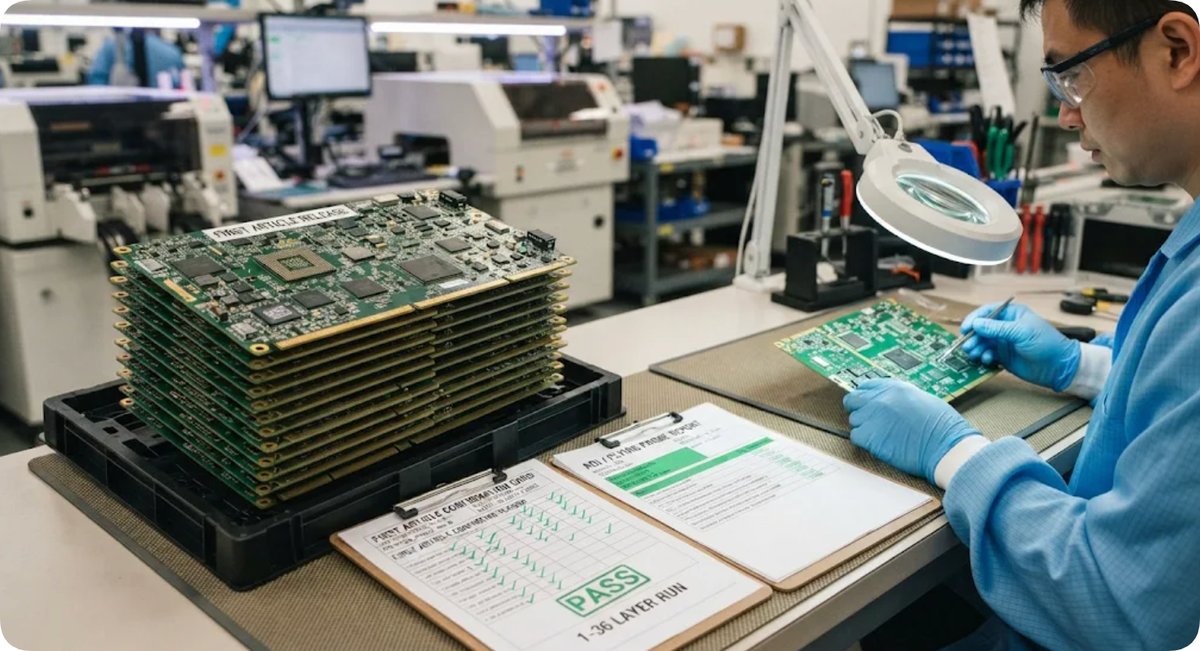 Board fabrication and test: stacked PCBs backed by first-article release and inspection records.
Capabilities such as panel processing up to 2000 × 600 mm, trace/space down to 65 μm, drilling accuracy within 25 μm, and verification via flying-probe, test fixtures, and AOI define repeatable build limits. At pack-out, board lots must arrive with approved first-article inspection (FAI) and test documentation tied to the matching enclosure revision.
Judging All Three Streams at One Convergence Table
Integrating purchasing, tooling, and board fabrication under Turnkey EMS Electronic Manufacturing Services gives one accountable team visibility across every dependency. Standardized station procedures, self-checks, QC sampling, open-box audits, and lot barcode traceability link every unit back to its source materials.
| Supply Stream | Proof Required at Pack-Out | Early Delay Indicator | Bench Absorption Limit |
|---|---|---|---|
| Purchased Components | Closed IQC sampling, qualified samples/small lots, traceable supply chain | Receiving cage backlog prior to kitting | None; a single missing part halts box closure |
| Enclosure & Tooling | Signed 3D sample, reserved mold/press slot, revision match with PCB | Tooling or injection molding queue delay | Minor part rework only; never ship-date slippage |
| Fabricated Boards | Approved first article, stack-up/feature verification, attached test log | Sampling, test, or multi-layer fab bottleneck | Minor rework; late lots hold scheduled assembly slots |
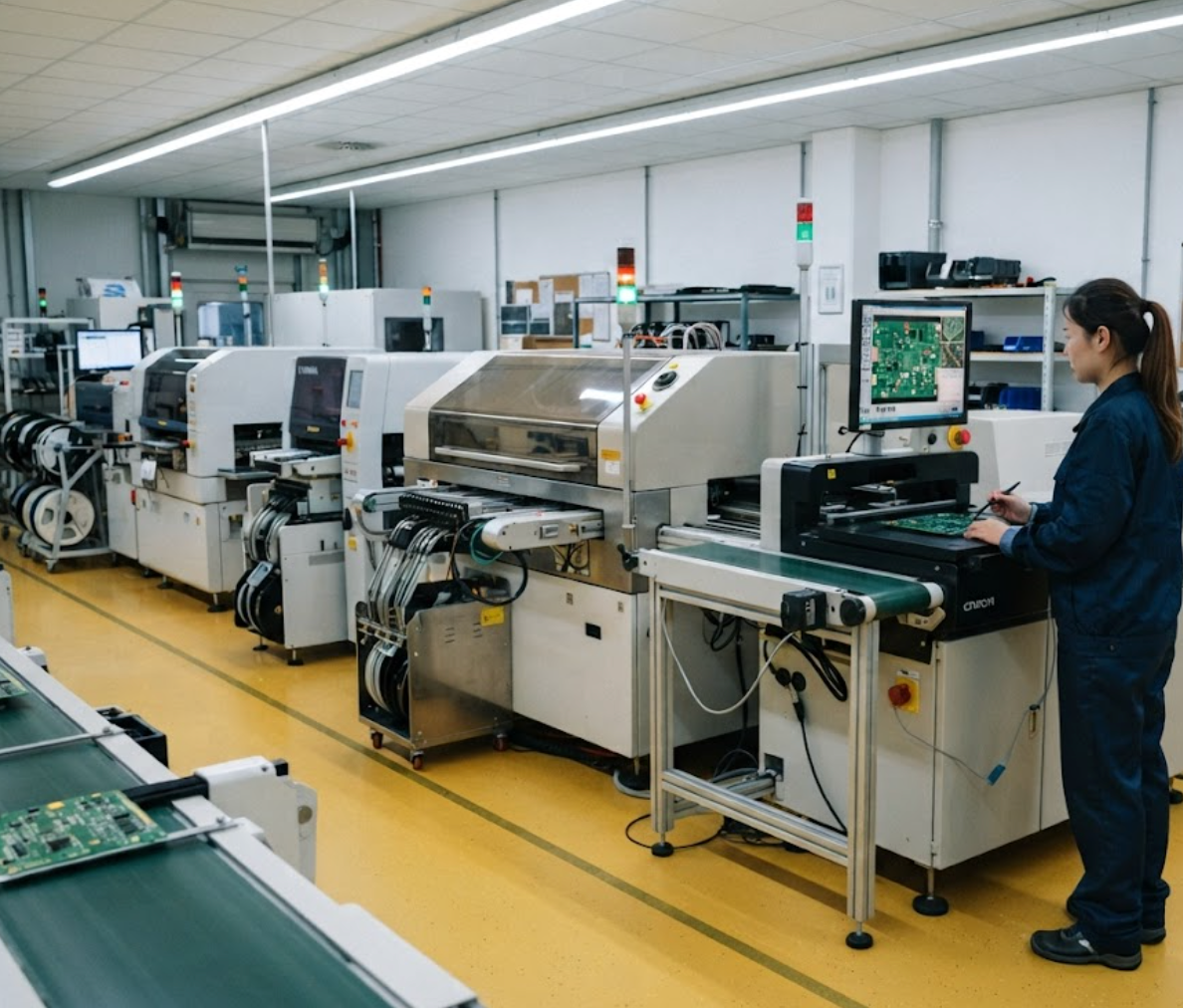
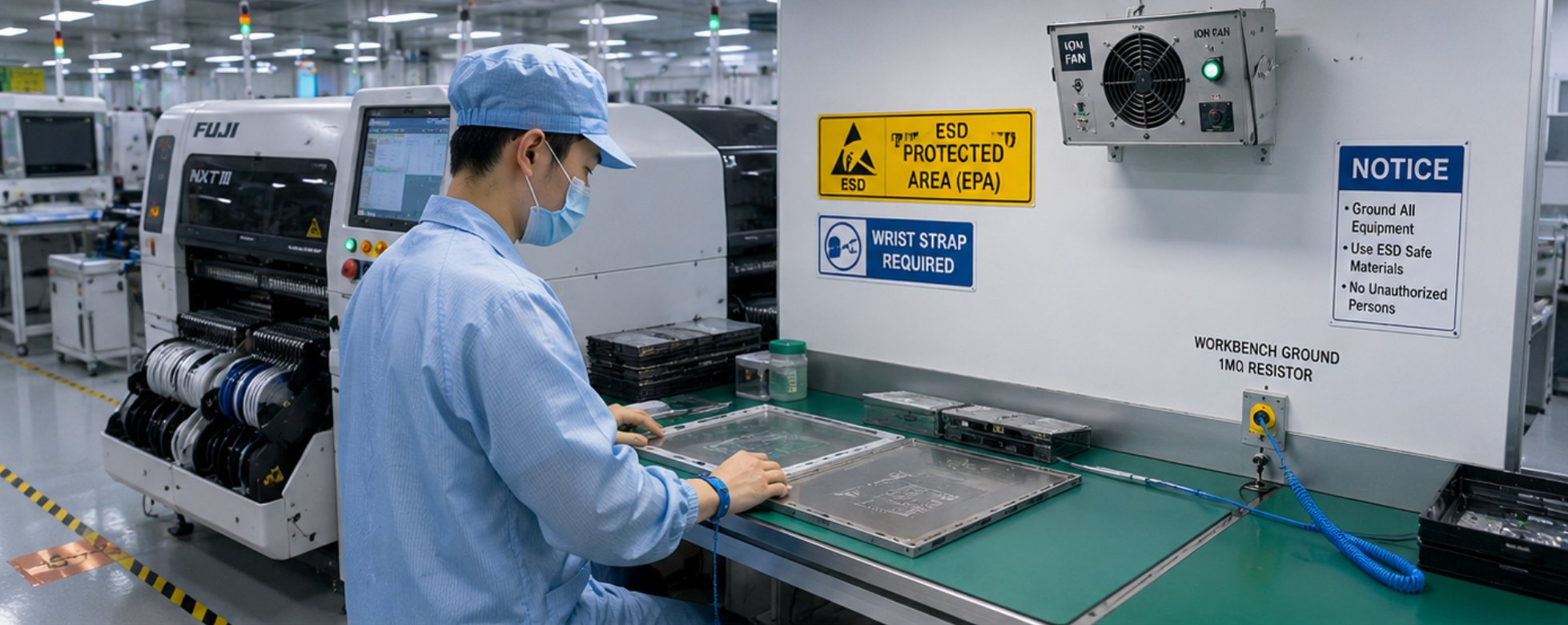
Even strong High Precision SMT Assembly Lines Factory capacity only translates into on-time shipments when boards, parts, and enclosures arrive in balance. Oversized queues of one sub-assembly while another waits increase handling risk, moisture exposure, and storage aging.
Booking Seasonal Capacity Early and Locking Convergence Dates
Peak-season execution is won during quieter planning weeks before capacity fills. As explored in our engineering review of one rework order, three approaches, late changes ripple across schedules quickly once lines are active. Reserving mold slots, fabrication windows, and component allocations early converts finite factory capacity into committed arrival dates.
Locking the longest-lead stream first—whether custom tooling, multi-layer PCB runs, or long-lead components—allows supporting streams to align tightly around the pack-out window. When verified components, revision-matched enclosures, and tested boards meet cleanly on the bench, orders ship on schedule without last-minute firefighting.
Frequently Asked Questions
1. Does a delay in any single stream hold up final pack-out and dispatch?
Yes. A finished box can only be sealed and released when verified components, approved enclosures, and tested boards are all present on the pack-out bench together.
2. Do established supplier relationships replace incoming quality control (IQC)?
No. Long-term supplier relationships strengthen allocation priority and qualification efficiency, while every critical component lot still undergoes incoming sampling and lab verification before kitting.
3. Can teams validate enclosure designs with sampling before committing to full volume runs?
Yes. Three-dimensional sampling, rapid part iteration, and flexible small-batch runs allow engineering teams to verify fit and finish prior to full-scale production.
4. Does a fast-turn PCB prototype serve as a mass-production release on its own?
No. Fast-turn prototypes with DFM analysis validate design manufacturability early, while production lots require formal first-article inspection and scheduled fabrication runs.
5. Why should buyers schedule peak-season streams backwards from the pack-out bench?
Yes, planning backwards aligns every stream around the actual bottleneck. Locking the longest-lead input first prevents idle inventory buildup and keeps all three streams arriving within a tight window.
Tags: shell mold /electronic component procurement / seasonal planning /
Prev: When the Coating Brief Arrives Before the Gerbers: Three-Proofing, EMS and Automotive PCBA
Next: No more...