
ESD Control in PCB Assembly: A Practical Installation & Deployment Guide for ESD-Safe Manufacturing
ESD Control in PCB Assembly: A Practical Installation & Deployment Guide for ESD-Safe Manufacturing
If you've ever lost a batch of PCBs to latent electrostatic discharge damage, you know the frustration—components that pass initial testing but fail weeks later in the field. That's the silent killer in SMT Assembly and PCB fabrication. After working with dozens of electronics manufacturers, I've seen how a poorly deployed ESD control system can wipe out margins on even the most carefully engineered products. The reality is that ESD protection isn't just about wrist straps and mats—it's about designing a complete installation and deployment strategy that covers every touchpoint from component intake to final packaging.
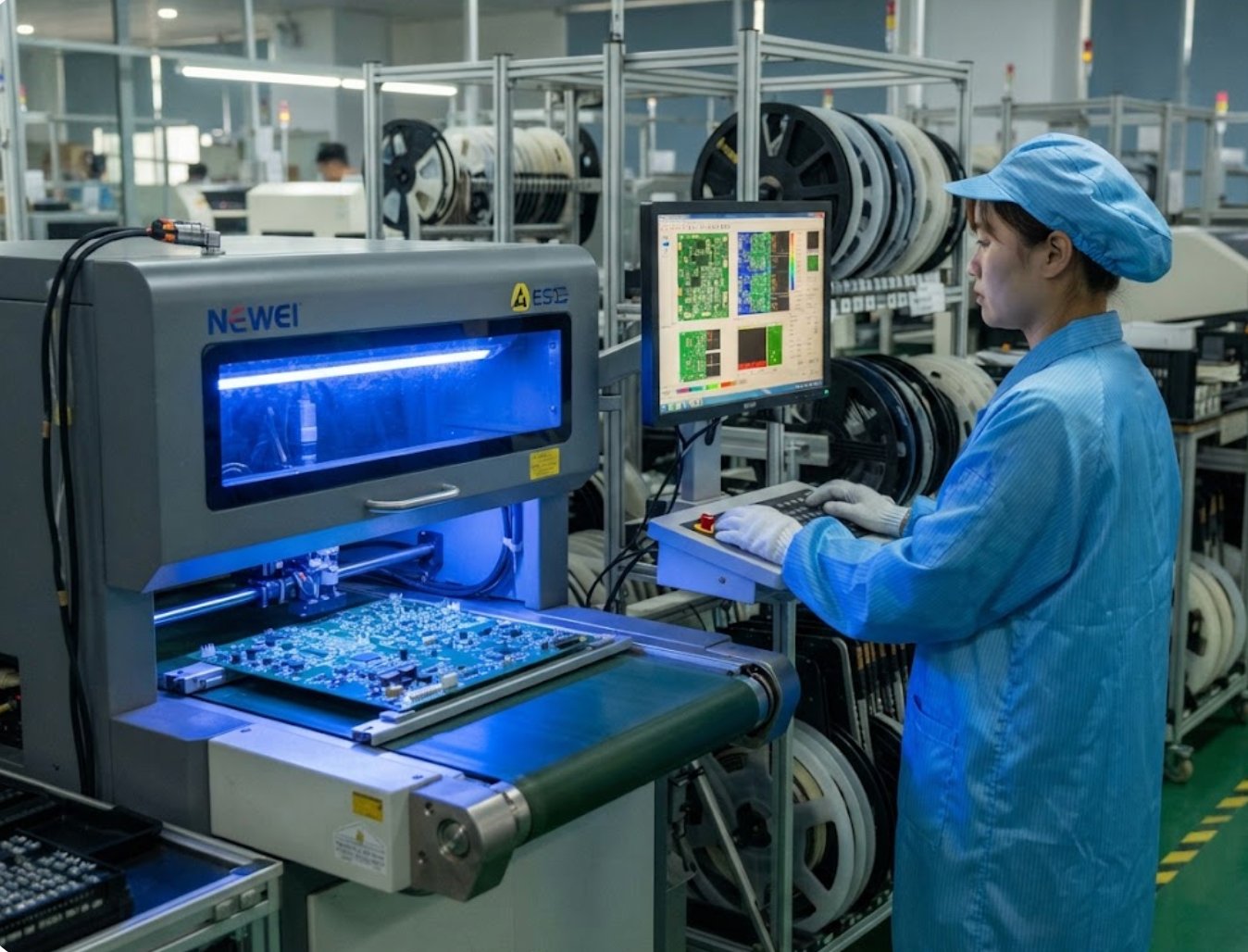
At NEWEI, we've built our entire production lines around Custom PCB Assembly Services that integrate ESD safety from the ground up, and I want to share the practical deployment steps that actually work on the factory floor. These aren't theoretical best practices—they're battle-tested methods we use daily to protect sensitive assemblies like industrial motherboards and rugged tablets.
My take: Many teams over-engineer their ESD plans with expensive monitoring systems but miss the basics—like ensuring every workbench has a verified grounding point. Start with the fundamentals: proper flooring, continuous monitoring, and strict material handling protocols. The ROI on a well-deployed ESD system is immediate—fewer field failures, lower warranty costs, and higher customer trust.
Understanding the ESD Threat in SMT Assembly and PCB Fabrication
Electrostatic discharge can occur when a charged object, like a human operator or a plastic tote, comes near a sensitive electronic component. In SMT Assembly, the most vulnerable points are during pick-and-place operations, reflow soldering, and manual inspection. A discharge as low as 30 volts can damage modern semiconductor junctions, especially in fine-pitch ICs and BGAs used in products like industrial motherboards and rugged tablets.
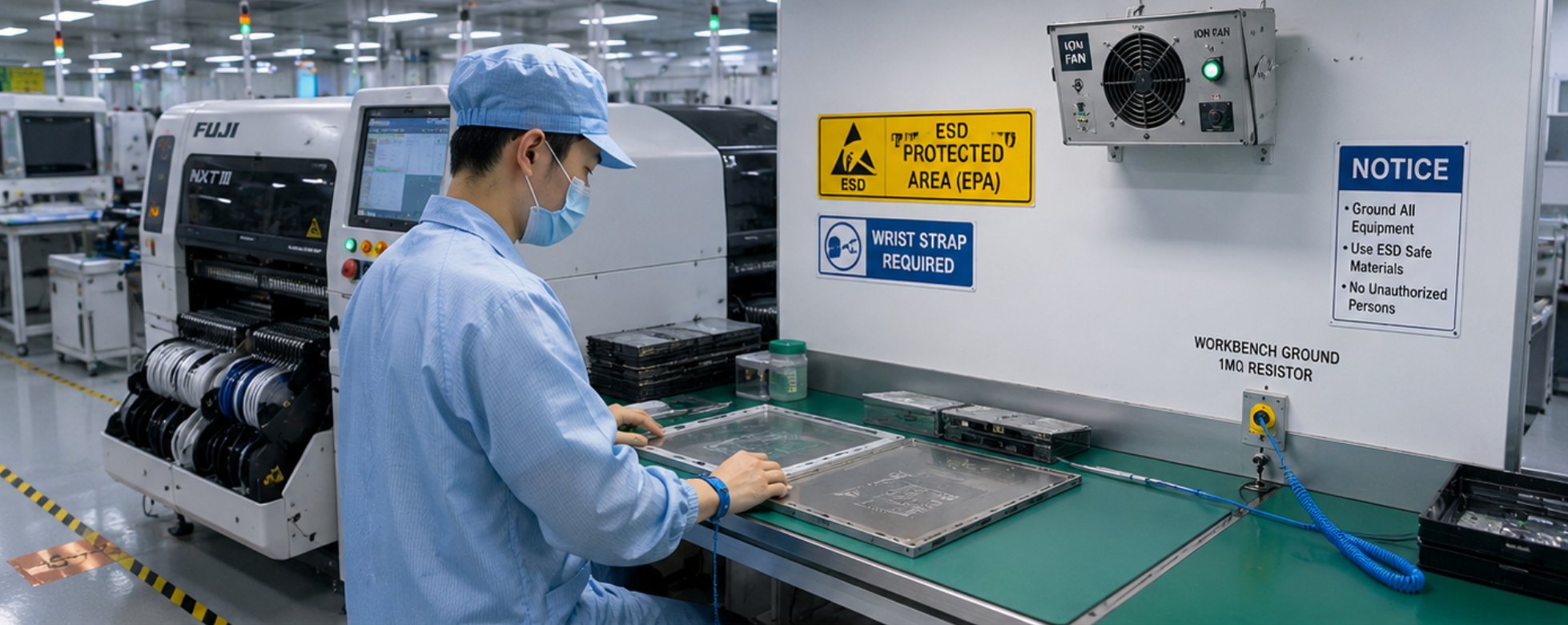
For PCB fabrication, the risks extend throughout the entire process—from laminate handling to drilling and plating. Static charges attract airborne contaminants that can cause shorts or weak solder joints. That's why an ESD control program must be integrated from the moment raw materials enter the facility. We've seen that the most effective approach is to designate ESD protected areas (EPAs) with clearly marked boundaries. Every person entering an EPA must wear ESD-safe footwear or heel straps, and all work surfaces must be grounded through a 1-megaohm resistor. This isn't just theory—it's the standard that keeps our production lines running at 99.99% yield.
Step-by-Step Installation of ESD Control Infrastructure
Deploying an ESD-safe environment requires careful planning. Here's the sequence that works in real-world PCB Assembly (PCBA) facilities:
1. Flooring and Grounding
Install conductive or static-dissipative flooring with a resistance to ground between 2.5 x 10^4 and 1 x 10^9 ohms. Each floor tile must be bonded to the grounding system using copper strips. We recommend using a continuous ground monitor that alerts operators if the path exceeds safe limits. In our experience, this single investment reduces ESD events by over 80%.
2. Workstation Setup
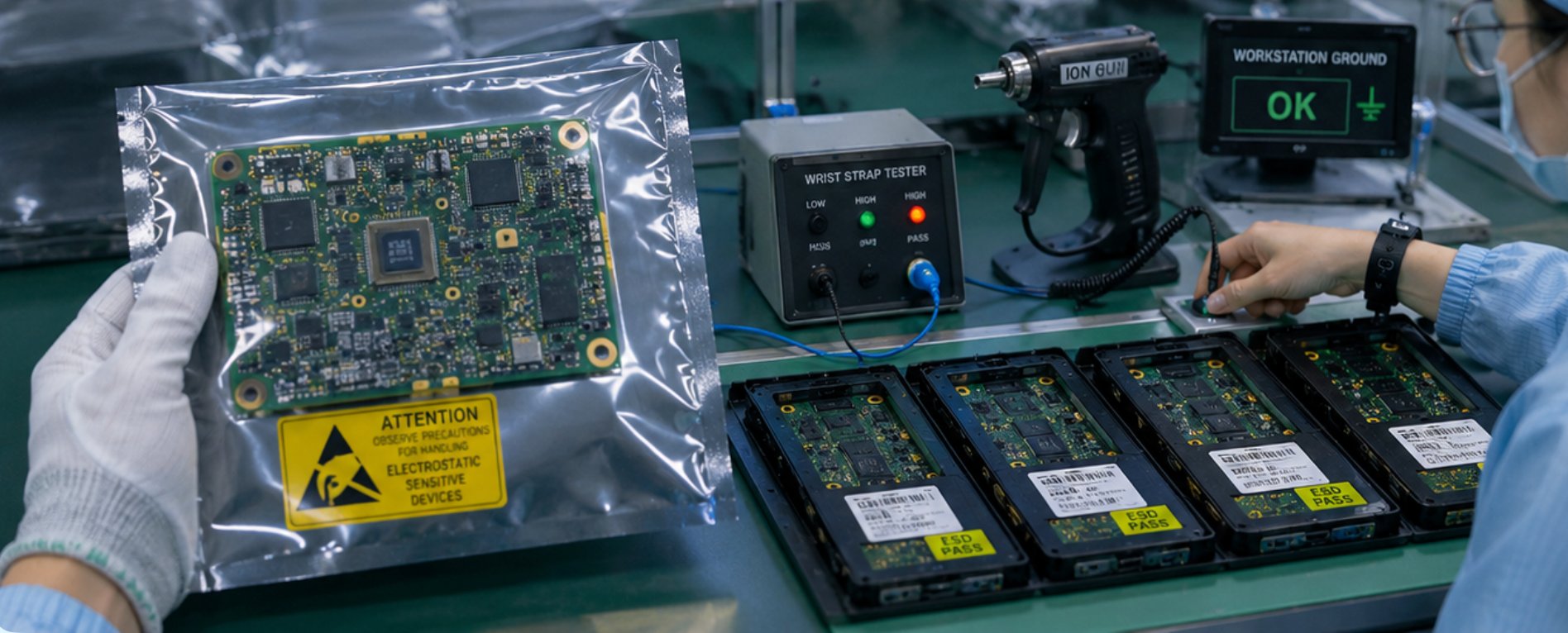
Every SMT Assembly station should have a dissipative work surface with a surface resistance of 10^6 to 10^9 ohms per square. Connect the surface to ground through a 1-megaohm resistor. Place wrist strap jacks at each position, and use constant monitors that check both the operator's connection and the mat's integrity. For soldering stations, ensure the iron tip is grounded and the voltage leakage is below 2 millivolts.
3. Material Handling and Storage
Store sensitive components in conductive bins or ESD-safe totes. Use static-shielding bags for transport between workstations. For products like handheld PDAs and industrial motherboards, we use antistatic trays during assembly to prevent charge buildup from friction between components and handling equipment.
4. Environmental Control
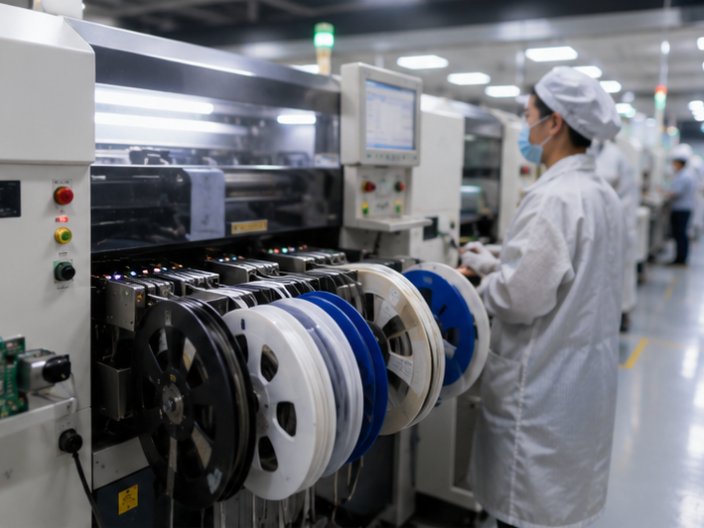
Maintain relative humidity between 40% and 60% in all EPAs. Low humidity increases static generation, while high humidity can cause corrosion. Install ionizers at critical points—especially near pick-and-place machines and manual assembly areas—to neutralize charges on insulators like component reels and plastic carriers.
Combining Products and Services for a Complete ESD-Safe Solution
One of the most effective ways to ensure ESD compliance is to integrate multiple products and services into a cohesive workflow. At NEWEI, we frequently combine industrial motherboards and rugged tablets with our SMT Assembly Services and Custom Industrial PC PCBA ODM to deliver end-to-end ESD-safe manufacturing.
For example, an industrial motherboard destined for use in a factory automation system requires careful handling throughout its production. The bare PCB is manufactured in an ESD-controlled environment, then transferred to our SMT line where all components—from passive resistors to high-value FPGAs—are placed and soldered under continuous ESD monitoring. After assembly, the board undergoes three-proofing paint application, which adds an extra layer of protection against moisture and contaminants. The final product is then tested in an ESD-safe chamber before being packed in antistatic packaging.
Similarly, rugged tablets designed for field use in logistics or military applications benefit from the same integrated approach. Their touchscreens, batteries, and mainboards are all handled in EPAs, and we use specialized fixtures during assembly to prevent movement-induced static charges. The combination of Custom PCB Assembly Services with dedicated ESD protocols ensures that even the most sensitive components—like the capacitive touch controller ICs—remain undamaged.
This product-service synergy is what sets NEWEI apart. By controlling the entire manufacturing chain in one facility, we eliminate the handoff risks that often introduce ESD damage. Every board goes through our SMT line with full SPI inspection before moving to functional testing, and we track ESD events in real time using a central monitoring system.
Real-World Applications Across Industries
ESD control is not a one-size-fits-all solution. Different products and environments require tailored approaches. Here are some scenarios where our ESD-safe manufacturing makes a difference:
Factory Automation
Industrial motherboards and control systems used in automated production lines must withstand harsh electrical environments. We deploy reinforced ESD protection during assembly, including shielded enclosures and transient voltage suppression on I/O ports. Our clients report significantly lower failure rates in their PLC and HMI systems after switching to our ESD-controlled PCBA process.
Logistics and Warehousing
Rugged tablets and handheld PDAs used for inventory management are exposed to constant handling and charging. We ensure that the battery contacts, connectors, and touchscreen controllers are assembled with ESD-safe procedures, reducing static-related touch failures. One major logistics provider saw a 40% drop in field repairs after adopting our assembly service for their handheld terminals.
Medical Devices
Portable medical equipment like Bluetooth thermometers and patient monitors require ultra-reliable performance. ESD damage can cause erratic readings or complete device failure. Our PCB Assembly (PCBA) services for medical clients include additional ESD testing at the board level, with every unit undergoing a 15-minute discharge test per IEC 61000-4-2.
Consumer Electronics
Bluetooth speakers and handheld game consoles are mass-produced in high volumes, where even a 0.1% ESD-related defect rate translates to thousands of returns. We use automated ESD monitoring on every SMT line, with real-time alerts that stop production if any workstation exceeds safe thresholds. This proactive approach keeps yields above 99.9% for our consumer electronics clients.
Automotive Electronics
Automotive-grade PCBs for infotainment, ADAS, and power management systems must meet the strictest ESD standards (AEC-Q100). We combine our automotive electronics expertise with dedicated ESD protocols, including component-level ESD classification and special handling for moisture-sensitive devices. The result is a product that survives the automotive assembly line and years of on-road vibration and temperature cycling.
Making ESD Control a Competitive Advantage
Investing in ESD control is not just about avoiding failures—it's about building trust with your customers. When you can demonstrate that every product leaving your facility has been assembled in a controlled ESD environment, you command higher prices and earn repeat business. At NEWEI, we offer free consultation and quotation for custom PCB assembly projects, from prototype to mass production, all under ISO-certified manufacturing with worldwide shipping.
If you're designing products that use sensitive components—whether it's an industrial motherboard, a rugged tablet, or a handheld PDA—don't leave ESD control to chance. The upfront investment in proper infrastructure pays for itself many times over in reduced failures and happier customers. Learn more about our manufacturing capabilities and how we integrate ESD protection into every step of your project.
Ready to deploy a production line that's truly ESD-safe? Contact us today for a consultation. Our dedicated project manager will work with you to design a manufacturing process that meets your specific requirements, ensuring that your products perform reliably from day one.
Tags: ESD control /ESD safe manufacturing /
Prev: Why Your Industrial PC and Rugged Tablet Prototypes Fail Without Proper PCB Assembly Maintenance
Next: Why Incoming Quality Control Is the Real Game-Changer in Custom PCB Assembly