
Why Quality Control Testing in PCB Assembly Is the Difference Between a Working Prototype and a Field Failure
Why Quality Control Testing in PCB Assembly Is the Difference Between a Working Prototype and a Field Failure
Why Quality Control Testing in PCB Assembly Is the Difference Between a Working Prototype and a Field Failure
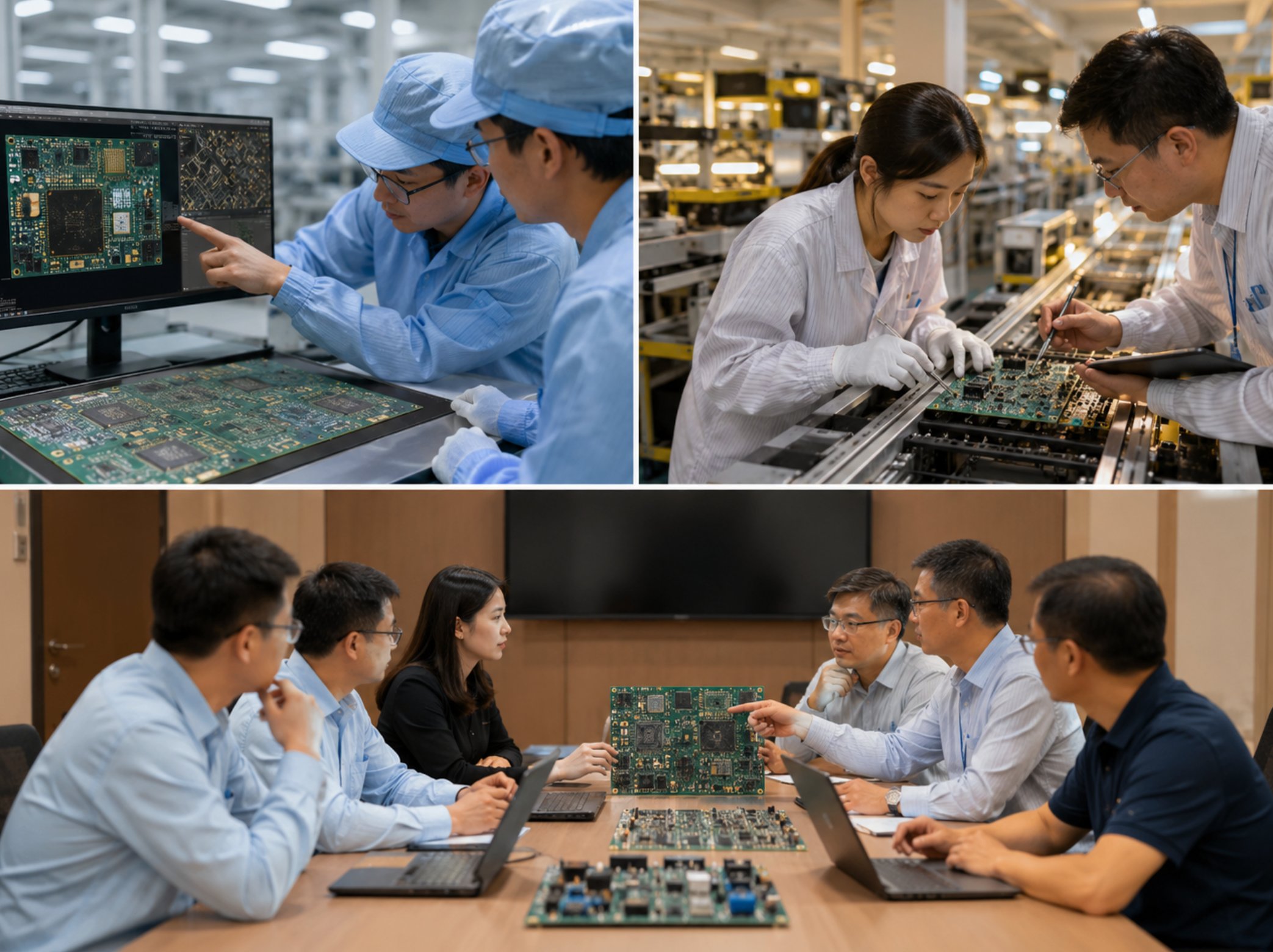
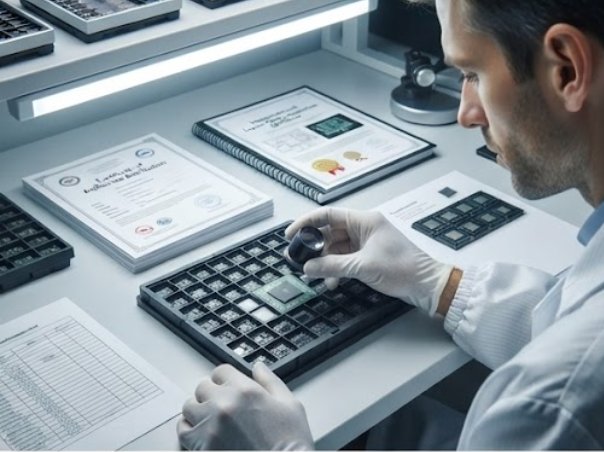
Over the years, I've watched the same scenario unfold far too often across electronics manufacturing lines. A design simflawlessly, the first batch of prototypes lights up on the bench, and then when a full production run of 10,000 units hits distribution, the returns start trickling in. The root cause almost always traces back to a single, overlooked step in the production chain: rigorous quality control testing. At NEWEI (Shenzhen Newei Industrial), we treat PCB assembly as a closed-loop process where every single board must pass through a gauntlet of inspections before it ships. This isn't just about catching defects; it's about engineering predictability into your entire supply chain. Our dedicated quality inspection solutions form the backbone of that reliability, ensuring that whether you are building a rugged tablet for a warehouse or a medical sensor for a clinic, the first unit out of the box performs exactly as the last one did.
My View: The real cost of poor quality isn't just the scrapped components—it's the lost trust and the delayed time-to-market. I've seen clients burn months of engineering time chasing intermittent failures that a proper ICT/FCT sequence would have caught in minutes. That's why I believe any contract manufacturer claiming high reliability must be transparent about their test coverage, from AOI through burn-in. At NEWEI, we don't just test because the spec requires it; we test because it's the only way to guarantee that your product works in the real world.
1. The First Line of Defense: AOI and X-Ray Inspection in SMT Assembly
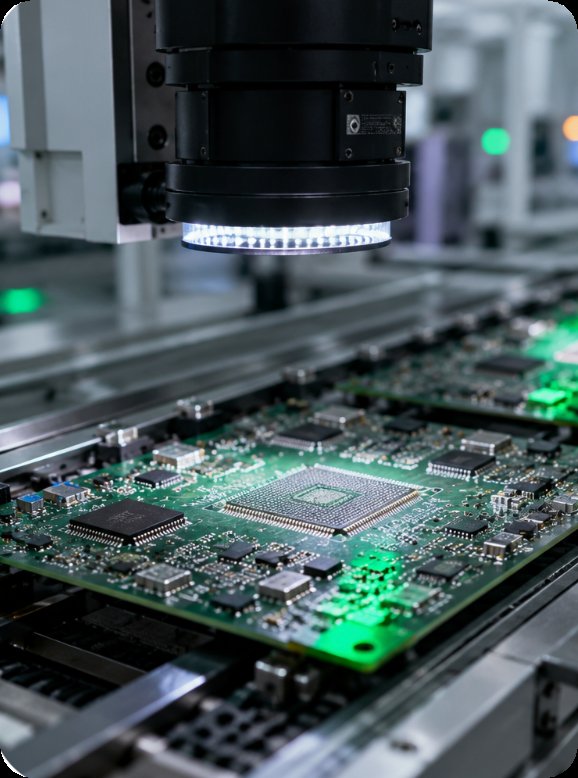
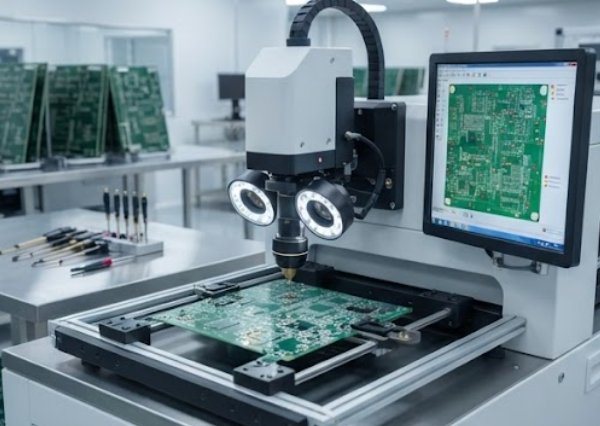
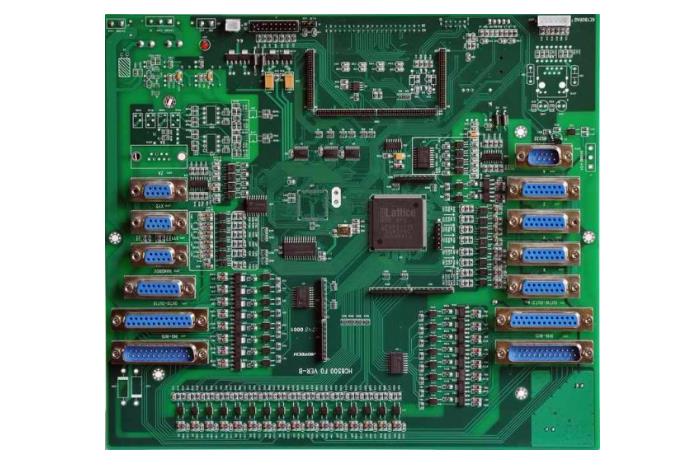
The moment a PCB enters our SMT assembly line, the quality control clock starts ticking. Our first automated checkpoint is the Automated Optical Inspection (AOI) system, which scans every solder joint immediately after the reflow oven. We're looking for tombstoning, insufficient solder, bridges, and component shift—defects that are invisible to the naked eye but can cause intermittent failures months later. For complex boards like the industrial motherboards we build for automation clients, AOI alone isn't enough. That's where X-Ray inspection comes in, particularly for BGA (Ball Grid Array) packages where the solder connections are hidden beneath the chip. Our X-Ray systems can detect voids, cracks, and insufficient solder ball wetting, which is critical for high-reliability applications. Every board that passes these optical and radiographic checks moves forward with a digital record, creating a traceable quality history that supports our SMT Assembly process.
2. ICT and FCT: Where Functional Testing Validates Real-World Performance
Optical inspection tells us the solder joints are present; functional testing tells us the circuit actually works. Our In-Circuit Test (ICT) fixtures probe every net on the board, checking for shorts, opens, and correct component values. This step is particularly aggressive for high-density designs like the handheld PDA terminals we assemble for logistics companies, where a single missing resistor can disable the entire barcode scanning circuit. After ICT, every board goes through Functional Circuit Test (FCT), where we power up the board and run a firmware sequence that simulates its end-use environment. For a Bluetooth thermometer project, that meant placing the board in a temperature chamber and verifying the sensor accuracy across -20°C to +85°C. The FCT fixture is custom-built for each product, and our engineers spend significant time developing test vectors that maximize coverage without slowing down throughput. This combination of ICT and FCT gives our clients confidence that their PCB Fabrication investment is protected.
3. How We Combine Product Assembly with PCBA Protection for Harsh Environments
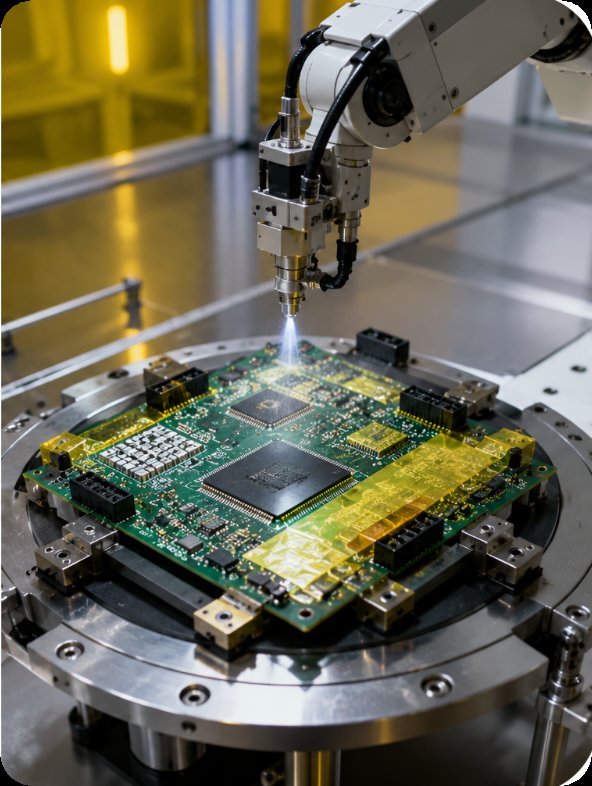
One of the most common oversights in electronics manufacturing is assuming that a board that passes electrical test is ready for any environment. For clients building rugged tablets for field service or automotive electronics for under-hood applications, we always recommend adding a conformal coating process after functional testing. Our PCBA three-proofing paint service applies a thin protective layer that resists moisture, dust, and chemical corrosion. This is not a one-size-fits-all step: we select between acrylic, silicone, and polyurethane coatings based on the product's thermal cycling requirements. For example, a smart home PCB that lives in a kitchen might only need silicone coating, while an industrial PC PCBA that controls a CNC machine needs a thicker, abrasion-resistant polyurethane layer. By integrating product assembly with conformal coating and final testing, we create a single point of responsibility for the board's entire lifecycle.
4. Aging Test and Burn-In: The Final Reliability Gate Before Shipping
A board can pass every electrical test and still fail in the field due to infant mortality. That's why we run aging tests (also called burn-in) on all critical assemblies. During this phase, we power the boards continuously for 24-72 hours inside a temperature-controlled chamber set to the product's maximum operating temperature. We monitor current draw, voltage rails, and communication interfaces in real time. If a weak component is going to fail, it will almost always fail during this burn-in period. For a recent custom PC build destined for a data logging application, we discovered a batch of capacitors that had slightly higher than spec leakage current—something that would have passed a standard test but would have caused drift after six months of continuous use. Replacing those capacitors before shipment saved the client from a costly field recall. This is the kind of deep quality control that separates a simple assembler from a true EMS manufacturing partner.
5. Application Scenarios Where Our Quality Testing Protocols Make the Biggest Impact
The value of a robust quality control system becomes most apparent when you look at the specific environments our clients operate in. Here are a few real-world examples that illustrate why test coverage matters:
Warehouse Logistics: A handheld PDA terminal that scans barcodes in a dusty, high-vibration forklift environment. Our X-Ray inspection ensures the BGA memory chips on the industrial motherboard won't crack under vibration, and the conformal coating protects against dust ingress.
Medical Monitoring: A Bluetooth thermometer that must maintain ±0.1°C accuracy over a 10-year battery life. Our FCT includes a precision temperature calibration step, and the aging test verifies that the reference voltage doesn't drift over 48 hours of continuous operation.
Retail Point-of-Sale: A custom PC with a touchscreen interface used in a busy checkout environment. Our ICT checks every power rail and capacitor, and the full functional test runs the operating system boot sequence to ensure the SSD and RAM are properly detected.
Automotive Infotainment: A rugged tablet mounted in a service vehicle that experiences wide temperature swings and direct sunlight. We combine PCBA three-proofing with a 72-hour burn-in cycle at 85°C to weed out any components that degrade under thermal stress.
Industrial Automation: An industrial PC PCBA that controls a robotic arm in a factory. Every board goes through both AOI and X-Ray, followed by a full FCT that verifies all I/O ports, including the Ethernet and CAN bus interfaces, are functioning under load.
6. The Economics of Quality: Why It Costs Less to Test Thoroughly the First Time
I've had clients push back on the cost of a full ICT/FCT sequence, especially for prototype runs. But here's the reality: finding a defect at the AOI stage costs pennies. Finding that same defect after a board has been assembled into a final product, shipped overseas, and installed in the field can cost hundreds of dollars in labor, shipping, and customer downtime. Our electronic component procurement team sources only from qualified suppliers, and our quality team maintains a closed-loop corrective action system. If a defect pattern emerges—say, a specific capacitor brand showing higher failure rates—we feed that data back into the procurement process to block that part from future builds. This continuous improvement cycle is built into our ISO-certified manufacturing system, and it's why we can offer a 99.99% defect-free rate on most projects. When you work with NEWEI, you are not just paying for assembly; you are investing in a system that protects your brand reputation.
7. From Prototype to Mass Production: Scaling Quality Control Without Sacrificing Speed
One of the biggest challenges in electronics manufacturing is maintaining the same level of quality control when you move from a 50-unit prototype to a 50,000-unit production run. Our answer is a standardized test platform that scales linearly. For SMT assembly of a new Bluetooth speaker design, we start by developing the FCT fixture during the prototype phase. That same fixture is then duplicated for the production line, so the test coverage is identical from unit one to unit ten thousand. We also use statistical process control (SPC) to monitor test yields in real time. If the yield on a particular PCB Manufacturing run drops by 1%, our engineers get an alert and can investigate before the defect rate escalates. This proactive approach means we can deliver high-volume orders with the same precision as a low-volume prototype run. Learn more about our manufacturing capabilities and see how we manage quality at scale.
Ready to Build Electronics That Work the First Time, Every Time?
Quality control testing isn't an optional add-on in custom PCB assembly—it's the foundation of a reliable product. At NEWEI, we combine advanced inspection equipment, rigorous functional testing, and a culture of continuous improvement to deliver boards that perform exactly as designed. Whether you need a rugged tablet for industrial use, a Bluetooth thermometer for medical monitoring, or a custom PC for a specialized application, our team is ready to build it to the highest standards. Contact NEWEI today for a free consultation and quotation. We'll work with you to define the right test coverage for your project and ensure your product ships with confidence.
Tags: PCBA /ICT /FCT /PCB Fabrication /quality control /AOI /
Prev: Why Incoming Quality Control Is the Real Game-Changer in Custom PCB Assembly
Next: Why Most PCB Assembly Testing Fails to Deliver ROI – And How NEWEI's System Changes That