
DIP Assembly and Automotive Electronics: The Extra Trip a New Capability Adds
A production line never gets shorter simply because a factory adds a new capability. Boards keep every pass they already had, and each new specification inserts an extra stop somewhere in the middle. Procurement teams often refer to this as a line upgrade—a single word that obscures a physical reality on the shop floor. A panel that previously went straight from SMT reflow to electrical testing now passes through reflow, manual component insertion, wave soldering, flux washing, and a second optical inspection. Nothing was removed from the traveler. That extra pass repeats on the next batch and every reorder afterward, which is why quoted lead times expand even when your order volume stays identical.
This routing reality hits hardest on mixed-technology builds, where one manufacturing floor simultaneously handles heavy through-hole industrial hardware, automotive-grade control modules, and smart consumer electronics destined for humid environments. Each product family gained distinct engineering requirements over the past decade, and each requirement landed at a different bottleneck along the assembly line. Evaluating a contract manufacturer is not about asking which new machine replaced an older one. It is about pinpointing exactly where the added stop sits, which operator owns the queue, and which legacy inspection refused to disappear. Answer those three questions, and a supplier's technical capability becomes verifiable on a one-page routing sheet rather than a bullet point in a sales deck.
The Board Still Goes Through Thermal Soldering Twice
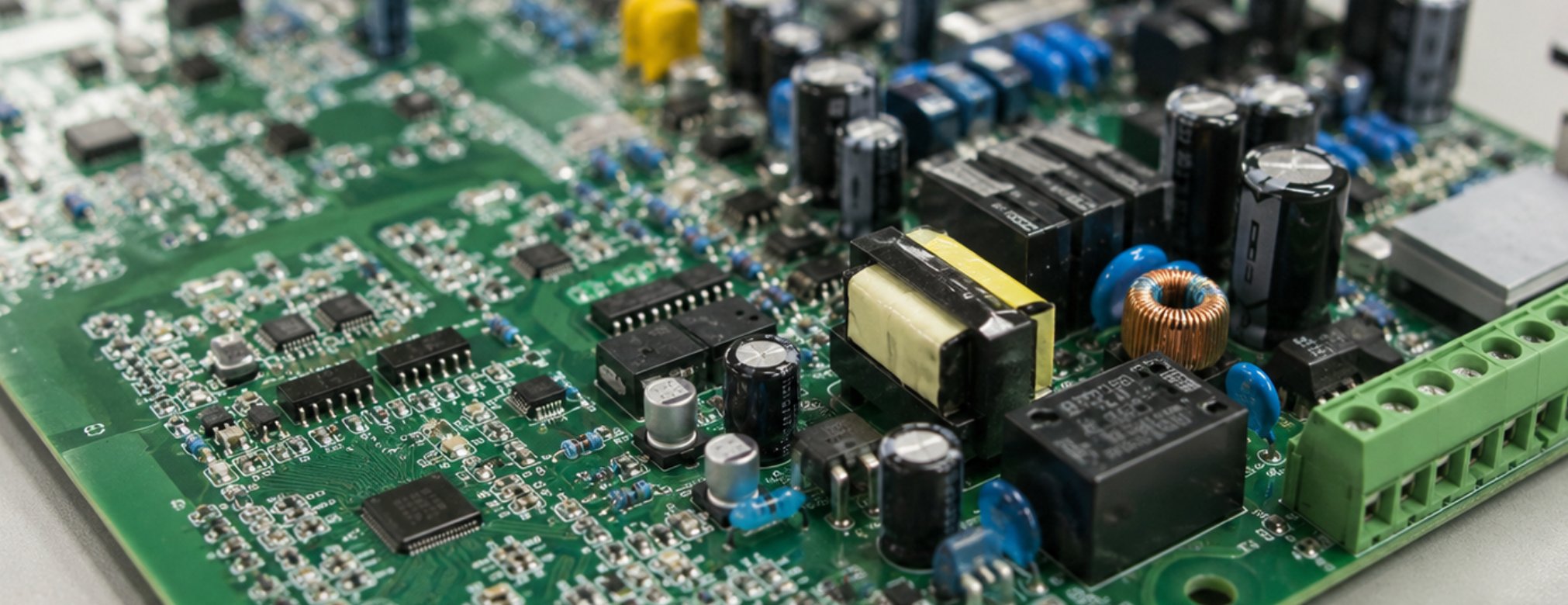
Through-hole assembly begins where surface-mount placement ends. High-current connectors, power relays, radial electrolytic capacitors, and odd-form mechanical components still require an operator or radial/axial inserter to seat leads through plated holes, followed by molten solder wave delivery from the underside. On a mixed-technology PCB, the panel has already endured a full convection reflow thermal profile before it ever reaches the insertion conveyor. The subsequent wave soldering pass imposes a second thermal excursion—not a substitute for the first—complete with its own flux chemistry, aqueous wash cycle, and post-solder joint inspection. It remains the clearest example of an added manufacturing pass that never eliminated an earlier thermal stage.
The published technical breakdown of DIP Through Hole Assembly & Wave Soldering illustrates how these stages stack on the floor. The facility specification lists four dedicated plugin lines, four wave soldering systems, 56 rear-welding hand-soldering stations, and four inline washing machines, backed by post-insertion Automated Optical Inspection (AOI) for wrong-part, missing-lead, and reverse-polarity errors. It also details structured WIP buffer zones tagged explicitly for boards awaiting insertion, awaiting rework maintenance, awaiting IPQC inspection, quarantined as defective, and awaiting final QA release. Those physical status tags form a live routing map: every status label marks a queue where panels pause, and every added capability inserts another staging point ahead of pack-out.
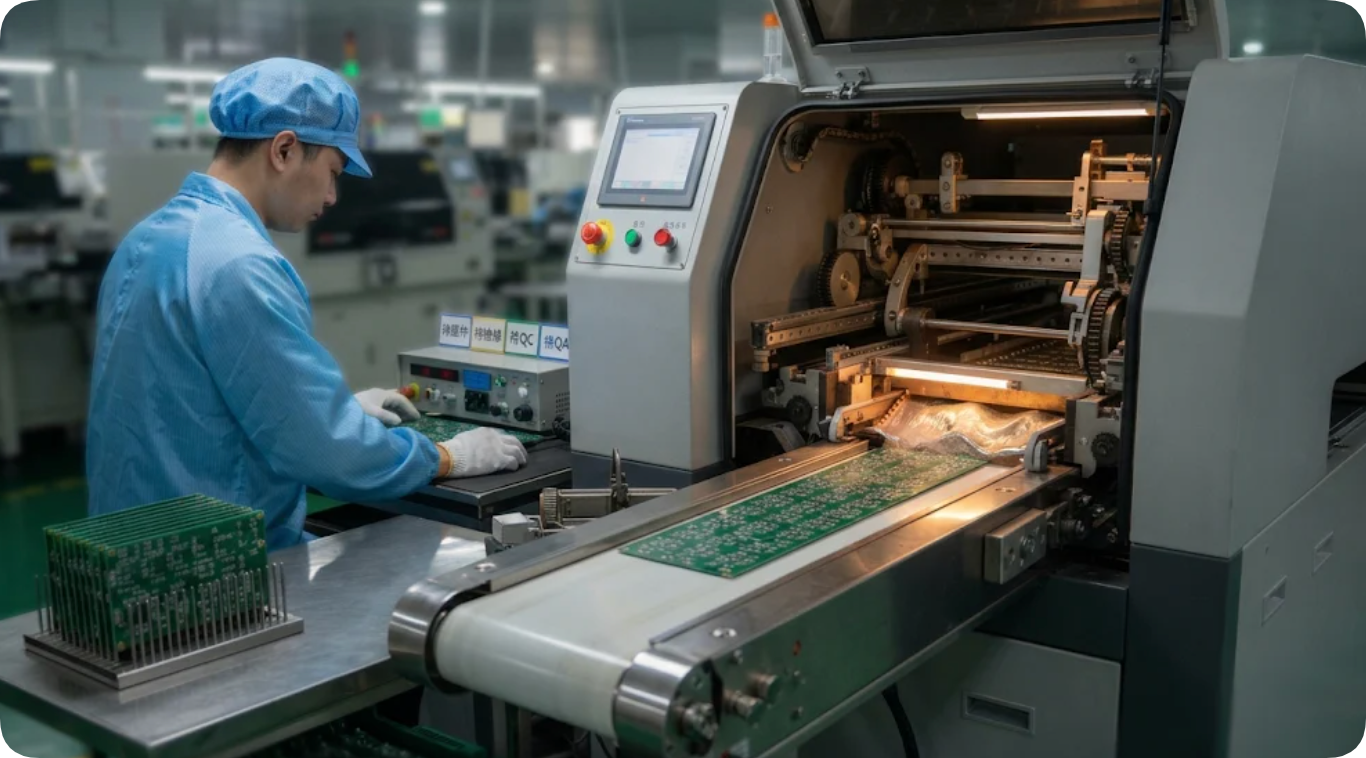
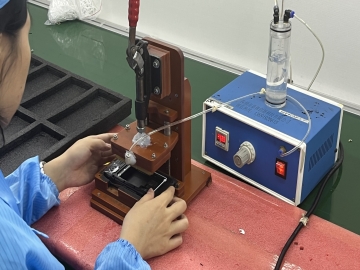
Automation entered this workflow as an addition rather than a clean replacement. Automatic slitting equipment, fluid dispensing systems, and precision spot-welding machines operate alongside those 56 manual rear-welding stations. The hand-soldering benches did not vanish when automated cells arrived; instead, manual touch-up now sits bracketed between two automated optical gates. A buyer who audits only an equipment roster misses that nuance and is caught off guard when labor-hours for hand-soldering remain on the cost breakdown.
Environmental Chamber Runs Arrive Before Legacy Final Test Leaves
Automotive electronics programs insert their extra pass at the back end of the line. Once a board is populated, soldered, and verified via In-Circuit Test (ICT) or Functional Circuit Test (FCT), automotive customers require documented proof that the assembly will survive years of thermal cycling, cold-crank voltage drops, and chassis vibration. That mandate inserts an environmental chamber burn-in or extended stress-screening loop directly between electrical testing and final packaging—while leaving the original end-of-line electrical test intact ahead of it. The Automotive Grade Electronics PCBA Manufacturing page highlights board categories including intelligent vehicle lighting, high-output car chargers, in-dash MP3 modules, and automotive body control boards, clarifying the hardware form factors built on these lines.
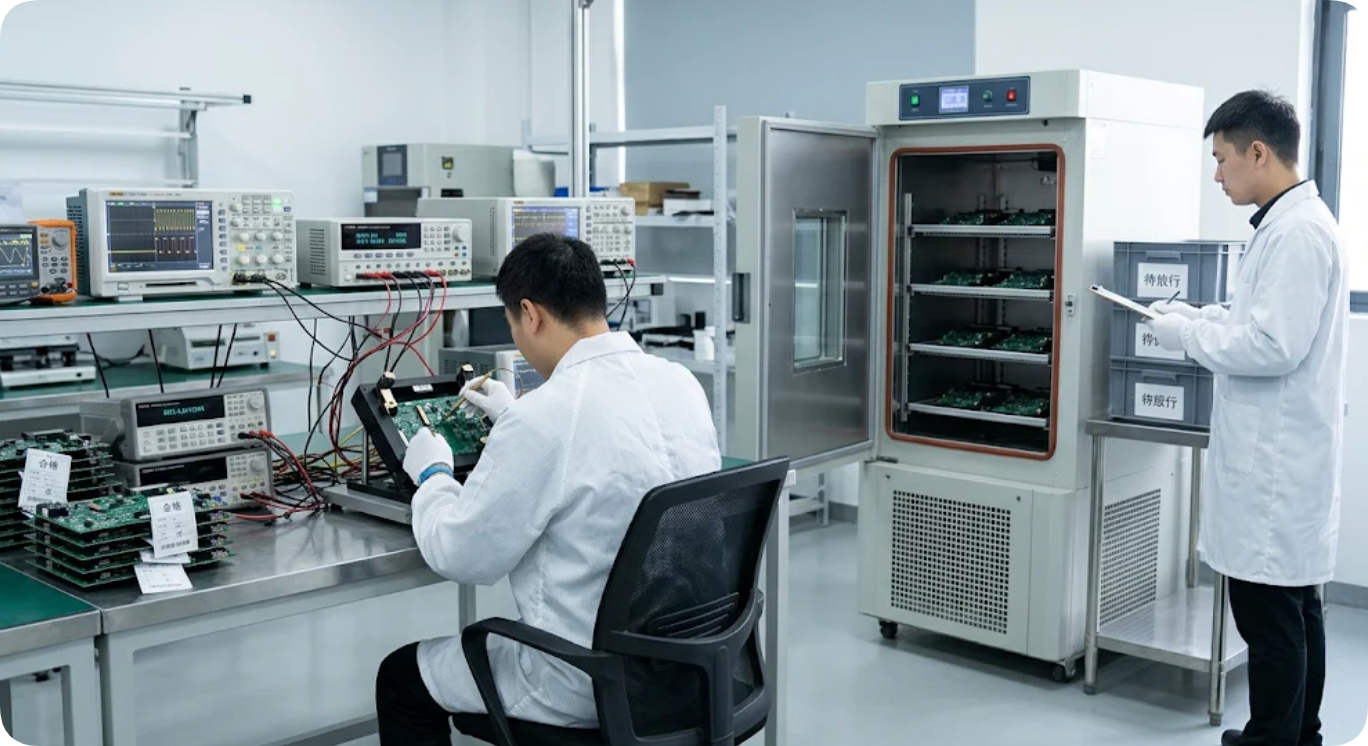
Because the public overview does not list specific chamber counts, soak durations, or temperature ramp rates, we do not speculate on cycle numbers here. What remains clear from a production-planning standpoint is the structural bottleneck: a reliability verification stage scheduled after electrical test creates an entirely separate WIP queue with dedicated racking fixtures, batch loading rules, and quarantine shelves. A production lot that has already passed 100% electrical functional testing still sits in that queue. When an OEM widens its thermal shock specification, the chamber hold lengthens without shortening the electrical test upstream—meaning capacity models based purely on test-fixture cycle times consistently underestimate true floor-space and lead-time consumption.
Conformal Coating Adds Masking and De-Masking Passes It Never Eliminated
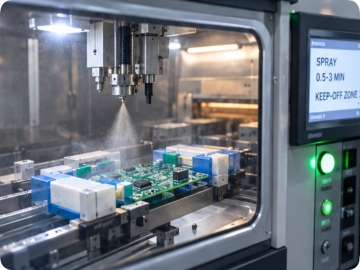
Consumer appliances built for bathrooms, kitchens, and high-humidity living spaces added environmental sealing rather than extreme thermal endurance. Applying a conformal coating—commonly referred to as three-proofing paint against moisture, dust, and corrosion—protects exposed copper traces and fine-pitch IC leads from condensation. However, insulating resin cannot be allowed to wick into board-to-wire connectors, pogo-pin test pads, acoustic sensor ports, or firmware programming headers. Operators must mask those keep-out zones prior to spraying and strip the masking boots or tape afterward, sandwiching one automated coating pass between two manual handling steps. The visual check that once closed out the assembly line is now followed by masking, selective spray coating, thermal or UV curing, de-masking, and a second visual inspection of the exact same connectors. The Smart Home Electronics PCBA OEM ODM Supplier catalog showcases electric toothbrush controllers, portable oxygen generator boards, bladeless fan drivers, and smart massage eyewear PCBs as representative builds.
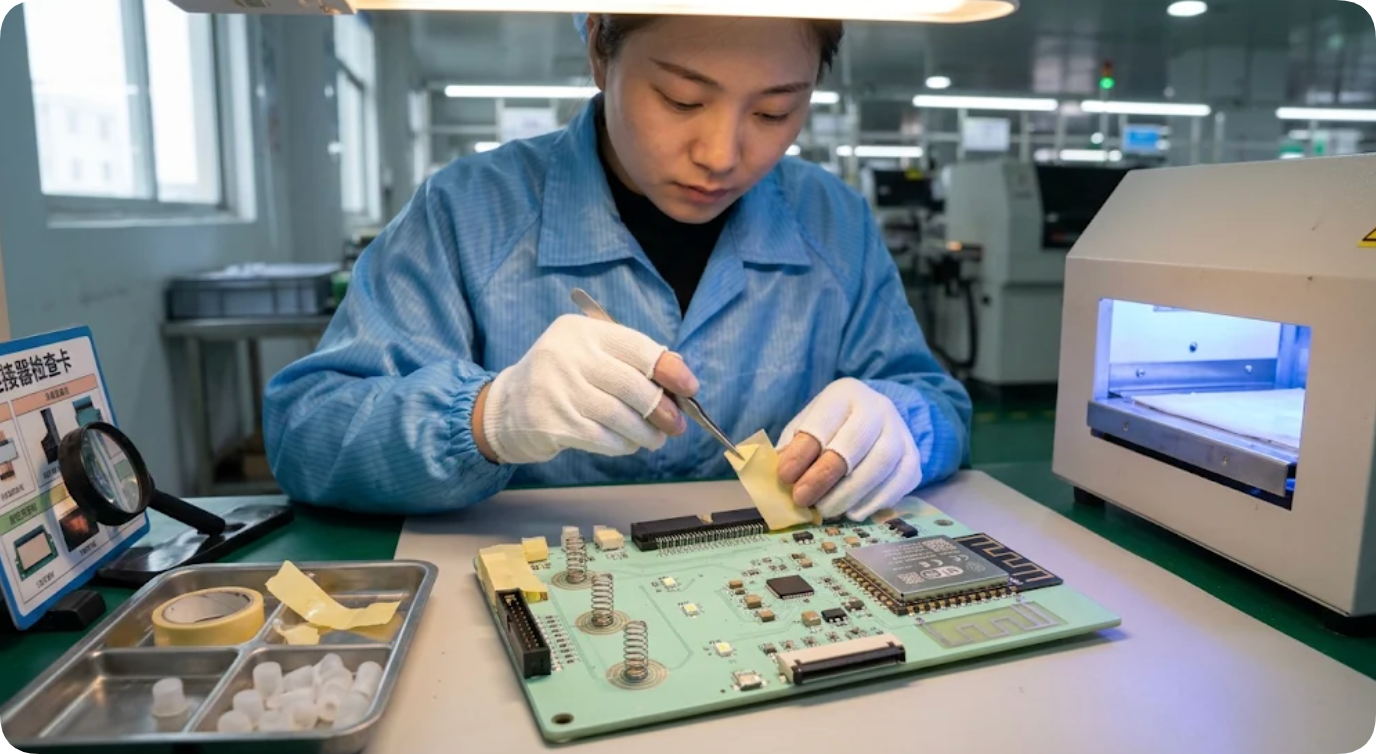
As with the automotive overview, the product showcase stops at application examples rather than publishing dry-film thickness tolerances, UV cure dwell times, or peelable mask chemistries. Buyers specifying moisture protection should review the dedicated PCBA Conformal Coating & Three-Proofing Services capability page and lock resin chemistry and keep-out drawings directly into the engineering control file. For production routing, the takeaway is unambiguous: adding a protective finish inserts an extra loop into the traveler while keeping pre-coat and post-coat connector inspections fully intact.
Three Product Families, Three Distinct Extra Passes
Comparing all three manufacturing lines side by side reveals the same operational rule: every capability upgrade occupies a specific slot on the traveler, and none cancels a legacy check. The matrix below maps each added process pass to the older step that stayed in place and the role accountable for clearing the queue.
| Added Capability Requested | Where the Extra Pass Lands | Legacy Step That Stays Intact | Process Owner on the Floor |
|---|---|---|---|
| Post-Insertion Optical Check (Plugin AOI) | After SMT reflow & lead insertion; prior to wave solder & QA release | Manual placement of odd-form parts & 56 rear-welding stations | DIP line supervisor managing the AQL sampling plan |
| Extended Reliability & Chamber Verification | Between end-of-line electrical test (ICT/FCT) and final pack-out | 100% electrical functional testing & IPQC/QA lot release logs | Assigned quality engineer signing off the reliability traveler |
| Conformal Coating for Humid Environments | After electrical verification; prior to anti-static ESD bagging | Pre-coat and post-demask visual connector & header inspection | Process engineer approving keep-out masking & cure logs |
The fourth column is the one most procurement audits overlook. Every added pass arrives with a human owner who requires shift headcount, dedicated bench space, custom fixtures, and labeled WIP racks for waiting panels. A supplier listing machinery without naming process ownership has described an asset list, not a repeatable production route. Requesting the traveler with named sign-offs beside every stop turns a sales claim into an auditable commitment on a single sheet.
Documentation Boundaries Across Published Capability Pages
Public technical pages vary in granularity, and recognizing where published specifications stop helps engineering buyers ask sharper RFQ questions. While the DIP assembly page details exact machine counts and quality certifications, the automotive and smart-home category pages focus on representative board applications and leave cycle-time parameters for formal engineering review.
| Specification Category | DIP Through-Hole Assembly | Automotive Electronics PCBA | Smart Home Electronics PCBA |
|---|---|---|---|
| Equipment or Board Examples Published | 4 plugin lines; 4 wave solder units; 56 rear welding stations; 4 washers | Smart lighting; car chargers; car MP3 modules; body control boards | Electric toothbrushes; oxygen generators; bladeless fans; massage glasses |
| Quality Management Systems Cited | ISO 9001:2015; ISO 13485; IATF 16949 | Not published on category page | Not published on category page |
| Cycle Time or Hold Duration Published | Not published on category page | Not published on category page | Not published on category page |
Explicitly identifying unpublished metrics is far more useful to a program manager than padded estimates. Armed with this boundary, an engineering buyer can send a targeted RFQ asking for exact chamber soak hours, coating cure windows, and total traveler stops for a specific Gerber package—getting concrete numbers rather than generic sales assurances. Different buyers experience these extra passes at different pressure points: industrial control buyers watch manual insertion queues between automated AOI gates; automotive Tier-1 suppliers track post-ICT chamber holds that govern shipment release dates; smart-home brands manage manual masking batch sizes; and multi-line EMS customers coordinate shared WIP staging shelves before issuing a PO through Turnkey EMS Electronic Manufacturing Services.
Why Legacy Inspection Gates Remain in Place
It is easy to assume that installing a newer optical or environmental test automatically retires an older check upstream. On a production floor, that almost never happens because sequential gates catch distinct failure modes and generate separate compliance records. Post-insertion AOI verifies component presence and polarity before wave soldering locks leads in place; final QA lot sampling validates finished solder fillets and cosmetic workmanship prior to pack-out. Neither record substitutes for the other. The same logic governs thermal chamber screening and post-demask connector checks: each was introduced to catch a defect class invisible to earlier test fixtures.
Consequently, a product's traveler grows longer over its commercial lifecycle. An assembly that launched with basic bare-board testing and single-pass functional verification picks up a burn-in hold when an automotive program qualifies it, and gains a selective coating loop when a damp-environment SKU launches—all while retaining its original electrical test station. Even when engineers redesign a line from scratch, active shipping programs rarely delete existing quality gates because removing an inspection step requires re-qualifying PPAP or customer audit records. Reviewing Quick Turn PCB Prototyping & Board Manufacturing provides a clear baseline of that early-stage build flow before downstream reliability and coating loops are appended.
When the Added Pass Dictates Daily Line Output
Factory throughput is frequently pitched around the placement speed of the fastest SMT chip-shooter on the floor. In reality, daily output is governed by the station with the longest WIP queue—and a newly added secondary process is almost always that bottleneck. Four wave soldering lines can easily keep pace with upstream SMT placement, yet 56 manual rear-welding benches and status-labeled WIP staging racks determine how many finished panels actually clear QA each shift. Fixed-duration environmental chamber runs and conformal coat cure ovens exert the exact same constraint on automotive and smart-home orders because they were appended after primary line balancing.
Before awarding a production contract, request a marked-up process flow diagram showing every WIP hold point, identify which station carries the longest queue at full capacity, and verify how shared staging shelves behave when two product families run concurrently. Confirming who signs off each added gate and how those logs attach to your shipment traceability package reveals true lead-time risk far more accurately than a machine brochure. For a closer look at how isolated process bottlenecks trigger localized lot defects, read Why Only Part of a Batch Fails.
The next time a contract manufacturer pitches a new technical capability as a faster workflow, ask two direct questions: which extra pass does it insert into the traveler, and which legacy step remains untouched? The complete answer fits on a single line of a routing sheet—and immediately shows you where WIP queues will build, which engineers will staff them, and how many handling cycles your boards will endure before hitting the shipping carton.
Frequently Asked Questions (FAQ)
1. Does adding automated DIP equipment eliminate manual soldering stations on a mixed-technology PCBA line?
No. Automated slitting, fluid dispensing, and spot-welding machines operate alongside manual rear-welding benches rather than replacing them. On a mixed-technology line, manual insertion and touch-up stations remain active in the routing sheet and are bracketed by automated optical inspection gates to verify odd-form component placement.
2. Where does automotive environmental chamber testing sit within the PCBA manufacturing sequence?
Environmental chamber burn-in and thermal cycling sit strictly between end-of-line electrical testing (ICT/FCT) and final pack-out. The primary electrical test stays in place ahead of the chamber run, meaning every automotive batch enters a second physical WIP queue after passing initial electrical verification.
3. Why does conformal coating require two separate visual connector inspections?
Conformal coating resin must be kept off connectors, test pads, and programming headers, which requires operators to mask those zones before spraying and strip the masking after curing. Inspectors check connector integrity before masking and perform a second inspection after de-masking to confirm zero resin seepage onto contact pins.
4. Which station actually determines daily PCBA output on a multi-process line?
Daily factory output is determined by the downstream process with the longest queue, not the fastest upstream SMT placement machine. Rear-welding hand-soldering banks, fixed-cycle environmental chambers, and conformal coating cure loops govern total daily shipments because they sit after primary line balancing.
5. What specific routing details should buyers request in an RFQ when cycle times are not published online?
Buyers must request a part-specific process traveler listing exact chamber soak durations, conformal coat cure windows, WIP staging hold points, and the named quality or process engineer responsible for signing off each added step before releasing the purchase order.
Tags: DIP assembly / smart home PCBA / automotive electronics / extra process step /
Prev: Product Assembly and DIP Assembly: How Far a Late Change Travels
Next: No more...