
PCBA Three-Proofing Paint and Custom Automotive Electronics: The Names a Peak-Week Roster Never Lists
A peak-week capacity sheet is a tidy document. It lists four fully automatic SMT lines, a coating machine that finishes a board in under three minutes, a sampling service that can turn a circuit board around in twenty-four hours, and the number of working days left before a shipment date. Every one of those figures is real and every one of them can be added up. What the sheet cannot list is the person who decides that an antenna has to stay bare before the spray head starts moving. Factories meet that omission on the Monday when the person is on leave and two hundred boards are already loaded on a carrier. The batch is not late because the machine ran slowly. It is late because nobody in the room was certain they were allowed to stop it.
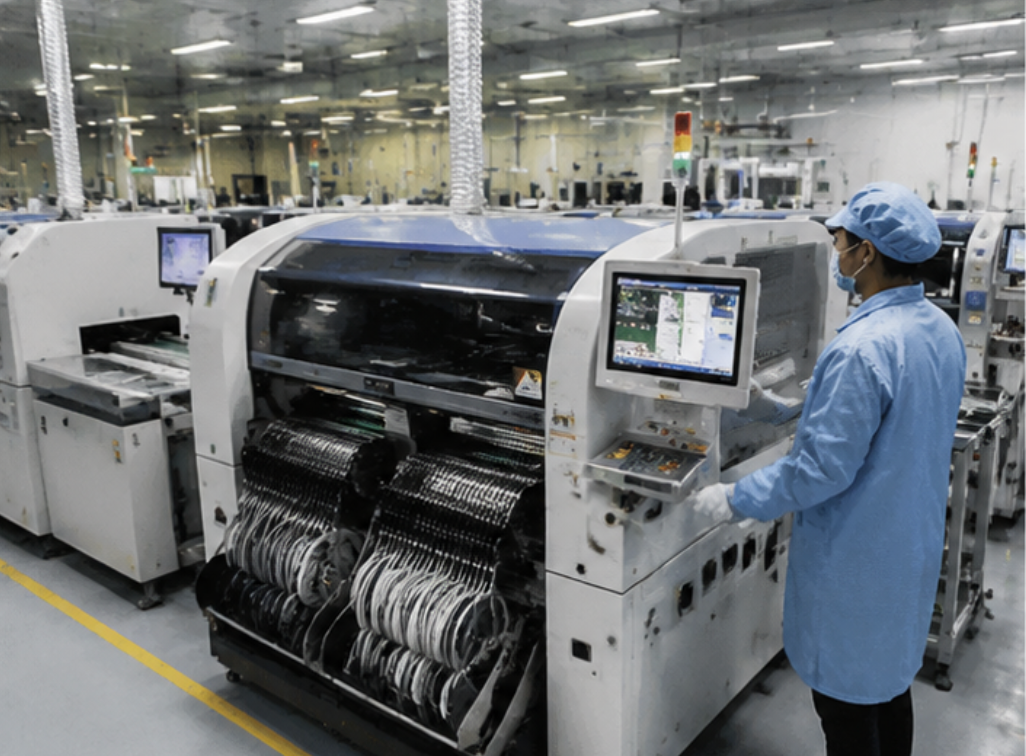
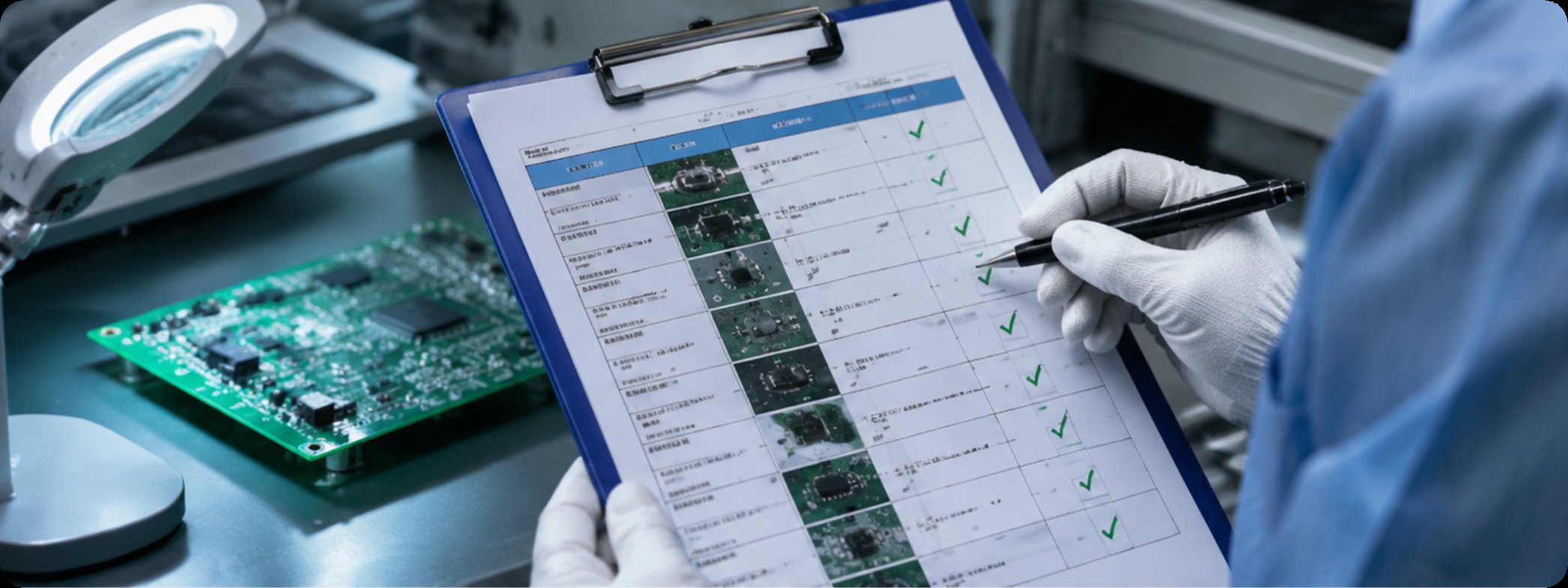
The same gap appears on the assembly floor, where a station can be documented down to the torque setting on an electric screwdriver and still depend on one operator who knows that a particular housing needs a second look before the barcode is printed. our product assembly line is described as one person per position, with two people carrying out a full inspection, station self-inspection under SOP, online QC coverage and QA sampling before an OBA unboxing check. Those are genuine controls, and they are published. None of them tells a stand-in which of the judgements below belongs to them, which belongs to a named colleague, and which one has to wait for somebody to come back from leave.
What the Roster Counts Instead of People
Capacity is measured in things that repeat. The coating page gives an average spraying time of 0.5-3 minutes per board; the SMT page quotes a three-to-five-day delivery window when materials are in stock, excluding public holidays; the PCB page advertises a twenty-four-hour fast sampling service. Put those three numbers next to a shipment date and a planner can produce a credible schedule. The schedule will survive a machine fault, because a second line or a second shift can absorb it. The schedule will not survive the absence of the one engineer who sets the machine adjustment programme for a board with an unusual connector layout, because no column records that dependency.
This is why a factory can be busy and still be fragile. A roster answers "how many hours are available"; it does not answer "how many decisions are single-threaded". The difference matters most in the weeks when every customer wants the same slot, because that is exactly when a stand-in is asked to cover a station they have watched but never run. The useful planning unit is not the operator's name. It is the judgement that sits behind the name, written down far enough in advance that a second pair of hands can execute it without guessing.
Who May Stop a Coating Run Without Asking
On our conformal coating service, the published capability is unusually concrete: one dedicated spraying line with two spraying machines, UV detection and baking in a fully automatic flow, double-sided spraying, and selective avoidance of connectors, antennas, WiFi modules and heat sinks where the customer requires it. Professional technical engineers set the machine adjustment programme so the film lands evenly. Every clause in that sentence describes either equipment or a decision made before the run begins. The masking pattern is the decision; the machine only repeats it.
That makes the masking judgement the first single point in a busy week. If a WiFi module reaches the spray head uncovered, the board does not simply need a wipe; the lot has to be held, the programme re-checked and the UV inspection repeated before the next carrier goes through. A stand-in who has only been told to "watch the masks" will usually wave the board on, because stopping a line feels like a bigger decision than letting one board pass. The fix is a narrow written trigger: when a component named on the keep-out photographs appears without its mask, the operator halts the run and calls the named engineer. Everything else waits for the shift lead. The trigger removes the social cost of stopping, which is the part a roster never budgets for.
The Single Name Beside First-Article Release
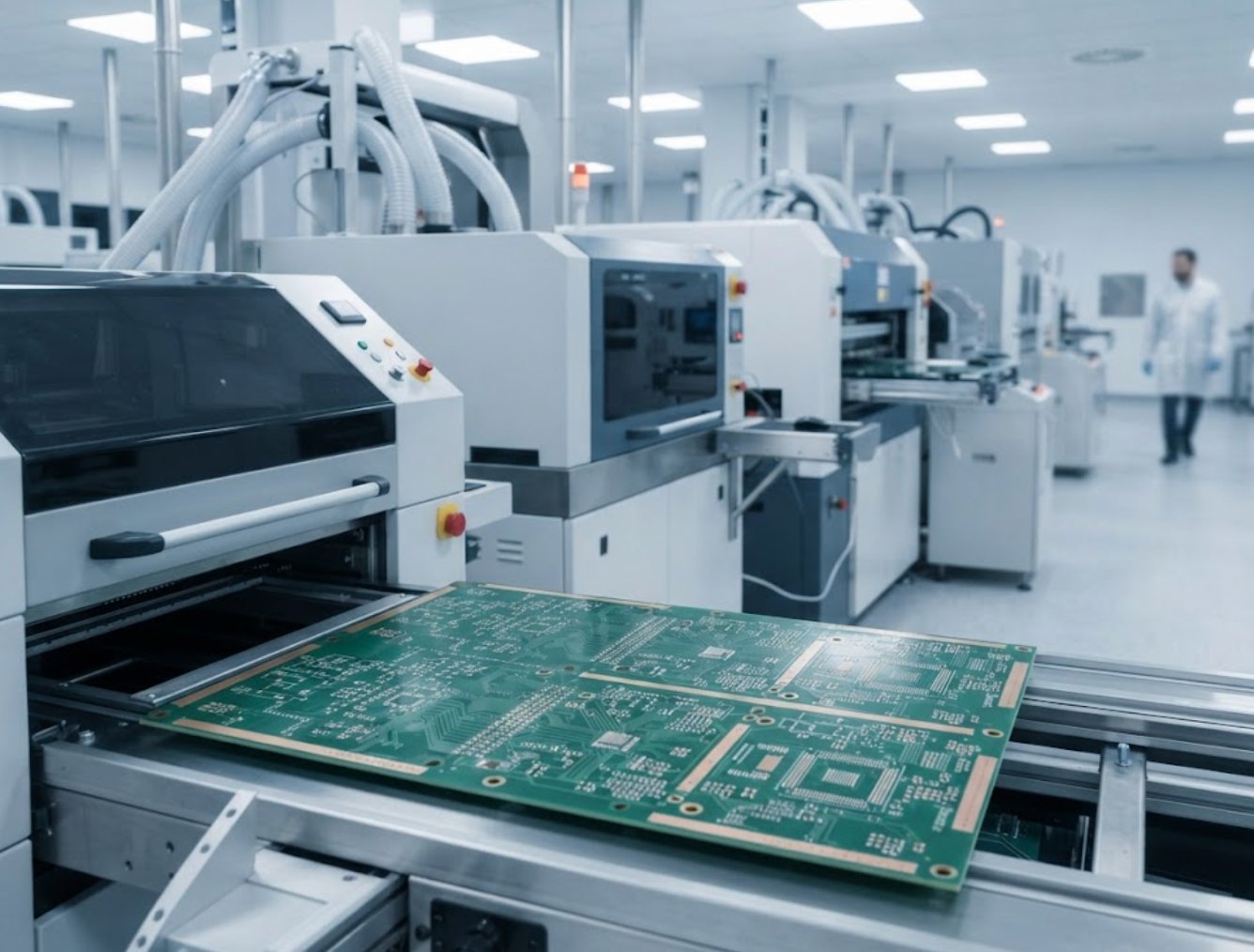
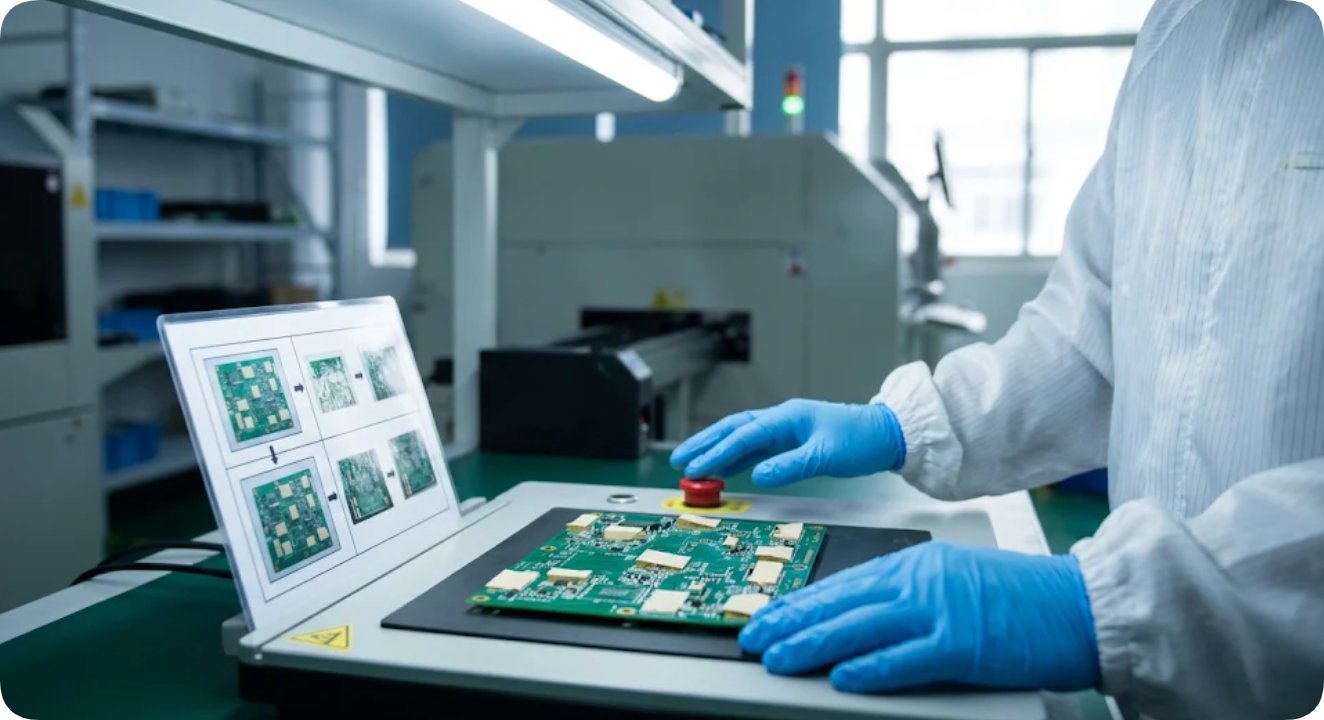
The second judgement sits at first-article release on our PCB assembly and manufacturing service. The page lists 1-36 layer multilayer boards, HDI, blind and buried vias, BGA, gold fingers, resin-plugged holes, laser drilling and 3 mil line width and spacing, with quotations based on the customer's BOM and GERBER documents. Those are process capabilities, not a release rule. Somewhere between the printed paste and the first board coming off the line, a person compares what was built against the file that was current when the order was accepted, and says that the rest of the lot may follow.
A stand-in can be handed the released board and still be unable to do that job. The board proves that something was built correctly; it does not prove that it was built to the right revision. What has to travel with the sample is the dated file state and the name of the person who accepted it. In practice we keep three objects together: the released first-article board, the revision printed on its label, and the controlled file that was live at release. If the third is missing, the second is only a sticker. This is also where a footprint question after release goes back to the engineer rather than being settled at the bench, because a quiet "that looks fine" at 6 p.m. is the cheapest way to turn one board into two hundred.

Why the Customer File Does Not Travel to a Stand-In
The third case is the awkward one, because our automotive electronics range is presented on a product-list page: smart lighting boards, car charger boards, car MP3 boards and automobile PCBA boards, with navigation and contact details around them. It publishes no layer count, no process window, no staffing figure and no release procedure. We do not fill those blanks from the other two services. A reader comparing the three columns of this article should see an empty column here and understand that the emptiness is deliberate, not an oversight in the writing.
What that page does establish is that these are customer-specific builds, and customer-specific builds live or die by the controlled file and its revision state. A stand-in may be perfectly capable of loading the right panel and running the right programme; they are not free to reinterpret which revision applies to today's batch. The rule we hold to is dull and effective: the dated file index and the approver's name sit together on the traveller, and if either is missing the lot stays on the shelf. A verbal "use the newer one" is not a revision. When the peak week arrives and the usual approver is on leave, that dull rule is the only thing standing between a mixed batch and a traceable one.

A Holiday Rota Is Not a Capacity Sheet
A holiday rota assigns bodies to stations. A capacity sheet assigns hours to machines. Neither document records whether the person on Tuesday can make the three decisions described above, which is why a fully staffed factory can still lose a day to a single absent engineer. our electronics manufacturing services cover the whole route from incoming inspection through to shipment, and the SMT page is specific about the people behind it: a quality team of over twenty covering IQC, IPQC and OQA, plus a team of ten electronic engineers who work on DFM and process improvement. Those teams are a real resource. They are not, on their own, a cover plan.
The distinction shows up when a shift changes mid-lot. Whoever takes over inherits a board, a traveller and a machine state, but not the reasoning that produced them. A rota that names a relief operator without naming the three judgements they are cleared to make is a document that looks complete right up to the moment it is tested. We have found it more useful to attach a short "cleared for" line to each relief name: cleared to halt a coating run on a masking mismatch; cleared to release a first article only when the dated file is present; cleared to load an automotive batch but never to choose its revision. Three lines, one per service, written before the rush rather than during it.
Three Questions Before a Decision Can Be Reused
Turning a judgement into something a stand-in can execute is mostly a matter of asking the right questions while the line is quiet. The first is "what does the operator see at the moment of the decision?" On a spraying line it is the keep-out photographs and the physical masks; at first article it is the sample board next to a dated file; on an automotive batch it is the revision line on the traveller. If the answer is a feeling or a memory, the decision has not been captured. The second is "what is the cost of getting it wrong, and who absorbs it?" A missed mask costs a held lot and a repeated UV check; a wrong revision costs the batch. These are different magnitudes and they deserve different approval paths.
The third question is "what must not move when the usual person is away?" For the masking pattern, the programme and the approved keep-out list stay fixed. For first article, the released sample and its file state stay fixed. For the automotive build, the dated index and the approver's name stay fixed. Everything else, including who presses the button, can change. our SMT assembly operations publish a three-to-five-day window with materials in stock and a full SPI, AOI and X-ray inspection chain; that inspection chain will tell you a board is wrong, but it will not tell a relief operator what to do about the three fixed items above. A dry pass with the stand-in present, run at least one full changeover before the busy week, is where the three answers get tested. Booking machine hours earlier does not buy that pass. A quiet Tuesday does.
What the Service Pages Publish and What They Omit
The two tables below separate what can be quoted from what cannot. Table 1 is an ownership map: each cell is a working rule, not a number, because none of the three pages publishes a number for who decides. Table 2 lists the published process facts next to the blanks we refuse to fill. Where a page says nothing, the article says so. An earlier article about the builds between a sample and a launch covers the physical stages; this one is about the decisions attached to them, and the two overlap only at the point where a released sample becomes the reference for everything after it.
| Station | The judgement that carries one name | What the stand-in is handed | What must not move |
|---|---|---|---|
| Coating line | Whether a connector, antenna, WiFi module or heat sink stays bare before the run starts | Three photographs of the masked board plus a written keep-out list | The masking pattern on a released lot |
| PCB first article | Whether the assembled board matches the controlled customer file | The released sample, its dated label and the file state at acceptance | Any footprint change after release |
| Automotive batch | Which file revision applies to today's lot | The dated file index together with the approver's name | A verbal instruction to use a newer file |
Table 1 deliberately contains no headcount. A page that lists a quality team of twenty and an engineering team of ten is describing capacity, not authority, and writing a number into the ownership column would imply a staffing promise the site has not made. The three rows are instead about which object travels with the decision, because an object can be handed to a relief operator at the start of a shift and checked at the end of it.
| Service page | What the page actually publishes | What it does not publish |
|---|---|---|
| PCBA Three-Proofing Paint | One spraying line with two machines; UV detection and baking; double-sided spraying; 0.5-3 minutes per board; selective avoidance of connectors, antennas, WiFi modules and heat sinks; engineers set the adjustment programme | Any named operator; any stop authority; any holiday cover rule |
| PCB Assembly and Manufacturing | 1-36 layer boards; HDI; blind and buried vias; BGA; gold fingers; resin-plugged holes; laser drilling; 3 mil line width and spacing; 24-hour sampling; quotation by BOM and GERBER | Who releases the first article; who may halt a lot |
| Custom Automotive Electronics | A product list of four board types: smart lighting, car charger, car MP3 and automobile PCBA | Every numeric specification; every staffing figure; every release procedure |
The third row is the one most likely to be "helpfully" completed by somebody with the other two pages open. It should stay empty. Quoting a layer count or an inspection regime for a page that publishes neither would be an inference, and an inference in a planning article is worse than a blank: a reader might build a rota around it. The same discipline applies to price. The SMT page says quotations are based on the customer's BOM and GERBER documents, with manual welding and special processes priced separately; no unit rate appears, and none belongs in this article. What a planner actually needs from these three pages is narrower and more useful: which decisions are documented, which are not, and which ones have to be written down before the peak week starts.
Frequently Asked Questions
1. Can a stand-in stop a coating run on their own?
Give them a written trigger, not a title. On a line that sprays a board in 0.5-3 minutes, a vague instruction to check the masking costs more than a halted carrier: the adjustment programme has to be re-set and the UV check repeated before the next lot starts. Our trigger is narrow. If a connector, antenna, WiFi module or heat sink named in the keep-out photographs appears without its mask, the operator halts the run and calls the named engineer; everything else waits for the shift lead. That removes the social cost of stopping, which is the part a capacity sheet never budgets for.
2. What exactly is handed over for first-article release?
Three objects, not a conversation: the released board, the revision state printed on its label, and the customer's file that was current when the order was accepted. A stand-in holding only the board can confirm that it looks right; they cannot confirm that it is the right revision. That is why the file travels with the sample, and why a footprint question after release goes back to the engineer instead of being settled at the bench at the end of a long shift.
3. Does an automotive build need a second named approver?
That product page publishes a list of four board types and nothing else, so we do not claim a staffing rule we cannot show. What we do require is that a batch never runs on a verbal instruction to use the newer file. The dated index and the approver's name sit together on the traveller, and if either is missing the lot stays on the shelf. This is a document rule rather than a headcount claim, and it holds whether the usual approver is at the factory or on leave.
4. When should the handover work be done?
While the line is quiet, and at least one full changeover before the peak week. A relief operator who first meets the masking photographs during a two-hundred-board rush is learning on the customer's batch. We run one dry pass with the stand-in present, record the three answers, and only then add the name to the rota. Reserving machine hours months earlier does not buy that pass; an ordinary Tuesday does, and it is the cheapest capacity anyone will find all quarter.
Tags: automotive electronics /pcba three-proofing paint /
Prev: Smart Wearable, Industrial PC and DIP Assembly: Matching the ROI to the Order Structure
Next: No more...