
NEWEI Electronics Compliance Standards for Custom PCB Assembly: SMT, PCB Fabrication and PCBA
Editor’s Note: After fifteen years of hands-on work with electronics manufacturers—from automotive ECUs to medical wearables—I’ve learned that compliance standards are not red tape. They are the difference between a product that ships once and one that ships reliably for years. Whether you are developing a custom mini PC for a factory floor or a rugged tablet for a construction site, understanding PCB assembly compliance is essential. At Custom PCB Assembly Services, we’ve spent over a decade refining processes that turn compliance into a competitive advantage. This guide walks you through the practical steps to achieve certified, high-quality PCB assembly for your next project.
Understanding the Compliance Landscape for PCB Fabrication and Assembly
Before diving into the assembly process, it is critical to understand which standards apply to your product. For PCB fabrication, IPC-6012 and IPC-A-600 define the acceptance criteria for rigid boards, while IPC-6013 covers flexible circuits. For PCB assembly (PCBA), IPC-A-610 is the global benchmark for workmanship. If your target market includes medical or automotive applications, you may also need ISO 13485 or IATF 16949 certification. A common mistake is assuming that a single standard covers everything. For example, a bluetooth thermometer for hospital use must comply with both IPC-A-610 Class 2 (high reliability) and FDA-related ISO 13485 manufacturing controls. We always advise clients to map out all applicable standards during the design phase, not after prototype. This upfront alignment prevents costly re-spins and delays.
Step 1: Incoming Material Inspection and Component Procurement
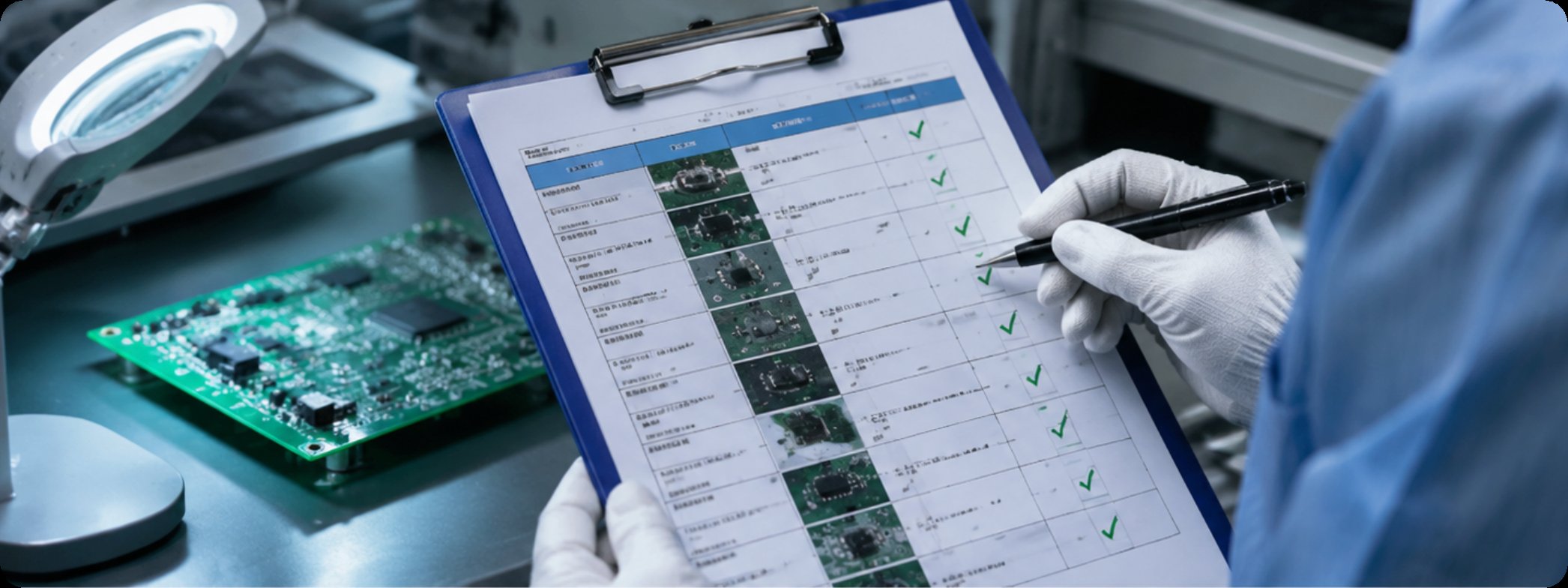
The foundation of compliant assembly starts with component procurement. Counterfeit or out-of-spec parts are the leading cause of field failures. We implement a multi-tier IQC process: visual inspection under magnification, XRF testing for lead-free compliance (RoHS), and electrical parameter verification for critical components like ICs and connectors. For high-reliability projects, such as a handheld PDA terminal used in warehouse logistics, we also perform solderability testing on all BGA and QFN packages. This rigorous incoming check is part of our Electronic Component Procurement Services, ensuring that every part meets the declared specifications before it ever reaches the SMT line. Without this step, even the most precise assembly process cannot guarantee compliance.
Step 2: SMT Assembly Process Control and SPI Monitoring
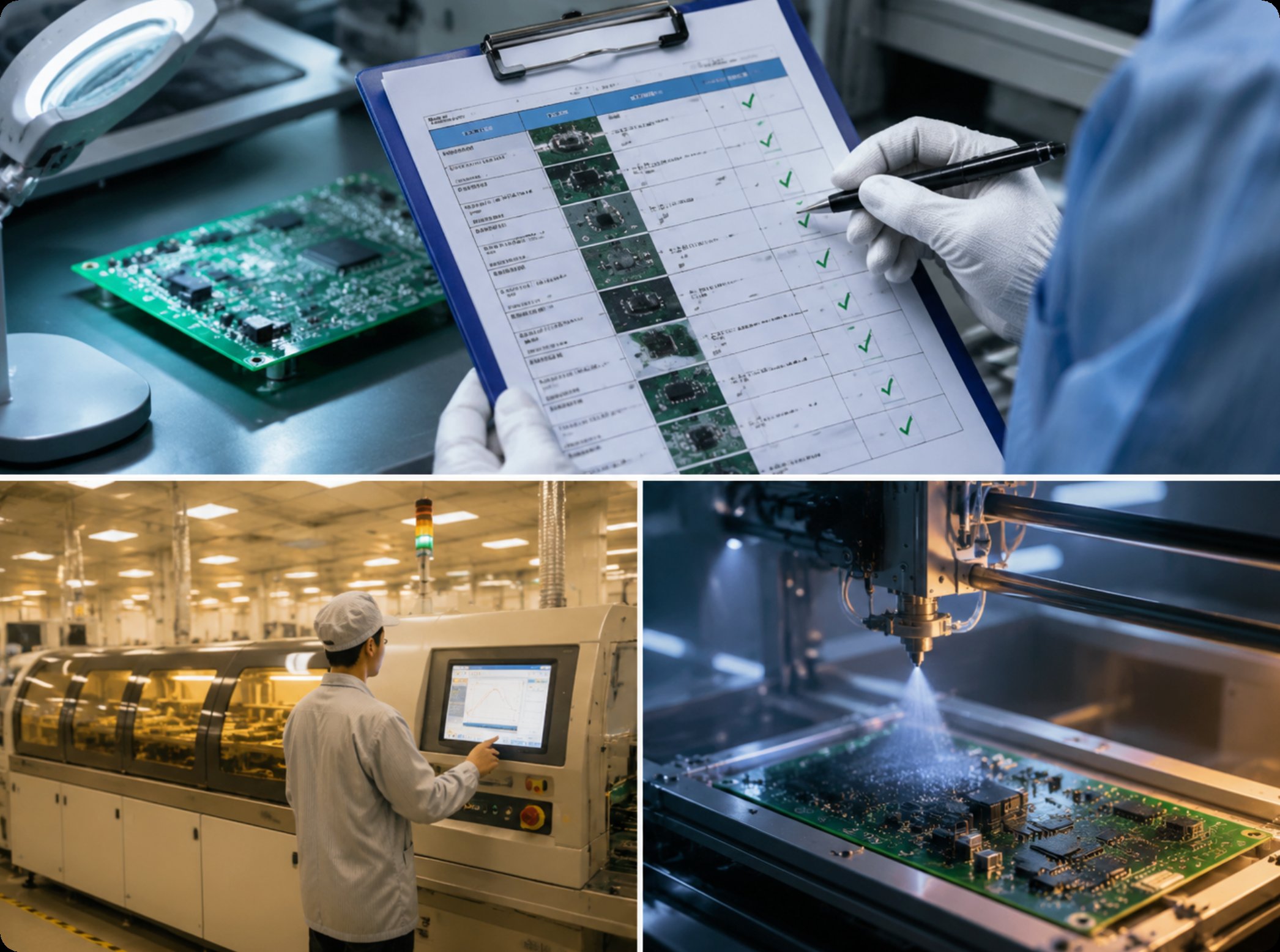
Once materials pass inspection, the SMT assembly process demands meticulous control. Solder paste printing is the most defect-prone step—misalignment or insufficient volume directly leads to opens or shorts. We use 3D SPI (Solder Paste Inspection) on every board, not just random samples. For a recent industrial motherboard project with 0201 components, the SPI system captured a 15-micron offset that would have caused intermittent failures in the field. Process parameters like reflow profile are validated using thermocouples attached to actual boards, not just coupons. This level of detail is why we treat each order as a SMT Assembly project with its own unique process window, especially when mixing leaded and lead-free components in the same board.
Step 3: DIP Assembly and Wave Soldering for Through-Hole Components
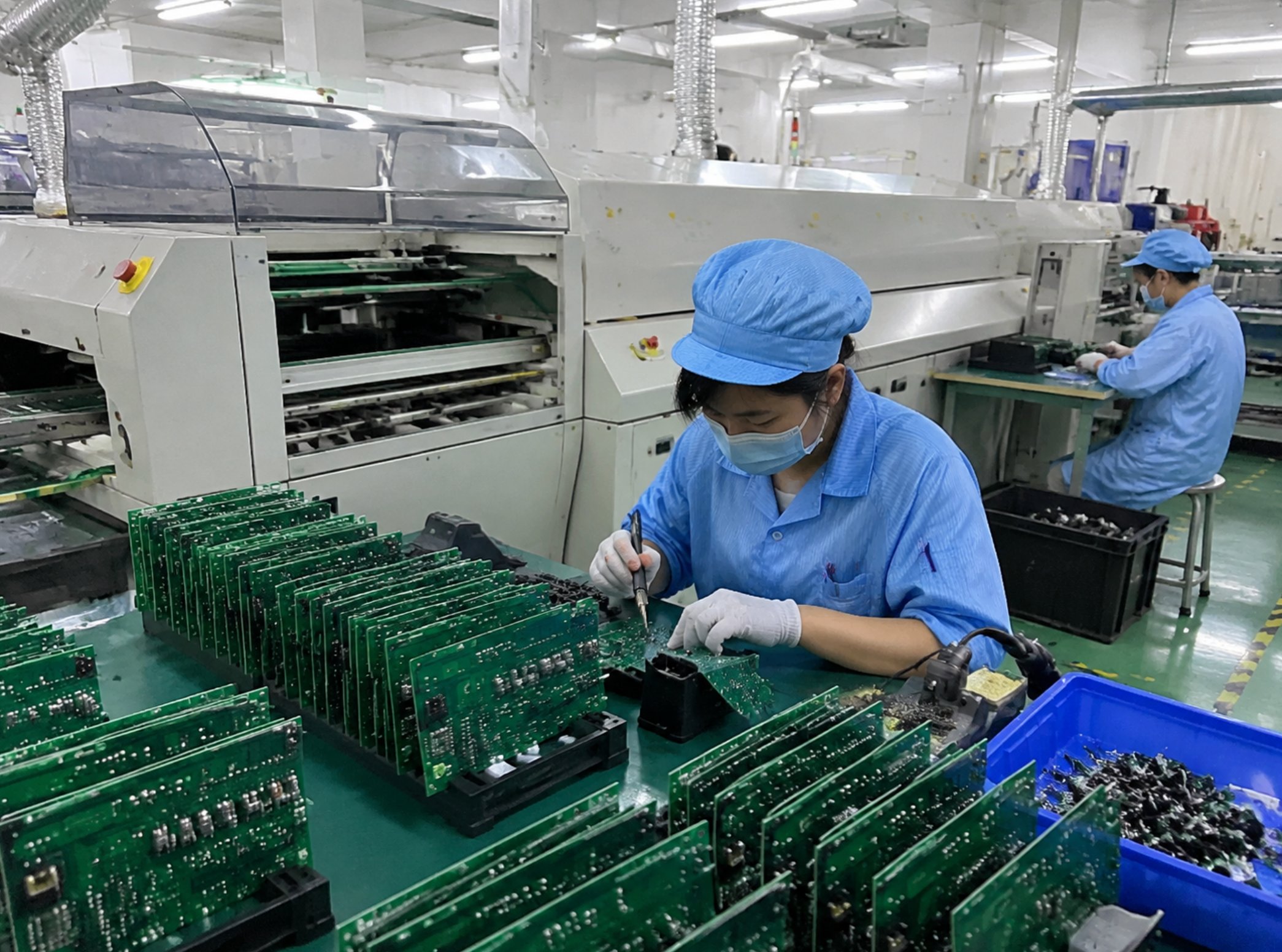
Not all components are surface-mount. Connectors, relays, and high-power devices often require through-hole soldering via wave soldering or selective soldering. The compliance challenge here is thermal management—excessive heat can damage nearby SMT components or cause board warpage. For our custom PC desktop motherboards, we use a nitrogen-inerted wave soldering system to reduce oxidation and improve wetting on complex multi-layer boards. A critical step is preheating the board gradually to avoid thermal shock. We also perform cross-section analysis on first-article through-hole joints to verify solder fill and voiding percentages per IPC-A-610 Class 2 or Class 3 requirements. This dual process (SMT + DIP) is where many contract manufacturers cut corners, but it is essential for achieving full compliance in mixed-technology designs.

Step 4: Inspection and Testing—AOI, X-Ray, and Functional Test
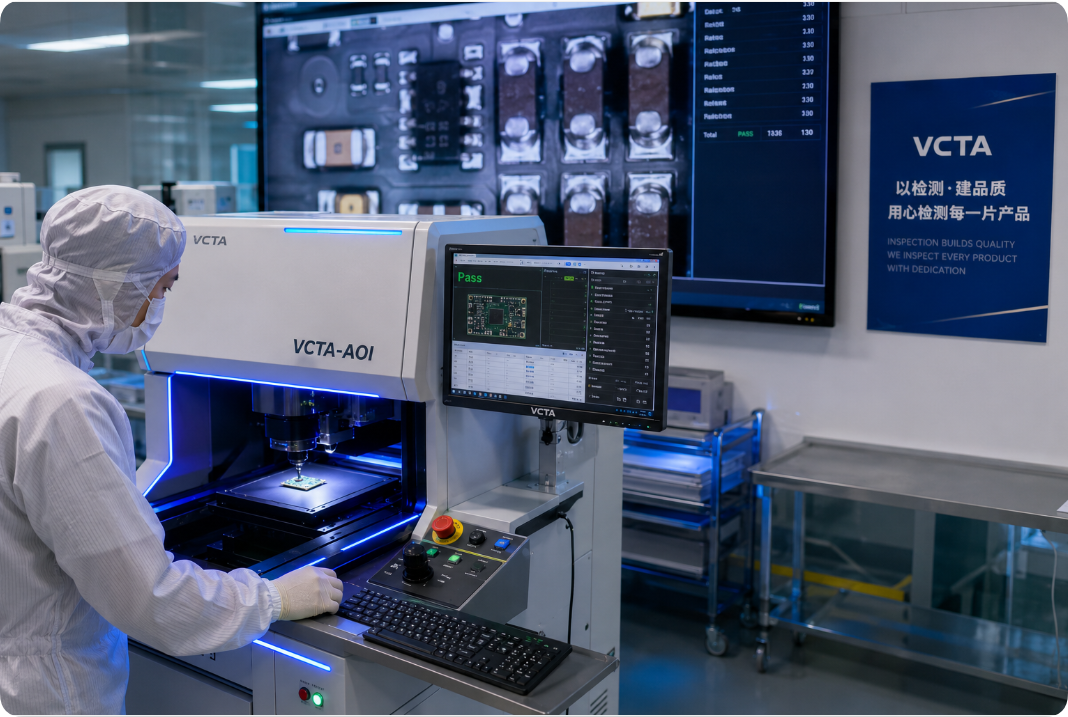
Inspection is where compliance becomes verifiable. We deploy a three-tier testing strategy: automated optical inspection (AOI) after reflow catches visible defects like tombstoning or insufficient solder; X-ray inspection targets hidden joints under BGA, QFN, and connector shields; and functional circuit test (FCT) validates the board operates under simulated load conditions. For a rugged tablet project that required IP65 certification, we added a 24-hour burn-in test at 70°C to ensure no latent solder defects. This level of testing is part of our Aging Test Services, designed to catch failures that standard AOI cannot detect. Without this depth, a compliant assembly is just an assumption—not a guarantee.
Step 5: Conformal Coating and Environmental Protection
For products exposed to moisture, dust, or chemicals, PCBA three-proofing paint (conformal coating) is a compliance requirement, not an option. The standard IPC-CC-830 defines the electrical insulation and moisture resistance of coatings. We apply acrylic, silicone, or polyurethane coatings selectively using robotic spray to avoid coating connectors or test points. For a handheld PDA terminal used in outdoor logistics, we applied a 50-micron silicone coating that passed a 48-hour salt spray test. The key is controlling thickness and coverage—too thin and protection fails, too thick and thermal dissipation suffers. Our PCBA Three-Proofing Paint Services include UV cure monitoring and thickness verification per IPC-A-610 standards.
Real-World Application Scenarios for Compliant PCB Assembly
Compliance is not abstract—it shows up in specific use cases. Here are three scenarios where our integrated approach delivers measurable results:
Industrial Automation Control Systems: A client needed an industrial motherboard for a PLC controller operating in a factory with high vibration and temperature swings. We combined SMT assembly with selective conformal coating and 100% X-ray inspection of all BGA joints. The result: zero field failures in the first 18 months.
Medical Wearable Devices: For a bluetooth thermometer intended for continuous patient monitoring, compliance required IPC Class 3 workmanship plus ISO 13485 process controls. We used low-temperature solder paste to prevent heat damage to the flexible PCB substrate and added automated optical inspection at every reflow stage.
Field Service Handhelds: A logistics company deployed handheld PDA terminals that needed to survive drops and rain. We applied a 2-part silicone conformal coating and performed drop-test validation (1.5m onto concrete) as part of the FCT procedure. The product achieved IP67 certification on the first attempt.
Each of these projects used a combination of PCB fabrication, SMT assembly, and PCBA testing services tailored to the specific compliance requirements. The common thread is a systematic, documented approach that leaves nothing to chance.
Common Compliance Pitfalls and How to Avoid Them
Even experienced teams make mistakes. Here are the most frequent issues we see and how to prevent them:
Assuming one standard fits all: A board certified to IPC Class 2 may fail UL 94 V-0 flammability if the substrate material is not specified correctly. Always cross-check material certifications against the end-product standard.
Skipping first-article inspection: Without a full cross-section and X-ray of the first production board, you risk discovering a tombstoning issue after 10,000 units are built. Always allocate time for first-article approval.
Ignoring solder paste storage: Solder paste has a shelf life and must be stored at 2-10°C. Using expired paste causes voiding and poor wetting. We log every paste batch with a use-by date.
Overlooking documentation: Auditors require traceability. Each board we assemble carries a serial number linked to component lot codes, reflow profiles, and inspection results. Without this, a compliance claim is just words.
Summary: A Quick Compliance Checklist for Your Next PCB Assembly Project
To wrap up, here is a practical checklist you can use when evaluating a contract manufacturer for custom PCB assembly:
| Requirement | What to Verify |
|---|---|
| Incoming inspection | XRF testing for RoHS, visual inspection per IPC-A-600 |
| SMT process control | 3D SPI on 100% of boards, reflow profile validation with thermocouples |
| DIP soldering | Cross-section analysis on first-article, preheat profile control |
| Testing | AOI + X-ray + FCT, burn-in test for high-reliability products |
| Conformal coating | Thickness verification, UV cure monitoring, IPC-CC-830 compliance |
| Traceability | Serial number linking to material lots, reflow profiles, inspection records |
If you are planning a new product launch or need to upgrade your current assembly process, learn more about our manufacturing capabilities and how we integrate compliance into every step. From prototype to mass production, we deliver certified quality that meets global standards—so you can focus on innovation, not paperwork.
This guide reflects real-world practices from over a decade of serving the electronics industry. Always consult your specific regulatory body for the latest compliance updates.
Tags: PCBA /PCB /IPC /SMT /NEWEI /quality /compliance /standards /RoHS /
Prev: NEWEI Electronics Packaging and Delivery Customer Case Study: PCBA, SMT Assembly and PCB Fabrication