
DIP Assembly, EMS Manufacturing and Industrial PC PCBA: Three SKUs From One Consumer Program and What Each One Inherits
A consumer programme rarely stays as one product. A retailer asks for a lighter version, a distributor asks for a regional plug, an education customer asks for a longer warranty. All three ship from the same board family. What differs is which layer absorbed each request, and that single decision decides which part of the quotation is rebuilt before anyone signs it. The three requests arrive as three emails, and each is measured against a quotation written for the original product alone, which is why none of them looks expensive at the moment it is sent.
Most disputes about consumer programme cost start at the quotation. Two suppliers quote the same nominal unit and differ widely, because one assumed every variant forks at copper while the other assumed all three fork at the housing. Neither is wrong about the board; they answered different questions. The fix is to name the fork point before anyone prices it.
The Programme That Started as a Single Product
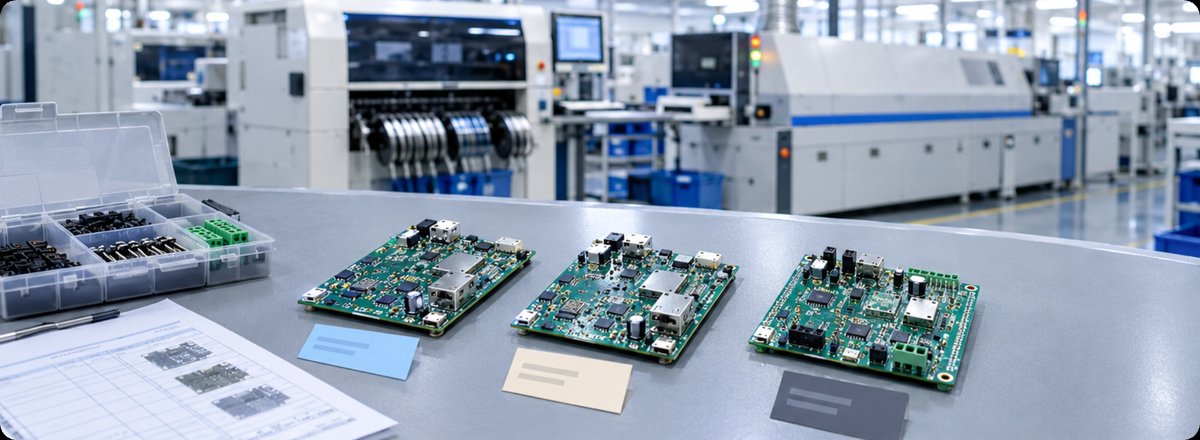
The original specification was modest: one board, one bill of materials, one carton. Every downstream department optimised for that single outcome. Procurement bought to that list, the test group wrote one procedure, final assembly built one work instruction. Nothing was wasteful while only one product existed.
Then three requests arrived inside one quarter, each reasonable alone. None asked for a new product. Each asked for one difference, and each difference landed on a different layer. Averaging the three produces a programme that is too expensive on one variant and unbuildable on another.
Where a Variant Actually Branches
A fork point is the layer where the versions stop being identical. Move up toward bare board and the fork grows expensive, because more must be redone. Move down toward finished goods and it shrinks, because less upstream depends on it. The same three requests can be met at four heights, and the choice is commercial as much as technical.
This is why a trivial-looking purchase-order change can be the programme's most disruptive request. Swapping a mounting boss in the housing reopens only tooling. Swapping the regulator on the board reopens material sourcing, paste control and the first-article record in one week. The visible difference between them is a single line of paperwork.
The Layer That Changes Decides the Cost
Copper is the most expensive place to fork. A revised footprint sends the board back through fabrication, where a new lot carries its own panel utilisation and delivery window. Everything downstream waits, including unchanged work, because the boards are physically different objects once the artwork moves.
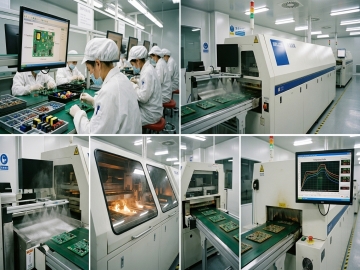
The paste layer is the cheapest fork and the easiest to underestimate. Swapping a surface-mount part for an equivalent one keeps the board, but changes the bill of materials, the feeder set, the placement program and the inspection limits. Nothing is fabricated again, yet four records must be regenerated before the line restarts.
Copper, Paste, Holes and Housing Are Four Ledgers
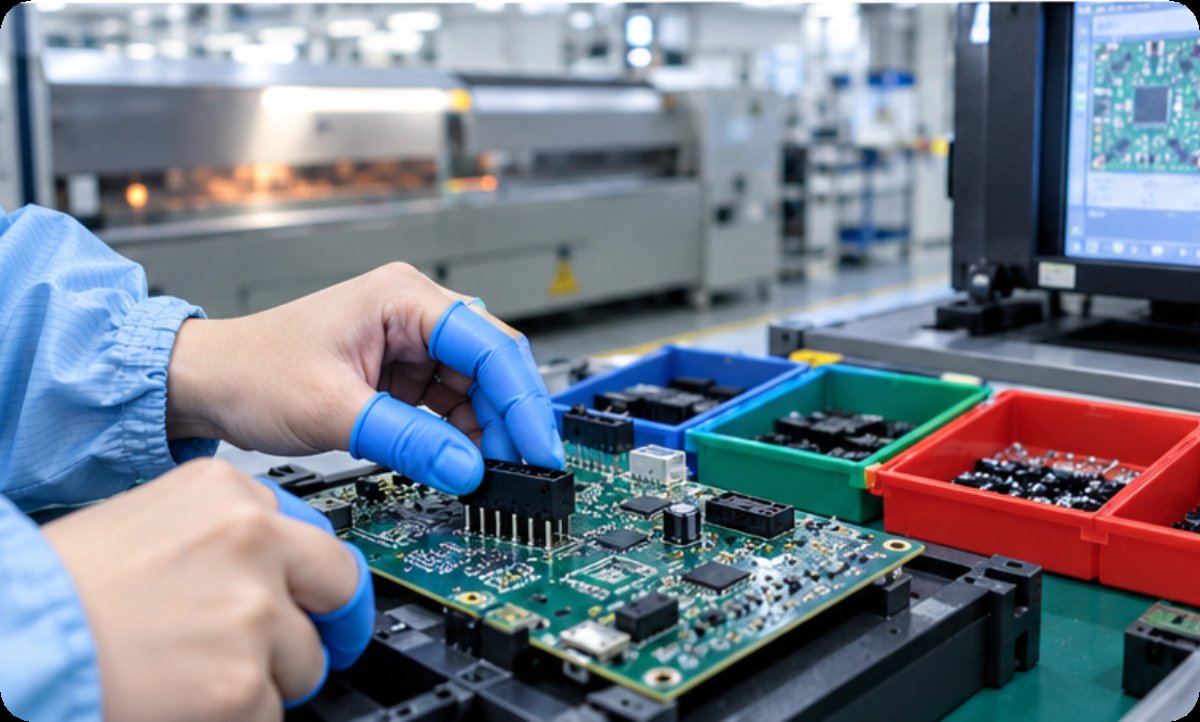
The through-hole layer behaves differently, being the least automated of the four. A through-hole variant re-enters a manual cell with plug-in inspection, wave attachment and a separate wash step, under strict in-process and lot sampling. A variant that changes only its connector count still reopens that cell, even though every surface-mount pass before it was unaffected. On a shared line that cell is the constraint: the manual stages set the pace for the whole panel, so a variant needing one extra fixture check lengthens the queue for every job behind it.
The housing is the cheapest fork and the most frequently misjudged. A colour, a label and a plug type look trivial, yet they touch the mould tool, the assembly instruction and the outgoing test at once. For our EMS manufacturing services, a change that looked like packaging turns into three coordinated documents.
The practical sequence is to fix the fork point first and negotiate second. Write down, per version, which of the four layers differs. A quotation built on that table can be compared line by line; one built on a blended average cannot, and the gap usually exceeds the entire tooling discussion. Writing that table takes an afternoon, and it is the only part of the negotiation that becomes cheaper to repeat each time a fourth version is added.
One Row per Fork, Stated Before the Quotation
The table below is the shortest form of that discussion: four fork layers, what each physically touches, what must be regenerated, and what carries over from the version already in production. The expensive forks are obvious without attaching a price.
| Fork layer | What physically changes | Must be regenerated | Can be carried over |
|---|---|---|---|
| Bare board | Artwork, stack-up, panel plan | Fabrication lot, all four downstream records | Nothing upstream |
| Placement | Part number, feeder set, program | Bill of materials, placement program, inspection limits | Board lot, through-hole setup |
| Through-hole | Connector or component count | Manual cell setup, sampling record, work instruction | Board lot, placement program |
| Finished goods | Plug, label, carton, warranty card | Mould tool check, assembly instruction, outgoing test | Board, placement, through-hole records |
Why the Second Order Is Cheaper Only on Paper
A second order on an unchanged product is genuinely cheaper: the first order absorbs preparation, the later ones reuse it. What breaks that rule is a repeat order on a variant that was never formally released. Its records sit in someone's file rather than the system, so the saving never arrives and preparation is quietly paid twice.
The commercial form of the same problem is an averaged unit price. Averaging holds when the versions differ only in carton, because shared work dominates. It misleads when one forks at copper and another at the housing, because shared work is smaller than the arithmetic implies. Split pricing by fork layer costs nothing to prepare. It also settles the question early, because a supplier asked to price four named layers must answer four questions instead of defending one blended number.
The Records That Keep Three Versions Apart
Programmes that survive three variants keep one written release per version rather than one release plus a difference list. Each carries its own bill of materials, first-article record and outgoing test definition. That is the only reason a field failure can be attributed to one version instead of argued about.
The discipline is light and it scales. Where a customer needs DIP assembly services on one version and surface-mount work on another, the two records coexist because each names its own layer. Where the same version also carries a different enclosure, the product assembly services record follows the housing rather than the board, and nothing needs reconciling.
Reading a Quotation That Assumes One Shape
A quotation built for a single shape is easy to recognise: one bill-of-materials line, one unit price, one preparation figure described only as a one-time cost. Nothing indicates which layer that preparation belongs to. Acceptable for one product, it becomes the central ambiguity once a second version appears, because one figure cannot honestly cover both copper work and housing work.
Programmes that get a defensible price on all three versions share one table like the above, name the fork layer per version, and let the supplier price the difference rather than the average. For boards built alongside industrial PC PCBA programmes, where a consumer variant and an embedded variant share a chassis, that one document stops the two quotation tracks from contradicting each other, which matters most in the month a distributor asks for a regional variant while an embedded customer asks for a wider temperature range on the same chassis.
The consumer market rarely asks for a new product when it asks for a variant. The work is therefore rarely in the soldering, and almost always in deciding, on paper and before pricing, which of four layers the difference belongs to. Programmes that record that decision once, per version, per layer keep three variants apart for years. Programmes that average them learn the cost in the month a retailer asks for a regional plug. Multi-version process detail sits in our consumer electronics PCBA services and in our manufacturing capabilities overview.
Frequently Asked Questions
1. Where should a consumer electronics variant fork if the request is only a different plug?
Fork it at the finished-goods layer. A regional plug changes the moulded enclosure, the assembly work instruction and the outgoing test definition, but it leaves the bare board, the placement program and the through-hole setup untouched. That is the cheapest of the four forks and the one that can usually be introduced without re-quoting the board.
2. Our third version only swaps one surface-mount component. Does that really need a new quotation?
Not a new quotation, but a new release. The board is refabricated, so nothing moves. The bill of materials, the feeder set, the placement program and the inspection limits all change, and four separate records must be regenerated before the line restarts. Treat it as a placement-layer fork rather than a copper-layer one, and price it accordingly.
3. How do we stop a second variant from costing as much as the first?
Release it formally. A repeat order on a variant whose records were never written down pays the preparation twice, because the saving depends on the setup file existing somewhere other than one person's inbox. One written release per version, per layer, is what makes the second and third orders measurably cheaper than the first.
4. Is a blended unit price acceptable when the three versions differ only in packaging?
Yes, and it is the one case where averaging works. When the shared work genuinely dominates, a single unit price is honest and simpler to negotiate. Averaging fails as soon as one version forks at copper and another at the housing, because the shared portion is then smaller than the arithmetic implies.
5. What does the through-hole layer force us to reopen on a connector change?
The manual cell. Plug-in inspection, wave attachment and the wash step all run again, under in-process and lot sampling, before the board can ship. On a shared line that cell sets the pace for the whole panel, so one extra fixture check lengthens the queue for every job behind it. Plan connector variants around the cell rather than around the placement machine.
Tags: Consumer Electronics PCBA /
Prev: Wearable PCBA, SMT Assembly and Shell Mold: Three Calendars That Only Run One After Another
Next: No more...