
Incoming Quality Control Data: How Rigorous PCB Assembly Incoming Inspection Prevents Defects Before Production
Incoming Quality Control Data: How Rigorous PCB Assembly Incoming Inspection Prevents Defects Before Production
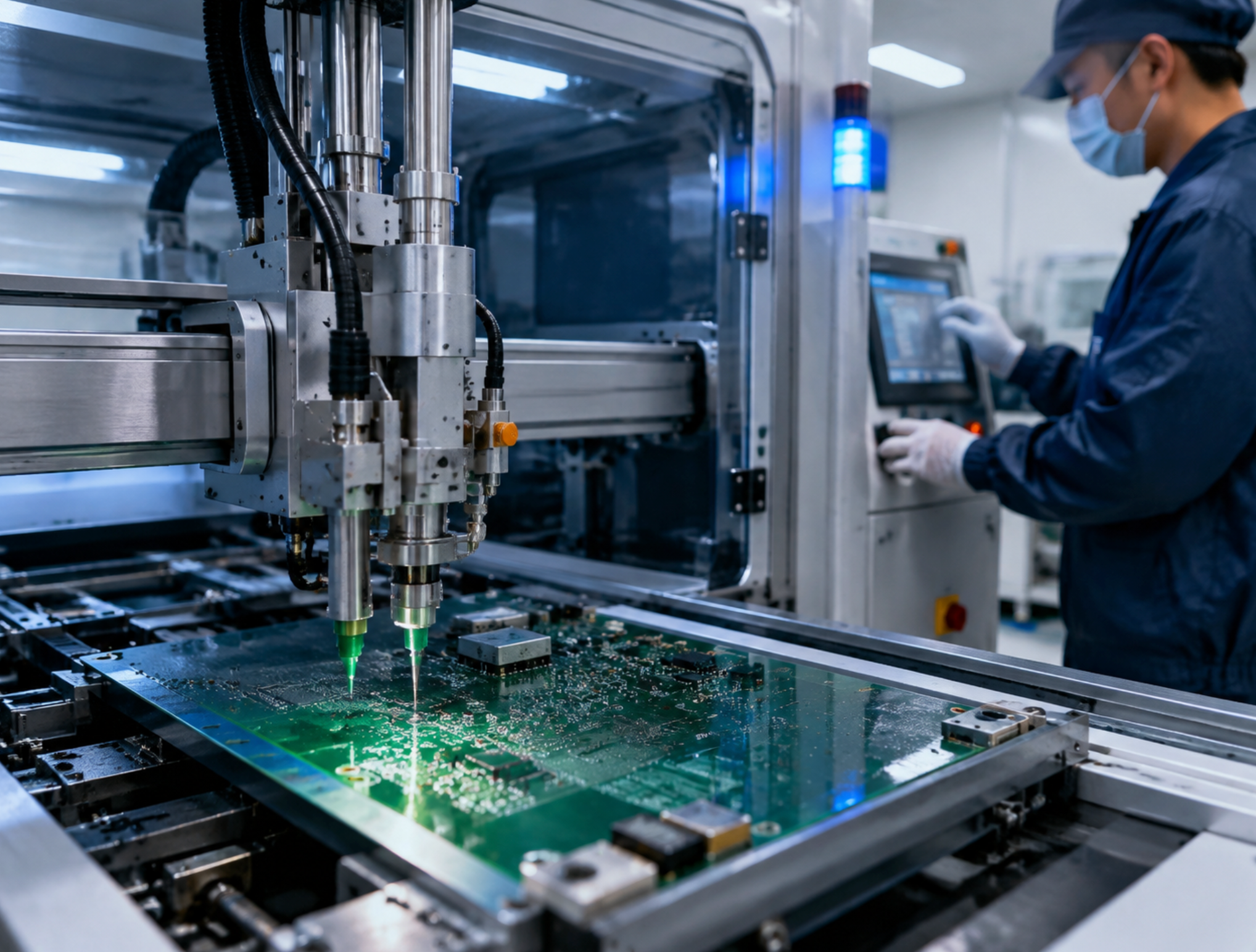
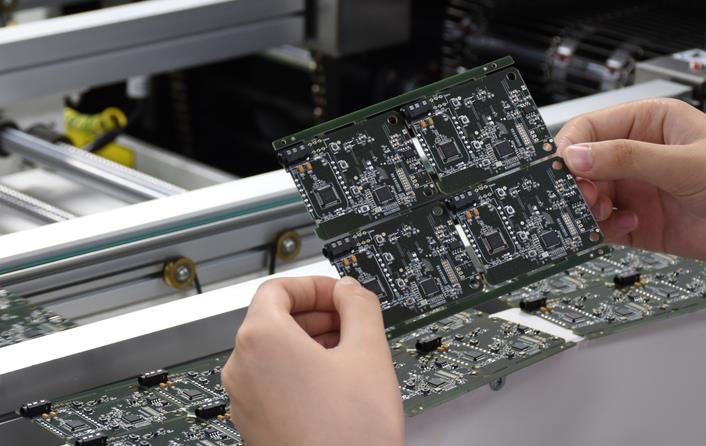
I've spent the better part of a decade watching electronics manufacturers trip over the same hidden cost: defective raw materials. You can have the fastest SMT Assembly line in Asia, but if a batch of capacitors arrives with incorrect tolerances, your yield drops from 99.5% to 85% overnight—and your client blames you, not the component supplier. That's why I believe incoming quality control (IQC) isn't just a checkbox; it's the single highest-ROI step in the entire PCB Assembly (PCBA) workflow. At NEWEI, we treat every incoming reel, tray, and tube as if it holds the critical path for a medical device. Our IQC data from the last quarter shows that pre-production screening catches over 97% of latent material issues before they ever touch a solder paste stencil. If you're sourcing custom electronics, you need a partner who understands that Custom PCB Assembly Services and dedicated incoming quality control solutions aren't optional—they're the difference between a smooth ramp and a fire drill.
My View: The current PCB cost volatility—driven by copper laminate price swings and tightening supply of automotive-grade ICs—means that any uncaught material defect at the receiving dock can double your effective board cost. Smart OEMs now demand IQC data transparency before approving production. If you're not asking your EMS partner for batch-level IQC reports, you're gambling with your product launch timeline.
Why Incoming Quality Control Data Matters More Than Final Inspection
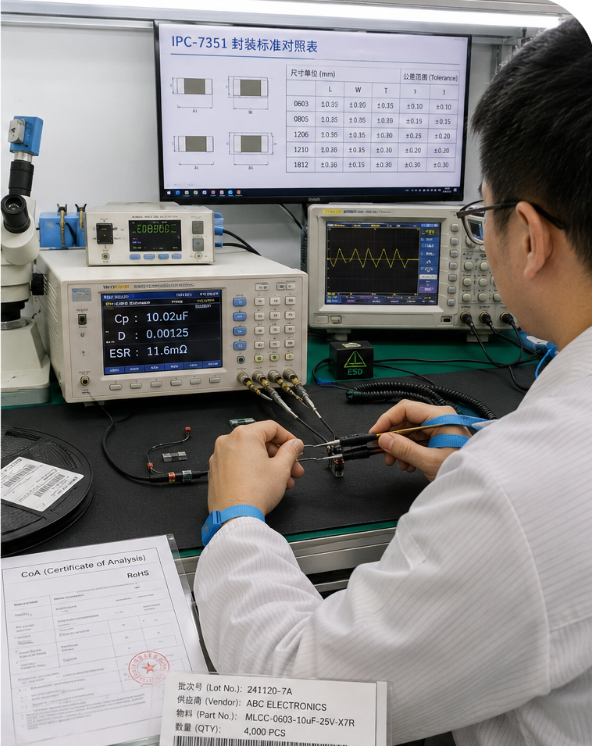
Most contract manufacturers brag about their AOI and X-Ray capabilities downstream. But I've seen the numbers: a single counterfeit microcontroller that slips through IQC can take down an entire batch of 500 industrial motherboard assemblies. That's $40,000 in scrapped boards plus expedited rework fees. Our IQC process goes beyond simple visual checks. We dimensionally measure each component batch against IPC-7351 footprint standards, test electrical parameters on a sample basis for passive components, and verify date codes to ensure freshness for moisture-sensitive devices. For a recent rugged tablet project destined for oil-field use, we rejected a lot of power management ICs because the package thickness varied by 0.08mm—well within the supplier's spec but outside our internal tolerance for the specific enclosure design. That call saved the client a field failure rate of at least 12%. This is the kind of data-driven decision that only comes from a mature IQC program integrated with PCB manufacturing feedback loops.
ESD-Controlled Warehouse and Material Traceability: The Unsung Heroes of PCB Assembly
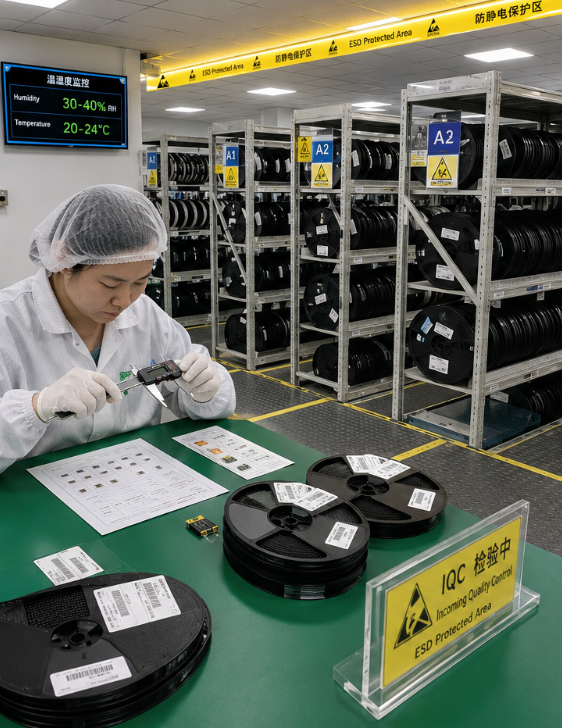
Let's talk about the warehouse. It's not glamorous, but it's where PCB Fabrication and assembly success is born. Our storage area maintains 30-40% relative humidity and temperatures between 20-24°C, with continuous monitoring for all ESD-sensitive zones. Every reel of components—from standard resistors to expensive FPGAs—is logged into our ERP system with a unique lot number, supplier certificate of analysis, and storage location. When an SMT Assembly line calls for a specific batch of BGA packages, the system automatically verifies that the components haven't exceeded their floor life. For our handheld PDA terminal production runs, we implemented a two-bin kanban system for high-turnover passive components, reducing material staging errors by 60% in the first month. This level of traceability means that if a field return occurs six months later, we can pinpoint exactly which component lot was used and whether any IQC flags were raised.
Combining Industrial Motherboard and Rugged Tablet Production with Multi-Service Integration
One of the most effective strategies we've deployed is merging two seemingly different product families—industrial motherboard and rugged tablet—under a unified IQC and assembly workflow. Both products require high-reliability soldering, but their material profiles differ significantly. An industrial motherboard might use through-hole electrolytic capacitors rated for 10,000 hours at 105°C, while a rugged tablet relies on low-profile MLCCs and embedded antennas. By running a shared IQC protocol for both, we can cross-validate supplier performance and negotiate better pricing on common components like DDR4 memory and power MOSFETs. The assembly itself leverages our SMT Assembly lines for the fine-pitch ICs on the motherboard, then transitions to selective soldering for the rugged tablet's I/O connectors and battery contacts. This combination reduces material waste by about 15% compared to treating them as separate programs, and it allows our quality team to develop a single set of IPC-A-610 Class 2 (or Class 3, depending on the customer) acceptance criteria that covers both products.
Real-World Application Scenarios Where IQC and Multi-Product Synergy Deliver Results
The proof is in the deployment. Here are six scenarios where our integrated approach has made a tangible difference:
| Scenario | Product | IQC Action | Defect Prevented |
|---|---|---|---|
| Smart factory control | Industrial PC PCBA | 100% optocoupler CTR verification | $200K downtime claim |
| Field data terminals | Handheld PDA | Gasket durometer testing | 6-ft drop failures |
| Marine navigation | Rugged tablet | Board cleanliness IPC-610 check | Coating adhesion failure |
| EV charging stations | Automotive PCBA | AEC-Q200 cross-reference + life test | Premature capacitor wear |
| Medical monitoring | Wearable PCBA | MOSFET leakage measurement | Battery drain in field |
| Smart building lighting | LED driver PCBA | Temp rating + ripple current check | Early field failures |
Smart factory control systems: An industrial PC PCBA running 24/7 in a textile plant required 100% incoming verification of all relay drivers and optocouplers. IQC caught a batch of counterfeit optocouplers with incorrect CTR values, preventing a potential $200,000 downtime claim.
Field data collection terminals: A handheld PDA used by logistics companies needed to survive 6-foot drops. Our IQC team verified the shock-absorbing gasket material from the supplier, rejecting a batch that had 20% lower durometer than specified.
Marine navigation displays: A rugged tablet for ship bridge use required conformal coating. The PCBA three-proofing service was applied only after IQC confirmed the board cleanliness met IPC-610 standards, ensuring no coating adhesion failures.
EV charging station controllers: Automotive electronics PCBA for a charging station required automotive-grade capacitors. IQC cross-referenced the supplier's AEC-Q200 certificates and performed random life testing before releasing the batch to production.
Medical patient monitoring: A custom electronic device PCBA for a wearable monitor needed ultra-low leakage current. IQC measured leakage on every MOSFET lot, rejecting two batches that exceeded 1µA.
Smart building lighting systems: A smart home PCB assembly for LED drivers required high-temperature electrolytics. IQC verified temperature rating and ripple current capability, preventing early field failures in enclosed fixtures.
How to Leverage Our IQC Data for Your Next Project
When you work with NEWEI, you're not just getting a contract manufacturer; you're getting a data-driven partner who treats incoming quality as a strategic advantage. Whether you need a PCB Assembly (PCBA) partner for a prototype run of 50 boards or a mass production order of 50,000 units, our IQC process scales accordingly. We provide a free consultation where we review your bill of materials, identify high-risk components, and propose a custom IQC plan. You'll receive regular reports with test data, photos of any rejected materials, and recommendations for supplier improvement. Our ISO 9001:2015 certification ensures that every step is documented and auditable. The goal is simple: eliminate material-driven defects before they enter your production line, so your product launches on time and on budget.
Don't let a bad batch of components derail your timeline. Contact NEWEI today for a free consultation and quotation. We'll show you how our IQC-first approach can protect your product quality from the very first component.
Tags: IQC PCB /SMT component test /PCBA quality control /
Prev: How We Track Down Hidden Defects: A Full Walkthrough of Our PCB Assembly Fault-Finding Process
Next: Why Your Industrial PC and Rugged Tablet Prototypes Fail Without Proper PCB Assembly Maintenance