
SMT Assembly and the Packing Bench: Troubleshooting the Faults That Start After the Line
There is a particular kind of return that frustrates both the customer and the factory: a board that passed every functional test on the way out, arrived dead or degraded, and left both sides arguing about whose fault it was. After enough of these disputes, a pattern emerges that most buyers never see — a meaningful share of "manufacturing defects" are actually packaging failures that were visible hours before the shipment left. My position after years of walking packing floors is blunt: if your EMS partner treats packing as labor rather than as a diagnostic stage, you will keep paying for faults nobody actually made on the line.
Why Boards That Pass Testing Still Fail in Transit
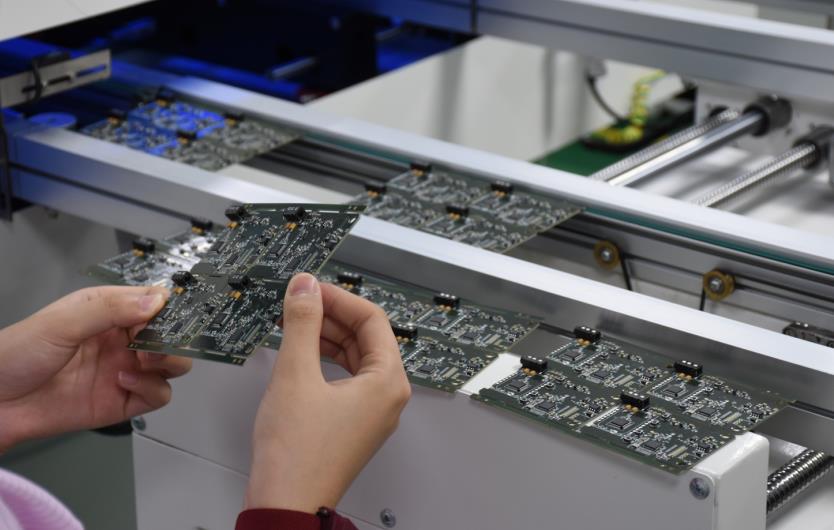
The diagnostic chain for a damaged arrival runs backwards through five suspects: the courier, the carton, the inner packaging, the pre-pack handling, and the board itself. Most disputes stop at the first two because they are the easiest to photograph. The real work starts at the third. On a modern line — NEWEI runs 8 fully automatic high-speed SMT lines with SPI, multi-zone reflow, AOI and X-ray — the probability of a process defect escaping to the packing bench is already low. What the line cannot control is what happens to the board in the forty minutes between final inspection and the heat sealer. A board that sat eight hours in a humid staging area, or got stacked under a carton of castings, can arrive with failures that look exactly like solder defects and get blamed on the SMT Assembly process that had nothing to do with them.
The Moisture Clock Nobody Resets
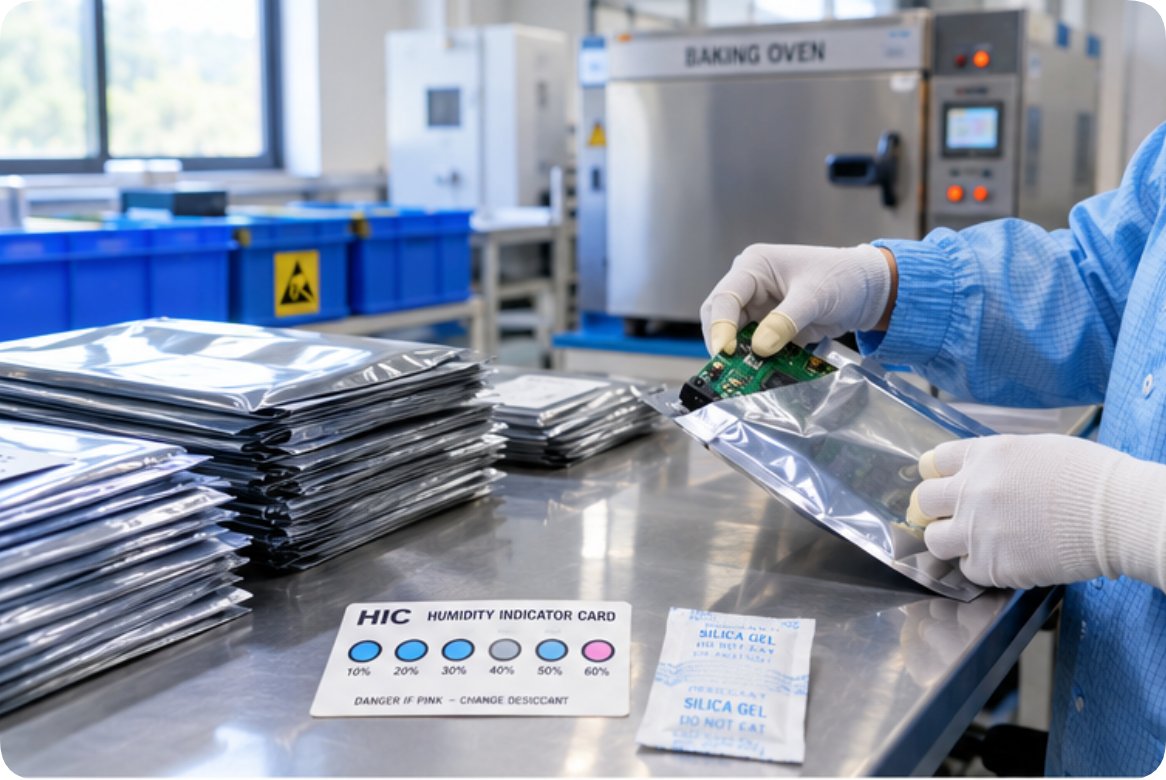
The most common and least understood of these failures is moisture. Every SMD component carries a floor-life rating set by its moisture sensitivity classification, and that clock starts the moment the dry bag is opened. Exceed it, and the reflow-style heating that happens during any later soldering or repair can pop moisture inside the package — a failure mode invisible under a microscope, and one that tends to show up weeks later in the field, which is exactly when nobody connects it back to the staging rack. The fix on the factory side is unglamorous: track exposure time per reel on a log at the SMT feeder rack, and when the clock runs out, send components to the baking oven before use rather than hoping the weather cooperates. The same discipline applies on the outbound side. Boards that leave the line must go into a sealed foil barrier bag with a desiccant pack and a humidity indicator card while their surface temperature is still within spec — a bag sealed over a warm board traps condensation instead of preventing it. Buyers who open an incoming shipment and find the card half-blue already have their answer: the fault happened at packing, not at soldering.
Reading the Vacuum Bag Like a Diagnostic
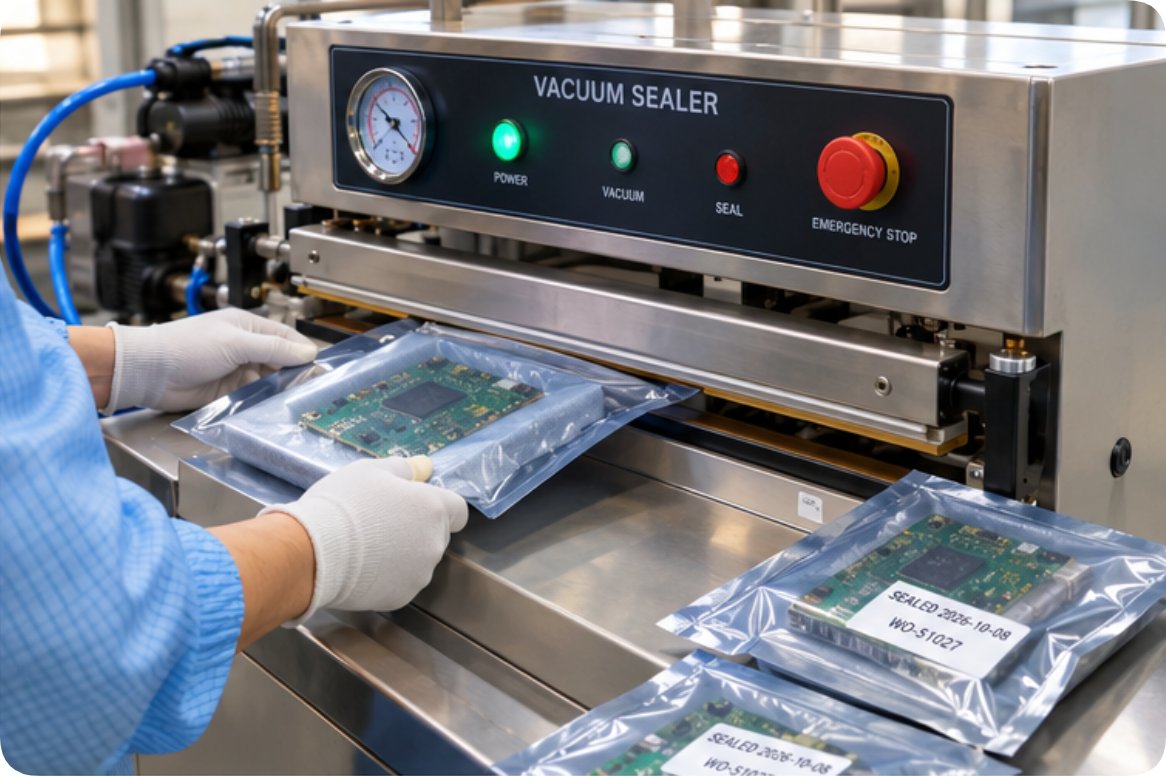
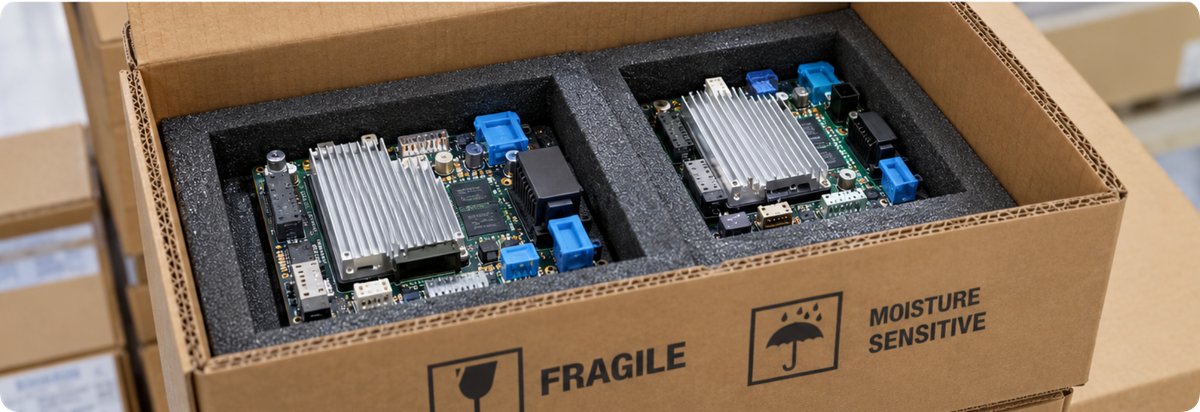
A sealed bag is itself a testable artifact, which is why the packing bench should be treated as an inspection station. Three checks take under a minute per carton. First, the seal line: a wrinkle or a solder-spatter puncture through the foil layer quietly defeats the whole barrier, and it shows up as a channel in the seam. Second, the residual air: a properly evacuated bag should be tight against the board and its foam saddle; a loose, puffy bag means the vacuum step was skipped or the pump is due for service, and a board rattling inside a bag inside a carton is a vibration experiment nobody ordered. Third, the paperwork on the bag: date of sealing, reel exposure log, and the work order number that ties the shipment to its process records. When a field failure does come back, that label is the difference between a one-hour root cause and a two-week argument. This is also where our product assembly services hand over to logistics — boxed assemblies, cabled units and housed devices each carry their own crush and abrasion risks that flat boards never see.
When the Foam Is the Problem
Physical protection fails in less obvious ways than a crushed carton. The recurring culprits: conductive foam that has dried out and lost its surface conductivity, turning a safe interlayer into an insulator with a static charge waiting to happen; recycled inserts with hard spots that concentrate load onto a connector or a tall capacitor; and trays that hold the board by its component side instead of its edges. Each of these passes a casual glance at the loading dock and fails quietly two thousand kilometers later. Automotive hardware raises the stakes, because a batch of automotive electronics PCBA — the car charger boards, lighting drivers and infotainment boards we build — will spend its shipping life on roads far rougher than the courier van, and its buyer will judge the sample by how it survives that journey. Vibration finds every unsupported component body; thermal cycling finds every seal that was closed under humidity. A board destined for an engine bay does not get packed the way a toy gets packed, and the extra two minutes at the bench is the cheapest vibration test the batch will ever get.
Three Products, Three Packing Risks
The same discipline scales across product types, and the risks are not interchangeable. The table below is the version we keep pinned at the packing bench.
| Product type | Dominant transit risk | Packing response |
|---|---|---|
| High-density SMT boards | Moisture ingress and micro-cracks | Foil bag, desiccant, indicator card, edge support |
| Automotive PCBA | Vibration and thermal cycling en route | Rigid trays, foam saddles, reinforced carton walls |
| Boxed consumer devices | Connector crush and cosmetic abrasion | Formed cavities, connector caps, seam protectors |
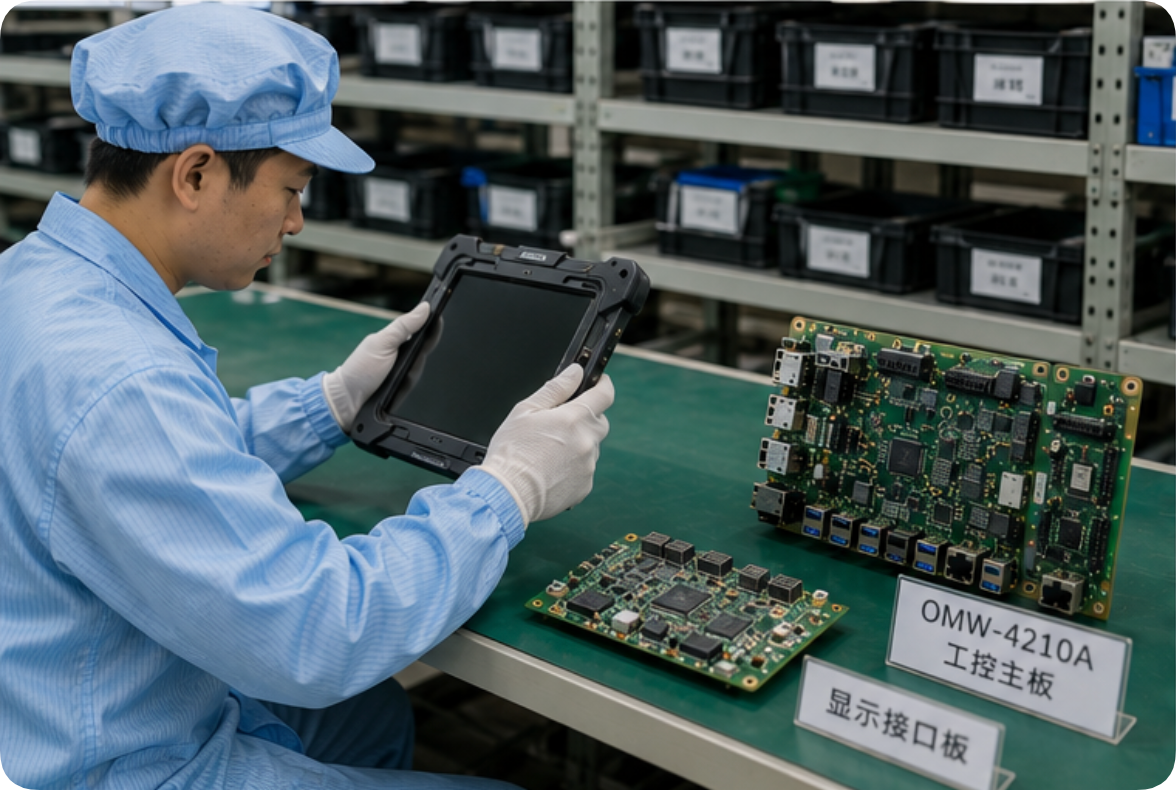
Consumer work illustrates the third row well. For electronic devices PCBA programs the packing bench is also where cosmetics are judged, because the buyer's first unboxing is a quality inspection whether we like it or not. Even a board-level product such as the Smart Medical Motherboard FT-C4435U — a Whiskey Lake design carrying 2×DDR4 SO-DIMM up to 64GB, independent triple display output and smart battery support over ACPI 4.0 — spends its first impression inside a bag and a foam saddle, not inside a BIOS screen. Its tall SO-DIMM sockets and display connectors are exactly the features a wrong tray will find first.
The Handover Checklist That Holds
None of this requires new equipment; it requires an owner and a checklist at the moment FQC signs off. The five lines that matter: exposure log current, bag sealed and dated, indicator card readable, foam matched to the board silhouette, carton marked with the work order. One person initials each line, and the shipment becomes traceable to a named packing decision rather than to "the factory" as an abstraction. The checklist also disciplines the handoff in the other direction: packing has standing permission to reject a board whose surface temperature, flux residue or exposed connector condition makes it unfit for the bag, and that rejection goes back to the line as data instead of disappearing into a rush order. Inside a broader electronics manufacturing services engagement, that checklist is also what turns a damage claim from a standoff into a fifteen-minute review — the records answer whether the moisture clock was reset, whether the seal was inspected, and whether the foam matched the board.
Fixing the Handoff, Not the Board
Buyers can push this without changing suppliers. Ask your partner three questions on the next program: what is the exposure logging procedure for moisture-sensitive reels, what does the packing bench inspect on every carton, and can the bag label be tied to process records a year later. If the answers are vague, expect to keep funding a defect nobody made. A competent partner will walk you to the bench and show you the log; a partner without one will change the subject to line speed. The line gets the credit when boards work and the blame when they do not, but a surprising number of failures are born in the last forty minutes — between the final test station and the heat sealer — and they are the cheapest faults of all to prevent.
Tags: SMT packing bench / moisture barrier bag / vacuum sealing / PCBA packaging /
Prev: Smart Wearable PCBA, Three-Proofing Paint and EMS Production: Station by Station Across the Readings
Next: No more...