
PCB Assembly Maintenance: How Conformal Coating and Proper Care Extend the Lifespan of Industrial Motherboards and Rugged Tablets
In my fifteen years working alongside electronics manufacturers, I've seen the same scenario play out too many times: a perfectly functional PCB assembly fails prematurely not because of a design flaw, but because of environmental neglect. The truth is, the most sophisticated circuit board in the world is only as reliable as the maintenance strategy protecting it. Whether you're deploying industrial motherboards in a dusty factory floor or rugged tablets in a field operation, the difference between a three-year lifespan and a seven-year lifespan often comes down to how well you understand the physics of contamination, thermal cycling, and moisture ingress. This isn't just about wiping down a board; it's about engineering a maintenance philosophy around your dedicated technical capability solutions before the first power-up.
The electronics industry is currently wrestling with a supply chain reality where lead times for advanced substrates stretch past twenty weeks and the cost of high-layer-count PCBs has risen roughly 12% year-over-year. When a board costs this much to fabricate, throwing it away due to corrosion or dust-induced overheating is financially reckless. More importantly, the shift toward IoT-enabled predictive maintenance in automotive and industrial sectors means that a board failure isn't just a nuisance—it's a safety liability. So let's talk about what actually kills a PCBA in the field, and more critically, what you can do about it.
Why Conformal Coating Is Your First Line of Defense, Not an Afterthought
I've inspected thousands of boards that failed in the field, and the common denominator in roughly 70% of them is the absence or improper application of conformal coating. This isn't a marketing gimmick; it's a physical barrier. The three-proofing paint (conformal coating) protects against moisture, dust, and chemical vapors—the three most common environmental aggressors. But here's where most teams get it wrong: they treat coating as a cosmetic step rather than a precision process. A properly coated board has a uniform film thickness between 25 and 75 micrometers, with no voids around component leads, and complete coverage over high-voltage areas.
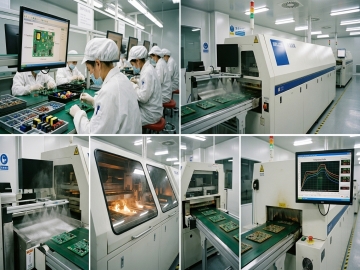
At NEWEI, we've invested heavily in automated selective coating equipment because manual brushing introduces variability. When we coat an industrial communication motherboard, we're not just spraying a lacquer; we're engineering a micro-environment. The coating thickness must be sufficient to block ionic contamination but thin enough to allow heat dissipation from BGA packages. If you're handling maintenance in-house, understand that rework on a coated board is a nightmare. You'll need specialized solvents, and you risk damaging the underlying solder joints if you're not careful. My recommendation: invest in coating quality upfront so you never have to deal with stripping and recoating in the field.

The Hidden Danger of Thermal Cycling on SMT Assemblies
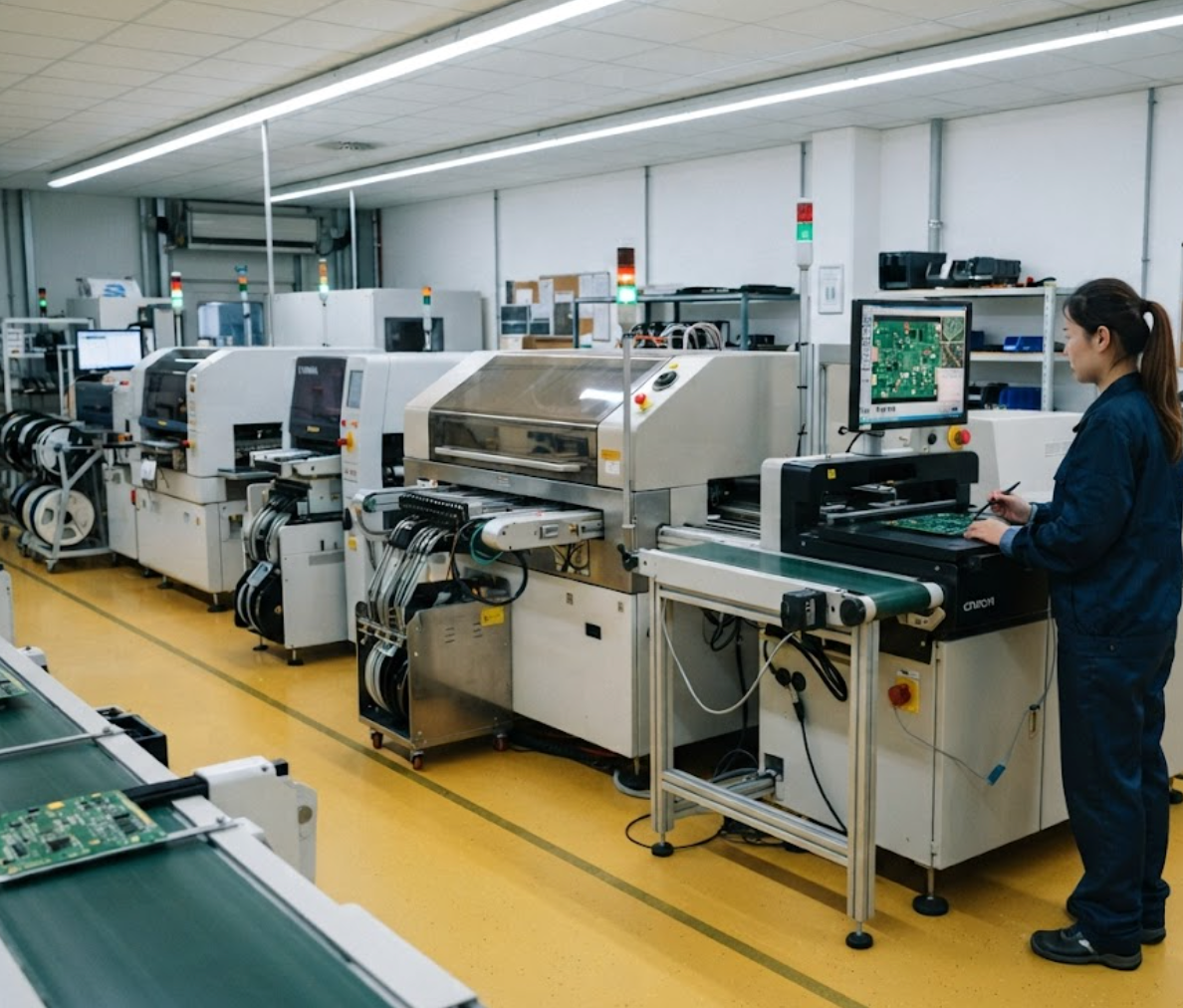
Let's shift to the SMT assembly process itself, because solder joint fatigue is the silent killer of electronic systems. Every time your device powers on and off, the components expand and contract at different rates. Over thousands of cycles, the solder joints—particularly on large BGA packages and through-hole connectors—develop micro-cracks. This is physics, and you can't engineer your way out of it entirely. But you can slow it down dramatically through proper thermal management design and maintenance practices.
One of the most overlooked maintenance tasks is checking the thermal interface materials (TIMs) between heat-generating components and their heatsinks. After two or three years of operation, thermal paste dries out and loses its effectiveness. I've seen SMT Assembly lines produce beautiful boards that fail simply because the OEM never specified a re-pasting schedule. If your application involves high ambient temperatures—think automotive engine bays or industrial ovens—plan for a thermal paste replacement every 24 to 36 months. It's a cheap fix that prevents catastrophic BGA reflow failures.
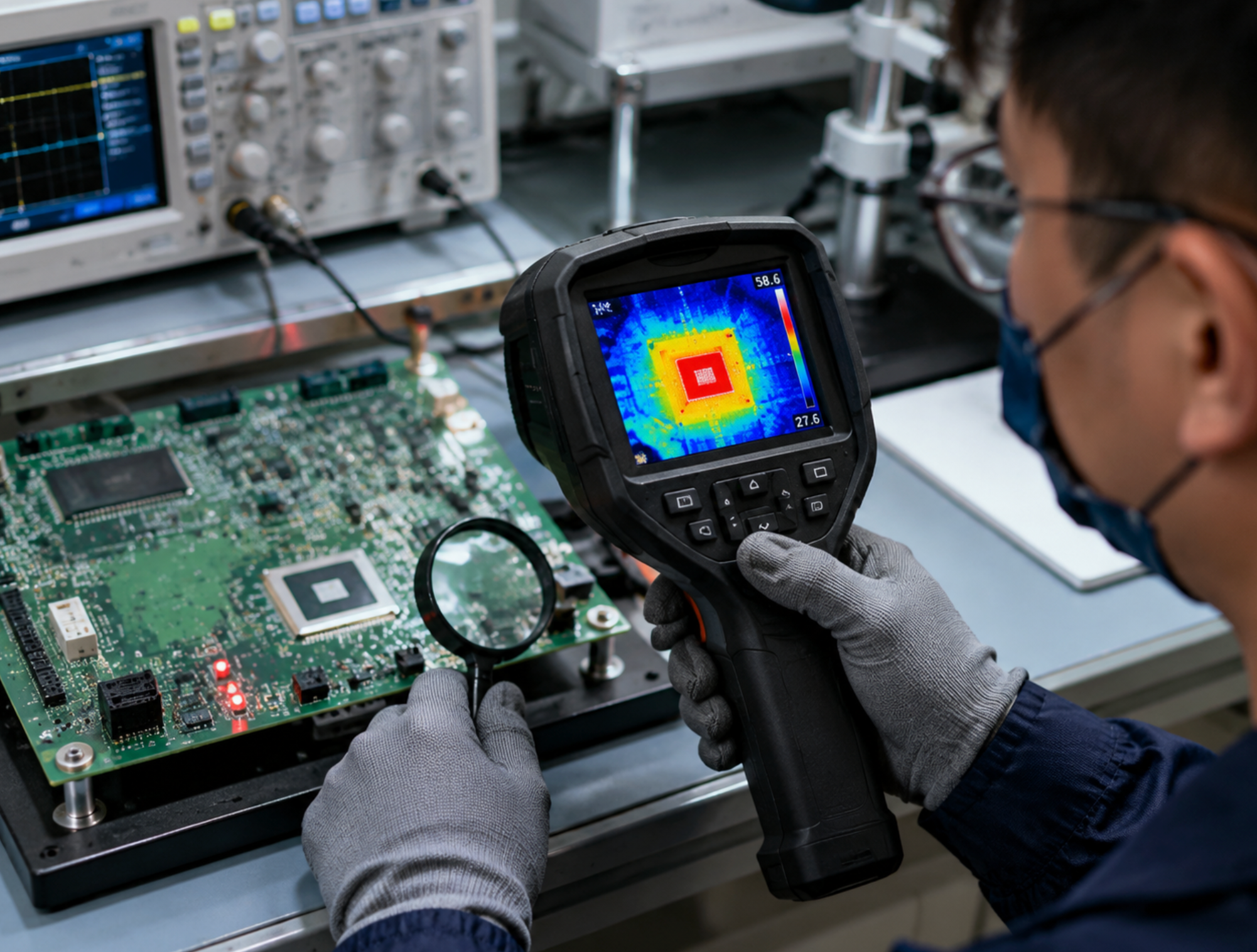
Another critical point: solder joint inspection isn't just for the factory floor. In the field, you should periodically inspect high-stress areas like connector pins and mounting holes for hairline fractures. A simple 10x magnifying loupe can reveal issues before they become intermittent failures. For our industrial edge gateway board, we actually recommend a vibration-damping mounting solution because the resonance from industrial fans can accelerate solder fatigue. This is the kind of practical advice that separates a good maintenance plan from a mediocre one.
Combining Products and Services: A Case Study in Smart Wearables and Industrial Computing
Here's where the real value lies: understanding how multiple product lines and services work together. Consider a scenario where a client needs both a smart bracelet PCBA board for consumer health tracking and an industrial fanless embedded motherboard for a factory automation gateway. On the surface, these seem like entirely different projects. But at NEWEI, we produce both on the same SMT assembly lines with the same rigorous quality gates, differing only in the component sourcing strategy and the final testing protocol.
The smart bracelet requires ultra-low power consumption, so we use finer pitch components and a different soldering profile than the industrial board, which demands higher thermal tolerance. The maintenance implications are distinct too. The wearable needs protection against sweat and skin oils—hence a thicker conformal coating—while the industrial board needs protection against dust and voltage transients. This is why we always advise clients to think in terms of ecosystems rather than individual boards. When you partner with a manufacturer that offers component procurement services, you ensure that the exact same batch of capacitors that passed IQC for your industrial board is available for your wearable production run. This traceability is a maintenance goldmine because if a component issue arises, you know exactly which lots to pull.
Let me give you a concrete example from our production floor. We recently ran a combined order for a smart glasses motherboard and a medical-grade motherboard. Both boards share a common processor architecture, which allowed us to optimize the stencil design and pick-and-place programs across both. However, the medical board required a full aging test of 72 hours at elevated temperature, while the consumer glasses board only needed a 4-hour functional test. This difference in testing rigor directly impacts field reliability and maintenance frequency. If you're a medical device OEM, you cannot skip the aging test; if you do, you're signing up for premature field failures that cost far more than the test itself.
Maintenance Schedules That Actually Make Sense for PCB Fabrication Outputs
Let's get practical about PCB fabrication outputs and how to maintain them. The first rule is that no single maintenance schedule fits all applications. A board used in a temperature-controlled office environment has a completely different maintenance profile than one bolted inside a forklift. Here's a framework I use with our clients, based on IPC standards and field data we've collected over a decade:
Quarterly checks for ruggedized equipment: If you're running rugged tablets or handheld terminals in logistics or construction, schedule a quarterly inspection. This includes checking the IP-rated gaskets for wear, verifying that the conformal coating hasn't chipped at the edges (especially around screw holes), and measuring the board's current draw against baseline values. An increase in idle current is often the first sign of moisture ingress or component degradation.
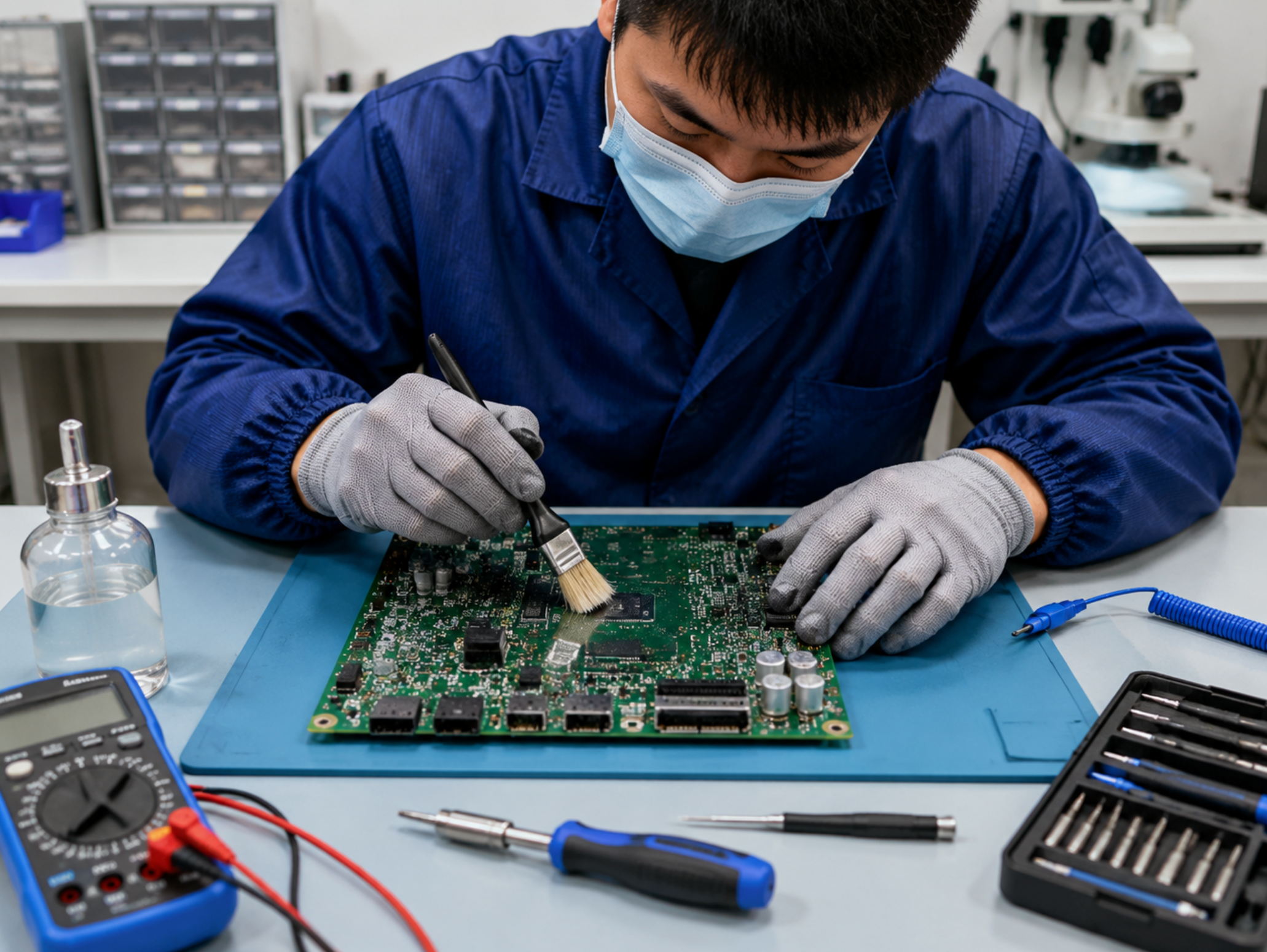
Biannual checks for industrial control systems: For industrial motherboards in PLCs or CNC machines, every six months you should power down, clean the board with isopropyl alcohol and a soft brush, inspect capacitors for bulging, and re-torque any bolted connections. The vibration from industrial machinery loosens connectors over time, and a loose power connector can cause voltage ripple that damages downstream components. Also, check the conformal coating for discoloration—a yellowing coating indicates excessive heat exposure and means your thermal management solution is inadequate.
Annual deep maintenance for high-reliability systems: For medical or automotive boards, plan an annual deep inspection that includes X-ray examination of BGA solder joints if you have access to the equipment, or at minimum, a thermal imaging scan to identify hot spots. This is where the aging test data from our factory becomes your baseline. We provide every client with the recorded test parameters from their production run, so you have a reference point for what "normal" operation looks like.
| Maintenance Cadence | Target Equipment | Key Actions |
|---|---|---|
| Quarterly | Rugged tablets, handheld PDAs | IP-gasket wear check; conformal coating edge inspection; current draw vs. baseline |
| Biannual | Industrial motherboards (PLC / CNC) | IPA cleaning; capacitor bulge check; re-torque connectors; coating discoloration check |
| Annual | Medical / automotive boards | X-ray or thermal imaging scan; thermal paste replacement; aging-test baseline review |
Real-World Application Scenarios Where Maintenance Matters Most
The gap between theory and practice closes when you look at specific applications. Consider these scenarios:
Smart farming with IoT sensors: A Bluetooth-enabled sensor node in a greenhouse operates at 85% humidity. Without proper conformal coating and a maintenance schedule that includes monthly connector cleaning, the board will corrode within a year. Our solution combines the three-proofing paint with a sealed enclosure design, and we advise farmers to use dielectric grease on all external connectors.
Last-mile delivery with handheld PDAs: Delivery drivers drop devices, expose them to rain, and leave them in hot vans. The handheld PDA boards we produce for this market use a thicker PCB substrate for mechanical strength and a dual-coated conformal layer. Maintenance here is mostly about the user: we recommend daily visual checks for screen cracks, which can allow moisture to reach the board, and a monthly cleaning of the charging contacts to prevent arcing.
Automotive telematics in commercial fleets: This is the harshest environment I've encountered. The automotive electronics we manufacture for fleet management systems sit in engine bays where temperature swings from -40°C to +125°C. The PCB fabrication must use high-Tg materials, and the SMT assembly must use high-temperature solder. Maintenance is non-negotiable: a quarterly inspection of the board's conformal coating for cracks, and a yearly replacement of the thermal paste on the main processor. We've seen these boards last seven years with proper care, versus two years without.
Medical monitoring in home care: For the smart medical motherboard, reliability is a life-or-death matter. These boards run continuously, so thermal management is critical. We recommend a biannual cleaning of the ventilation paths and a check of the battery backup system. The conformal coating on these boards is specially formulated to resist disinfectant chemicals, because hospitals clean equipment aggressively.
What a Proper Maintenance Partnership Looks Like
You should not have to figure this out alone. A competent PCB assembly partner will provide you with a maintenance manual tailored to your specific board and application. At NEWEI, when we ship a production run, we include a "care and feeding" document that specifies cleaning agents that won't damage the conformal coating, torque specifications for mounting screws, and recommended inspection intervals. We also maintain a service relationship where you can send boards back for professional rework and re-assembly if needed.
One thing I always stress to our clients is to keep spare boards in storage correctly. A board stored in a non-ESD bag in a humid warehouse will absorb moisture, and when you finally deploy it, the popcorn effect can delaminate the PCB layers during the first power-on. We recommend storing spares in vacuum-sealed ESD bags with desiccant, and we offer this packaging service at our factory. The cost of proper storage is trivial compared to the cost of a field failure.
Another often-missed point: firmware updates affect hardware maintenance. When you update the firmware on your industrial motherboard, you may change how the power management system operates, which can affect thermal profiles. After any firmware update, run a thermal validation test. This is a proactive step that prevents unexpected failures months later.
Finally, let's talk about the cost-benefit math. A typical PCB assembly for an industrial application costs anywhere from $50 to $500, depending on complexity. A field failure, when you factor in downtime, truck rolls, and lost productivity, can easily cost $5,000 to $50,000. When you frame maintenance this way, spending a few hundred dollars a year on inspections and recoating is not an expense; it's the highest-ROI insurance you can buy. Our data shows that clients who follow a structured maintenance program reduce their field failure rate by up to 65%.
If you're designing a new product or have an existing board that needs a maintenance strategy, I encourage you to learn more about our manufacturing capabilities and talk to our engineering team. We don't just build boards; we build reliability into every solder joint, every coating layer, and every test protocol. The bottom line is this: a board that's designed for manufacturability and maintained with intention will outlive its expected lifespan. That's not a promise; it's a pattern we've proven across thousands of production runs.
My honest take: The electronics industry spends too much time chasing the next exotic material and too little time on the mundane discipline of maintenance. I've visited factories where a $2 million SMT line produces boards that fail in the field because the OEM didn't budget $200 for conformal coating inspection equipment. The technology is not the bottleneck; the culture of maintenance is. If you embed maintenance thinking into your design phase—choosing components that can tolerate humidity, specifying coating thicknesses that match your environment, and planning for thermal aging—you will see your return rates plummet. Don't wait for the first field failure to write a maintenance plan. Do it now, and treat it as a core engineering requirement, not an afterthought.
Tags: SMT assembly / PCB fabrication / PCBA / conformal coating /
Prev: Real-World Data: How Custom PCB Assembly Quality Control Impacts Your Product's Failure Rate in 2025
Next: SMT Assembly Trends 2025: How NEWEI Custom PCB Assembly Keeps You Ahead