
Supplier Scorecards Are Rewriting Incoming Quality Control for SMT Assembly Buyers
For most of the past decade, incoming quality control at an electronics manufacturing services company ended in one of two ways: the lot passed, or the lot was rejected and an argument started. That model is quietly disappearing. Across the EMS industry, buyers and factories are replacing the pass-fail quarrel with something calmer and far more useful — the supplier scorecard, a running quarterly record of how each component source actually performs at the incoming bench. The shift matters to anyone buying SMT Assembly capacity, because the scorecard era changes what a factory can promise before the first reel is even ordered. This article walks through what the trend looks like from the incoming dock, how it reshapes three very different service lines — high-volume SMT placement, consumer smart home PCBA, and wearable ODM programs — and what a buyer can do to start scoring suppliers without buying a single piece of new software.
Why the Quarterly Scorecard Replaced the Quarantine Dispute
The old system had a structural flaw: a rejected lot created a loss, and whoever absorbed the loss had every reason to argue. Incoming inspectors hesitated to reject borderline material because rejection meant line-down; suppliers pushed back because acceptance history was invisible to everyone except the two people in the room. The scorecard dissolves that fight by making acceptance history a shared, dated record. When a connector lot fails the mate-demate check for the third quarter running, there is no negotiation — the trend line already exists, and the supplier sees it at the same moment the buyer does. Industry surveys and procurement frameworks have pushed the same direction for years under names like supplier performance management, but what is new in PCBA manufacturing is the granularity: scorecards now break incoming quality into line items that map directly to what happens on the placement floor, rather than a single opaque "quality" grade. The sourcing side of this shift — how component procurement feeds the scorecard with lot-level data — sits inside our component sourcing services, where incoming records and purchase decisions are kept under one system.
What Goes on a Modern Incoming Scorecard
The useful scorecards share a shape. They are short — five to eight line items, not fifty — and every line item ends in something a production planner can act on. The most common items are lot acceptance rate against the sampling plan, defect parts per million on electricals, cosmetic conformity on finished enclosures and boards, documentation accuracy such as date codes and certificates of conformance, and responsiveness, which measures how fast a supplier answers a discrepancy report rather than how fast it ships. Responsiveness is the line item most factories added only after the component shortages of recent years, when the cost of a silent supplier became impossible to ignore. A scorecard without a consequence is just a spreadsheet, so mature programs tie each line to an action: two consecutive red quarters on documentation triggers a certificate audit before the next release, and a green year earns the supplier first-look status on new part numbers. The table below shows how the same line items land differently across three service lines.
| Scorecard line item | SMT volume builds | Smart home consumer PCBA | Wearable ODM programs |
|---|---|---|---|
| Lot acceptance rate | Weighted heaviest; one bad reel idles a placement line | Standard weight; batches are smaller and mixed | Standard weight; early builds use broker stock |
| Defect PPM on electricals | Tracked per reel against AQL sampling | Tracked per batch; consumer returns are the real signal | Tracked per build; volumes too small for firm PPM early |
| Cosmetic conformity | Rarely decisive on bare boards | Decisive; housing color and finish mismatches kill retail lots | Decisive on enclosures that touch skin |
| Documentation accuracy | Date codes and MSL ratings gate the reflow profile | Certificates support retail compliance files | Drives the rework path when drawings change |
| Responsiveness | Measured in hours; line-down cannot wait | Measured in days; tied to retail launch windows | Measured in hours; sample velocity decides program wins |
Placement Floors Read Scorecards Before Scheduling
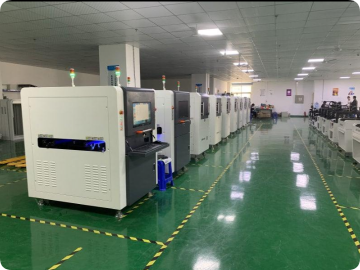
For a high-volume surface mount operation, the incoming scorecard is really a scheduling document in disguise. A placement line that runs thousands of boards a day cannot tolerate a reel that turns out to be mislabeled or moisture-damaged, because the discovery cost is measured in scrapped panels and lost machine hours, not in one bad part. That is why the quality organization behind a line matters as much as the line itself; at our SMT assembly services operation, a quality team of more than twenty people runs the three checkpoints that feed the scorecard — IQC at incoming, IPQC during the process, and OQA before shipment — and standard placement lead times of three to five days leave no room to re-inspect a suspect lot twice. Buyers who read a factory's scorecard discipline before placing an order are, in effect, reading the factory's future on-time record. The trend line to watch in the industry is consolidation: EMS providers are scoring component distributors on the same sheet they score the factories, because in a scorecard world every hand that touches the reel owns a slice of the incoming result.

Consumer Smart Home Batches Live on Cosmetic Consistency
Smart home hardware changes the scorecard's center of gravity. A smart electric toothbrush PCBA or a smart massage glasses board rarely fails on placement accuracy; it fails on the things retail shoppers see — housing color that drifted between two molding batches, silk-screen legends that do not match the app's onboarding flow, or a finish that photographs differently from the listing images. Incoming quality control for consumer smart home products therefore scores cosmetic conformity as a first-class line item, with the incoming bench holding retained samples from the approved golden batch and comparing each new arrival under standardized lighting. The category also multiplies the number of suppliers a scorecard must cover: a single smart home product can carry a PCB fabricator, a plastics molder, a pendant accessory vendor, and a packaging printer, each scored monthly. Retail buyers have noticed. More chain-store and platform sellers now ask their PCBA partners for the incoming trend sheet as part of the vendor-onboarding file, treating a year of green scorecards as a proxy for the discipline they cannot see inside the factory. That is exactly the kind of product range covered by our smart home PCBA services, where consumer-grade incoming checks run alongside the electrical ones.

Wearable ODM Programs Score Suppliers on Sample Velocity
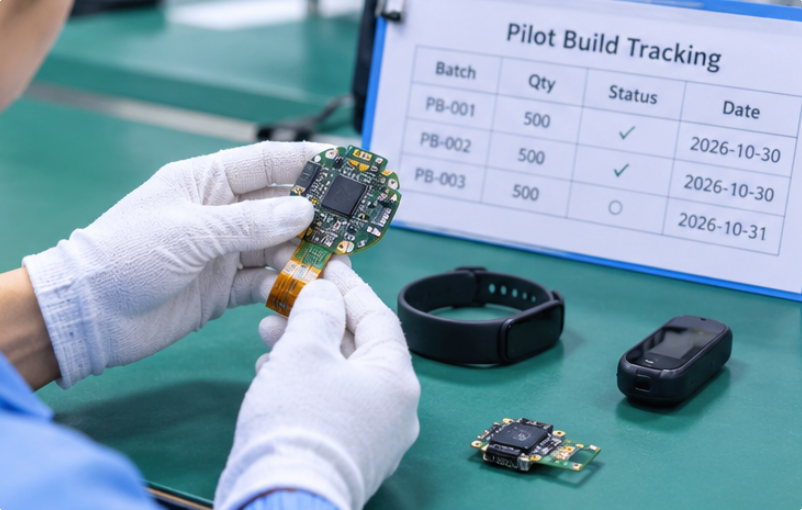
Wearable ODM work bends the scorecard in a different direction again. A typical wearable program moves through more board revisions in six months than an industrial product sees in two years — sensor changes, antenna tuning, a thinner battery strap — and every revision pulls new or substituted parts through the incoming dock. On that terrain, the decisive scorecard line is responsiveness measured in sample velocity: how fast does a supplier turn a discrepancy report during pilot builds, and how often does a substituted part arrive with the documentation the change-control process requires. A wearable program that waits four days for a confirmed replacement sensor does not just slip; it loses the seasonal window that the whole business case was built on. ODM buyers have started writing scorecard expectations directly into development agreements, reserving the right to re-source any line item that goes red for two consecutive pilot stages. It is a quiet rebalancing of power: in the pass-fail era the supplier controlled the narrative of a dispute, and in the scorecard era the data does. Programs of this kind are the daily work of our wearable PCBA services, where pilot-stage incoming checks are scored against the same sheet the customer sees.
Starting a Scorecard Without Buying Software
The most common objection to the scorecard trend is tooling, and it is mostly an excuse. A working incoming scorecard needs four columns per line item — supplier, month, measured value, and traffic light — and one discipline: the incoming inspector fills the sheet the same day the lot is judged, not at month end. A shared spreadsheet with a locked tab per supplier survives contact with reality better than a quality module nobody has been trained on. The practices that separate scorecards that live from scorecards that die are unglamorous: the traffic light thresholds are agreed with the supplier in advance, the sheet is reviewed in a standing quarterly call where both sides bring the same numbers, and every red is answered by a dated corrective action rather than a promise. Factories that already run ISO-aligned quality systems find the scorecard is less a new system than a lens on records they already keep; buyers evaluating a manufacturing partner can see how those records are organized across our EMS manufacturing services, where incoming, process, and outgoing records follow one thread. The trend's direction is not in doubt — the only question is whether a buyer's suppliers get scored before or after the first line-down event does it for them.
Frequently Asked Questions
1. How many line items should an incoming supplier scorecard carry?
Five to eight. The most durable programs score lot acceptance rate, defect PPM on electricals, cosmetic conformity, documentation accuracy, and responsiveness, then resist the urge to add more. A scorecard with twenty line items collapses into noise, and suppliers stop arguing about any single line because the overall grade feels arbitrary. If a new risk appears, the stronger move is to tighten the threshold on an existing line rather than to add a twenty-first row.
2. What is a reasonable review cadence for a supplier scorecard?
Monthly scoring with a quarterly review call is the pattern that holds up best across the industry. Monthly entries keep the data honest and current; the quarterly call is where thresholds get renegotiated and corrective actions get dates. Scoring only quarterly tends to bury the first red month inside an amber average, and scoring weekly turns the sheet into a chore that inspectors abandon by the second month.
3. Does a scorecard replace an incoming inspection plan?
No, and treating it as one is the most common implementation mistake. The inspection plan — sampling levels, AQL classes, test methods — remains the instrument that generates the data; the scorecard is the ledger that makes the trend visible across lots and quarters. A factory that loosens inspection because a supplier's scorecard is green has misunderstood the tool: the green score is an output of the inspections, not a substitute for them.
4. How does scorecard data change the way a PCBA buyer evaluates a new factory?
It turns references into evidence. Instead of asking whether a factory "has quality control," a buyer can ask to see the factory's own incoming trend sheets for the past year — how many red quarters, on which suppliers, and what corrective actions followed. A factory that keeps scorecards on its own component sources is a factory that will also be measurable when your program is the one on the bench, and the manufacturing capabilities behind such records are outlined on our manufacturing capabilities page.
Tags: supplier scorecard /PCBA supplier management /
Next: No more...