
How Incoming Quality Control Protects Your PCB Fabrication
In my experience, the single biggest cause of field failures in assembled electronics is not the placement machine or the solder profile — it is a bad component that slips through the incoming gate. My take: if you control the parts before they ever reach the line, you have already won most of the reliability battle. That is why I keep pushing incoming quality control to the front of every program we run at NEWEI, especially on boards headed for automotive and industrial environments where one counterfeit IC can take down an entire controller.
Why Electronic Component Procurement Is the First Real Test of Quality
The boards we build are only as trustworthy as the parts mounted on them. Start a program with sloppy sourcing and no amount of careful reflow or downstream inspection fully recovers it. That is why we treat our dedicated incoming quality control solutions as the front gate rather than a back-stop, and I tell every OEM to do the same before committing to volume.
For years the industry ran component buying as a pure cost game — chase the cheapest reel, hope the date code is real. That approach has aged badly. Counterfeit and remarketed parts keep surfacing through legitimate-looking channels, and the cost of one bad lot now dwarfs the cents saved on sourcing. Our electronic component procurement starts upstream, with supplier qualification, so the parts that arrive are already vetted before a single one is counted into stock.

Authorized-Distributor Sourcing Beats the Spot Market Every Time
We route most active devices through authorized franchise distributors and traceable brokers with verifiable lot provenance. The spot market still earns its place for long-tail or obsolete parts, but those get pulled into a tighter inspection path instead of the standard flow. The goal is not to erase risk — it is to know exactly where each part came from and to grade that risk before it touches a board.
Supplier Qualification Audits We Run Before a Single Reel Ships
Before a new source reaches our approved list it goes through a qualification audit: business legitimacy, export compliance, sample test reports, and a track record of consistent date codes. We keep the bar high because holding the incoming gate is cheaper than the returns, recalls, and reputation damage that follow a slipped counterfeit. A supplier that cannot show traceability simply does not make the cut.
What Our IQC Line Actually Checks and the Numbers Behind It
Incoming quality control is not a glance at a reel. It is a layered process, and the layers exist because different defect classes hide in different ways. I like to show customers the actual split of what we catch, because the data settles arguments faster than opinion. The table below is a simplified view of how we tier the inspection and what each tier is built to find.
| Inspection tier | Sample scope | What it catches | Typical AQL |
|---|---|---|---|
| Visual and doc check | 100% of incoming lots | Wrong P/N, mixed reels, moisture damage, label mismatch | AQL 1.0 |
| AOI on sampled parts | Per AQL 1.0 / 2.5 | Lead coplanarity, remarking, body crack, terminal defect | AQL 1.0 |
| X-Ray sampling for BGA and QFN | 0.65% to 1.0% of quantity | Voids, wire anomaly, die mismatch, internal structure | AQL 0.65 |
Visual Inspection and AOI on Every Reel
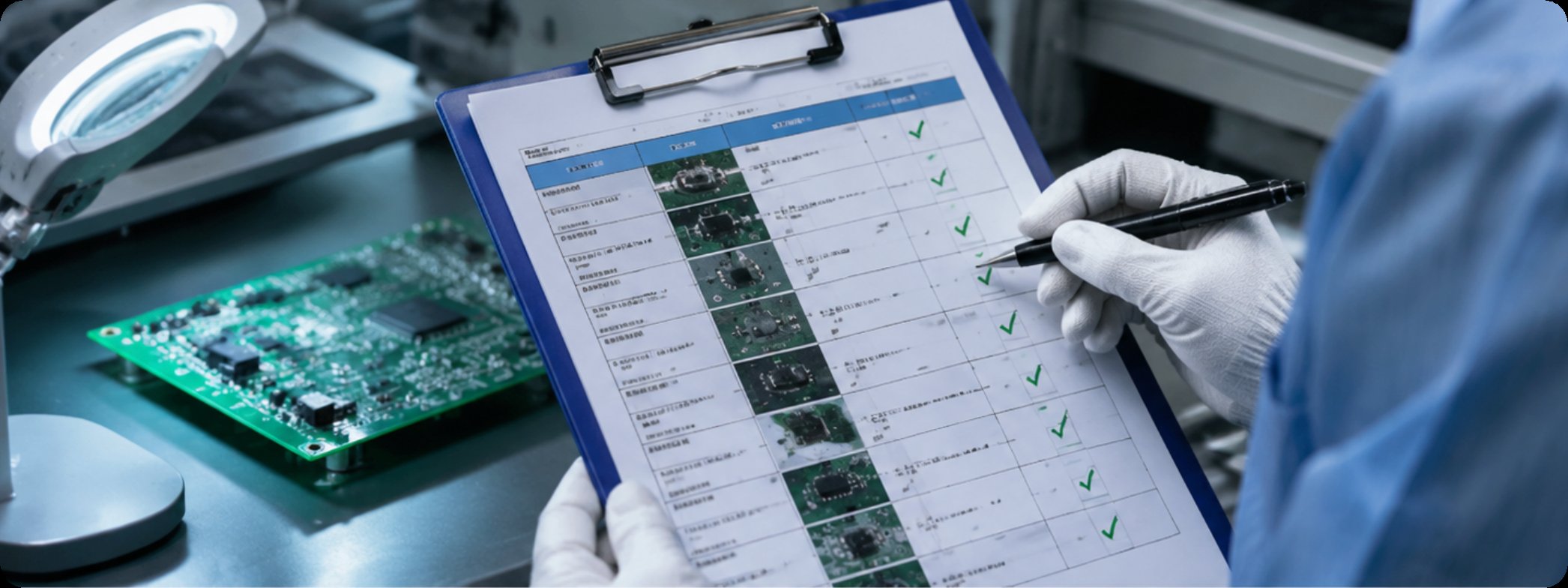
Every incoming lot gets a visual check against the packing list, then automated optical inspection on sampled parts for marking, lead coplanarity, and body defects. On standard SMD packages this catches the obvious counterfeits and most handling damage before they move into stock.
X-Ray Sampling for BGAs and Bottom-Termination Parts
The parts that worry me most are the ones you cannot see — BGAs, QFNs, and other bottom-termination devices where a remarked die hides under a clean package. For those we run X-ray sampling to check for voids, bond-wire anomalies, and internal structure that does not match the declared device. It is the difference between trusting a label and verifying the silicon.
Clean Material Flow Keeps PCB Fabrication Reliable
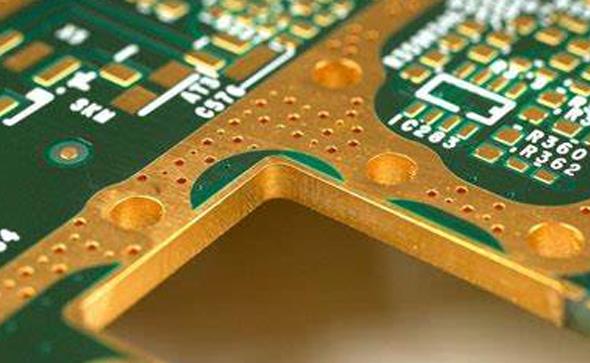
Good sourcing only pays off if the board underneath it is built to hold those parts reliably. That is where our PCB fabrication capabilities come in — the laminate, the surface finish, and the impedance control decide whether a clean component survives into a working product. I treat fabrication and incoming control as one chain, not two departments.
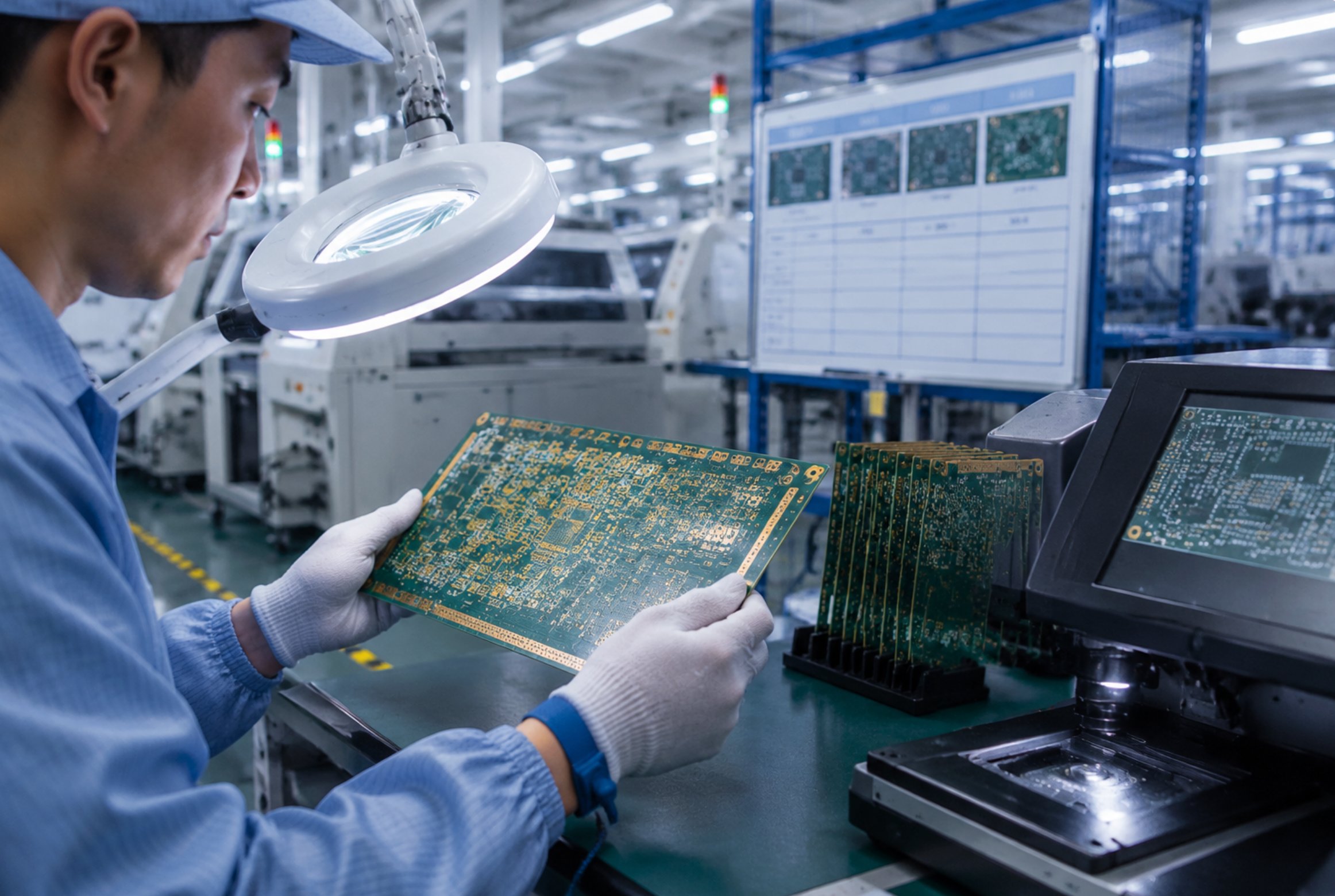
On quick-turn sampling, the bare board and the sourced components often land in the same week. Holding both to the same discipline — verified material in, verified bare board out — is what lets a 24 to 48 hour sample still meet IPC Class 2 or Class 3. Speed without that gate is just faster scrap. The surface-finish choice below is one fabrication decision that interacts directly with component placement, so it belongs in the same conversation as incoming control.
| Surface finish | Best for | Trade-off | Common use |
|---|---|---|---|
| HASL | Cost-sensitive, through-hole | Flatness limits fine pitch | Consumer boards |
| Lead-free HASL | RoHS, general volume | Same flatness limit as HASL | Mainstream volume |
| ENIG | Fine pitch, wire bonding, Al pads | Higher cost, black-pad risk if poorly run | BGA, HDI |
| Immersion Gold | Max shelf life, press-fit | Premium cost | Long-life industrial |
Traceability, ESD Storage, and the Automotive-Grade Exception
The part is verified and the board is built — now it has to stay verified until it is placed. Storage and handling are where plenty of programs quietly lose what incoming control earned them, and it is the step most buyers never visit.
Batch-Level Traceability You Can Hand to an Auditor
Every lot we accept is logged at batch level: distributor, date code, lot number, inspection result, and the board it eventually feeds. If a field issue appears eighteen months later, we walk the chain backward in minutes instead of guessing. For automotive and medical customers that paper trail is the contract, and batch-level traceability is what makes a zero-defect claim believable.
ESD-Compliant Warehousing for Precision ICs
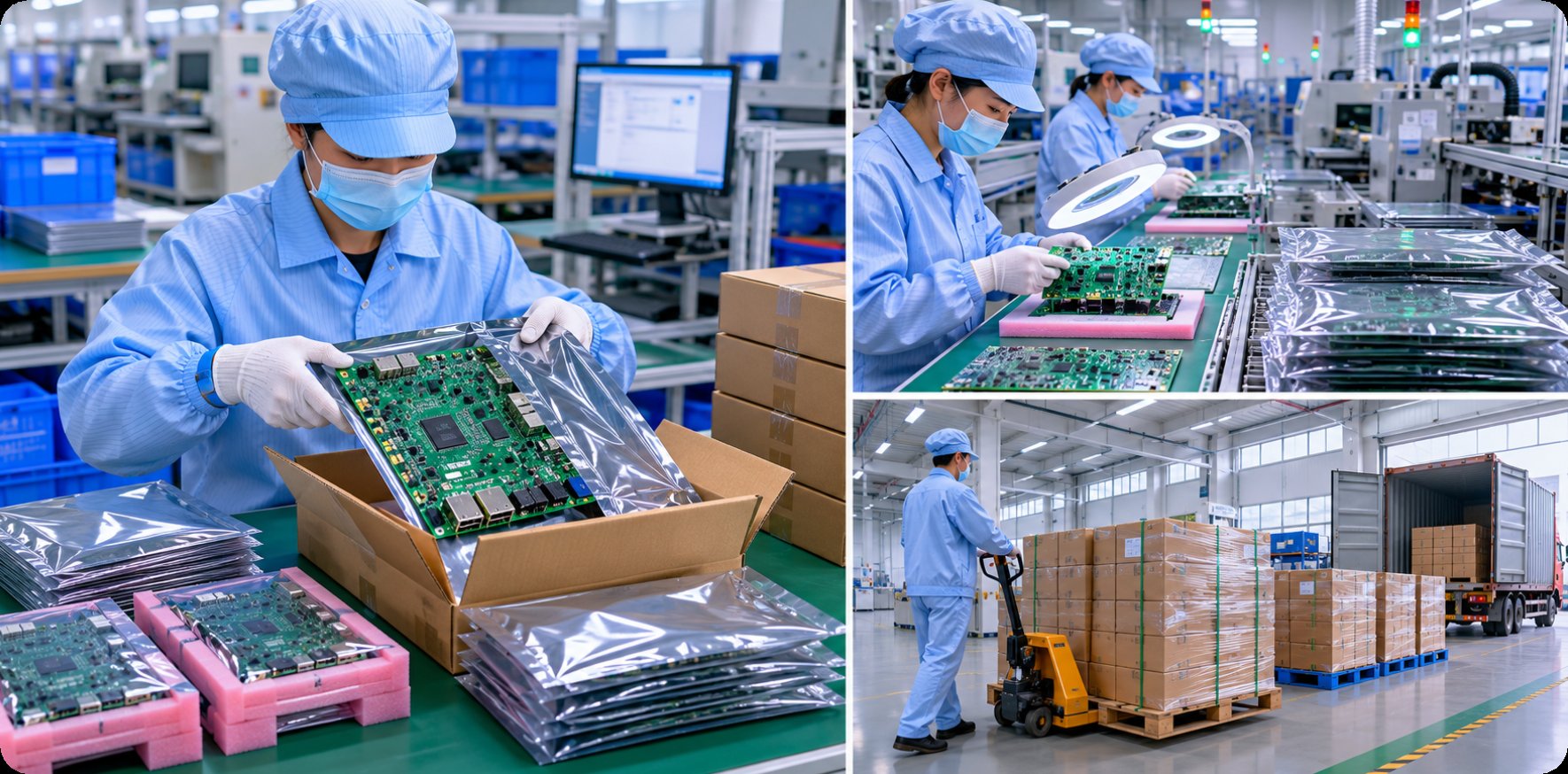
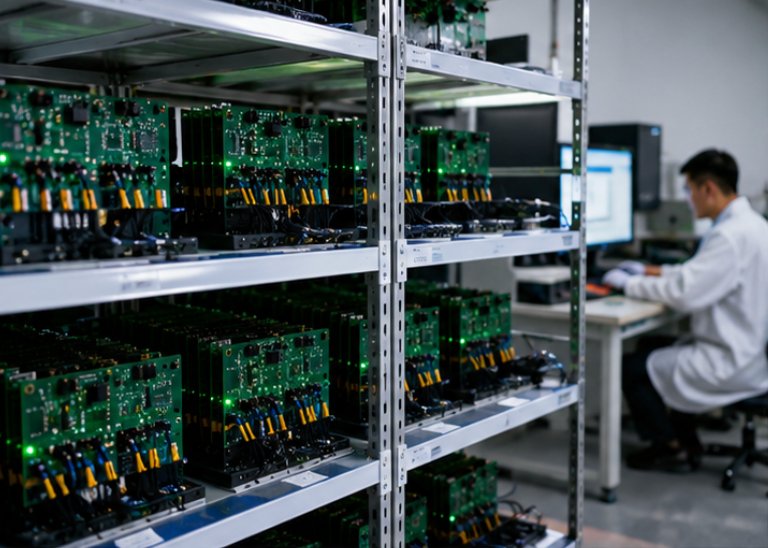
Precision ICs and automotive-grade parts get a stricter home: ESD-compliant shelving, controlled humidity, and separated handling so a sensitive device is never parked next to a static risk. The handling discipline matters as much as the inspection, because a part that passes X-ray and then gets zapped on a bench was never really safe. We run the warehouse as an extension of the line, not a dump for boxes.
From Sourced Parts to a Finished Board: The One-Stop Path
This is the part I am proudest of. Sourcing, fabrication, and assembly sit under one roof, so the hand-offs that normally leak defects simply do not exist. Our electronics manufacturing services wrap component procurement, PCB fabrication, and placement into a single accountable flow, so the person who qualified your parts shares the building with the person who builds your board.
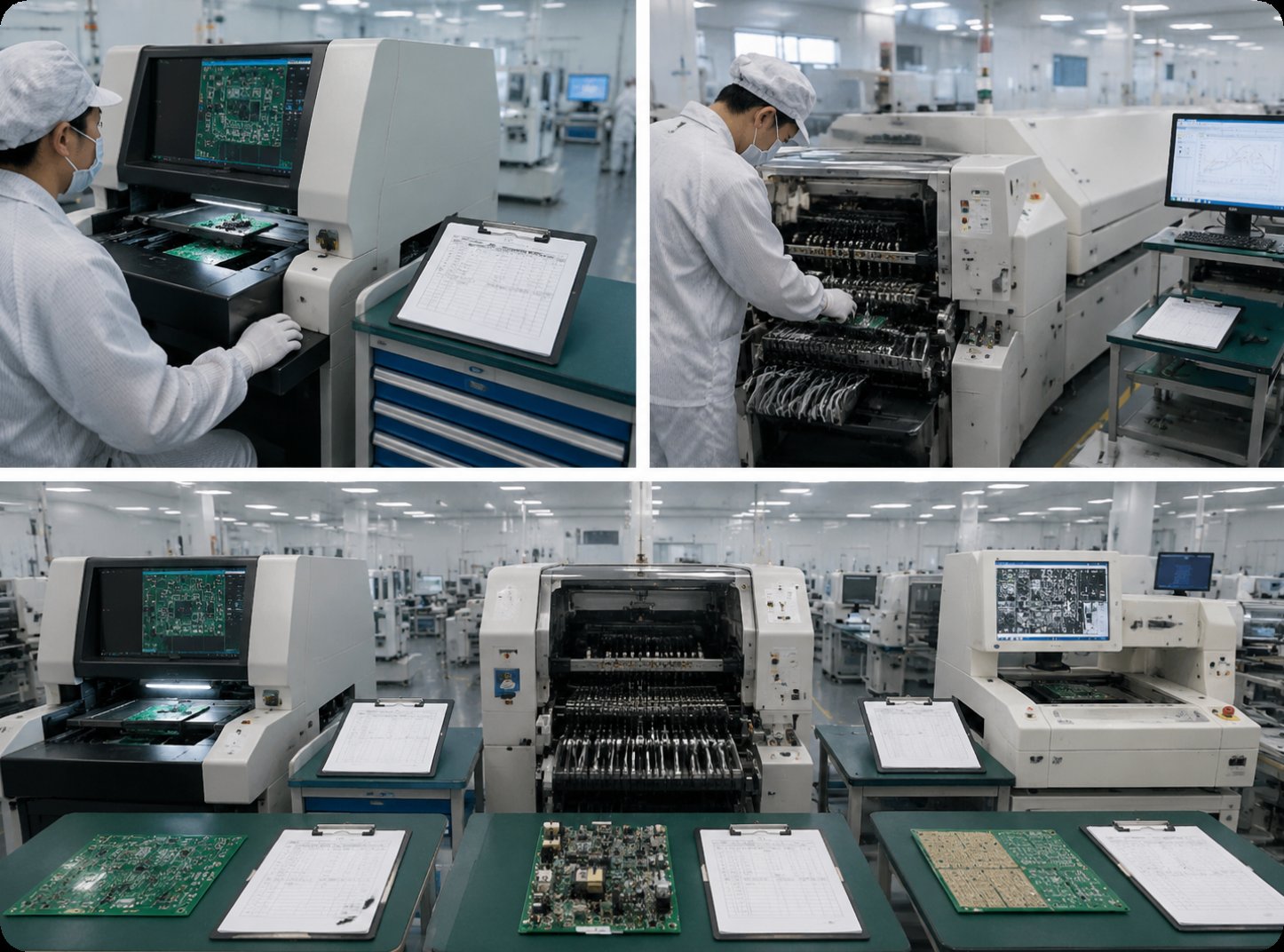
That continuity shows up most clearly on the line itself. Every board moves through our SMT assembly process with full SPI and post-reflow inspection before it reaches functional test, and the parts feeding that line were already verified at incoming. The result is fewer surprises, tighter yields, and a lot less finger-pointing between suppliers when something does go wrong.
Where This Pays Off: Real Application Scenarios
Industrial PC motherboards running 24/7 on factory floors, where a counterfeit capacitor means a line stoppage and a costly service call.
Automotive-grade controller boards, where traceability is mandated and one unknown lot is a recall waiting to happen.
Medical motherboards, where batch records have to survive an audit years after the product ships.
IoT sensor nodes shipped in the tens of thousands, where one bad reel scales into a warehouse of returns.
Rugged handheld devices, where the board takes shock and heat that punish any weak joint the incoming gate missed.
In each of those, the incoming gate is what keeps one bad part from becoming a field campaign. Control it early and everything downstream gets cheaper and quieter.
Bring the BOM Early and Let the Gate Do Its Job
If you are scoping a new board and the sourcing path feels like the weak link, bring it to us early. NEWEI runs free consultation and quotation, and we would rather qualify your parts in week one than explain a failure in month six. Send the BOM and we will show you exactly how the incoming gate protects the board you are about to build — from the first verified reel to the last inspected joint.
Tags: PCB fabrication / electronic component procurement /
Prev: Why Custom Automotive Electronics Is Reshaping Customer Case Programs in 2026
Next: SMT and DIP Assembly Under IPC Standards: What Compliant Electronics Manufacturing Really Demands