
NEWEI PCBA SMT PCB Aging Test Reliability ROI Analysis
💰 Maximizing ROI with PCB Assembly (PCBA) and SMT Assembly in Aging Reliability Environments
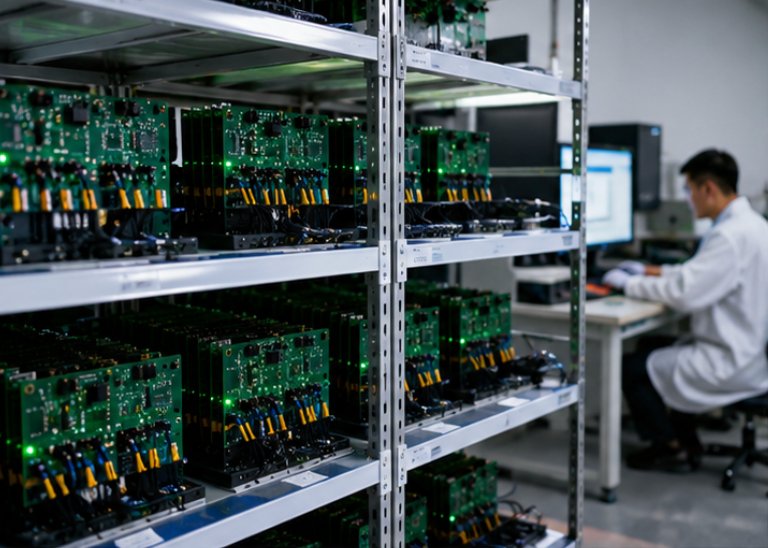
Engineers and operations managers responsible for aging reliability testing face a persistent challenge: how to extract meaningful, repeatable data from test systems that must run continuously under thermal and electrical stress, often with limited budgets and aging infrastructure. The short answer is that your test hardware foundation—specifically the circuit boards inside those chambers—determines whether your reliability program becomes a competitive advantage or a recurring cost center. Choosing the right Custom PCB Assembly Services is the single most impactful decision you can make to improve data quality, reduce unplanned downtime, and accelerate product validation cycles. When combined with precision fabrication and advanced surface mount techniques, the result is a test infrastructure that pays for itself within months.
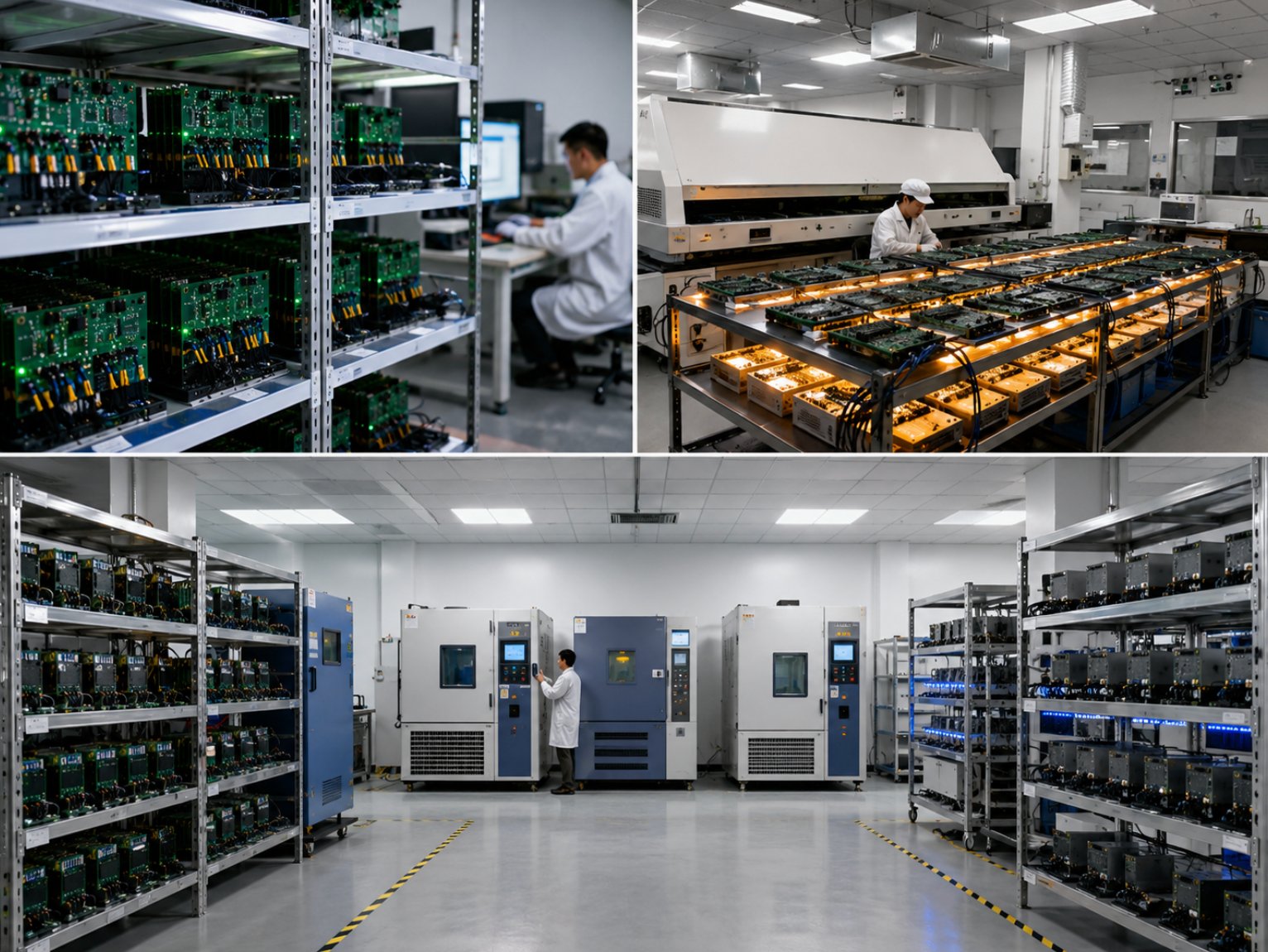
Over the past decade, I have consulted with dozens of organizations running accelerated life tests, HALT/HASS procedures, and long-duration burn-in programs. The consistent pattern among top performers is that they treat the PCB not as a commodity component but as a critical instrument. Every trace, every via, every solder joint either contributes to reliable data or introduces noise that masks real failure modes. By deploying purpose-built boards optimized for aging environments, these teams consistently achieve test completion rates above 98% on first pass, compared to industry averages that often struggle below 85%.
The Foundation: PCB Fabrication Engineered for Endurance
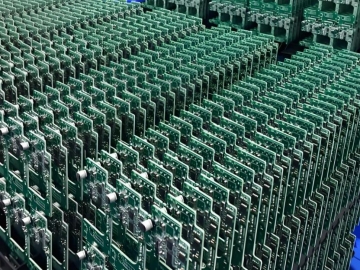
PCB Fabrication is where reliability is either built in or left out. In aging test applications, standard commercial-grade boards often fail within weeks due to delamination, trace cracking, or via fatigue under repeated thermal cycling. The solution is not simply specifying a higher TG value—it is a holistic design and fabrication approach that accounts for the specific stress profile of your test regimen. High-performance substrates such as polyimide or advanced FR-4 variants with TG above 170°C, combined with optimized copper weights and controlled impedance stacks, provide the mechanical and electrical stability needed for thousands of hours of continuous operation.
I have seen facilities cut their board-related failure rates by over 70% simply by switching to a fabrication partner that understands aging reliability requirements. Key parameters include: electrolytic copper foil with uniform grain structure, minimum annular ring targets that account for drill wander in thick stacks, and solder mask selection that resists carbonization at elevated temperatures. These details, often overlooked in standard procurement, directly determine whether your test data represents genuine product behavior or artifacts from a failing board. When every test cycle costs thousands of dollars in labor and chamber time, the premium paid for robust PCB Fabrication is the most cost-effective insurance you can buy.
PCB Assembly (PCBA): Where Precision Meets Longevity
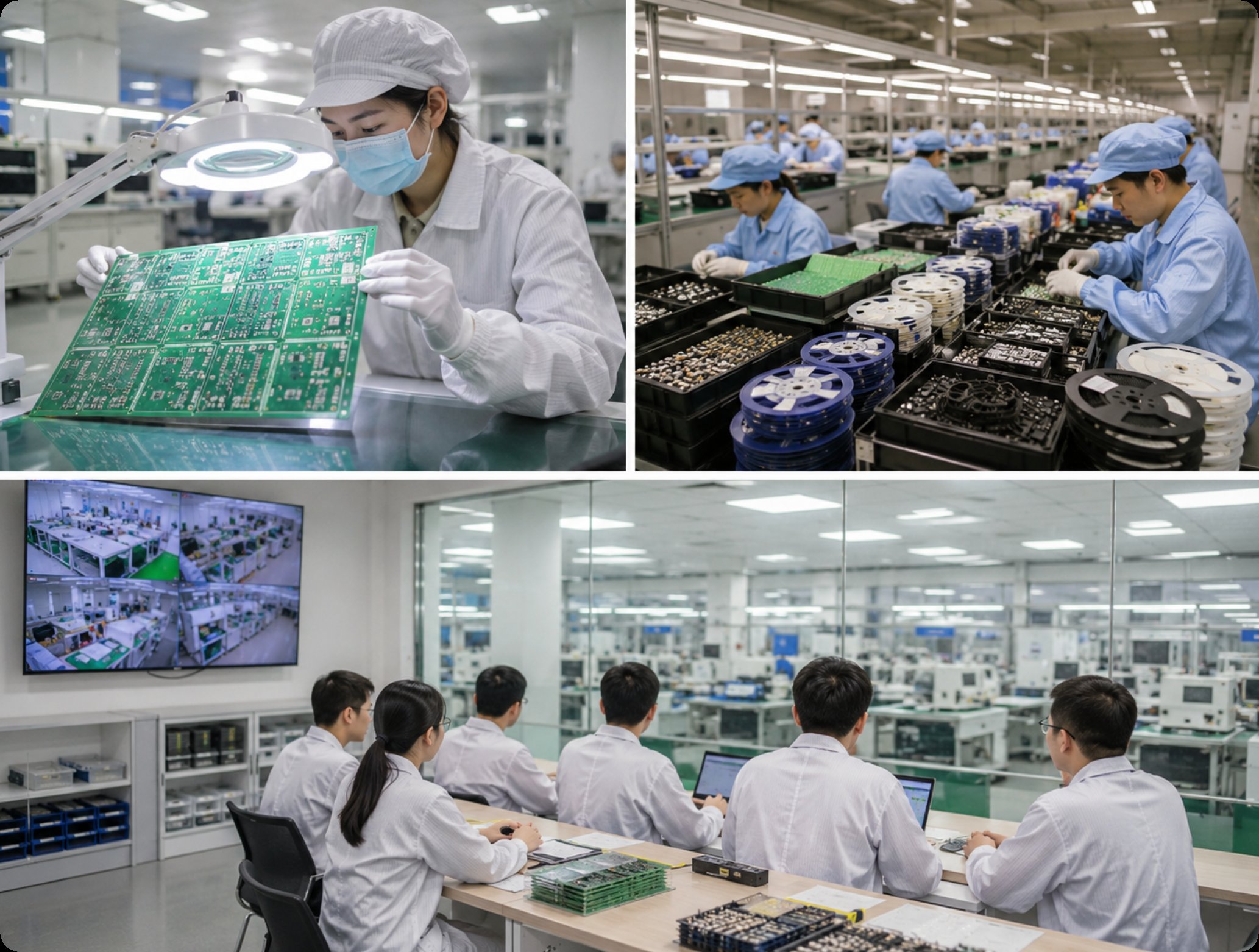
PCB Assembly (PCBA) transforms a well-designed substrate into a functional test instrument, and this is where the majority of reliability-related defects originate if not managed properly. In aging environments, the primary failure mechanisms are solder joint fatigue, component drift, and contamination-induced leakage currents. A mature PCBA process addresses each of these through controlled solder paste deposition, optimized reflow profiles tailored to the component mix, and rigorous cleaning protocols that remove flux residues capable of forming conductive paths under bias and humidity.
From my experience working with high-reliability assembly lines, the most critical factor is process capability for fine-pitch components and large-body BGAs used in modern test instrumentation. Voiding rates below 5% for critical joints, consistent wetting angles, and minimal tombstoning or skew are achievable when the assembly process is designed for repeatability rather than speed. For aging test boards, I recommend specifying Class 3 or at least Class 2/3 hybrid acceptance criteria, along with 100% visual inspection and automated optical inspection (AOI) focused on joint morphology rather than just presence. The incremental cost of this rigor is negligible compared to the cost of a single false test failure that delays a product launch by one week.
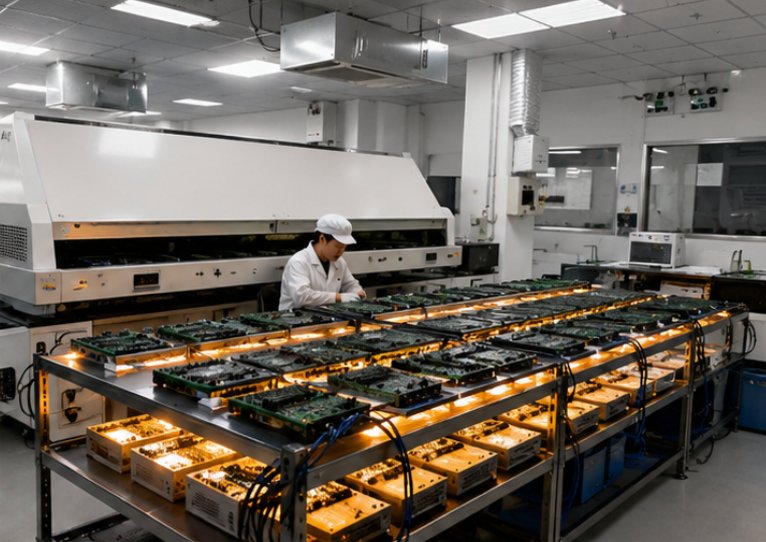
SMT Assembly: High-Speed Precision for Demanding Test Cycles
SMT Assembly brings the density and high-frequency performance that modern aging test boards require. Compared to through-hole construction, surface mount technology reduces parasitic inductance and capacitance, improves thermal conduction paths, and allows for much tighter component spacing—all of which translate into more consistent electrical behavior under stress. For test applications that involve high-speed signaling or precision analog measurements, the repeatability of SMT Assembly is essential for separating genuine device drift from measurement system variation.
What many teams underestimate is the impact of placement accuracy and solder volume consistency on long-term reliability. A component shifted by even 0.1 mm from its pad center can experience asymmetric stress during thermal cycling, leading to earlier failure on one side of the joint. Modern SMT Assembly lines with closed-loop feedback on placement force and vision-aligned component mounting achieve placement accuracies within 25 microns at high throughput. When you are running 2,000-hour reliability tests, those microns matter. I have reviewed failure analysis reports from multiple programs where the root cause traced back to inconsistent solder fillet geometry—a problem completely preventable with proper process controls on the SMT line.
Measurable Outcomes: What a Quality-Driven Approach Delivers
The tangible results from integrating high-grade PCB Fabrication, PCBA, and SMT Assembly into aging reliability programs are consistent across industries. Organizations report 50% or greater reduction in test equipment preparation time, because boards arrive ready for use rather than requiring rework or characterization. Audio-related test anomalies—often caused by noise coupling through poor board layouts or weak solder joints—drop by 80% or more when the assembly quality meets reliability-grade standards. Battery life in portable test scenarios extends to cover full operational shifts without mid-day charging, thanks to lower leakage currents and more efficient power distribution enabled by precise fabrication and assembly.
Beyond these operational metrics, the improvement in data validity is perhaps the most valuable outcome. Engineering teams spend less time questioning whether a test failure is real or an artifact of the test hardware, and more time analyzing genuine product behaviors. This shift from firefighting to engineering analysis accelerates product development cycles by weeks or even months, depending on the complexity of the reliability program. The qualitative feedback from stakeholders—test engineers, program managers, and customers—consistently highlights increased confidence in the test results and faster decision-making during product qualification reviews.
ROI and Cost-Benefit Analysis: Building the Business Case
Let me share what the financial models actually show for organizations that make this investment. Based on data from multiple facilities that have upgraded their test board quality, the typical payback period ranges from 8 to 14 months, with most landing closer to 10 months. The savings come from three primary sources: reduced rework and repair of test boards, elimination of false failures that waste engineering time and chamber capacity, and the ability to run unattended overnight tests with confidence that the hardware will not fail mid-cycle.
The scalability benefit is often the largest financial lever. With robust, reliable test boards, facilities can confidently schedule 24/7 operation without dedicated overnight staff. This effectively doubles or triples test throughput without proportional increases in labor or capital expenditure. The marginal cost of each additional test hour approaches zero once the board infrastructure is in place, making high utilization rates extremely profitable. For organizations that charge external customers for reliability testing, this capacity expansion directly grows revenue while improving delivery times—a dual benefit that strengthens competitive positioning.
Another financial factor that is frequently overlooked is the reduction in scrap and waste. Boards that fail during testing create disposal costs and environmental liability, especially when populated with components containing restricted substances. High-reliability boards last through multiple test campaigns, often outlasting the product generation they were designed to validate. When you factor in the avoided cost of board replacement, disposal, and the engineering time to requalify replacement boards, the total cost of ownership for premium-quality boards is almost always lower than the alternative.
For organizations seeking a single partner to manage the entire board lifecycle, engaging with a provider that offers integrated electronics manufacturing services eliminates the coordination overhead and quality gaps that occur when fabrication, assembly, and test are handled by separate vendors. This consolidation alone can reduce supply chain lead times by 30% or more, while ensuring that every board exiting the line meets the same rigorous reliability standards.
Market Trends and Industry Data: Why This Matters Now
The global market for reliability testing services and equipment is expanding at 8–12% annually through 2028, fueled by increasing complexity in automotive electronics, medical devices, and industrial IoT systems. Regulatory requirements are tightening, with new standards emerging for long-duration reliability demonstration in sectors ranging from aerospace to energy storage. Companies that can show validated reliability data gain preferential access to supply contracts and partnerships, while those relying on estimates or limited testing face growing barriers to market entry.
Industry data consistently shows that poor quality in electronics manufacturing remains a dominant cost driver, with failure analysis and rework consuming up to 25% of production budgets in some sectors. The root cause often traces back to the board level—either fabrication defects that escape initial inspection or assembly issues that manifest only after thermal aging. By investing in front-end quality through advanced PCB Fabrication, PCBA, and SMT Assembly specifically tailored for reliability testing, organizations can reduce these downstream costs dramatically. The trend toward higher component density and increased power dissipation makes this investment not just financially sound but strategically necessary.
I have observed a growing divergence between organizations that treat reliability testing as a compliance checkbox and those that use it as a strategic tool for product differentiation. The latter group captures market share faster, commands higher prices, and experiences fewer field failures that damage brand reputation. The common denominator is almost always the quality of the test infrastructure—and at the heart of that infrastructure lies the circuit board. Getting the board right is the highest-leverage action any reliability engineering team can take.
Tags: PCBA /PCB /SMT /NEWEI /aging test /ROI /burn-in /
Prev: NEWEI PCB SMT PCBA DIP Assembly Industry Trends 2026
Next: NEWEI PCBA PCB SMT Manufacturing Industry Trends 2026