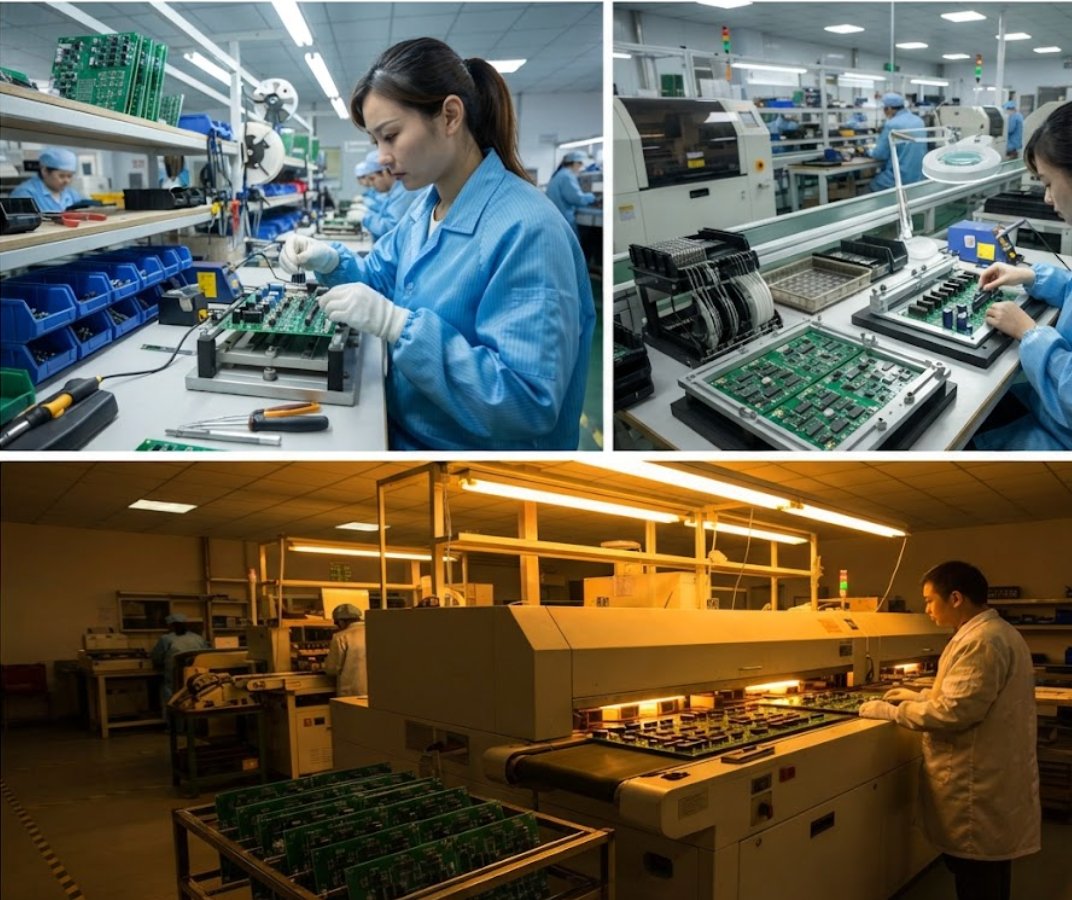

NEWEI Electronics Quality Control and Testing Maintenance: PCBA, SMT Assembly and PCB Fabrication
In my fifteen years of working with electronics manufacturers, I've seen too many promising products fail silently in the field—not because of design flaws, but because production quality wasn't validated under real-world stress. That's the ugly truth most contract manufacturers won't tell you: a board that passes basic electrical testing can still die within weeks of deployment. That's why at NEWEI, we've built our entire quality framework around a rigorous aging test protocol that catches infant mortality before your product reaches a customer. We don't just assemble boards; we validate every single unit through a systematic dedicated quality inspection solutions process that simulates months of operation in hours. This approach has slashed our field failure rates to below 50 PPM—a number we're proud to stand behind. If you are looking for truly reliable Custom PCB Assembly Services, this is the standard you should demand.
My take: The biggest mistake OEMs make is treating "quality control" as a final inspection step rather than an integrated lifecycle process. By the time you're testing at the end of the line, you've already spent money on bad boards. We start quality at incoming component inspection and carry it through every single step—including the aging test that most shops skip. If you're not running a full burn-in on your PCBA, you're gambling with your brand reputation.
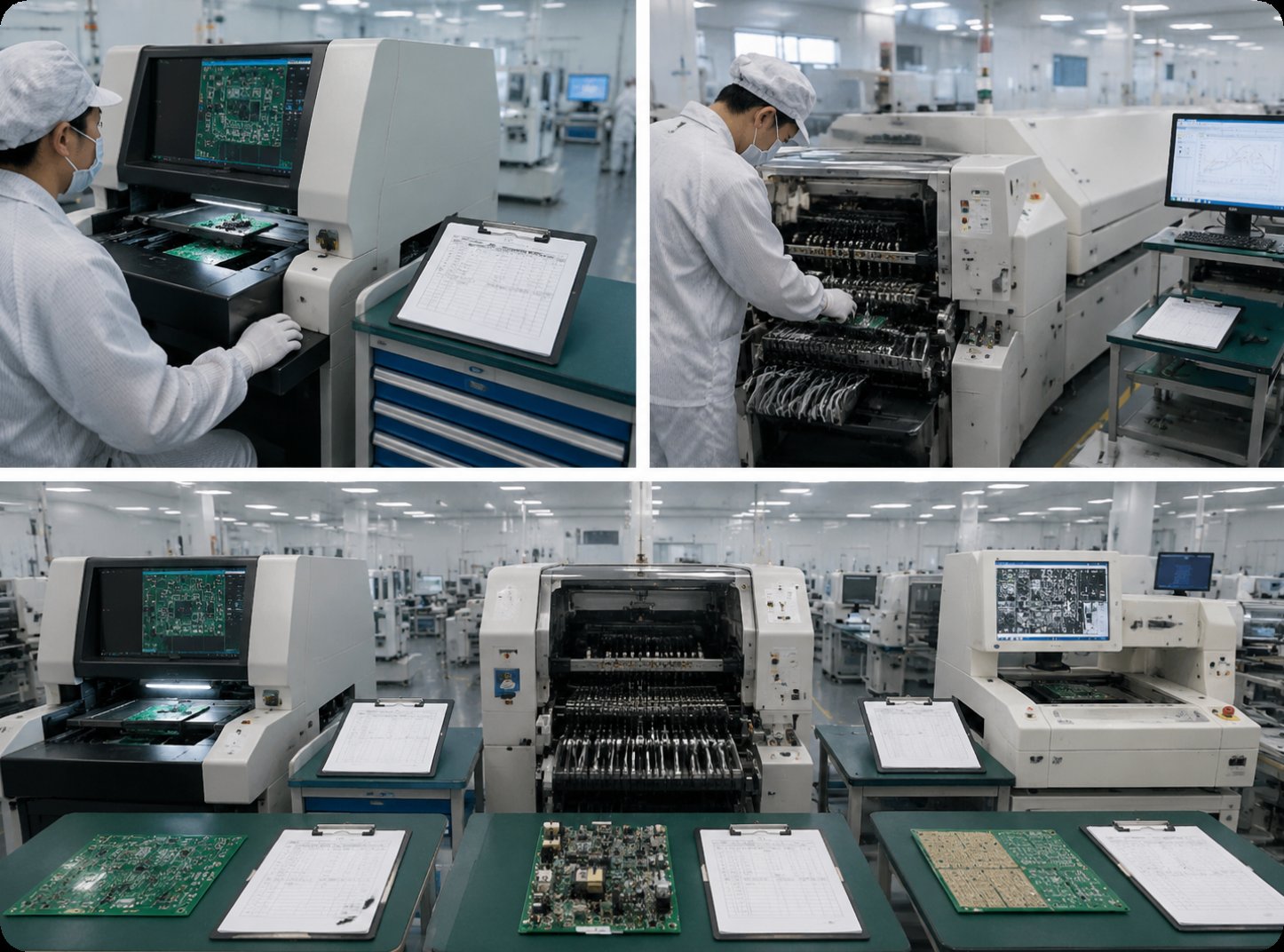
What an Aging Test Actually Covers—And Why Most Shops Don't Do It Right
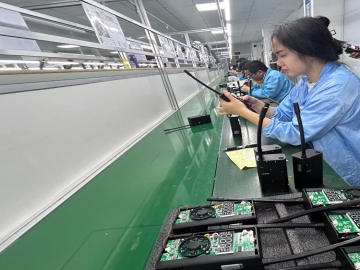
Let's be blunt: a standard functional test (FCT) tells you if a board works at that exact moment. An aging test tells you if it will still work next month. During our burn-in process, we apply combined stress factors: elevated temperature (typically 60-85°C), voltage margining, and cyclical power-on/power-off sequences. We run this for 24 to 72 hours depending on the product class. For example, our industrial communication motherboard OMW-4210A undergoes a 72-hour aging cycle because it's designed for 24/7 operation in factory environments where downtime costs thousands per minute. The aging test reveals weak solder joints, marginal components, and latent defects that a room-temperature test will never catch. We track every parameter—current draw, signal integrity, temperature rise—against a golden unit baseline. If anything drifts beyond spec, that board is flagged, analyzed, and never shipped.
SMT Assembly Meets Rigorous Quality Validation
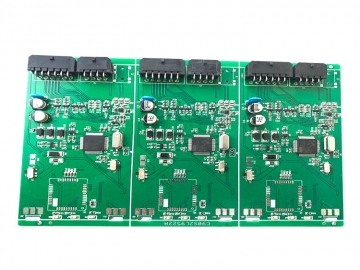
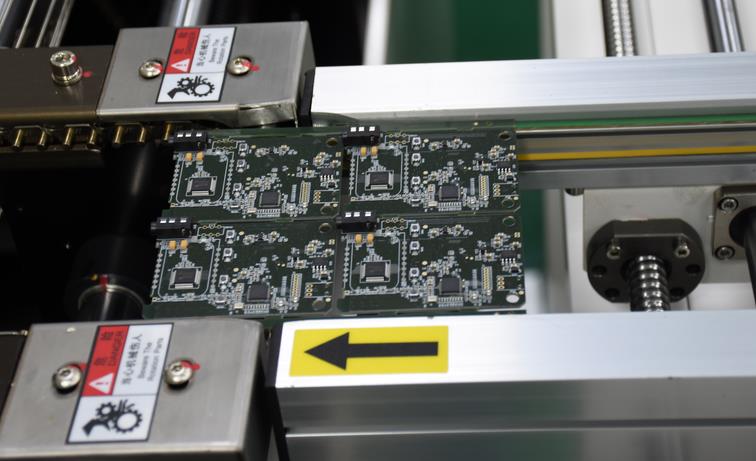
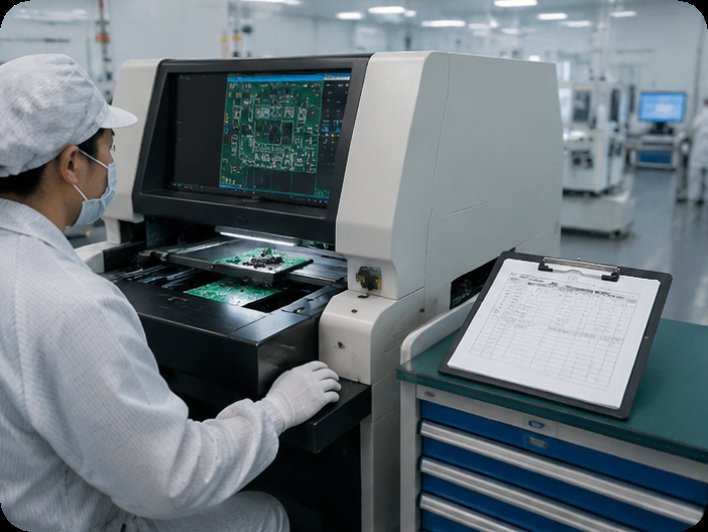
Quality doesn't start at aging; it starts at the first solder paste deposit. Our SMT assembly line is equipped with 10-zone reflow ovens and closed-loop temperature profiling that ensures every joint reaches the exact thermal profile required. But even with perfect soldering, components themselves can have hidden defects. That's why we pair every assembly run with SPI (solder paste inspection) and AOI (automated optical inspection) before the board ever reaches the aging chamber. The combination of precision assembly and comprehensive stress testing creates a closed-loop quality system. We recently completed a run of Bluetooth thermometer PCBA boards where the aging test caught a batch of capacitors that had intermittent leakage under load—something no visual inspection would have found. The client avoided a recall that would have cost them over $100,000.
Product & Service Synergy: How Industrial Motherboards and Rugged Tablets Benefit from Combined Services
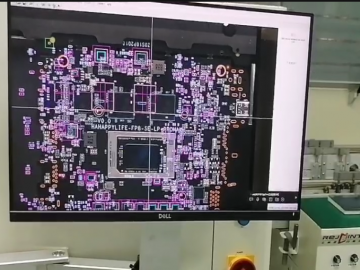
One of the most common questions I get is, "Can you really handle both my industrial motherboard and my rugged tablet in one place?" The answer is yes—and the synergy is exactly why customers come to us. Take our industrial motherboard line, for example. These boards require tight impedance control, multiple copper layers, and careful component placement for thermal management. We combine PCB fabrication with SMT assembly and a full aging test cycle to ensure these boards can handle 24/7 operation in dusty, vibrating environments. On the same production floor, we're building rugged tablets that demand conformal coating, sealed connectors, and drop-test validation. Our PCBA three-proofing paint service applies a uniform coating that protects against moisture, dust, and chemical exposure—critical for both products. By managing both product lines under one roof, we reduce lead times, eliminate handoff errors, and ensure consistent quality across the board. The aging test for these products includes vibration and humidity cycling, not just thermal stress, because their real-world environments are harsher than a controlled lab.
Real-World Applications: Where Our Aging Test Protocol Makes the Difference
Here are five scenarios where a robust aging test—backed by quality assembly—has saved our customers from disaster:
Smart home hubs: A customer's smart electric toothbrush PCBA board was experiencing random resets after two weeks in the field. Our aging test revealed a marginal voltage regulator that only failed under continuous load. We swapped the component and the problem disappeared.
Automotive electronics: An infotainment module needed to survive 85°C cabin temperatures. Standard testing passed, but our extended aging cycle at 90°C with voltage margining exposed a cold solder joint on a BGA package. Rework saved the entire production batch.
Medical devices: A Bluetooth thermometer OEM required zero field failures for FDA compliance. We ran a 48-hour aging test on every board, logging temperature and current data. The result? Zero returns in the first six months of production.
Industrial automation: A factory using our industrial mini PC boards reported intermittent communication failures. Our analysis traced the issue to a connector that loosened under thermal cycling—something only an aging test would catch. We switched to a locking connector and requalified the design.
Consumer electronics: A handheld game console needed to survive shipping and customer abuse. Our combined drop test and aging cycle identified weak points in the power management circuit, allowing the design team to reinforce the layout before mass production.
Each of these cases reinforces the same lesson: quality is not a checkpoint, it's a culture. And that culture starts with the first incoming component inspection and continues through the final packaging check.
How to Choose a Partner That Delivers Real Quality
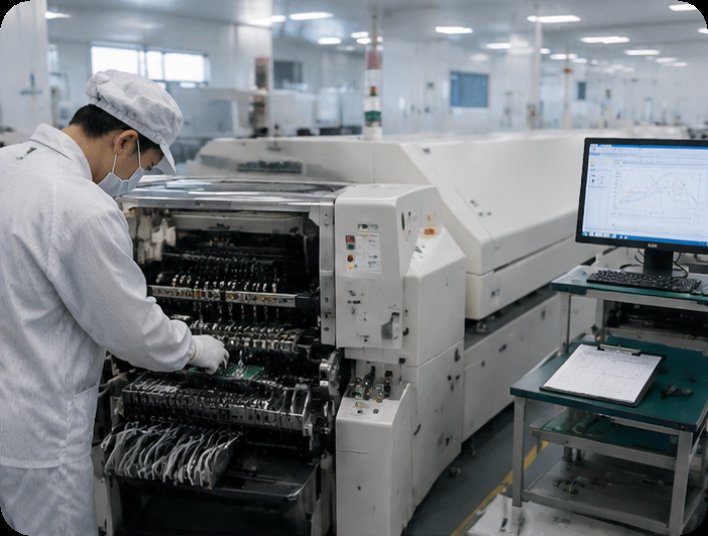
I've worked with dozens of EMS providers over my career, and I can tell you the ones that deliver consistent quality share three traits: they invest in test equipment, they document everything, and they don't cut corners on aging. At NEWEI, we've made the decision to run every production lot through a full aging cycle—not because our customers always ask for it, but because we know it prevents failures. Our manufacturing capabilities include in-house PCB fabrication, component procurement, SMT and DIP assembly, conformal coating, and comprehensive testing—all under one roof. This vertical integration gives us control over every variable that affects quality. If you're evaluating a contract manufacturer, ask them three questions: Do you run aging tests on every board? Do you track test data per serial number? Do you have a closed-loop corrective action system? If the answer to any of these is no, you're taking a risk.
We're not perfect—no one is. But we've built a system that catches problems before they become your problems. From the initial design review to the final aging test cycle, every board we ship has been validated under conditions that simulate its real life. That's the difference between a manufacturer that just builds boards and one that builds reliability. Contact us today for a free consultation and quotation. Let's talk about how we can apply our PCB assembly (PCBA) expertise to your next project—and give you the confidence that your product will perform when it matters most.
Related reading: Explore our full EMS capabilities to see how we support projects from prototype to high-volume production.
Tags: PCBA /PCB /testing /SMT /NEWEI /quality control /AOI /maintenance /inspection /
Prev: NEWEI Electronics Manufacturing Customer Case Comparison: PCB Fabrication, PCBA and SMT Assembly
Next: NEWEI Electronics Packaging and Delivery Customer Case Study: PCBA, SMT Assembly and PCB Fabrication