
Electronic Component Procurement, Custom Smart Wearable PCBA ODM and Custom Electronic Devices PCBA: Maintenance Decides Before the Board Ships
A smart bracelet that comes back from the field with a dead cell, a VR headset board that fails after a coating touch-up, a Bluetooth headset that cannot be opened without destroying the shell — none of these failures start on the day the unit breaks. They start months earlier, in decisions that never appear on a maintenance schedule: which distributor channel feeds the replacement parts, whether the battery sits on a connector or is soldered flat, and whether the repair bench ever received a document worth following. For a wearable program, upkeep is decided three times before a single unit ships.
Shenzhen Newei Industrial builds all three decision points into one production floor. The wearable PCBA services line runs VR glasses, massage belts, smart bracelets and Bluetooth headsets, and the same plant handles the sourcing and the consumer-device boards that share those benches. This article walks the three contact points in the order a program actually meets them, and shows what each one locks in.
Where Spare Parts Get Locked In
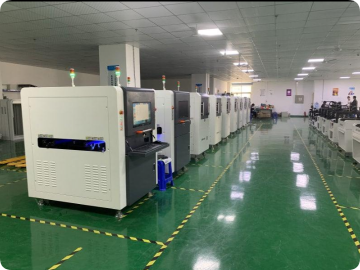
The first contact point is purchasing, and it decides whether a repair is even possible two years out. Newei runs sourcing through a supply chain system that audits and certifies every supplier, recognizes samples and small-batch specifications before volume, and backs the flow with an IQC incoming inspection that applies AQL sampling to all core components in a dedicated inspection lab. Two levers matter most for wearables: centralized buying keeps the price of a replacement sensor or cell stable across repeat lots, and a ten-year cooperative relationship with original factories and agents gives priority on continuous supply and factory-level technical support. A single buyer working through online traders gets neither — no consistency guarantee and no channel back to the original manufacturer when a part silently changes die revision. The Electronic Component Procurement service formalizes exactly this: audited channels, pooled demand and an inspection gate before anything reaches the line.
The Drawing Stage Sets the Rework Path
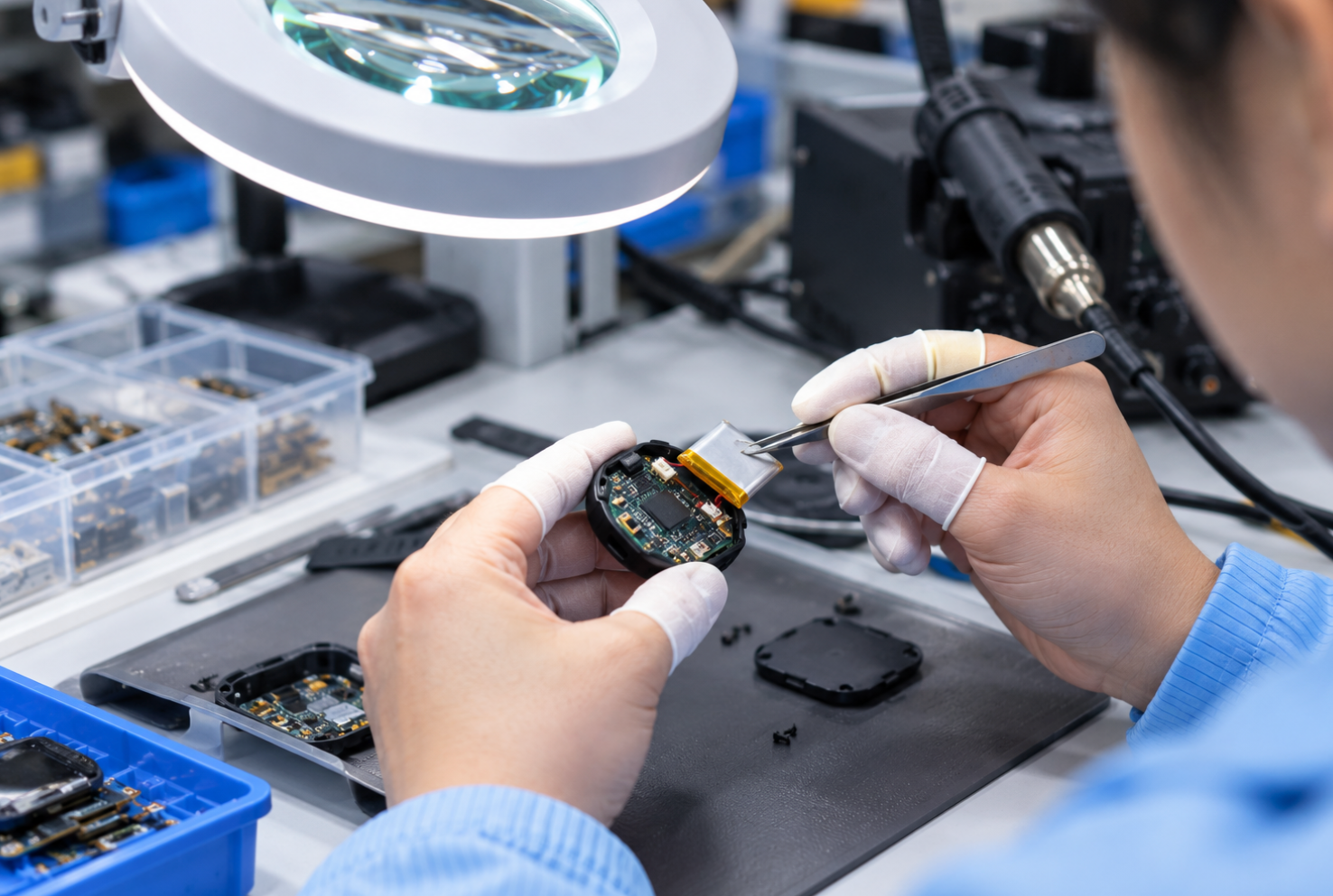
The second contact point sits on the ODM drawing itself. A wrist-worn board is small, sealed and body-worn, so every extra screw, every glued membrane and every soldered-down cell is a promise the service bench will have to keep. On the custom smart wearable PCBA ODM line the maintainability calls are made while the layout is still open: whether the battery lands on a connector or flat on pads, where the test points go so a failed unit can be probed without a full teardown, and how the conformal coating window is masked so a touch-up can reach the joint it needs. A bracelet board designed with a connectorized cell and an exposed test pad comes back from the field in one piece; the same product with a bonded cell often ends its life at the first battery swap.

Repair Records as a Deliverable
The third contact point is documentation, and on the consumer-device side it is treated as a product in its own right. The consumer electronics PCBA services floor builds smart glasses motherboards, wireless audio system boards and projector boards alongside the wearable lines, and the repair bench for those programs works from the same record chain: incoming failure photo, symptom note, board revision, rework action, and post-repair functional result. When a customer's service team receives that chain with each return, the second repair of the same failure mode takes minutes instead of an afternoon of guessing. Units that ship without it turn every field return into a new investigation.

A Four-Column Ownership Sheet
The three contact points divide cleanly once they are written side by side:
| Contact Point | Who Owns It | What It Locks In | What It Cannot Fix Later |
|---|---|---|---|
| Sourcing and incoming inspection | Electronic Component Procurement | Part continuity, die-revision consistency, AQL-verified quality of replacements | A part the original factory has discontinued |
| ODM layout and coating mask | Custom Smart Wearable PCBA ODM | Battery on a connector, reachable test points, reworkable coating window | A cell bonded flat in a sealed shell |
| Return documentation | Custom Electronic Devices PCBA | Failure photo, revision, action and result on every repaired unit | A failure mode nobody photographed the first time |
Read left to right, the sheet explains why maintenance budgets leak: the columns are owned by different teams, and a program that treats upkeep as a post-launch activity discovers all three gaps at once. The our electronics manufacturing services page describes how the sourcing, ODM and assembly responsibilities stay under one roof, which is what keeps the columns talking to each other.
How the Three Sheets Stay in Sync
Ownership split across teams only works if the sheets talk. On the Newei floor the sync runs through three routine documents. When a supplier changes a part, the sourcing sheet records the die revision and the change lands on the ODM layout review before the next lot is scheduled — a sensor that moves from one package outline to another invalidates the coating mask and the test-point plan at the same time. When the layout changes, the revision number propagates to the repair record template the same week, so a bench receiving a return can tell at a glance which drawing generation it is holding. And when the bench logs a new failure mode twice in one month, that entry routes back to sourcing as a candidate question about the part lot rather than staying a repair anecdote. The loop is unglamorous, but it is what turns three separate responsibilities into one maintenance position. Programs that skip the sync get the classic wearable failure: purchasing approves an alternate cell, the layout never hears about it, and the first return with a swollen pack arrives against a drawing that no longer matches the unit in the bag.
What to Ask Before the Pilot Run
Three questions catch most of the leakage. Ask the sourcing team which parts on the bill of materials have a second approved channel, not just the cheapest one. Ask the layout team to point at the drawing where the battery connects and where the test pads sit — if the answer takes longer than a minute, the maintainability call was never made. Ask the repair bench to show one completed record chain from a recent return; a real one has a photograph and a board revision on it, and an empty bench system has neither. Programs that ask these three questions before the pilot run consistently skip the most expensive class of surprises, the kind that only surface after thousands of units are on wrists.
Frequently Asked Questions
1. How early should maintainability be reviewed in a wearable program?
At the layout review, before the first pilot batch. The battery connection type and the coating mask window are drawing-stage calls; after SMT has run, changing either means new stencils, new fixtures and a repeat of first-article inspection.
2. Does centralized sourcing really matter for low-volume wearable projects?
It matters most there. A 5,000-unit bracelet program has no leverage with a distributor on its own, so a discontinued sensor or a silent die revision lands entirely on that project. Pooled demand across the plant's programs keeps the same part flowing to small batches.
3. What should a repair record contain to be useful?
Four things minimum: a photo of the failure as received, the board revision, the exact rework action, and the post-repair functional result. The first entry usually decides whether the second repair of the same mode takes ten minutes or a full day.
4. Can conformal coating be applied only where needed?
Yes, and on wearables it should be. Masking the connector zones and test points during the coating pass keeps later rework possible; a full flood coat over an unmasked board seals every joint and turns a two-minute touch-up into a strip-and-rebuild.
Maintenance is not a service plan appended after launch — it is a set of commitments written into sourcing contracts, layout drawings and repair logs. Teams that assign the three contact points early get wearable programs whose field returns shrink a failure mode instead of just recording it.
To see the manufacturing capabilities behind these three contact points, learn more about our manufacturing capabilities.
Tags: component procurement /wearable PCBA maintenance / ODM design for service /
Prev: Where Each Fault Gets Caught on a Custom Industrial PC PCBA ODM Order
Next: Supplier Scorecards Are Rewriting Incoming Quality Control for SMT Assembly Buyers