
Before the Box: The Performance Gates a Smart Home PCBA Clears
A smart home product earns its performance numbers in three distinct rooms, and none of them is the marketing floor. The first is a bench where a bare customized circuit board powers up for the very first time. The second is an assembly line where that board gets screws, seams and a housing. The third is an aging rack where finished units sit for hours nobody bills the customer for. A brand that only asks for the final test report is reading the last chapter of a book whose ending was decided much earlier.
This piece walks those three gates in the order a real build meets them — custom board, product assembly, aging test — using the way NEWEI actually runs each stage for smart home electronics PCBA and neighboring product families. The point is not that testing exists. It is that each gate answers a different question, and the questions come in an order that saves the most money when respected.
Why a Spec Sheet Never Survives First Power-On
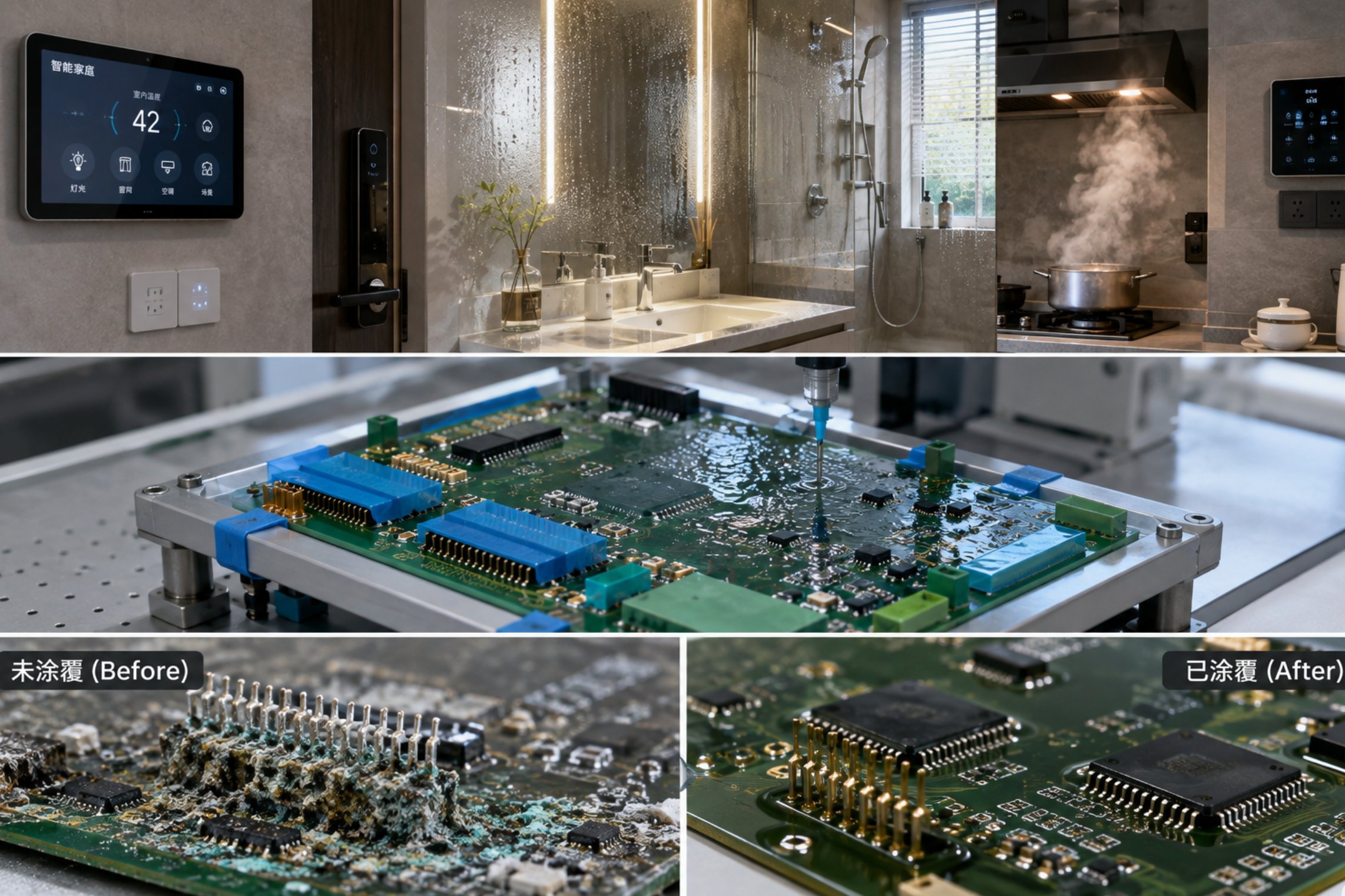
Every smart home project starts with a document that promises radio range, standby current, response latency and a voice assistant waking on the right keyword. On paper the board is finished. Then the first prototypes come back from SMT and reality starts editing. A sensor reads fine alone and drifts next to the Wi-Fi module. A motor driver survives bench tests but browns out when the display, the radio and the pump all switch at once. None of this means the design failed; it means the design has now met electricity. The gates below exist to make that meeting early, cheap and recorded.
The Board Gate: What Gets Proved Before the House Gets Smart
For a custom smart home board, the first performance gate sits at board level, before any enclosure exists. This is where the categories that NEWEI assembles — smart electric toothbrush control boards, oxygen generator PCBA, bladeless fan boards, smart massage glasses — prove their core function with nothing around them. A toothbrush board has to show its pressure-sensing curve and charge behavior on its own. An oxygen generator board has to hold its flow and concentration readings without a housing trapping heat. A bladeless fan board has to prove its brushless motor control across the speed range before anyone bolts it into a loop amplifier.
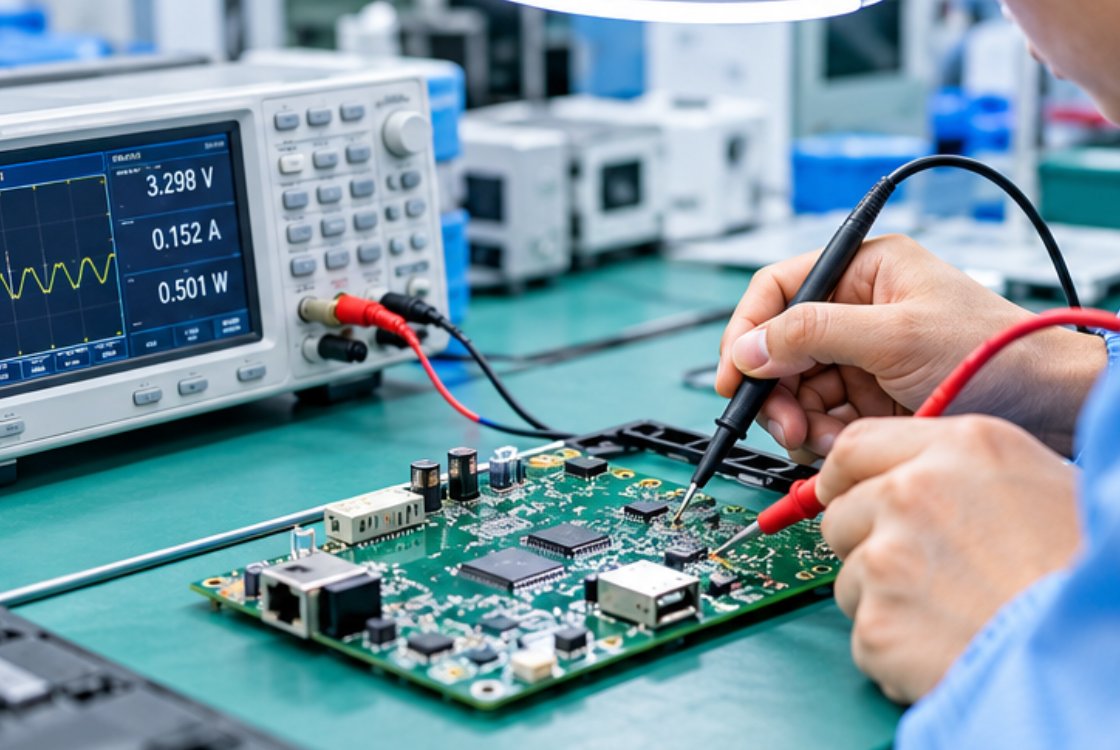
Board-level work is also where a mistake is cheapest. Changing a trace, swapping a component value or re-flowing a panel costs hours at this gate. The same correction after assembly — when the board is inside a housing, glued to a battery and packed with accessories — costs a teardown. So the honest question a buyer should ask is not "does it pass final test" but "what did the first article prove, and what did it send back to layout?"
When the Board Becomes the Product
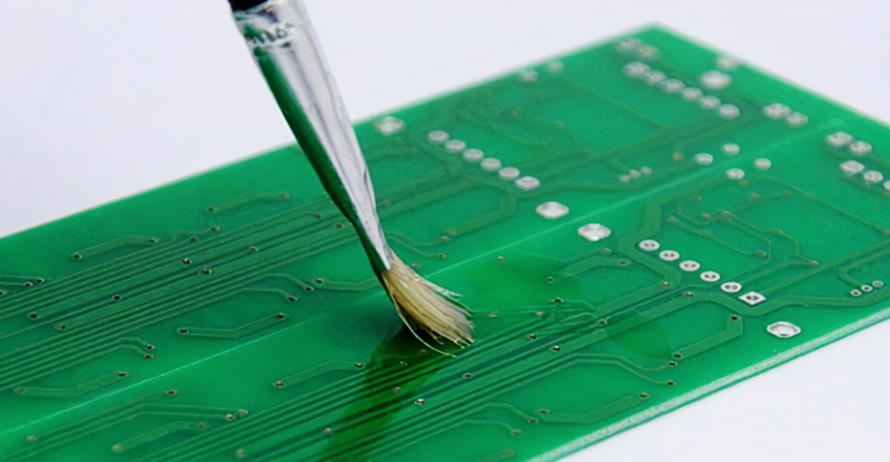
Between the board gate and the finished box sits the stage customers visualize least: product assembly services, where PCBA meets housing, wires, motors and packaging to become a shippable unit. NEWEI runs this for industrial controllers, consumer electronics and IoT modules, and the stage is dominated by manual operations — which is precisely why it needs its own gate rather than inheriting the board's. A board that measured perfectly can be ruined by a screwdriver: an over-torqued self-tapping screw can crack a solder joint it took a reflow oven to create.
The Assembly Gate: Torque, Seams and a Second Pair of Eyes
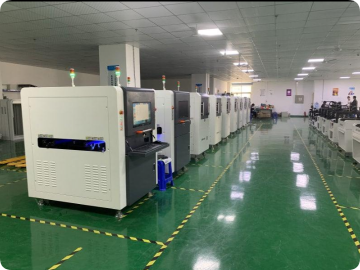
The assembly gate is statistical as much as physical. The line runs under ISO9001:2015, ISO13485 for medical devices and IATF16949 for automotive-grade process discipline, with station self-inspection at every position, QC full inspection across the process, and QA sampling against AQL standards to catch drift before it becomes a batch problem. Before anything ships, the quality department runs OBA unboxing inspection on packed product. A barcode management system traces each unit through the line, registering good and bad units so a defect found at OBA points back to the exact station and shift.
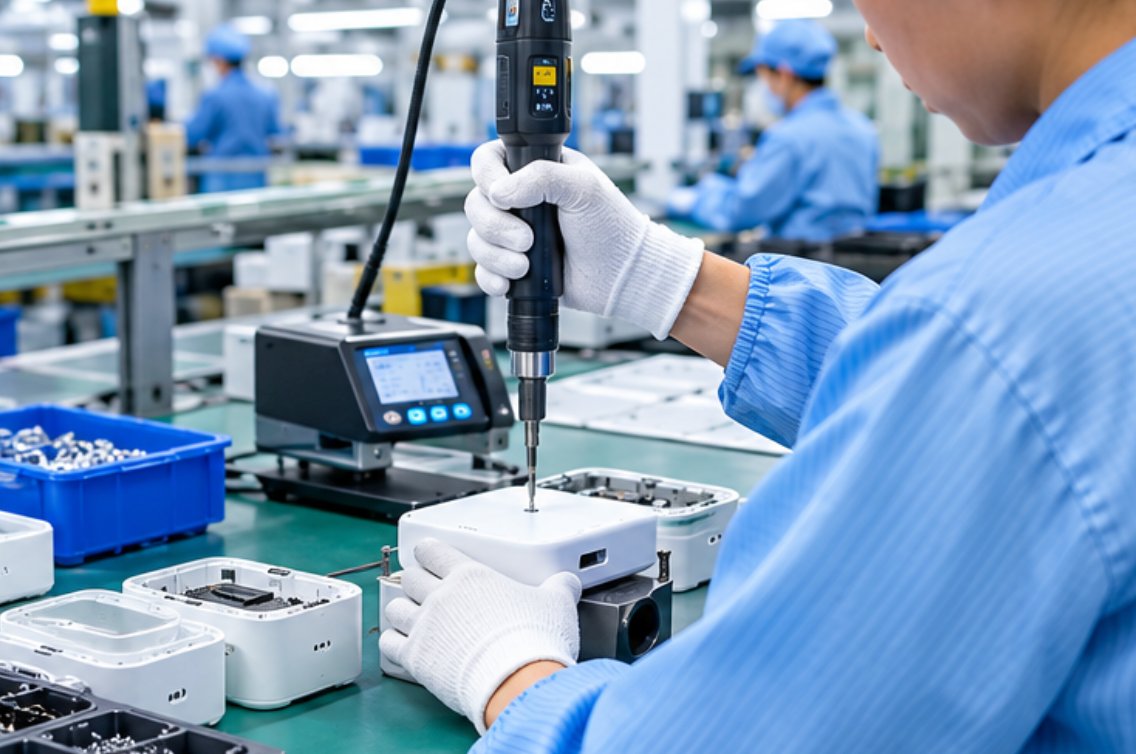
The equipment list tells you what performance means at this gate: electric screwdrivers with controlled torque, magnifying glasses for joint inspection, torque meters, dispensing machines and test racks that verify function with the housing closed. Around 95% of line workers are skilled and each holds one position through strict training, and a two-person full-inspection rule puts a second set of eyes over the whole process. A seam that whistles, a button that needs a second press, a charger that intermittently loses contact — these are assembly-gate findings, and they are caught here or not at all.
The Aging Gate: Hours the Customer Never Sees
The final gate asks a question neither of the others can: what happens on day thirty? Aging test services run finished units under power for extended periods so that early-life failures surface in the factory instead of the customer's living room. The profiles are set per product: on the same lines NEWEI has run a blood glucose meter board through up to 500 simulated test cycles for roughly 48 hours at room temperature, and an intelligent HD camera board at 60°C and 70% humidity for 72 hours. A solar storage controller gets continuous charge-discharge cycling across three cycles in 24 hours at room temperature. For a smart home build the equivalent might be days of paired-app reconnections, radio handshakes and standby current sampling — conditions set by the product's usage scenario, then monitored, analyzed and fed back to engineering.
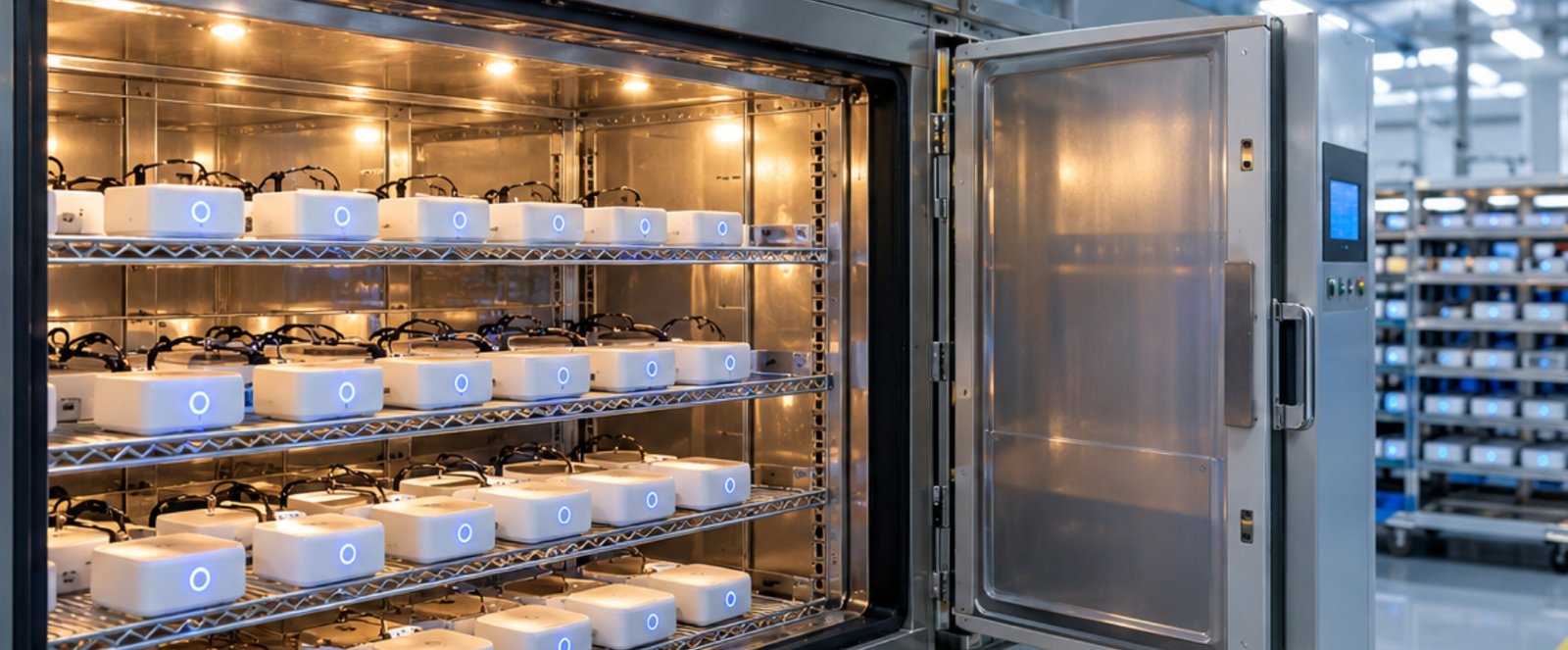
The method menu is deliberate: room-temperature aging for normal-use behavior, high-temperature aging to accelerate defects, low-temperature runs for winter-garage devices, and alternating temperature-humidity cycles for bathroom and outdoor products. Tests that cannot be completed in-house go to a third-party partner laboratory. What aging buys is a survivor curve — and a defensible warranty period backed by data instead of optimism.
What Each Gate Owns
| Gate | Question it answers | What gets measured | Who signs it off |
|---|---|---|---|
| Board gate | Does the design work at all? | Core function, sensor curves, charge behavior, motor control range | Engineering, against the first article |
| Assembly gate | Did the build hurt the design? | Torque records, seam and joint inspection, AQL sampling, OBA unboxing | QC full inspection plus QA sampling |
| Aging gate | Will it still work on day thirty? | Powered runtime, reconnection cycles, standby current, failure screening | Aging records against the agreed profile |
Reading the table by ownership explains why skipping a gate never saves time. A field failure that traces to a cracked joint belongs to the assembly gate; one that traces to a marginal power design belongs to the board gate; one that shows up in week three belongs to aging. The barcode traceability that runs through assembly is what makes that attribution factual instead of argumentative, and it is the same discipline that carries across the wider EMS electronic manufacturing program these gates sit inside.
When a Gate Sends Work Backwards
Gates are useful precisely when they fail builds. A board gate rejection sends layout back a few days. An assembly gate rejection — a torque crack caught at OBA, a housing seam caught by sampling — costs rework hours and a process correction, not a redesign. An aging gate rejection is the expensive one, which is exactly why the profile is agreed before mass production: the number of units, the hours, the temperature and humidity, the pass criteria. A buyer who treats those parameters as negotiable at shipment time is negotiating with physics, and physics has already read the spec sheet. More dispatches from the production floor are filed in the PCB manufacturing news section.
Frequently Asked Questions
1. How long does aging test take for a smart home product?
It depends on the profile set for the product's usage scenario, not a fixed factory number. On NEWEI's own lines the range runs from about 24 hours of room-temperature continuous operation for a controller-type board up to 72 hours at 60°C and 70% humidity for an environment-sensitive one, with a glucose meter board logged at roughly 48 hours and up to 500 simulated cycles. The profile, sample quantity and pass criteria are agreed before the batch runs.
2. Can I skip the board gate if the reference design is proven?
The reference design proves itself, not your board. Your layout changes the antenna keep-out, the power tree and the thermal path, and every one of those edits is invisible until first power-on. The board gate is measured in days; the field recall it prevents is measured differently.
3. What does the assembly gate actually add if QC already inspected the board?
Assembly adds physical stresses no board-level test applies: screw torque into self-tapping bosses, connector seating against a housing, cable routing near a fan. That is why the gate uses controlled-torque tools, torque meters, magnifier inspection and OBA unboxing checks on packed product — it verifies the build, not the circuit.
4. What happens to units that fail aging?
They are screened out and never ship — that is the gate's purpose. The failure data is analyzed and fed back to engineering and production so the cause is corrected, and the traceability records show which stations and batches were affected. Early failures caught on the rack are the cheap version of the same failure caught by an end customer.
Tags: aging test /performance test /product assembly /smart home PCBA /
Prev: Smart Wearable PCBA and DIP Assembly: Three Order Sheets, Three Ways the Money Splits