
Custom Automotive Electronics, EMS Electronic Manufacturing and PCBA Three-Proofing Paint: An Off-Season Plan for the Busy Quarter
Every electronics brand knows the rhythm: orders arrive in a cluster, the calendar tightens, and the factories that still have line time are the ones that took the call months earlier. The brands that struggle through a peak season are rarely the ones with bad products — they are the ones who tried to book SMT time, component supply and protective coating in the same month everybody else did. Capacity planning is not a manufacturing nicety; it is the difference between shipping the quarter and apologizing through it. This plan walks the off-season moves behind three services that carry a busy quarter: Custom Automotive Electronics builds whose boards must survive heat and vibration long after the holiday rush, the EMS Electronic Manufacturing engagement that turns a design package into a running line, and the PCBA Three-Proofing Paint capacity that has to be scheduled before boards start stacking up faster than they can be coated.
Why the Off-Season Is When Orders Are Actually Won
The off-season looks quiet from a sales dashboard, but it is when the quarter ahead gets decided. A factory's answer to "can you take this in November?" is written in what happened between March and June: whether the design was frozen, whether the component orders were placed against long-lead parts, and whether the coating line had an open week to absorb the first production batch. Brands that start the conversation in the off-season get DFM feedback while changes are still cheap. Brands that start it in the peak get a quote with caveats. The scenario this plan covers is the common one for SMT assembly programs: one product family, one peak window, and three services whose queues fill at different speeds.
Lock the Design Before the Line Needs It
The first window belongs to engineering, and the EMS engagement's published intake list shows what it expects to receive: schematic diagrams, drawings, layouts, MCU programs, BOMs, PCB Gerbers and assembly SOPs. That list is the design freeze in practice — every document on it is something a brand can finalize in the off-season without paying overtime for it. The same engagement offers joint development and prototype builds, where the sample run exercises the core processes end to end: SMT mounting, DIP plugins, PCBA testing, three proof paint spraying, finished product assembly and aging testing, explicitly to verify design reliability and DFM manufacturability. Running that verification while the line calendar is open is what makes the peak-season batch boring. A brand that skips it discovers in October that its connector footprint does not survive the pick-and-place, and at that point every fix competes with paid line time.

Reserve Line Time While the Calendar Is Open
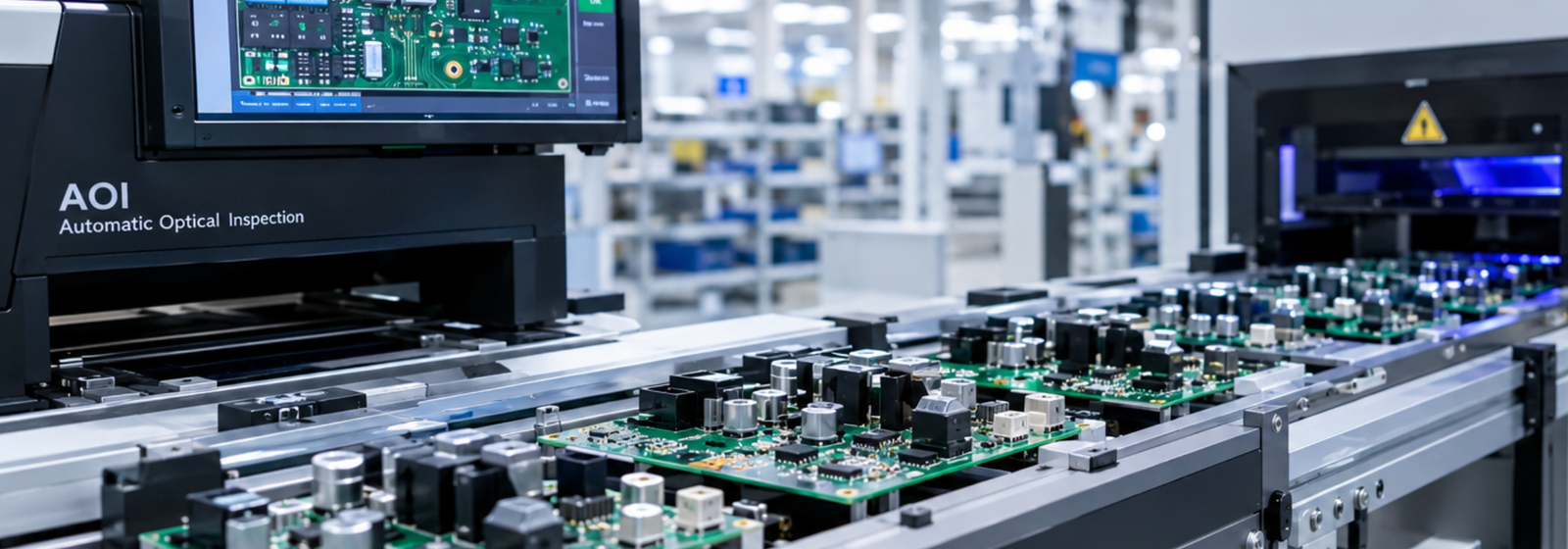
The second window is the production booking itself, and the EMS page is unusually specific about what sits behind it. Circuit board production runs entirely in-house with no outsourced processes — through-hole PCBs, flexible boards, HDI, blind and buried vias, carbon film boards — with a published monthly capacity of 50,000 square meters and TS16949, UL, CE, RoHS and ISO9001 certification, verified through flying-needle testing, test-stand fixtures and AOI. The SMT operation runs high-speed lines alongside DIP insertion, with a test process group of AOI, ICT and FCT under ISO9001 and IPC-A-610E Class II acceptance, and it takes precision placements including 0201 packages, BGA and fine-pitch ICs. Component procurement leans on supplier relationships of five to ten years with original manufacturers and agents, governed by an internal SQE annual audit. None of that capacity is infinite, and a peak quarter is exactly when 0201-and-BGA capability gets claimed early. The off-season move is simple: place the booking while the audit calendar, the stencil inventory and the line slots are all still negotiable.
Schedule the Coating Before the Boards Stack Up
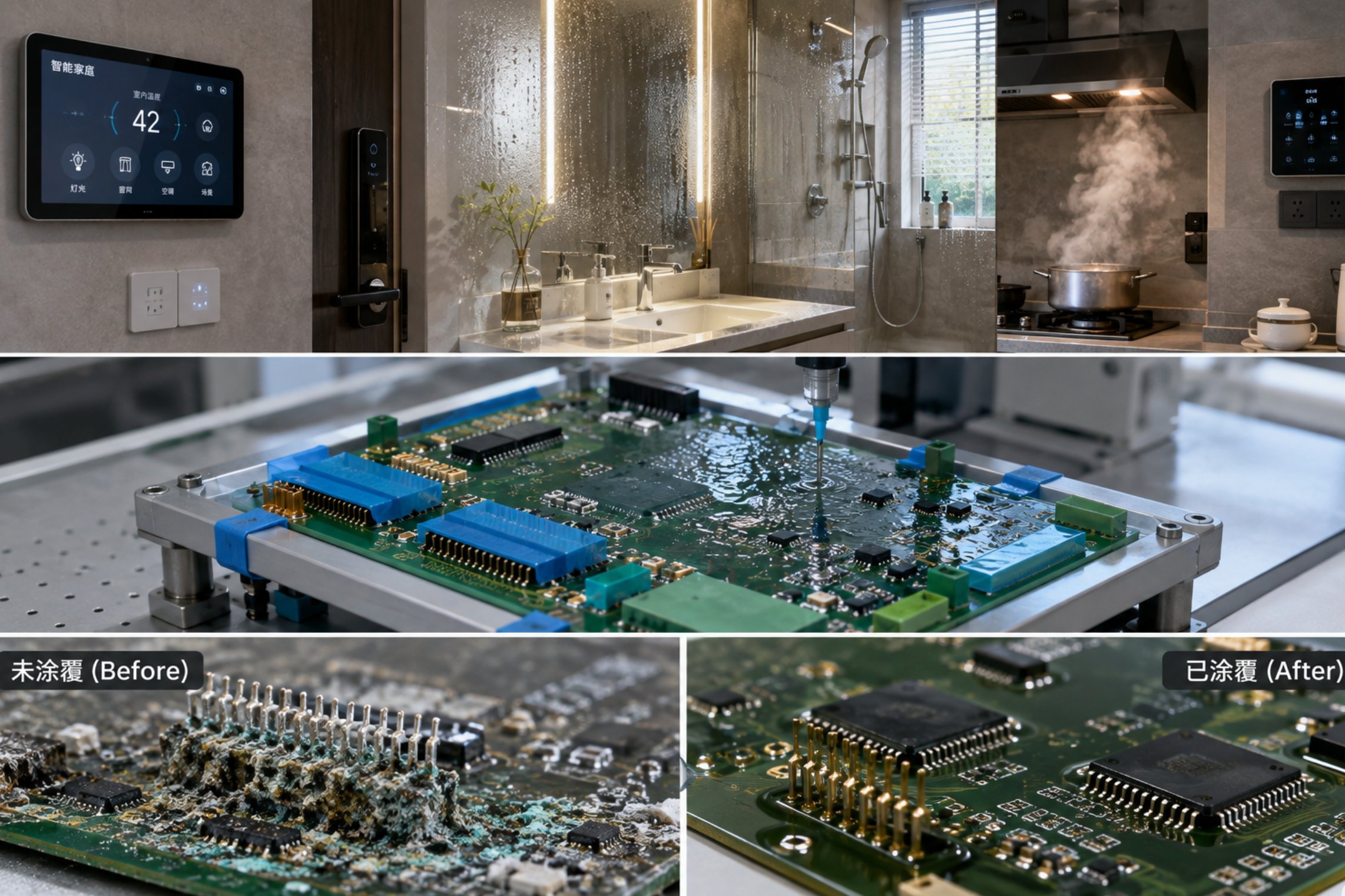
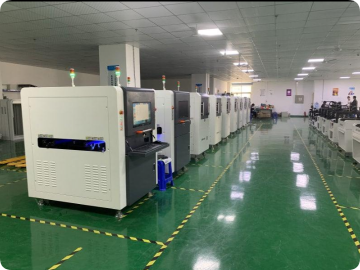
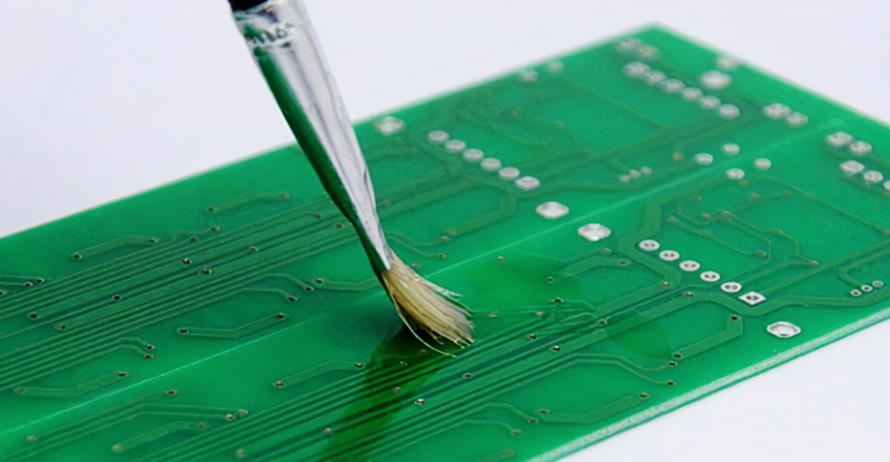
The third window is the one brands discover last. Three-proofing paint is configured into the PCBA process to meet environmental needs — temperature, humidity, durability, insulation, waterproofing and dustproofing — and the published line is one professional spraying line with two spraying machines, UV detection and baking in a fully automatic one-stop flow. The published capability list matters for planning: boards up to 550 mm by 470 mm, carriers that keep edge spraying uniform, dense high-component boards, a combination of fan-shaped and needle spraying, selective avoidance of connectors, antennas, WiFi modules and heat sinks, and double-sided spraying and baking. Average spraying time runs 0.5 to 3 minutes per board — fast, but a peak season's boards arrive all at once, and the traditional manual alternative the page warns about (poor consistency, coating reaching LCDs and sockets, uneven thickness, contamination) is what rushed scheduling produces. Coating belongs in the plan as its own booked window, not as an afterthought between assembly and packing.

What Automotive Boards Change in the Plan
An automotive program adds constraints that make the off-season windows tighter, not looser. The automotive PCBA catalog published on the service page — smart lighting boards, car charger boards, car MP3 boards and general automobile boards — lives in an environment where the three-proofing film's published properties (resistance to high and low temperatures, insulation, moisture resistance, dust and corrosion protection after curing) stop being optional and start being the reason the board survives the engine bay or the dashboard. An automotive brand planning a peak quarter should therefore move every window earlier: the design freeze needs the temperature and vibration profile settled before the prototype run, the component order needs automotive-grade parts reserved against the supplier audit list, and the coating window needs enough slack for double-sided spraying because a schedule that leaves coating last is the schedule that slips. The boards themselves are not exotic; the calendar discipline around them is.
| Planning window | What gets locked | Service that carries it |
|---|---|---|
| Design freeze | Schematics, BOMs, Gerbers, MCU programs, assembly SOPs; prototype run verifies DFM | EMS Electronic Manufacturing |
| Production booking | Line slots, component orders, AOI/ICT/FCT test planning, precision placements | EMS Electronic Manufacturing |
| Coating reservation | Spray line week, board carriers, selective-avoidance mask list, double-sided bake | PCBA Three-Proofing Paint |
| Environmental validation | Temperature, humidity and vibration profile behind the coating requirement | Custom Automotive Electronics |
The Ordering Sequence That Keeps Three Queues Moving
The plan's last move is sequence, because the three queues fill at different speeds and in a fixed order. Components come first: the published procurement model runs on five-to-ten-year relationships with original manufacturers and agents, and a long-lead IC ordered in the off-season is the cheapest schedule insurance a brand can buy. Production comes second, because line slots for precision SMT work are the capacity that peak seasons exhaust first. Coating comes third on paper but should be booked alongside production, since the spraying line's published throughput — 0.5 to 3 minutes a board, on a single professional line — is precisely the kind of capacity that looks ample until every board in the quarter needs it in the same month. Brands that sequence the three moves in the off-season spend the peak quarter shipping; brands that sequence them in the peak spend the peak quarter waiting. The manufacturing capabilities behind each service, including PCB fabrication lead options, are summarized on the site's PCB manufacturing page for teams that want to go deeper.
Frequently Asked Questions
1. How early should a peak-season booking actually be placed?
The service pages deliberately publish capability instead of calendar availability, so no honest universal number exists. What the pages do support is the dependency chain: prototype verification runs before mass production, mass production needs booked line slots, and coating needs its own reserved window on a single professional line. A brand that starts the design-freeze conversation in the off-season gives each of those dependencies a queue position ahead of the peak; a brand that starts late inherits whatever queue position is left.
2. Can the spraying line handle boards with connectors and WiFi modules that cannot be coated?
Yes — selective avoidance is published capability, not a special request. The three-proofing page lists connectors, antennas, WiFi modules and heat sinks among the components that can be selectively kept free of coating, alongside fan-shaped and needle spraying combinations that cover dense high-component boards. The mask list should be finalized during the design freeze, because it determines the board carriers and the spraying program, both of which are prepared before the first board of the batch arrives.
3. Why does the design package list matter for seasonal planning?
Because the published intake list — schematics, drawings, layouts, MCU programs, BOMs, PCB Gerbers and assembly SOPs — is effectively the checklist for the design-freeze window. A brand that can hand over every item on that list has a design that can be prototyped and DFM-verified while the line calendar is open. A brand missing an item discovers the gap during the peak, when the fix has to compete with production time.
4. Do automotive boards really need different scheduling than consumer boards?
The scheduling logic is the same; the stakes are higher. Automotive boards from the published catalog — smart lighting, car charger, car MP3 and general automobile boards — operate in the temperature, humidity and vibration conditions that the three-proofing film is formulated against. That makes the coating window non-negotiable and the prototype verification more demanding, which is why an automotive program should move every window earlier rather than compress them into the peak.
Tags:
Prev: Before the Box: The Performance Gates a Smart Home PCBA Clears
Next: No more...