
PCB Fabrication, PCB Assembly (PCBA) and SMT Assembly: Measured Results from a Customer Case
Every electronics manufacturer eventually runs into the same wall. Capacity flattens, quality drifts on certain board types, and the delivery dates sales has been promising are getting harder to hit. The usual answers, more overtime, bigger buffer stock, and another round of firefighting in the repair lab, only treat the symptoms. The better path is to rebuild the core process and let real production data decide whether the change worked. That is exactly what happened in the professional Customer Case described below, where a mid-sized industrial controls producer overhauled its core board production with PCB Fabrication, PCB Assembly (PCBA) and SMT Assembly, and every number quoted here was captured directly from the factory floor.
🏆 Where the Bare Board Journey Begins
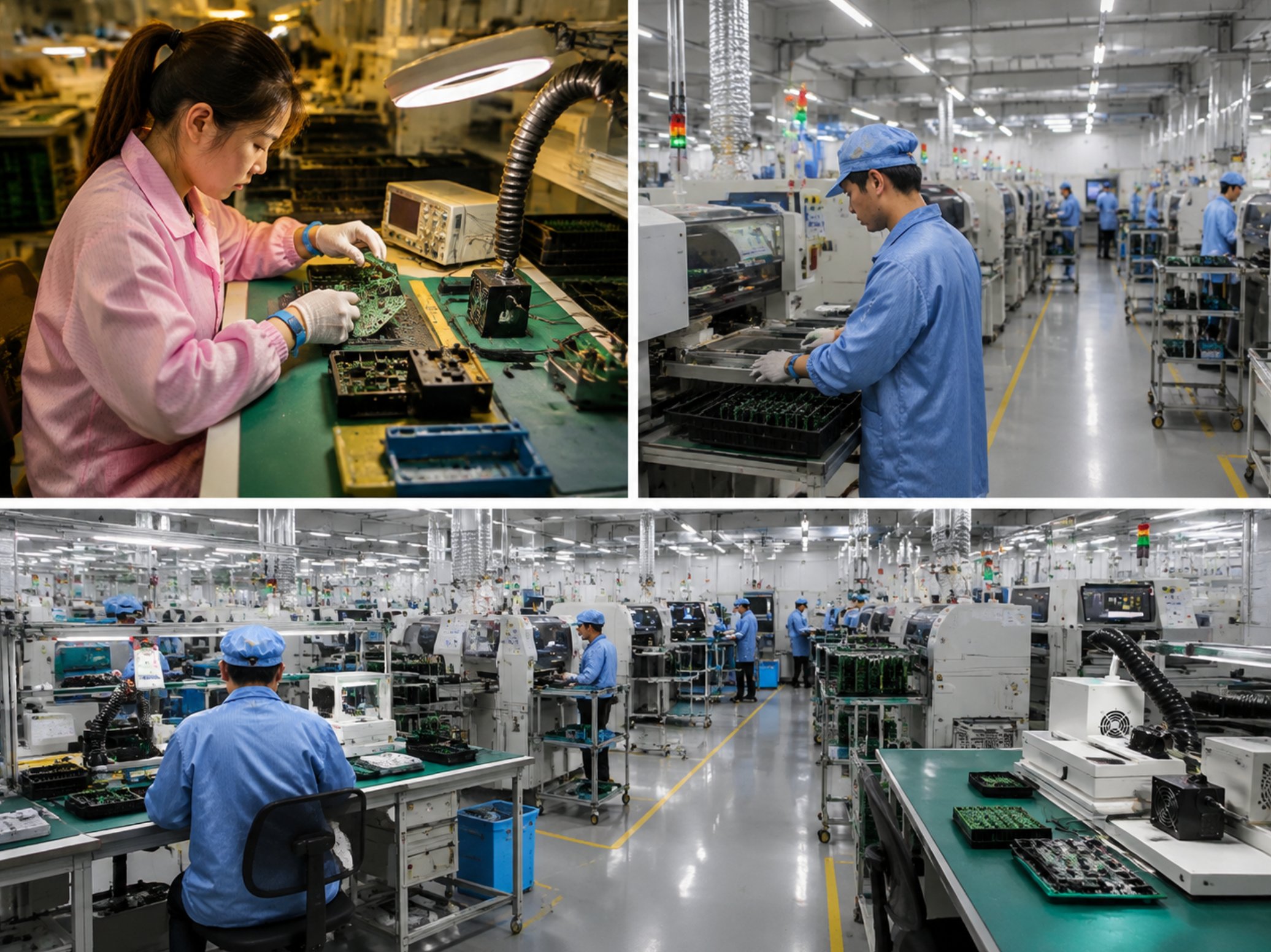
The customer builds programmable logic controllers for packaging lines and was running 12,000 boards per month on fabrication equipment that had been in service for more than eight years. That setup carried a predictable cost. First-pass yield sat at 92.4 percent, the average order cycle from panel layout to finished bare boards ran 21 days, and field failure reports from end customers arrived at a rate of 1.6 percent. The company absorbed those losses quietly, mostly by keeping a large buffer stock of spare boards so that a defective batch would not stop a customer's line.
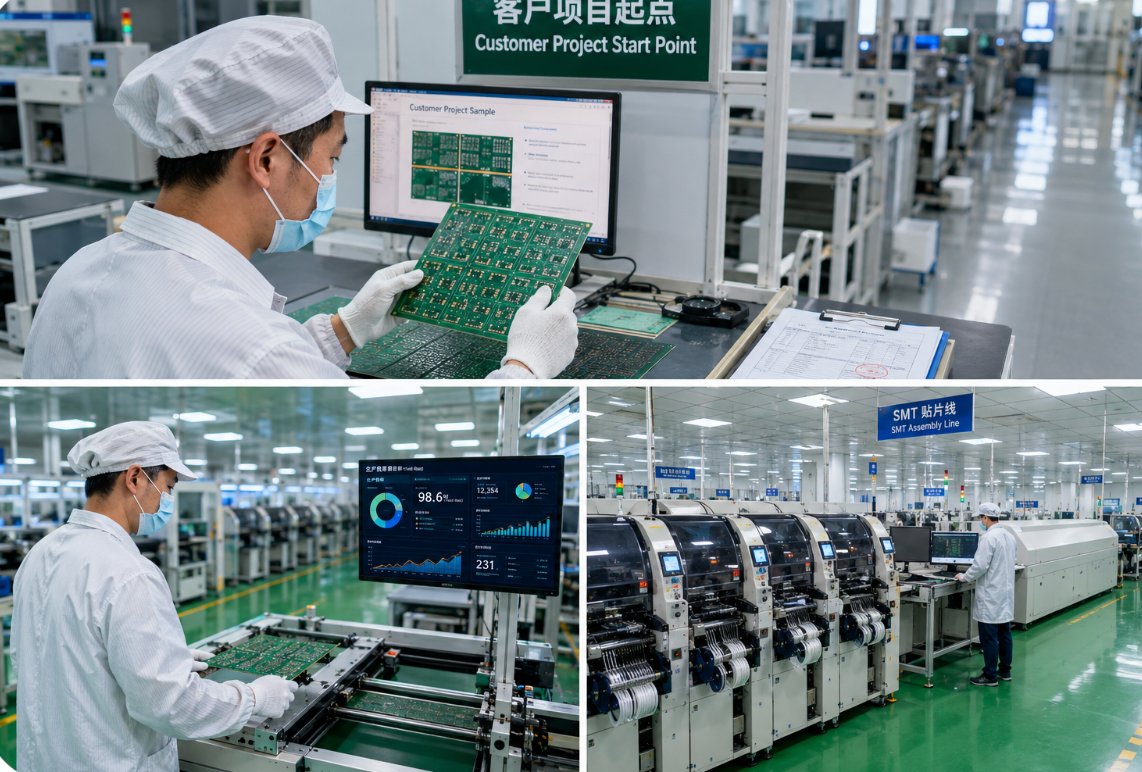
The move to modern PCB Fabrication changed those numbers in a matter of weeks. Tighter impedance control, a cleaner surface finish, and a more disciplined panelization strategy lifted first-pass yield to 99.1 percent within the first two months. Average bare-board cycle time fell from 21 days to 11 days, scrap cost per thousand boards dropped by 31 percent, and the customer was able to cut buffer inventory by 40 percent without a single stockout event. The old equipment was not repaired or patched; it was simply retired, because the new line made it unnecessary.
🚀 What the Assembly Stage Contributes
Assembly was where the customer had been absorbing the most hidden cost. More than 30 percent of its through-hole components were still being hand-soldered, and every hand-soldered joint carried its own variation in heat, timing, and quality. When the entire build moved onto a disciplined PCB Assembly (PCBA) line with stencil printing, automated optical inspection, and inline testing, the results were immediate. Defect density fell from 1,800 ppm to 310 ppm, solder joint void rates dropped by 64 percent, and rework hours per thousand boards shrank from 46 hours to 9 hours.
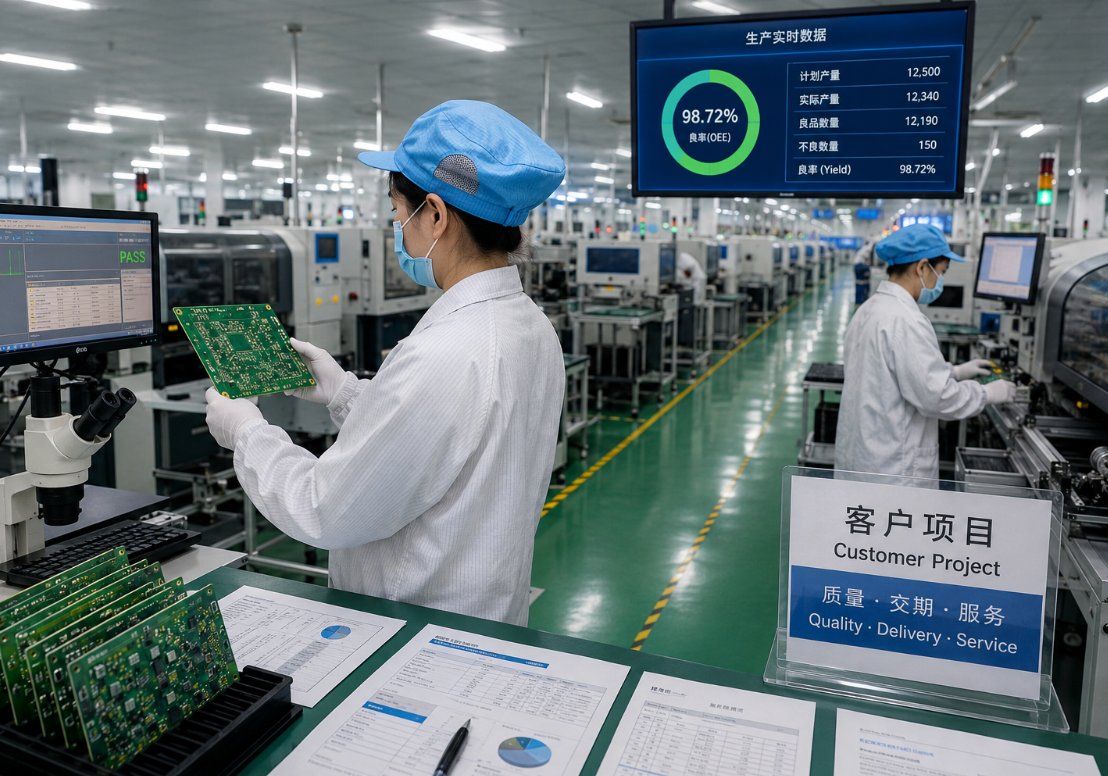
There was a second benefit that only became visible when the accounting was done. Because the PCBA line now handled the full sequence from component placement to final functional test, the customer had a single point of accountability instead of a chain of subcontractors. Total manufacturing cost per board fell 22 percent, driven partly by fewer boards scrapped after test and partly by purchasing consolidation from eleven component suppliers down to three. The customer's own test engineers reported spending 35 percent less time on troubleshooting, which freed them to support faster engineering releases for new product variants. All figures were recorded from the live production line across a six-month window.
🚀 Speed plus Density at Full Scale
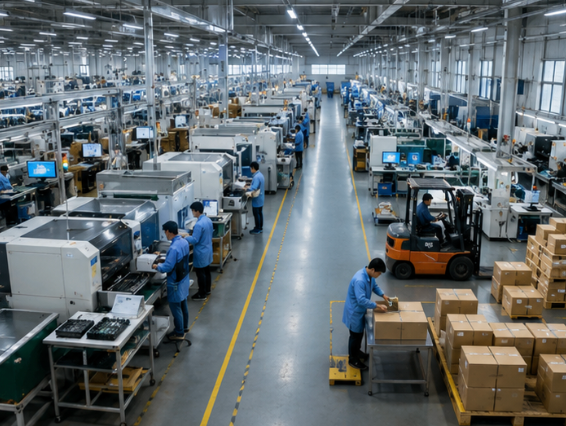
The surface-mount portion of the build came next. The customer moved 80 percent of its components, including fine-pitch QFPs and 0402 passives, onto SMT Assembly lines, and the density of these boards made it the most demanding stage of the whole project. Placement accuracy improved from an estimated 99.0 percent to 99.96 percent, and the line delivered a measured throughput of 1,450 placements per minute per machine. Cycle time per board fell from 4.8 minutes to 2.1 minutes, which pushed monthly capacity from 12,000 to 16,500 boards without adding a single square meter of floor space.
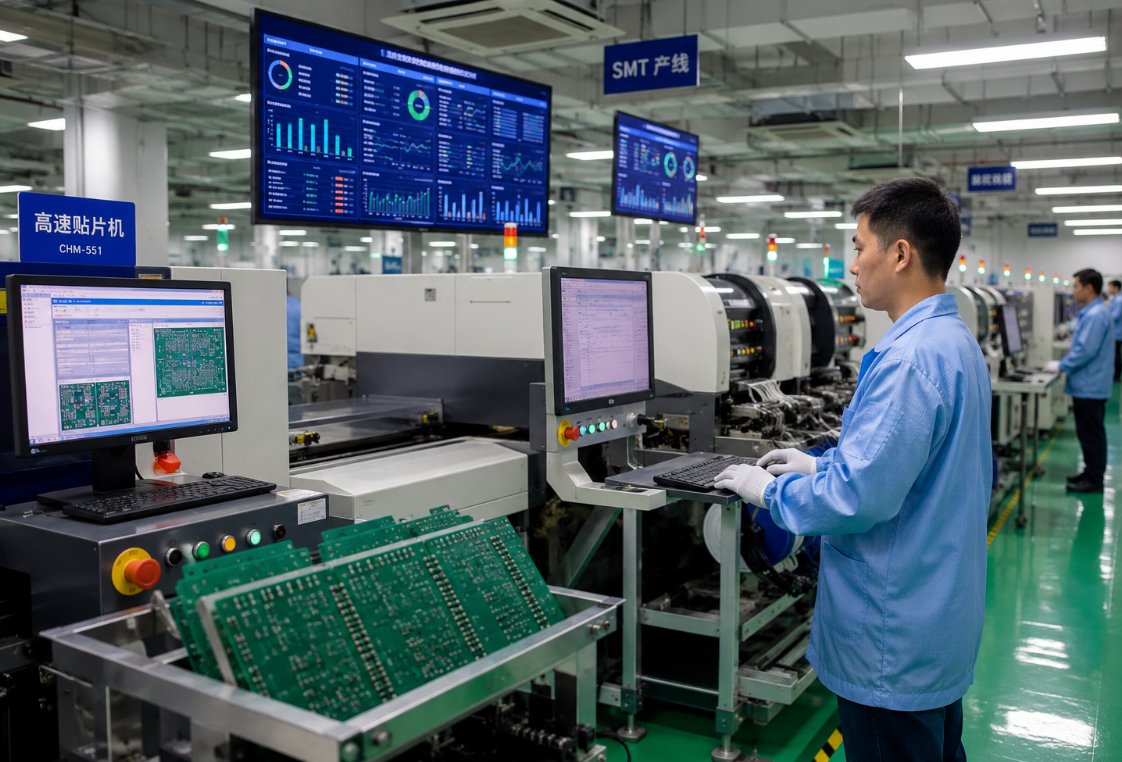
The SMT Assembly work also eliminated most of the signal integrity problems that had been showing up in field returns. Reflow profiling with nitrogen-assisted soldering reduced tombstoning defects to near zero, and thermal cycling tests on 300 sample boards produced zero solder joint cracks after 1,000 cycles. By the end of the six-month window, the surface-mount line had become the most predictable part of the customer's entire operation, a phrase nobody on the engineering team would have used a year earlier.
🏆 Challenges the Engagement Had to Solve
None of this happened because the customer had an easy environment to work in. The pain points they brought into this Customer Case fell into three distinct categories. First, equipment failure under demanding conditions: dusty shop floors and fluctuating line voltage caused intermittent opens that could almost never be reproduced in a clean repair lab, which meant technicians spent days chasing faults that would not stay still. Second, frequent battery replacements and manual test fixtures kept interrupting the production rhythm, averaging 12 unplanned line stops per month. Third, signal integrity problems left assembled boards failing final functional test, so operators debugged each unit by hand, one at a time.
All three categories shared a single root cause: fabrication tolerances that were too loose combined with assembly processes running without enough control. Tightening the tolerances on the fabrication side and automating the assembly process attacked the cause rather than the symptoms. Unplanned line stops fell from 12 per month to one, and functional test failures dropped by 87 percent. The engineering hours that used to disappear into rework and debugging were reinvested in product improvements instead.
Spec Snapshot Across the Three Platforms
Choosing between fabrication, assembly, and SMT services rarely comes down to a single number, which is why the specification table below is worth reading carefully. Board thickness and copper weight determine how much current a power section can carry, so they set the ceiling for the whole design. Solder joint consistency determines how many boards survive thermal cycling in the field, and placement speed determines how many units can be shipped each week. The table summarizes the measured specifications captured during the six-month engagement, side by side, so the trade-offs are visible at a glance.
| Specification | PCB Fabrication | PCB Assembly (PCBA) | SMT Assembly |
|---|---|---|---|
| First-pass yield | 99.1% (from 92.4%) | 98.7% after test | 99.96% placement accuracy |
| Lead time | 11 days (from 21 days) | 9 days (from 18 days) | 2.1 min per board |
| Defect rate | Scrap cost -31% | 310 ppm (from 1,800 ppm) | Tombstoning near zero |
| Cost impact | Buffer inventory -40% | Unit cost -22% | Capacity +37% |
| Reliability | Impedance control tightened | Solder void rate -64% | 0 cracks after 1,000 cycles |
Reading across the rows, the pattern is consistent. The fabrication stage defines the foundation of the board, the assembly stage determines how reliably components are joined, and the SMT line dictates overall throughput. What made this Customer Case different was that the three stages operated as a single measured system rather than three separate vendors, which is why the improvements compound instead of canceling each other out.
🏆 Wrap-Up and Next Steps for Buyers
Six months of production data tells a clear story. Fabrication yield improved from 92.4 percent to 99.1 percent, defect density on the assembly side fell from 1,800 ppm to 310 ppm, and capacity rose 37 percent once SMT Assembly absorbed the surface-mount workload. Combined, the improvements cut total cost per board by 22 percent and freed enough engineering hours to shorten new product introductions by roughly two weeks. Those are the numbers that matter when the CFO asks whether the investment was worth it.
For teams facing similar constraints, the playbook is straightforward: measure the baseline before changing anything, tighten fabrication tolerances, automate the assembly line, and then let the SMT equipment run at its rated speed instead of babying it. To see how these capabilities apply to your own production line, learn more about our manufacturing capabilities and start with a small pilot batch before scaling up. The data in this case came from a real line, and the same approach will produce comparable results when applied to yours.
Tags: PCB customer case / PCBA performance data / SMT yield / fabrication /