
Product Assembly and EMS Electronic Manufacturing: Cutting Packaging and Delivery Cost per Unit
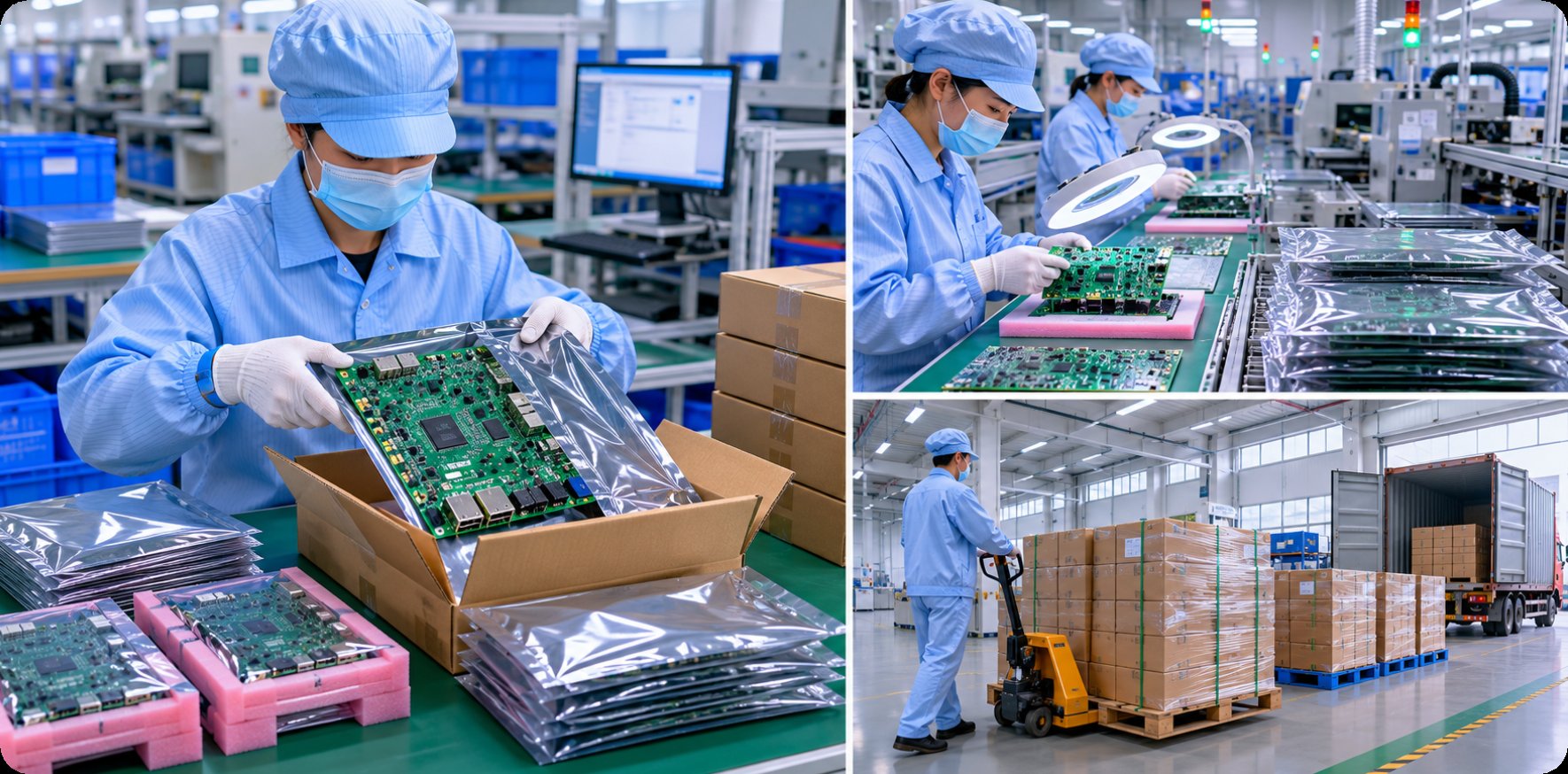
Most teams obsess over component cost and stop there. They miss the second half of the bill, the part that shows up after the board passes test and someone has to get it into a carton, onto a truck, and into the customer's hands without a scratch. After watching a few hundred batches move through a contract line, my view is blunt: the cheapest place to save money in electronics manufacturing is rarely the bare PCB. It is the handoff between build and ship. When product assembly and packaging workflow sits under one roof with electronics manufacturing services, the cost per shipped unit drops in ways a spreadsheet of component prices never captures.
The Margin Drain Hiding in Ship-Out
The slow leak is familiar. A finished PCBA leaves the test bench and waits. It waits for a boxing instruction. It waits for a different shift. It waits while three vendors argue over who owns the label. Every hour in that queue is rent, labor, and risk, and none of it appears on the BOM. A buyer comparing two quotes will see the same line item for the board and miss that one supplier bundles the carton, the desiccant, and the paperwork while the other treats each as a separate upsell.
Where the hours actually disappear
In a fragmented model, the assembly house finishes its job and the batch moves to a packager across town. That single geography change adds a handling cycle, a quality re-check, and a transport leg. Multiply by twelve batches a month and the hidden freight alone can exceed the savings that triggered the split in the first place. The fix is not a cheaper box. It is removing the move.
One Chain Beats a Dozen Handoffs
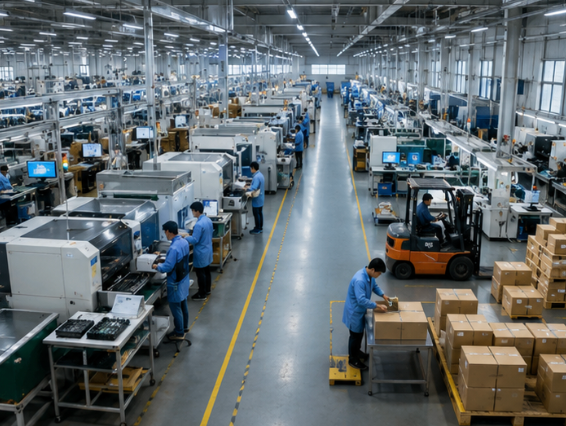
When the same floor owns build and pack, the unit never leaves the building until it is ready to leave for the customer. That sounds obvious and it is, yet most procurement still shops the two steps apart. Consolidation is not about loyalty to a vendor. It is about eliminating the moments where a good board can be bent,static-damaged, or simply lost between invoices.
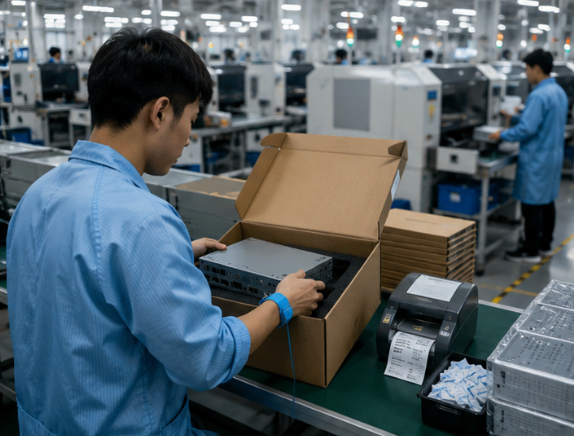
A turnkey line that pairs electronics manufacturing services with final assembly turns the ship-out desk from a bottleneck into a checkout. The operator who placed the last connector is often the one who seals the bag. Context travels with the product instead of being written down and forwarded.
Counting Dollars Behind Every Box
ROI only gets real when you price the unit the way the customer receives it, not the way it leaves the oven. The table below is a simplified view from a mid-volume industrial order we reviewed, where the only change was merging assembly and pack under one schedule.
| Cost element | Split suppliers | One-line turnkey |
|---|---|---|
| Board build (SMT + DIP) | $4.10 | $4.10 |
| Inter-facility freight | $0.38 | $0.00 |
| Re-inspection at packager | $0.22 | $0.00 |
| Static-safe packaging kit | $0.31 | $0.27 |
| Admin and handoff labor | $0.45 | $0.12 |
| Total per unit | $5.46 | $4.49 |
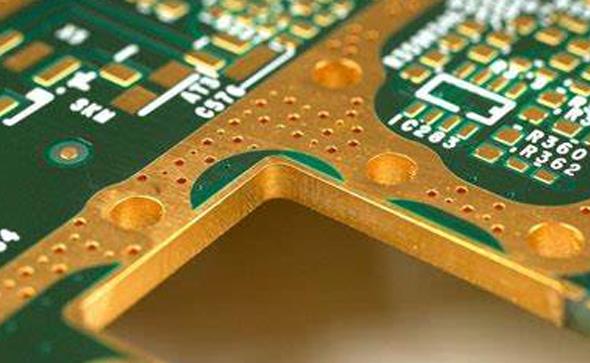
The board itself is identical in both columns. The saving comes entirely from deleted motion. At ten thousand units a month that gap is roughly nine hundred dollars of pure margin returned to the program, with no change to the design and no negotiation with a component distributor. For teams tracking PCB manufacturing capabilities alongside assembly, the same logic compounds across the whole bill of materials.
Where the Two Workflows Converge
Product assembly is the act of turning tested boards into a finished item: mounting into enclosures, attaching cables, labeling, and verifying the whole. Electronics manufacturing wraps that with sourcing, SMT, and test. The overlap is the handoff zone, and that zone is exactly where cost and defects are born. Pulling it inside one schedule means the person who finds a missing standoff fixes it on the spot instead of writing a non-conformance report that travels for two days.
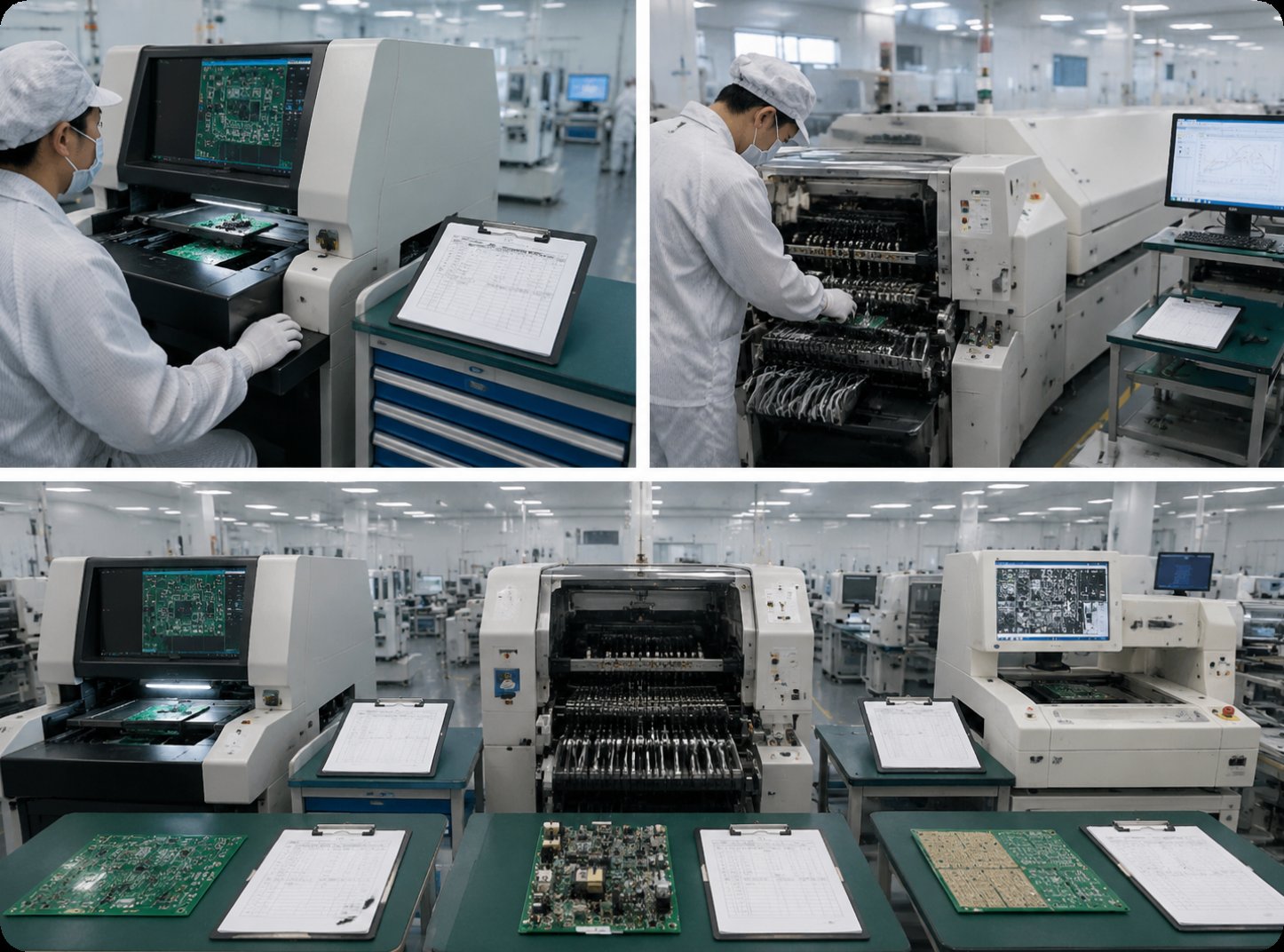
On a typical SMT assembly line feeding a final assembly cell, the board can move from reflow to enclosure in under an hour. The same board split across vendors spends that hour plus a half day in transit and queue. Throughput, not headcount, is what moves the number.
A Buyer's Real-World Baseline
The theory lands better with concrete scenes. These are the patterns we see most often when a customer asks why their per-unit landed cost will not bend:
Industrial controller house: builds 8k units a month, was splitting SMT and pack across two cities, recovered about 11% of unit cost and three days of lead time by consolidating.
Medical accessory brand: needed sealed, traceable cartons for audit; a single-line flow let every box carry the test record from the same system that built it.
IoT sensor startup: short runs with frequent changeovers; deleting the packager handoff removed their most common source of mislabeled shipments.
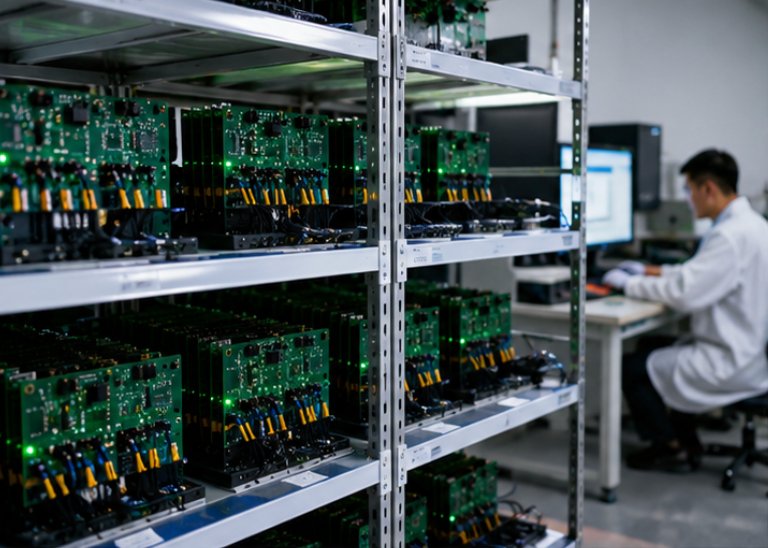
Automotive submodule: required bake and aging test and burn-in before pack; keeping it in-line cut the risk of a damp board sealed by mistake.
Consumer gadget importer: peak season spikes; one schedule meant overtime absorbed the surge instead of expedite freight.
POS hardware maker: mixed models on one line; consolidated pack let them kit region-specific plugs without a second warehouse touch.
The common thread is not the product. It is the absence of a dead stop between done and shipped.
When the Return Lands Soonest
Payback on a consolidated line is fastest for programs with steady volume and tight margins, exactly the ones that think they cannot afford to change. A mid-volume run recovering under a dollar a unit clears the setup effort in the first few weeks. The slower case is a one-off prototype batch, where the saving exists but the volume never arrives to bank it. That is why the ROI question should be asked per program, not per company.
For teams still routing DIP assembly services to a separate shop from their SMT and pack, the first move is simply to map the handoffs on one order and price the waiting. The number is usually larger than expected, and once seen it is hard to unsee.

What to ask a supplier before you sign
Request the full landed cost per unit, not the board price. Ask who owns the carton and the label. Ask where the test record travels after the last solder joint. If those answers point to three companies, the quote is hiding the real number.
Making the switch without freezing production
A clean cutover keeps the current split running while the consolidated line proves itself on a single SKU. Once the per-unit gap is visible on real orders, the rest of the catalog follows without a single day of stopped shipments.
The takeaway is plain. The board is only half the cost. The other half is the distance between built and delivered, and that distance is a choice, not a fact of the bill of materials.
Tags: product assembly /EMS manufacturing /packaging cost /landed cost /turnkey line /
Prev: Closing the Quality Loop: ROI of Integrated PCB Assembly and In-House Testing