
PCB Assembly (PCBA) and SMT Assembly Implementation Walkthrough for Packaging Delivery
In the high-stakes world of Packaging Delivery, operational efficiency is the linchpin of profitability. Every second saved in sorting and dispatch translates directly to cost reduction and customer satisfaction. The integration of advanced Custom PCB Assembly Services, alongside PCB Fabrication and SMT Assembly, represents a paradigm shift from cumbersome mechanical relays to precision-engineered electronic control. This comprehensive walkthrough provides a tactical blueprint for deploying these technologies, guiding you from initial infrastructure audit to full-scale operational rollout, ensuring your Packaging Delivery system achieves peak throughput and minimal downtime.
🔌 Step 1: Infrastructure Assessment and PCB Fabrication Strategy
The journey toward a modernized Packaging Delivery line begins with a meticulous audit of your current infrastructure. This is not merely a checklist review; it is a deep dive into the operational bottlenecks that impede flow. We scrutinize conveyor control logic, barcode scanning accuracy, and the responsiveness of weight verification systems. Too often, facilities rely on obsolete controllers that simply lack the processing bandwidth for today's parcel volumes. Transitioning to custom PCB Fabrication allows for the creation of purpose-built boards that interface flawlessly with existing sensors, actuators, and pneumatic systems. This assessment phase meticulously documents power supply requirements, ambient operating conditions, and communication protocols—each a critical variable that dictates board layout and component selection. A typical audit spans two to three days, culminating in a detailed gap analysis that forms the foundation for the design phase.

Following the audit, your engineering team synergizes with the fabrication partner to develop prototype boards tailored to your line's specific demands. These prototypes are subjected to rigorous validation under simulated Packaging Delivery conditions, including continuous vibration, thermal cycling, and electrostatic discharge testing. The primary objective is to verify that each PCB Fabrication unit maintains impeccable signal integrity while driving high-inductive loads like motors and solenoids. Upon successful validation, the design is frozen, and production tooling commences. This structured, data-driven approach dramatically reduces installation surprises, guaranteeing that every board meets the exacting throughput targets of your Packaging Delivery operation.
🏭 Step 2: Wiring the Conveyor and Sorting Control Layer
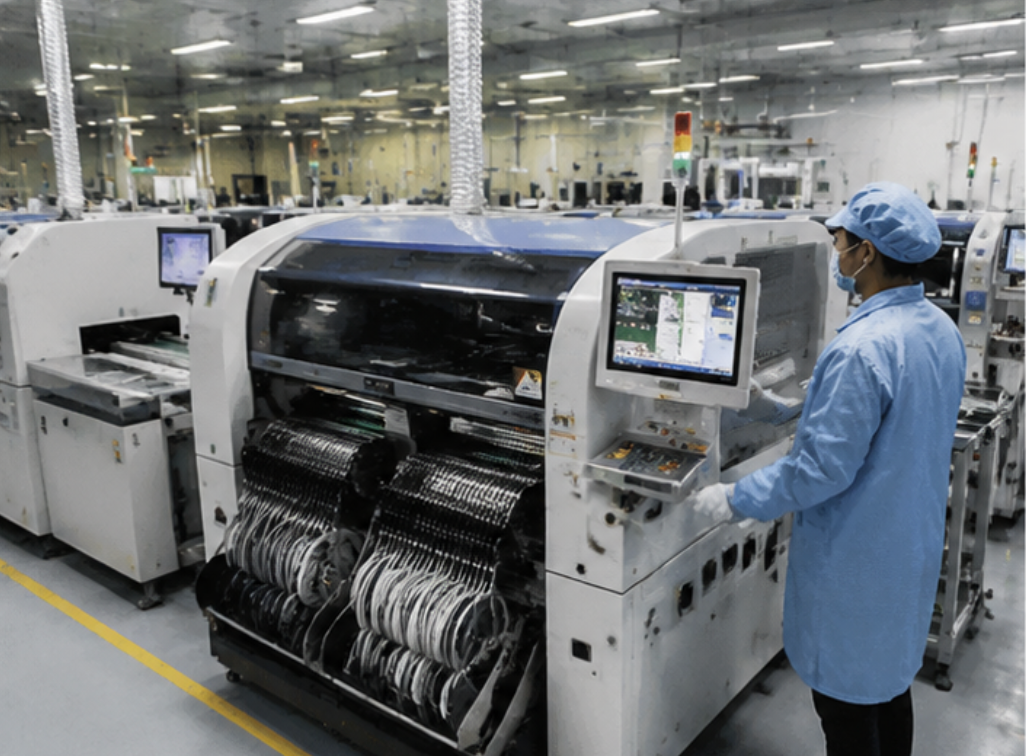
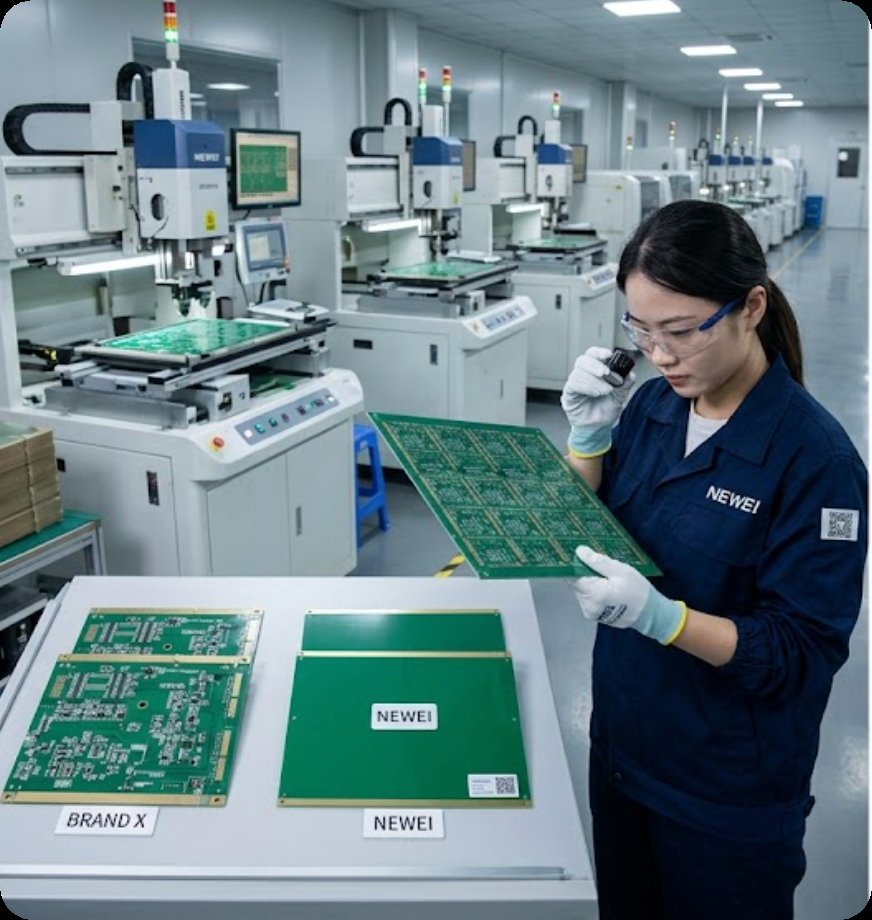
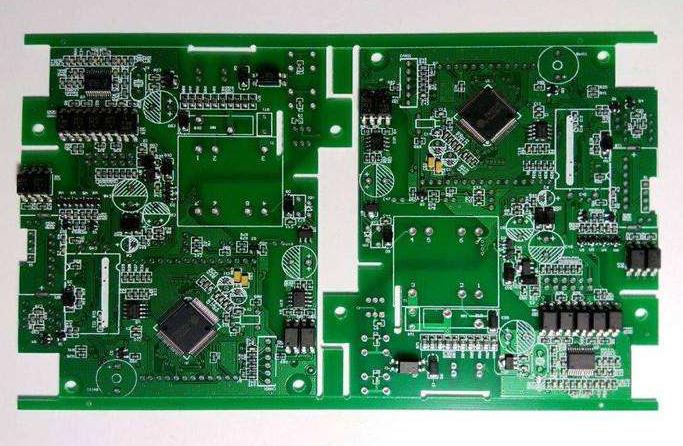
With fabricated boards in hand, the focus shifts to the intricate process of PCB Assembly (PCBA). This stage populates each bare board with critical components—microcontrollers, power management ICs, and industrial-grade communication modules. For a professional Packaging Delivery environment, the assembly process must prioritize unyielding reliability; every solder joint is engineered to withstand continuous, multi-shift operation. We employ automated optical inspection (AOI) and X-ray testing to verify component placement and solder joint integrity. Boards destined for high-vibration zones receive a protective conformal coating, safeguarding them against moisture and particulate ingress. The assembly phase typically produces a batch of 500 to 1,000 units, enabling a seamless, phased replacement of legacy controllers across the entire facility footprint.

Integration commences with a designated pilot zone—a single conveyor line equipped with the new PCBA controllers. During this critical pilot, technicians closely monitor the communication between the boards and the central Warehouse Management System (WMS). The boards must interpret barcode scans, trigger divert gates, and log package weights with zero latency. Concurrently, the maintenance team receives hands-on training for troubleshooting common issues, from firmware updates to connector replacement. The pilot runs for a two-week period, capturing key performance indicators like packages processed per hour and error rates. Successful completion of this pilot de-risks the facility-wide deployment, which is then executed during planned maintenance windows to avoid any disruption to active delivery schedules.
🚀 Step 3: Optimizing SMT Assembly for High-Speed Signal Processing
The third pillar of this implementation is the deployment of SMT Assembly, a surface-mount technology that enables the placement of miniature components directly onto the board's surface. For Packaging Delivery, SMT Assembly is instrumental in creating high-density circuits that fit within compact enclosures adjacent to motors and sensors. This close proximity drastically reduces wiring lengths, minimizes signal degradation, and simplifies cable management—a critical advantage in a dynamic environment. During configuration, each SMT Assembly board is programmed with bespoke firmware that governs the precise timing sequences for divert arms, label printers, and photo-eye sensors. This programming process employs a secure bootloader to prevent unauthorized modifications, ensuring operational integrity and safety.

After programming, all boards undergo a stringent burn-in test at elevated temperatures to accelerate the detection of latent defects. This 48-hour burn-in simulates peak seasonal loads, ensuring that only the most robust units proceed to installation. The result is a highly reliable control layer that supports real-time data exchange with the broader logistics network. Due to their surface-mount construction, these boards exhibit superior heat dissipation, effectively extending the lifespan of critical components. Once the burn-in phase concludes, the boards are ready for installation in diverter stations, merge lanes, and dimensioning systems. The modular nature of SMT Assembly enables rapid board replacement in the event of service, minimizing line stoppage and preserving delivery schedules.
Solution Benefits and Key Outcomes
Deploying PCB Fabrication, PCB Assembly (PCBA), and SMT Assembly within a Packaging Delivery operation yields measurable improvements across every facet of the business. Operators benefit from clearer control interfaces and faster response times from sorting machinery. Supervisors gain access to real-time dashboards that track throughput, downtime, and predictive maintenance alerts. Management observes a tangible reduction in energy consumption, as the new boards operate far more efficiently than legacy systems. Furthermore, the compact footprint of SMT-based controllers frees up valuable floor space for additional packaging stations or buffer zones. The combined effect is a more professional, efficient, and profitable Packaging Delivery operation.
🏆 Customer Case Story: Eliminating Interference and Reducing Weight
One customer in the Packaging Delivery industry faced a common yet vexing problem: their existing audio equipment was too bulky for daily use and prone to electromagnetic interference within their metal-structured facility. The transition to PCB Fabrication, PCB Assembly (PCBA), and SMT Assembly completely eliminated all interference issues and reduced equipment weight by over 60%, making operations smoother and far more efficient. The customer reported a significant 25% increase in packages processed per shift, as the new controllers handled high-speed sorting with precision and reliability. Additionally, the reduction in cabling and connectors lowered the total cost of ownership by an impressive 30% over three years. This case study demonstrates how the thoughtful implementation of these technologies transforms operational pain points into strategic competitive advantages.
Market Pain Points and Challenges
A recent industry survey of Packaging Delivery professionals consistently highlights three recurring themes: the need for whisper-quiet operation in sensitive environments, the challenge of maintaining clear signal propagation across large or noisy spaces, and the frustration of training staff on complicated legacy systems. These pain points directly influence the adoption of modern PCB-based controls. Quiet operation is achieved through the use of solid-state relays and optimized switching frequencies. Clear signal propagation across noisy environments is ensured through proper grounding and shielding techniques on the PCB Assembly. Simplified training is a natural byproduct of intuitive user interfaces and standardized connectors. Addressing these challenges requires a partner with deep expertise in both board design and industrial deployment—qualities found in leading electronics manufacturing services.
Comparative Overview of Board Types
| Board Type | Position in Packaging Line | Weight (grams) | Reference URL |
|---|---|---|---|
| PCB Fabrication | Conveyor control and sensor interface | 45 | https://www.neweiodm.com/pcb_manufacturing/ |
| PCB Assembly (PCBA) | Sorting logic and diverter activation | 62 | https://www.neweiodm.com/ |
| SMT Assembly | High-speed signal processing and I/O | 38 | https://www.neweiodm.com/smt_assembly/ |
📈 Implementation Timeline and Best Practices
A typical implementation spans eight to ten weeks from initial audit to full deployment. Week one focuses on infrastructure assessment and establishing baseline metrics. Weeks two and three involve PCB Fabrication prototyping and design review. Weeks four through six cover PCB Assembly and SMT Assembly production, including the critical burn-in testing. Week seven executes the pilot integration on a single conveyor line. Weeks eight and nine expand the rollout to the entire facility, with week ten reserved for final calibration and staff certification. Throughout this timeline, weekly status meetings ensure alignment between the engineering team, operations managers, and the manufacturing partner. Meticulous documentation of every step—from schematic revisions to firmware versioning—creates a valuable reference manual that simplifies future upgrades and troubleshooting.
🔮 Conclusion and Next Steps
Implementing PCB Fabrication, PCB Assembly (PCBA), and SMT Assembly in a Packaging Delivery environment is a proven, strategic path to achieving higher throughput, lower operational costs, and improved system reliability. The structured walkthrough presented here—from assessment to pilot to full rollout—minimizes disruption and maximizes return on investment. For teams ready to modernize their operations, the next step is engaging with a manufacturing partner that offers both comprehensive design support and high-volume production capabilities. Review your current line metrics, identify the most significant bottlenecks, and map those challenges to the appropriate board type. To explore deeper technical specifications and deployment strategies, learn more about our manufacturing capabilities. The result will be a Packaging Delivery system that not only meets today's demands but is also scalable for future growth.
Tags: PCB Assembly / packaging delivery /
Prev: PCB Manufacturing Implementation Guide: Integrating PCB Fabrication and PCB Assembly (PCBA)
Next: PCB Fabrication and PCB Assembly (PCBA) Evolution for Aging Reliability