
Three Generations of SMT-Core Practice: How Aging, Smart-Home Boards and Sourcing Evolved Together
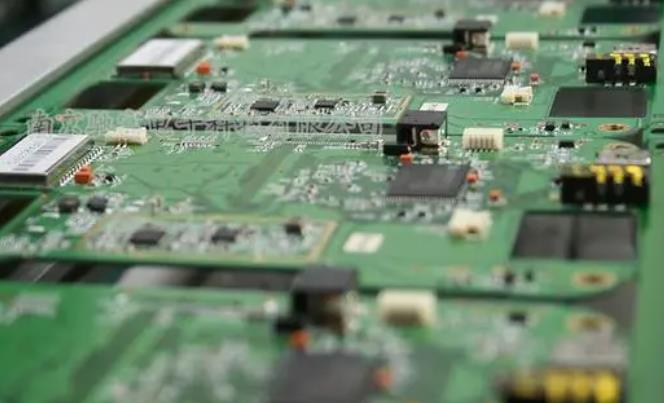
SMT assembly did not change in one jump. The line that builds a board today is the third version of a practice that started with hand-applied paste and bench-top stress testing. Looking at smt assembly solutions across the last two decades shows three clear builds: an early line that proved the process worked, a middle phase that automated the painful steps, and a current line where data ties every station together. At our electronics manufacturing services we still run all three mindsets on different products, which makes the contrast easy to see side by side.
This article follows three disciplines that moved together through those builds: stress screening of finished boards, the density of smart-home controllers, and the way component stock is secured before a job starts. Each one tells the same story from a different bench.
Where the Early Line Started
The first builds treated SMT as a craft with a few helpers. Stencil printing was done by hand, placement relied on slower feeders, and quality was judged mostly by eye. Aging Test in that era meant loading boards into a temperature chamber, running a fixed soak, and hoping the weak units failed before shipping. It worked, but it was slow and the failure signal arrived days after the board was built.
Component supply in the early line was a quote-and-wait exercise. A buyer sent a bill of materials to a distributor, compared two prices, and placed the order. There was little visibility into lead-time risk until a part simply did not show up.
What the Middle Phase Corrected
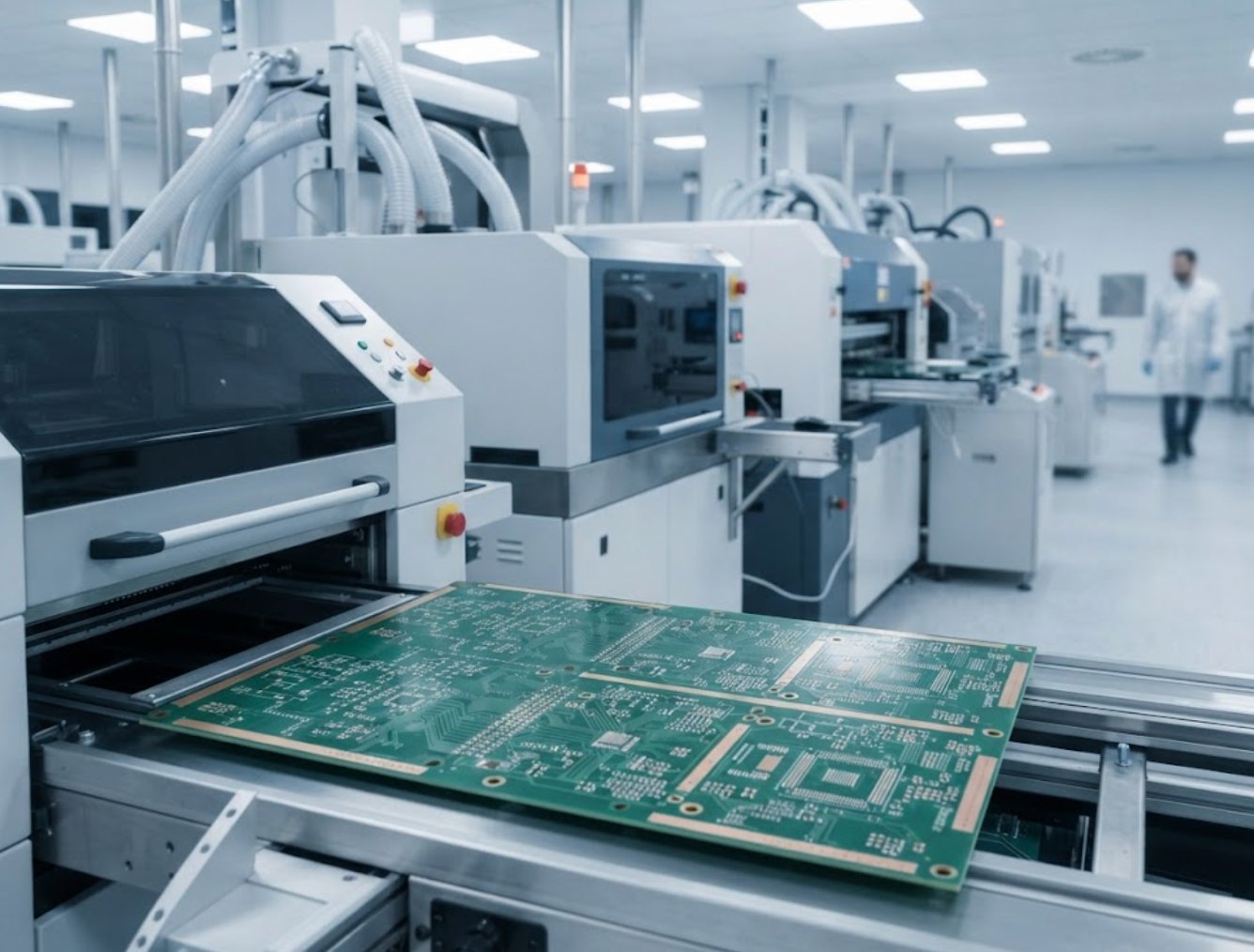
The middle phase attacked the steps that hurt most: setup time, first-pass yield, and late discovery of defects. Automatic stencil printers with vision alignment removed most of the hand error. Smart Home Products PCB work benefited directly, because those controllers packed more parts into the same footprint and could no longer tolerate a sloppy print.
Burn-in moved from a separate chamber visit to a staged stress window built into the line. Boards still aged, but the wait shrank because screening started while the unit was still powered in the cell. Sourcing also gained a software layer: bills of materials were matched against live stock instead of a static spreadsheet.
How Today's Line Runs
The current line treats the three disciplines as one data flow. Placement, inspection, and stress screening share a record per board, so a drift in one station is visible in the next. Electronic Component Procurement now starts before the design is frozen, because the longest lead parts decide the launch date more than the assembly itself.
Traceability that was once a binder of papers is now a query. A smart-home board, an aged module, and a sourced part all reference the same job number, which is what lets a modern line promise what the early line could only hope for.
The Three Builds Side by Side
| Dimension | Early Line | Middle Phase | Today's Line |
|---|---|---|---|
| Stencil & paste | Hand-aligned, sample check | Vision printer, SPI gate | Closed-loop print with per-board log |
| Stress screening | Chamber soak, late signal | Staged inline window | Screening tied to build record |
| Bill of materials | Quote and wait | Matched to live stock | Risk forecast before freeze |
| Traceability | Paper binder | Per-batch file | Per-board query |
Burn-In Moved From Oven to Inline
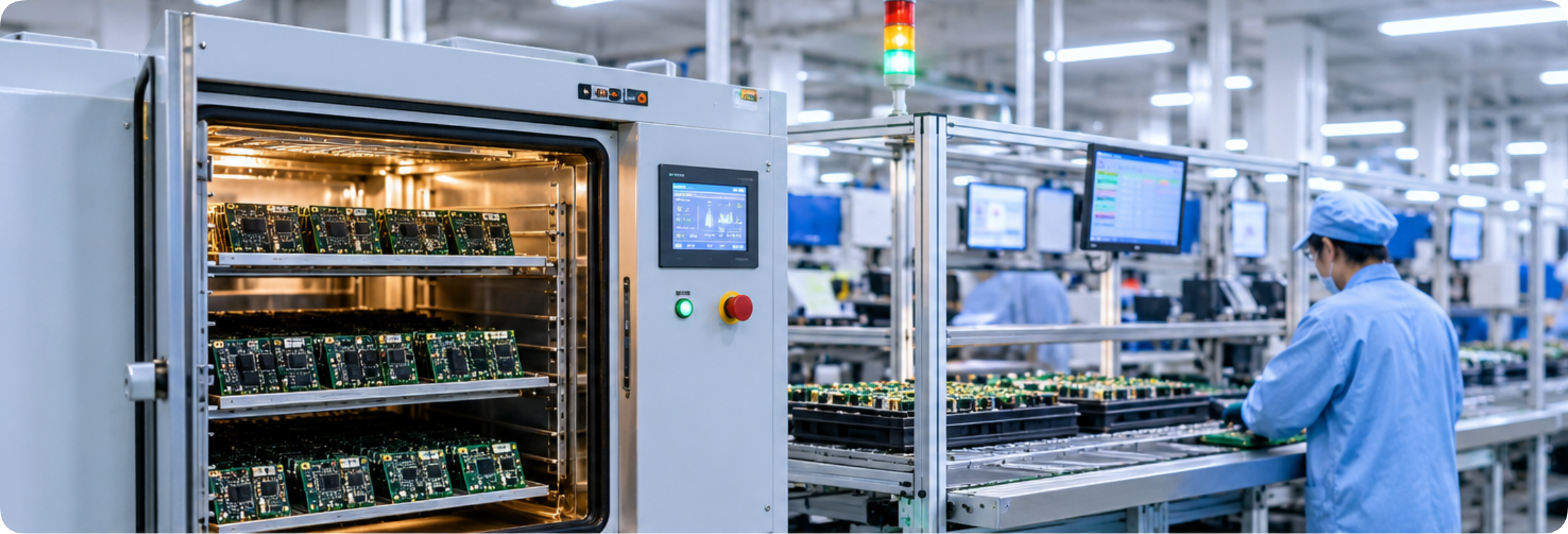
The biggest change in stress screening is timing. Early burn-in was a separate chapter: build the board, box it, move it to a chamber, wait, then test. The middle phase moved the stress window earlier so a board was exercised while still in its cell. Today the screening result is part of the same record that follows the board to the next station, which means a weak unit is pulled before it ever leaves the floor.
For smart-home and automotive-adjacent work this matters because the cost of a field return is no longer just the part. It is the truck, the technician, and the trust. An inline screen that catches a drift early protects all three.
Board Density Climbed With Each Step
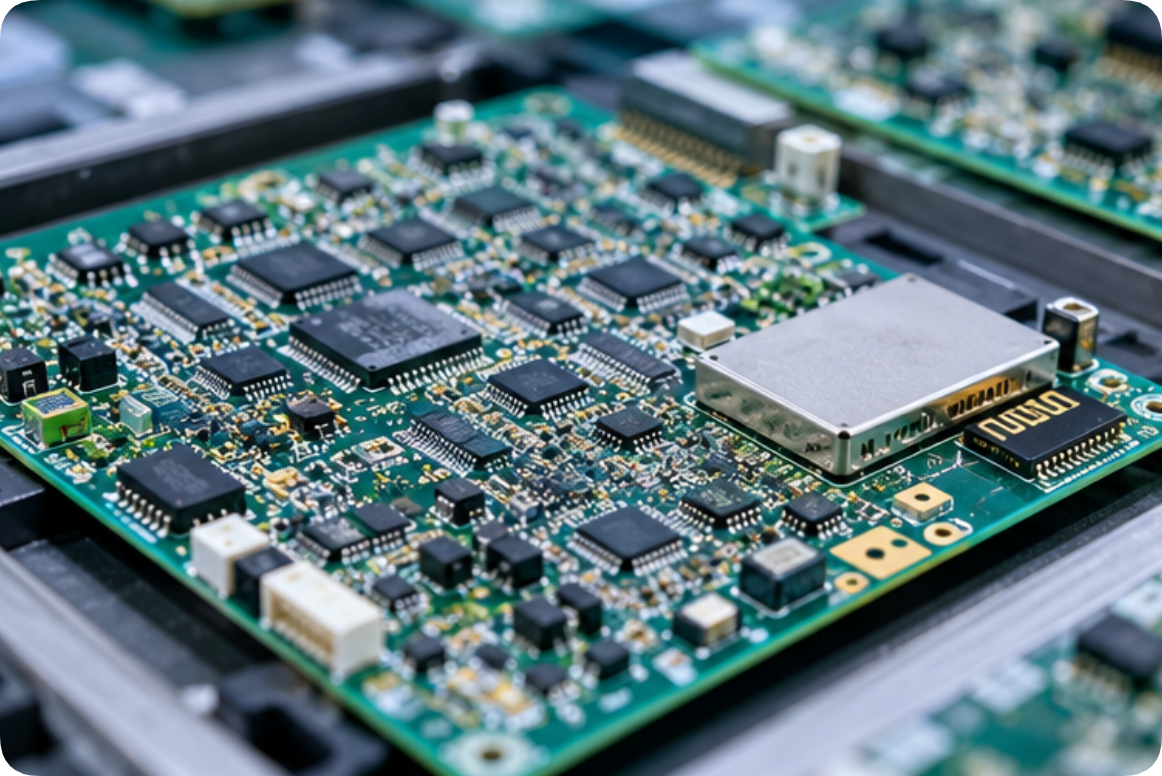
Smart-home controllers are a clean yardstick for the three builds. Early versions were roomy, with parts spaced for hand rework. The middle phase pushed components closer as wireless modules and sensors merged onto one board. Today's smart-home PCB often carries the radio, the power stage, and the sense elements in a footprint a previous generation would have called impossible.
That density is exactly why the middle-phase investments paid off. Without vision printing and automated inspection, a board this crowded would have a first-pass yield no line could ship. Density and process maturity grew in the same breath.
Sourcing Shifted From Quote to Forecast

Component procurement followed the same arc. The early line treated buying as a closing step: finish the design, then ask for prices. The middle phase matched the bill of materials to available stock so a shortage surfaced during planning. The current line goes further and treats the longest-lead parts as the schedule, because a board cannot ship around a missing microcontroller.
This is where the three disciplines meet. A forecast made before the design freezes lets the assembly line plan its own build window, which in turn lets stress screening and density targets be set with real numbers instead of guesses.
Why the Three Disciplines Now Move Together
The lesson of three generations is not that any one step got faster. It is that screening, density, and sourcing stopped being separate departments. A DIP assembly sibling process still exists for through-hole parts, and it obeys the same rule: the earlier a signal appears, the cheaper it is to act on.
For a buyer the practical takeaway is to ask where each discipline starts on a given program. If sourcing begins at freeze, stress screening after build, and density as an afterthought, the line is still running an early mindset with modern machines.
Frequently Asked Questions
1. Does moving burn-in inline mean boards are tested less thoroughly?
No. Inline screening usually runs a longer effective stress window because it starts earlier and feeds results straight into the build record, whereas a chamber soak was a single fixed block at the end.
2. Why does component sourcing now start before the design is frozen?
The longest-lead parts set the launch date more than the assembly itself. Securing them during design avoids a finished board that waits weeks for one missing component.
3. Is higher smart-home board density always better?
Not always. Crowded layouts demand vision printing and automated inspection to keep first-pass yield acceptable, so density should rise only as process maturity allows.
4. Can an older SMT line still build modern boards?
It can if the painful steps are automated and traceability is per board. The machines matter less than whether screening, sourcing, and inspection share one data flow.
Tags:
Prev: From Tooling to Automotive Grade: How Shell Mold and DIP Assembly Evolved With PCB Manufacturing
Next: No more...