
Electronic Component Procurement to Custom Industrial PC PCBA ODM: The Paper Trail a Buyer Should Demand at Three Checkpoints
A compliant electronics build is not decided on the production line alone. Long before the first stencil is cut, a chain of documents determines whether a project can survive an audit, a field failure investigation, or a customs inspection. Buyers who treat paperwork as an afterthought usually discover the gap when a customer asks for evidence that nobody kept. This guide walks through three checkpoints where the file trail matters most, from electronic component procurement through automotive boards and into industrial computing hardware, and lists exactly what to request at each gate. For a broader view of the manufacturing floor behind these documents, learn more about our manufacturing capabilities.
Why Paperwork Decides the Build Before Solder Does
Every engineering decision eventually becomes a record. A drawing revision, a laminate specification, a substitute part approval: each of these lives on paper long after the engineers who made them have moved to other projects. When a dispute arises two years later, the factory and the customer will both reach for those records, and the side with a complete file wins the argument almost every time. That is why experienced procurement teams evaluate a supplier's document discipline as a technical capability in its own right, not as an administrative bonus. A line that can produce a clean record on demand is usually a line that follows its own process instructions, because the two habits share the same root: repeatable, written procedures that operators actually use. The reverse is also true. Sloppy records almost always accompany sloppy floors, and no certificate framed on the office wall can compensate for a batch history nobody can reconstruct.
Sourcing Files That Should Ship With Every Component Batch
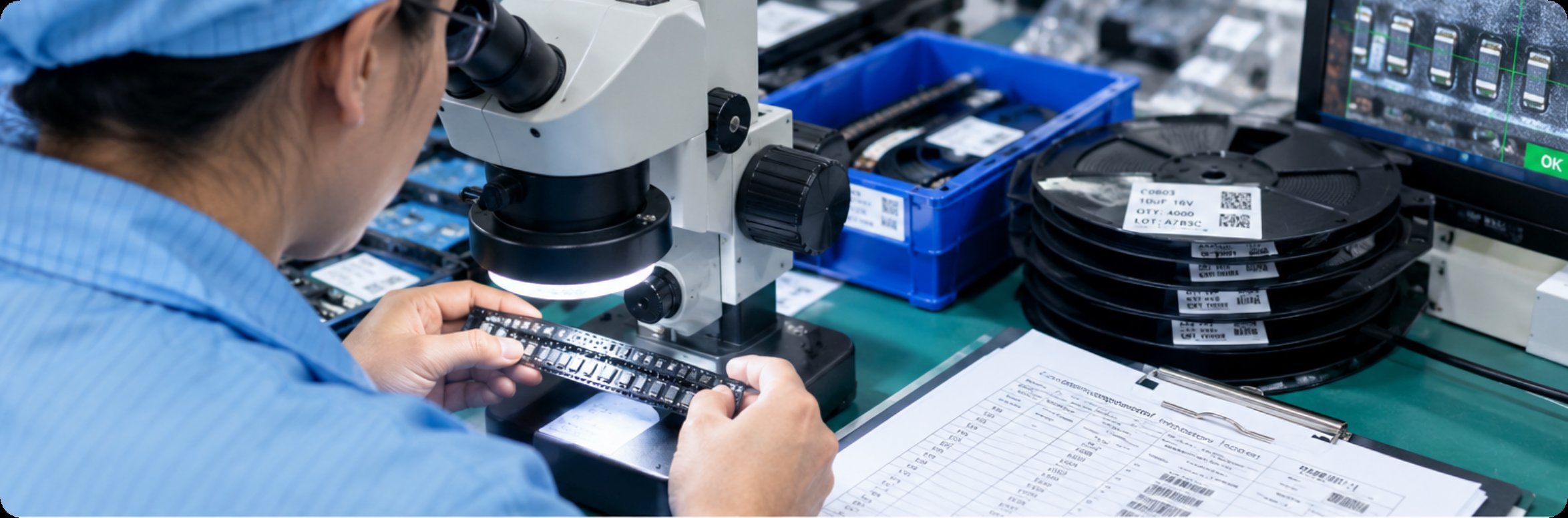
The first checkpoint sits at the material gate. Under a labor-and-material contracting model, the manufacturer buys parts on the customer's behalf, which means the customer inherits both the cost savings and the obligation to know what was bought. A disciplined sourcing file therefore includes the approved vendor list against which parts were ordered, the date-code and lot policy agreed before purchase, and certificates of conformance that tie each reel or tray back to the original manufacturer. Buyers should also ask how our component sourcing services handle substitutes when a part goes end-of-life mid-project, because the approval record for a replacement component is one of the most frequently requested items in any later failure analysis. Moisture-sensitive parts add one more layer: rack labels showing bake and dry-cabinet history prove that floor-life rules were respected, and those labels cost nothing to keep but are impossible to recreate after the fact.

Automotive Boards: Documents That Ride With Every Shipment
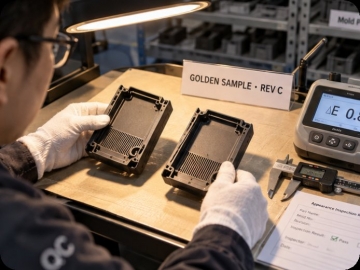
Vehicles expose electronics to vibration, temperature swings and years of continuous duty, so the documentation standard rises accordingly. Product families such as smart lighting boards, car charger boards and car MP3 boards may look simple, but each one carries expectations that a consumer gadget never faces. The file set a buyer should demand starts with process evidence: soldering profiles archived per shift, inspection records tied to serial numbers, and rework logs that name the operator and the reason. Traceability deserves special attention because an automotive recall investigation moves backwards from a field failure to a production window, sometimes years old. If the manufacturer can narrow the affected population to specific date codes within hours, the cost of the incident stays contained; if the records force a wide sweep, every unit shipped in months becomes suspect. Buyers evaluating our automotive electronics services should ask to see a sample traceability report from a past order and time how quickly the factory assembles it. The answer to that one request reveals more about real capability than any slide deck.
Industrial Computing Builds: Reading the Board Beyond the Model Number
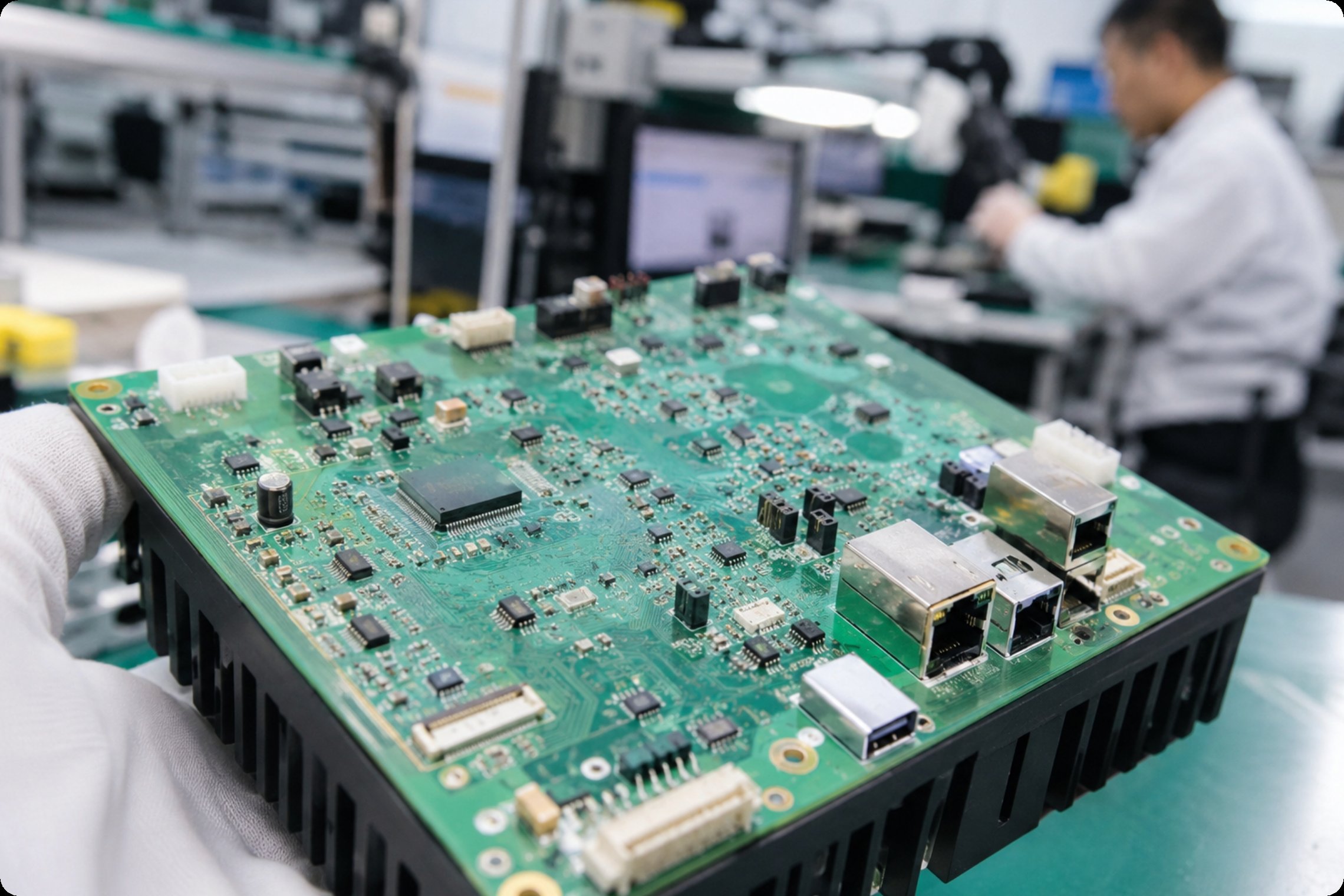
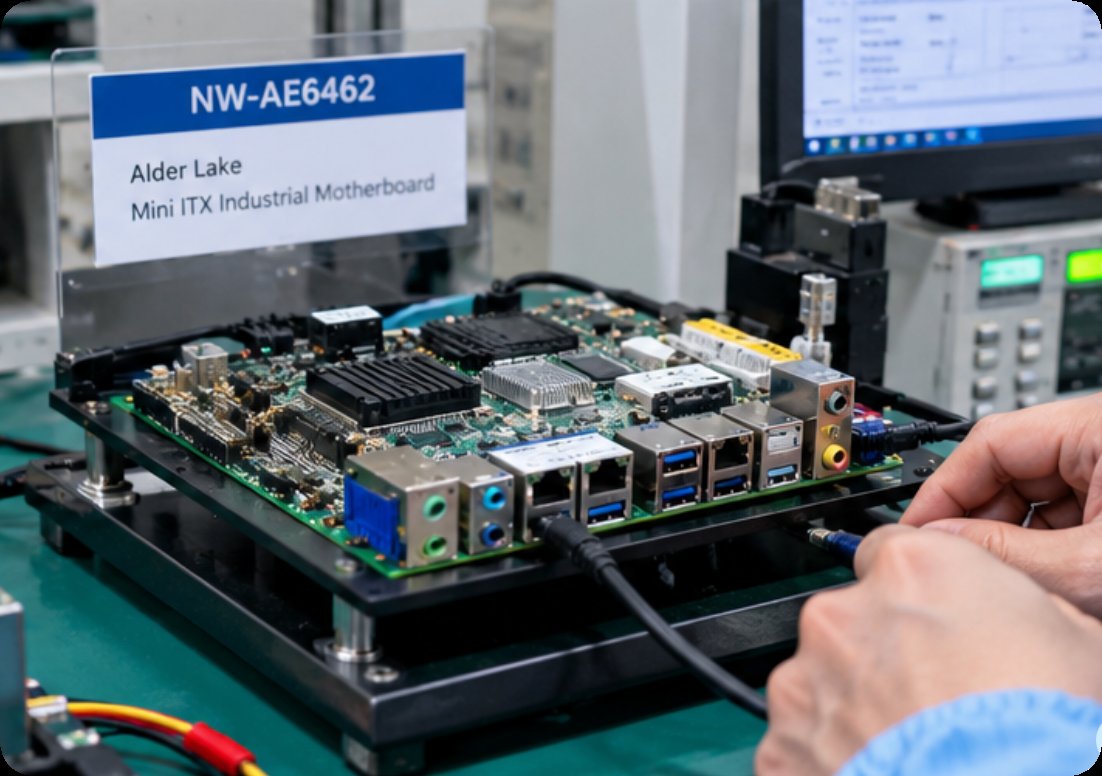
Industrial computing hardware compounds the challenge with long service lives and fixed platform commitments. A lineup that spans Alder Lake and Kaby Lake generations, multiple Mini ITX and 3.5-inch form factors, and specific boards such as the NW-AE6462 or the Elkhart J6412 DB04 will be deployed and repaired for years after its design freeze. Compliance here means proving that the board a customer receives today still matches the revision they qualified last year. Revision control records, firmware version logs and change-notification procedures are the documents that make that proof possible. Buyers working with our industrial PC PCBA services on an ODM basis should insist on a written change-notification agreement before the first production run, defining how much advance notice a board revision, a component swap or a firmware update requires. Without that agreement, a silent substitution can invalidate a customer's own certifications downstream, and the argument over who pays for the re-qualification can outlast the project itself.
The Checkpoint Table: What to Ask at Each Gate
| Checkpoint | Primary risk | File to demand | Why it matters |
|---|---|---|---|
| Sourcing gate | Counterfeit or stale parts entering the line | Certificates of conformance, date-code policy, substitute approval records | Proves every part matches the customer-approved definition |
| Automotive build gate | Untraceable field failures | Serial-linked inspection records, rework logs, soldering profiles | Lets a recall investigation narrow to exact date codes |
| Industrial ODM gate | Silent revisions after qualification | Revision control, change-notification agreement, firmware logs | Keeps the shipped board identical to the qualified design |
Read together, the three gates form a single logic: each stage inherits the records of the stage before it. A substitute part approved at the sourcing gate must reappear in the automotive traceability file; a revision announced under the industrial ODM agreement must trace back to the affected date codes. Buyers who audit the connections between the files, rather than each file in isolation, catch the gaps that single-stage reviews miss. The same connective thinking applies to downstream protection steps, which is why a walk through our conformal coating services should include the batch records linking coated boards to their pre-coating inspection results.
Verification as a Technical Capability, Not a Sales Promise
The final habit that separates strong suppliers from average ones is how they treat verification itself. Weak factories show certificates; strong factories show the raw records behind them, on request, without a week of preparation. A practical test for any buyer is to pick one random production date and ask for the complete document set for that day: material certificates, inspection sheets, rework entries and shipment records. A supplier running a real quality system assembles that folder in hours because the system generates the records as a by-product of production, not as a special exercise for audits. When evaluating our electronics manufacturing services partners, run this test before the first order, then repeat it a year into the relationship. Consistency between the two exercises tells you whether the discipline is cultural or performative, and that distinction is exactly what the paper trail exists to reveal.
Frequently Asked Questions
1. Should compliance files be requested before or after the first order?
Before. Ask for a sample document package from a recent production run while you are still qualifying the supplier. A factory with a working quality system produces that package quickly; one that improvises paperwork for audits will be slow, and the slowness itself is the answer.
2. What happens if a component goes end-of-life in the middle of a project?
The substitute must go through a written approval that names the replacement, the reason, the affected date codes and the customer sign-off. Verbal approvals are the single most common gap found in later failure analysis, so make the approval form a contract requirement from day one.
3. How far back should traceability records reach?
At minimum for the expected service life of the product. Automotive and industrial boards often stay in the field for a decade, so serial-linked inspection and rework records from every production window must remain retrievable, not just the records of the most recent orders.
4. Who should keep the compliance file after delivery?
Both sides. The buyer holds the evidence for customer audits and warranty claims, while the manufacturer keeps the process records needed to explain any field return. Agree in advance who archives what and in which format, because reconstructing a shared file years later never goes smoothly.
Tags: component procurement / automotive electronics / industrial PC ODM /
Next: No more...