
Custom Automotive Electronics, EMS Electronic Manufacturing and Product Assembly: Where Upkeep Actually Happens
Most maintenance programmes do not fail because the wrong oil was used or the wrong interval was chosen. They fail because a task sat between two job roles and neither one owned it. The shop floor that keeps a line running for a decade is rarely the one with the most elaborate schedule; it is the one where every recurring task has a name against it.
Three separate service lines sit at different points in that chain, and each exposes a different weakness. A programme built for one of them borrows badly from the others, which is why an audit often finds a tidy set of records on one line and nothing at all on the next.
Why Checklists Get Skipped
A pre-shift sheet that asks an operator to tick forty boxes, thirty-nine of which will always be fine, trains people to tick without looking. The form itself becomes the failure. What survives contact with a busy shift is a short list that asks for an exception rather than a confirmation: everything normal unless written down. That inversion costs a little discipline at the start and repays it within a month, because the blank spaces then carry actual information.
The second mechanism is less obvious. When a line is behind, upkeep is the first activity sacrificed, and the decision to skip it is made by whoever is closest to the pressure rather than by whoever owns the risk. A schedule that can be postponed without anyone noticing is not a schedule.
What an Audit Really Reads
An assessor from a demanding customer does not read a maintenance policy. They read the log, and they read it the way a forensic accountant reads a ledger: for gaps, for a sudden change in handwriting, for a month where every entry is perfect and the month before it was sparse. Continuity is the evidence. A programme with honest gaps outranks one with suspicious perfection.
This is where custom automotive electronics work changes the standard for everything around it. Vehicle programmes bring a documentation expectation that spreads into the whole building, because the assessor walks the same corridors and asks the same questions at every station. A plant that runs one automotive line tends to end up with better records on its consumer lines as a side effect, and that is not a coincidence.

The log above is the part of the station an assessor spends the most time on.
How the Upkeep Standard Gets Set
The tempting answer is to adopt whatever the equipment maker recommends, which is safe on paper and almost always too heavy to hold. The workable version is a negotiation between the strictest customer requirement and the interval the team will actually meet in a busy quarter. Pick the second one, write it down, and treat any shortening as a deliberate upgrade with a reason attached.
Verifying that the standard still means something is its own routine. An aging test run on a sample after a maintenance cycle answers a question no checklist can: whether the intervention actually restored performance or merely touched the right components in the right order.
The Only Window Is Between Changeovers
Contract manufacturing removes the option of a quiet weekend. A line carrying several customers never stops for long enough to be serviced in isolation, so the only reliable window is the interval already set aside for the changeover itself. In that reading, upkeep is not competing with production time, it is competing with nothing, because the line is already down.
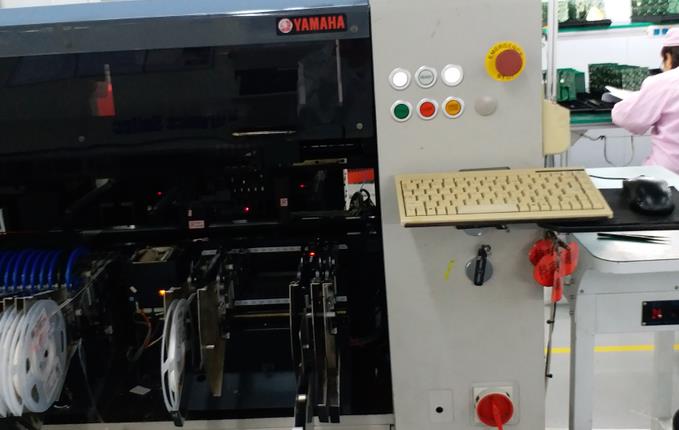
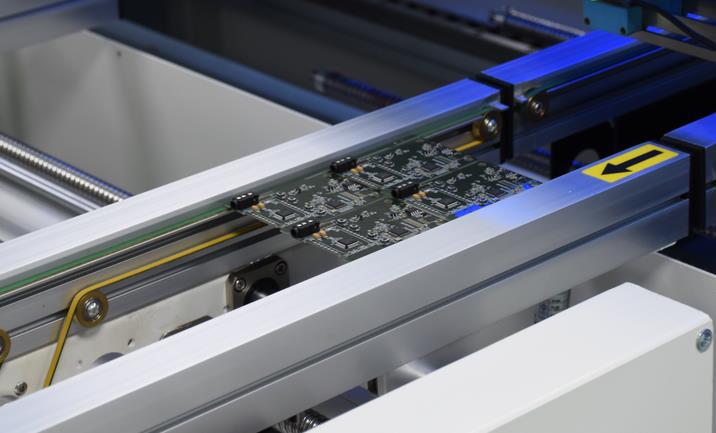
What that demands is being explicit about the fifteen minutes: wipe the nozzles, inspect the rails, check the placement head, confirm the feeder positions. Folded into the changeover sheet, those tasks stop needing a separate argument. Left outside it, they need a supervisor to defend them every single week, which is a losing position.

Servicing folded into a changeover is the only version that survives a full order book.
An EMS manufacturing operation that has made this shift usually finds the same thing: the upkeep performed during changeovers is more consistent than the upkeep previously attempted between shifts, because it belongs to a process that already has an owner.
Tooling Drifts Before Anyone Notices
Fixtures wear gradually and the tolerance they hold drifts with them, so the first symptom is not a failure but a slow rise in rework that everyone attributes to material. Replacement intervals based on the calendar miss this entirely. Counting cycles at the station, and setting the interval from that count, catches the drift at the point where it is still cheap.
The same logic applies to anything that holds a setting rather than a shape. A torque driver that has not been checked will still click, and the click will feel exactly like a correct one. Product assembly stations that calibrate on a schedule tied to use rather than to the month tend to have far fewer intermittent field returns, and the reason is not the tool, it is the interval.

A driver that clicks is not evidence that the setting is still correct.
Who Signs, Who Owns
Shift handover is the weakest joint in most programmes, because it happens when attention is lowest and the information is easiest to compress into "all fine". A short written note with a photograph of anything unusual costs two minutes and removes the ambiguity entirely. The signature is not decoration: a named person changes how carefully the round is done, and it also gives the next shift someone to ask.
A Five-Column Rhythm That Survives Peak Season
| Task | Interval | Owner | Record | First sign it was missed |
|---|---|---|---|---|
| Start-of-shift walk | Every shift | Line operator | Exception note | Small stoppages nobody logs |
| Changeover service | Every changeover | Set-up technician | Changeover sheet | Rising placement defects |
| Fixture check | By cycle count | Process engineer | Cycle log | Slow climb in rework |
| Torque verification | By use, not calendar | Assembly lead | Calibration card | Intermittent field returns |
| Accuracy re-check | Quarterly | Quality | Sample report | Drift visible only in samples |
Reading down the fourth column shows why the table works: every task has a named record someone else can find later. Reading down the fifth shows what happens when it does not, and in every case the first symptom is a number that creeps rather than a machine that stops.
Making It a Habit, Not a Campaign
A plant-wide clean-up day produces a photograph and no lasting change, because nothing about the process has been altered. The habit forms when upkeep time appears in the schedule as an allocation rather than as a remainder, and when a new starter learns the routine as part of induction rather than as an optional extra. Teams that train upkeep first and product second tend to have both.
The SMT assembly line, the assembly cell and the automotive programme all end up depending on the same thing, which is a schedule that treats an hour of upkeep as a real hour. Once that is settled, the rest is repetition.
Tags: PCB manufacturing / EMS / automotive electronics PCBA / product assembly /
Prev: Industrial PC ODM, Smart Home PCB and PCB Fabrication: What Through-Hole Work Returns