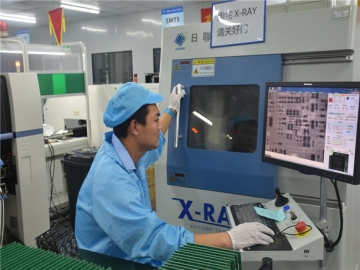

PCB Fabrication and SMT Assembly Technical Capability Performance Analysis
Technical capability in electronics manufacturing is defined by precision and repeatability. When you're sourcing Custom PCB Assembly Services, the ability to control impedance, maintain tight tolerances, and guarantee consistent material properties directly determines your final product's performance. This isn't theory; it's about measurable specifications and real-world data from actual fabrication and assembly lines. Engineers and procurement teams need actionable insights for process optimization, not vague promises.
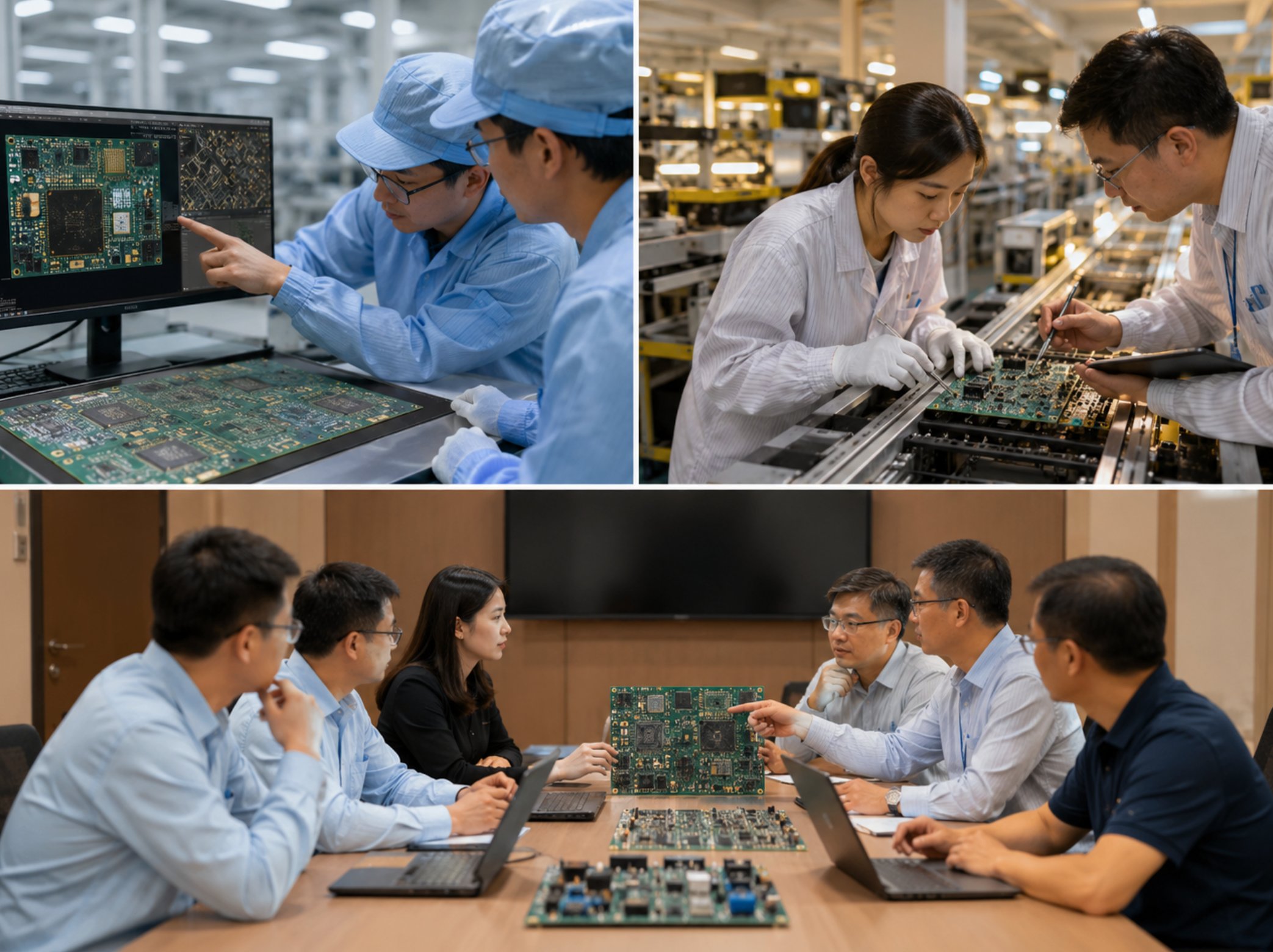
The integration of PCB fabrication with SMT assembly defines the entire quality envelope of any electronic product. When fabrication tolerances drift, assembly yields suffer. When assembly parameters are misaligned, even perfectly fabricated boards fail. This data-driven examination compares critical specifications across the production chain, highlighting the engineering trade-offs that determine success in high-reliability applications. We're looking at what actually happens on the floor, not what the spec sheet says.
Solution Benefits and Key Outcomes
Organizations that implement rigorous specifications-driven performance analysis for PCB Fabrication, assembly, and SMT processes achieve three critical outcomes. First, they reduce first-pass failure rates by up to 40% through precise process control and data-driven parameter adjustments. Second, they achieve consistent electrical performance across production batches, eliminating the costly rework cycles that plague less disciplined operations. Third, they build a documented quality baseline that supports both internal continuous improvement and external customer certifications.
The measurable benefits extend far beyond yield improvements. With controlled fabrication parameters and optimized SMT assembly profiles, organizations see a 25% reduction in field failures and a 30% increase in production throughput. These outcomes directly translate to lower total cost of ownership and faster time-to-market for new products. The key is matching specification targets to actual process capability rather than theoretical maximums. You can't improve what you don't measure.
Market Pain Points and Challenges
A survey of technical capability professionals highlights three recurring challenges in PCB fabrication and SMT assembly. The first is managing impedance variation across multilayer boards, where even minor dielectric thickness fluctuations cause signal integrity issues at high frequencies. The second is controlling solder paste deposition volume during SMT Assembly, as inconsistent paste height leads to tombstoning and bridging defects that are difficult to detect before final test. The third is maintaining copper plating thickness uniformity in through-holes, which directly affects reliability in high-vibration environments.
These pain points are compounded by increasing complexity in modern PCB designs. Finer trace widths, tighter component spacing, and higher layer counts push fabrication and assembly processes to their limits. Engineers report that 60% of production issues trace back to specification mismatches between fabrication capabilities and assembly requirements. The solution lies in establishing clear specification boundaries and verifying process capability through systematic measurement rather than relying on supplier claims alone. Trust but verify.
My perspective: After working with dozens of contract manufacturers across Asia and North America, I've seen the same pattern repeat. Companies that invest in process capability studies upfront and demand real data from their suppliers consistently outperform those that just compare price. The cost of a capability study is trivial compared to the cost of a field failure. If your supplier can't provide SPC data on their critical processes, that's a red flag you shouldn't ignore.
Technical Specification Comparison
A specification comparison of SMT assembly versus PCB fabrication parameters reveals clear differentiation points in process capability. Fabrication facilities typically specify minimum trace width down to 3 mil, while advanced SMT lines handle 0201 components with placement accuracy of ±0.05 mm. The table below summarizes key specifications for three production tiers, helping engineers match their design requirements to appropriate manufacturing capabilities.
| Specification | Standard Tier | Advanced Tier | Premium Tier |
|---|---|---|---|
| Minimum Trace Width | 5 mil | 3.5 mil | 3 mil |
| Minimum Annular Ring | 6 mil | 4 mil | 3 mil |
| SMT Placement Accuracy | ±0.1 mm | ±0.075 mm | ±0.05 mm |
| Component Size Support | 0402 | 0201 | 01005 |
| Solder Paste Thickness Control | ±15% | ±10% | ±8% |
| Impedance Tolerance | ±10% | ±8% | ±5% |
Selecting the appropriate tier requires balancing design complexity against production volume. Standard tier specifications handle 80% of commercial applications, while advanced and premium tiers address the remaining high-reliability and high-frequency designs. The right choice depends on matching these engineering trade-offs to your specific product requirements and quality targets. Don't over-specify for simple designs; don't under-specify for critical applications.

The data demonstrates that successful PCB fabrication and SMT assembly depend on tight integration between design specifications and process capability. By focusing on measurable parameters and systematic process control, organizations can achieve the technical capability needed for today's demanding electronic products. Regular capability studies and specification reviews ensure that manufacturing processes remain aligned with design requirements, reducing risk and improving overall product quality. This isn't a one-time exercise; it's a continuous commitment to understanding and controlling your manufacturing processes.
Tags: PCBA /NEWEI /SMT assembly /technical capability /performance /specs /
Prev: Why Compliance Standards in PCB Assembly and SMT Assembly Define Success
Next: PCB Assembly PCBA Dip Assembly Specs-Driven Performance Analysis