
Industrial Motherboard vs Handheld PDA: The ODM Comparison Every Hardware Startup Needs to Read
My View: Over the past decade, I have evaluated ODM requirements for hundreds of hardware startups. The single most common mistake is treating the choice between an Industrial Motherboard and a Handheld PDA Terminal as a technical specification problem. It is not. It is a commercial decision about time-to-market, capital efficiency, and channel readiness. The right path can save you six months and hundreds of thousands of dollars. The wrong one can kill your company before you find product-market fit.
Industrial Motherboard vs Handheld PDA: The ODM Comparison Every Hardware Startup Needs to Read
When you are building a hardware startup, every decision feels high-stakes. But few choices are as foundational as selecting the right ODM path. Should you start with a bare Industrial Motherboard that gives you maximum flexibility for embedded systems, or go all-in on a fully integrated Handheld PDA Terminal that is ready for retail and logistics deployments? This is not a question of which is "better"—it is about which path aligns with your business model, your funding stage, and your go-to-market strategy. Partnering with a proven Custom PCB Assembly Services provider becomes the single most important decision in your production cycle. In this article, I will walk you through a head-to-head ODM comparison across eight critical dimensions, drawing from real projects in medical, logistics, and retail verticals.
1. Scenario Suitability: Where Does Each Path Excel?
The first filter is always the application environment. Industrial Motherboard solutions are the backbone of embedded systems, industrial gateways, automation controllers, and IoT edge devices. They are designed to be integrated into a larger enclosure—think medical carts, factory control cabinets, or smart kiosks. In these cases, you do not need a finished handheld shell; you need a reliable computing core with flexible I/O.
Handheld PDA Terminal products, by contrast, are complete end-user devices. They integrate a touchscreen, battery pack, barcode scanner, RFID/NFC module, and a rugged housing rated for 5-meter drops. If your startup is building a medical diagnostic tool for nurses, a retail inventory scanner, or a logistics tracking terminal, the Handheld PDA path saves you from having to design a custom enclosure and source a display module separately. It is a "product in a box" approach that accelerates your time to market.
2. Development Cycle: 4-6 Weeks vs 8-10 Weeks
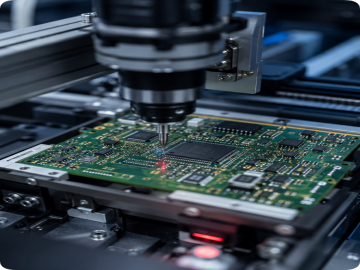
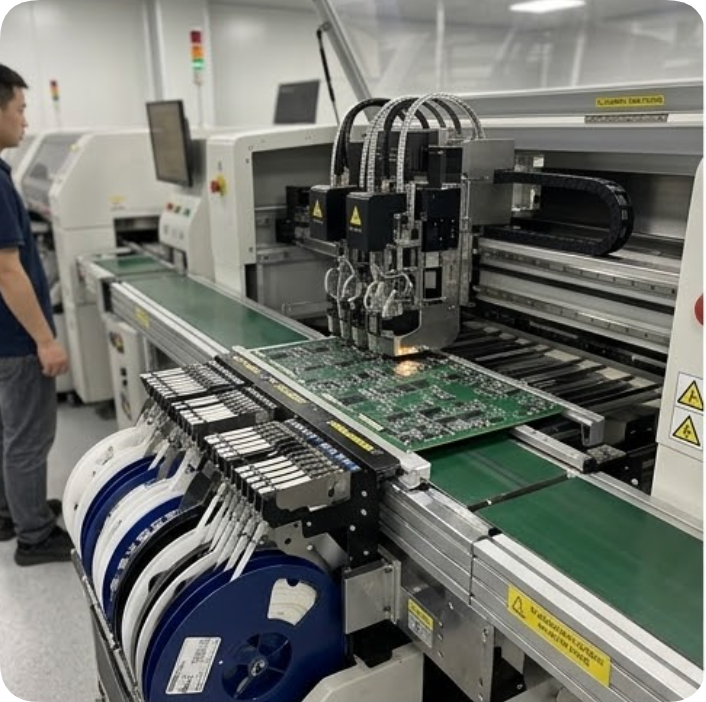
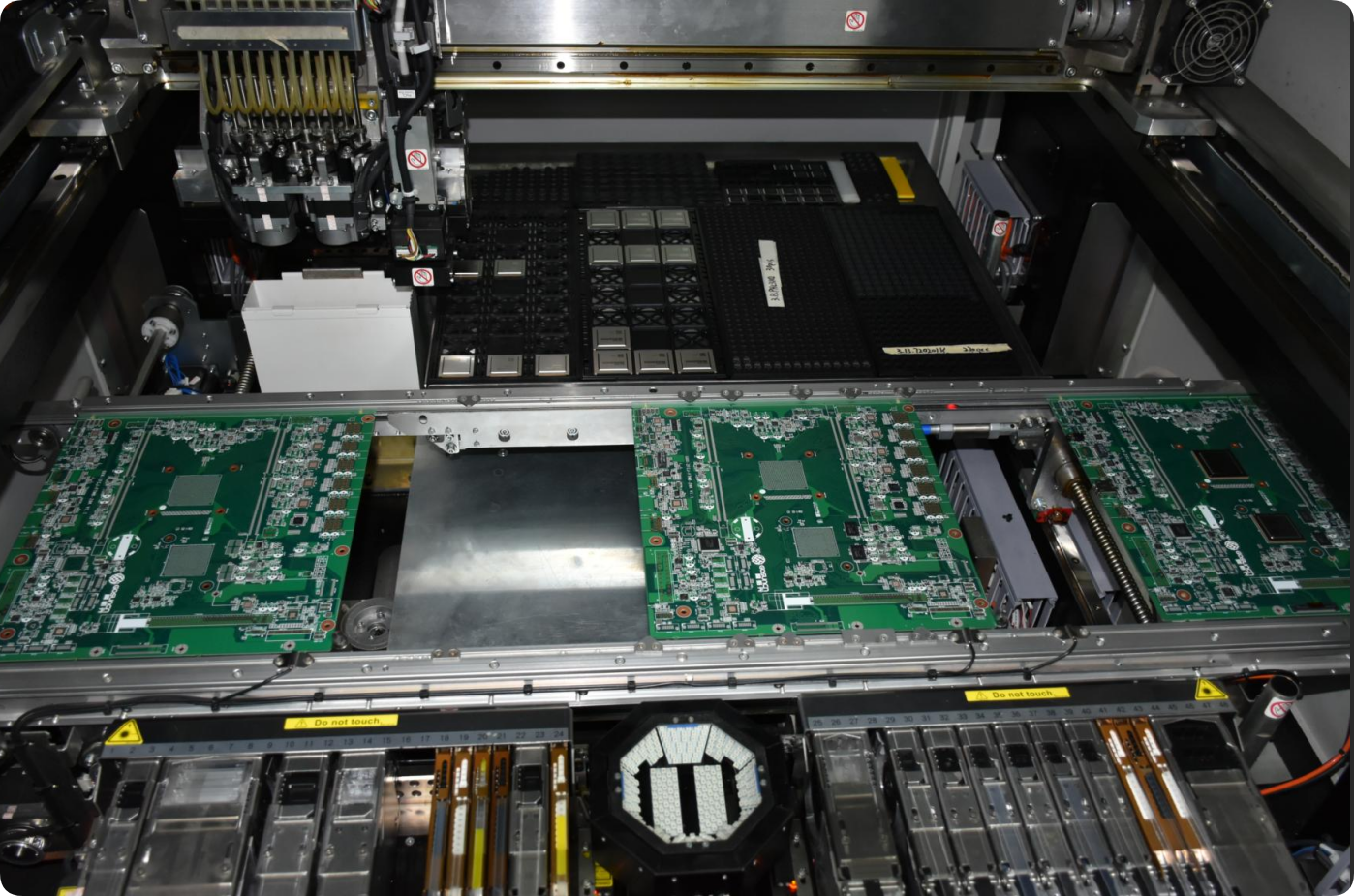
Time is the scarcest resource for any startup. Industrial Motherboard projects typically move from PCB layout to first prototypes in 4-6 weeks at the PCBA level. This is because the scope is limited to PCB design, BGA assembly with ±0.01mm precision, and 0201 micro-component placement. No mechanical design, no display tuning, no battery certification. For a startup still iterating on firmware and core algorithms, this speed is invaluable.
In contrast, a Handheld PDA Terminal ODM project requires 8-10 weeks minimum. The additional time goes into injection-molded housing design, touchscreen integration, battery pack engineering, and full device assembly. You also need drop-test validation and IP rating verification. The trade-off is clear: faster PCB-level prototyping vs. a longer but more complete product development cycle.
3. Cost Structure: BOM vs NRE Trade-offs
Let’s talk money. An Industrial Motherboard has a lower BOM cost—no display, no battery, no enclosure. Your NRE (Non-Recurring Engineering) is concentrated on PCB design and stencil fabrication. For a typical 6-layer HDI board, NRE runs between $3,000 and $8,000. BOM cost per board can be as low as $25-80 depending on processor choice and memory configuration.
A Handheld PDA Terminal has a significantly higher BOM because of structural components, touchscreen, battery pack, and the scanner/RFID module. BOM cost typically ranges from $120 to $350 per unit. NRE is also higher—$12,000 to $25,000—because you need mold tooling for the housing and custom flex cables for the display. However, the selling price of a finished PDA terminal is 3-5x higher than a bare board, which means higher gross margin per unit if you have the sales channels to move volume.
4. Volume Thresholds: MOQ Differences
Minimum Order Quantity (MOQ) is often the hidden trap for startups. Industrial Motherboard production runs can start at 500-1,000 units per batch. This is ideal for teams that are still validating product-market fit and do not want to tie up cash in finished goods inventory. You can order small batches, test the market, and scale incrementally.
Handheld PDA Terminal projects typically require 2,000-5,000 units as a starting MOQ. The reason is the injection molding cycle: mold tools are expensive, and the economics only work at higher volumes. If you do not have confirmed channels or pre-orders, this MOQ can be a cash-flow killer. I have seen startups burn six months of runway trying to finance a 3,000-unit PDA order that they could not sell.
5. NEWEI Full-Cycle ODM Coverage
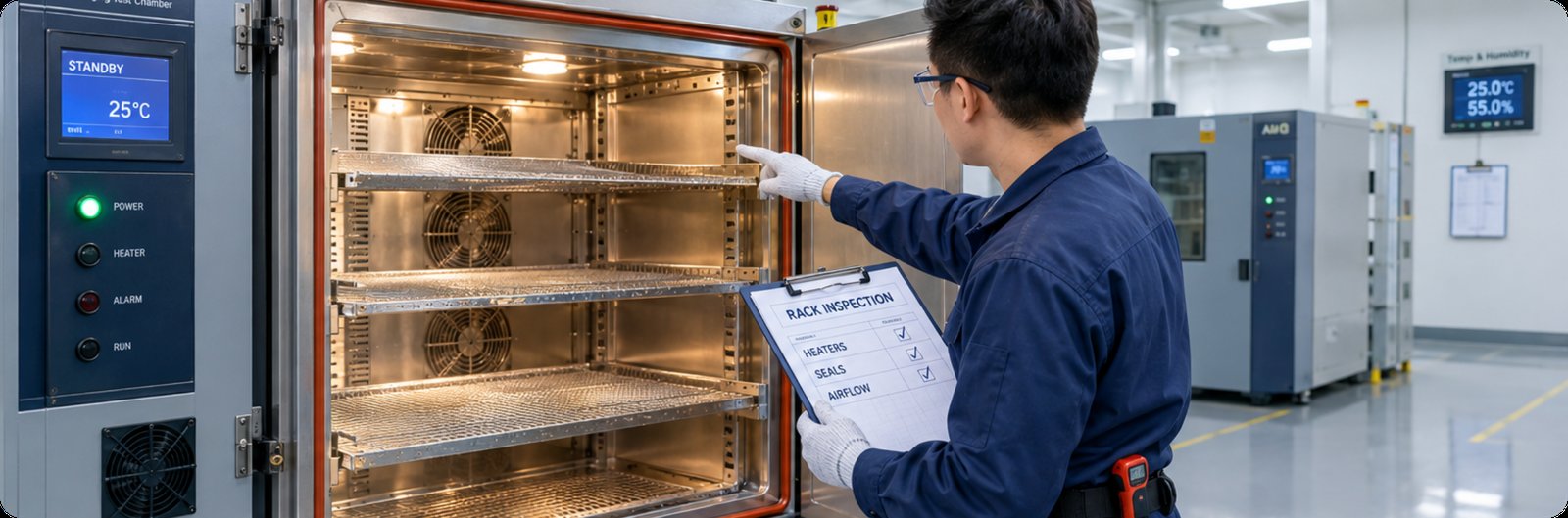
Regardless of which path you choose, NEWEI provides end-to-end PCB Manufacturing + SMT Assembly + Aging Test + Product Assembly services. For Industrial Motherboard projects, the core services are PCB Manufacturing and SMT Assembly, followed by Aging Test to ensure reliability. For Handheld PDA Terminal projects, we add Product Assembly services that cover full device integration, including display bonding, battery pack assembly, and drop-test verification.
This means you can start with a simple Industrial Motherboard prototype, validate your core technology, and later transition to a Handheld PDA Terminal without switching manufacturers. The engineering knowledge transfers seamlessly because the same team handles both the PCBA and the final assembly.
6. Decision Matrix: 8-Dimension Comparison
The table below summarizes the key differences between the two ODM paths. Use it as a quick reference when discussing your project with the NEWEI engineering team.
| Dimension | Industrial Motherboard | Handheld PDA Terminal |
|---|---|---|
| Best Application | Embedded systems, IoT gateways, automation controllers, medical carts | Retail inventory scanners, logistics trackers, medical diagnostic handhelds, asset management |
| Typical Customer | Startup building an industrial sensor hub, robotics company needing a compute module | Startup with a dedicated sales channel in healthcare, retail, or logistics |
| Development Cycle | 4-6 weeks (PCBA level) | 8-10 weeks (full device) |
| MOQ (Minimum Order Quantity) | 500-1,000 units | 2,000-5,000 units |
| NRE Range | $3,000 – $8,000 | $12,000 – $25,000 |
| DPPM Target | < 500 DPPM (board level) | < 800 DPPM (system level) |
| Certification Path | CE/FCC at board level; customer handles system certification | Full device CE/FCC, IP rating, drop test, battery UN38.3 |
| NEWEI Assembly Service | PCB Manufacturing + SMT Assembly + Aging Test | PCB Manufacturing + SMT Assembly + Aging Test + Product Assembly + Drop Test |
7. Certification and Compliance: A Hidden Differentiator
One dimension that startups often underestimate is the certification path. Industrial Motherboard certification is relatively straightforward: CE and FCC at the board level. Your customer or integrator will handle the system-level certification for the final product. This reduces your regulatory burden significantly.
Handheld PDA Terminal certification is more complex. You need full device CE/FCC, IP rating (typically IP65 or higher), drop test certification, and battery UN38.3 for lithium-ion packs. The total certification cost can be $15,000 to $30,000 and takes 6-10 weeks. If you are targeting medical applications, add IEC 60601 to the list. This is not a reason to avoid the Handheld PDA path—but you must budget for it.
8. When to Switch Paths
Here is the insight that most founders miss: you do not have to choose once and stay there. I have worked with startups that started with an Industrial Motherboard to prove their core algorithm, then transitioned to a Handheld PDA Terminal once they had customer traction. NEWEI’s ODM platform supports this path switching because we own the entire stack—from PCB fabrication to final assembly. Your initial PCB design can be reused in the handheld product with minimal modification.
Conversely, if you start with a Handheld PDA and realize the market wants a smaller embedded module, you can strip down the design to a board-only version. The key is to choose the path that minimizes your risk at your current stage.
Conclusion: Your Decision Framework
After reviewing hundreds of hardware startup ODM projects, here is my actionable advice:
Choose the Industrial Motherboard path if: you are building an embedded system, IoT gateway, or automation controller; you are still validating product-market fit; you have a limited budget for NRE; or you need to iterate quickly on firmware and algorithms.
Choose the Handheld PDA Terminal path if: you have a confirmed sales channel in retail, logistics, or healthcare; you need a complete end-user device with barcode/RFID; you have the capital to support a 2,000-5,000 unit MOQ; or you want a higher per-unit margin.
In both cases, work with a partner that offers full-cycle ODM services. NEWEI provides PCB Manufacturing, SMT Assembly, Aging Test, and Product Assembly under one roof. This means you can start with a motherboard prototype and scale to a finished handheld terminal without changing suppliers.
Ready to discuss your project? Contact NEWEI for a free consultation and quotation. Our engineering team will help you evaluate which ODM path aligns with your startup’s stage, budget, and market entry plan.
NEWEI Service Policy: Free consultation and quotation | Custom PCB Assembly from prototype to mass production | ISO certified manufacturing | Worldwide shipping | Dedicated project manager support
Tags: SMT assembly /Industrial Motherboard /Handheld PDA /ODM comparison /
Next: How Factory Culture Shapes Reliable Custom PCB Assembly & Electronics Manufacturing Services