
ESD Control in PCBA Manufacturing: Real-World Case Study of ESD Protection in SMT Assembly and PCB Fabrication
How a Medical Device OEM Cut ESD Failures by 87%: A Custom PCB Assembly Case Study in Static Control
My Take: After a decade of troubleshooting failed prototypes for clients in the medical and industrial sectors, I’ve seen one root cause destroy more projects than bad solder joints or component shortages combined: electrostatic discharge (ESD). Most engineers underestimate how a single 200-volt zap inside a dry SMT line can silently degrade a precision IC. This case study isn’t just about a client who fixed their yield—it’s about how NEWEI’s integrated PCB Assembly (PCBA) workflow, from dedicated ESD storage to functional testing, turned a 12% failure rate into something you could count on one hand. If you’re sourcing electronics that must survive hospital floors or factory floors, this is the blueprint. You’ve designed a brilliant circuit. The BOM is locked. The layout is clean. Then your first batch of prototypes arrives with intermittent failures that no one can explain. The symptom? Random resets, data corruption, or a dead channel on an ADC. The cause? Static discharge during assembly or handling. For one European medical device OEM, this was the reality of their custom PCB Assembly (PCBA) journey—until they switched to a partner with a zero-compromise approach to static control. Here’s how Custom PCB Assembly Services from NEWEI transformed their production line and why their story matters for anyone manufacturing sensitive electronics today.
1. The Critical Role of ESD-Controlled PCB Assembly in Modern Electronics
1. The Critical Role of ESD-Controlled PCB Assembly in Modern Electronics
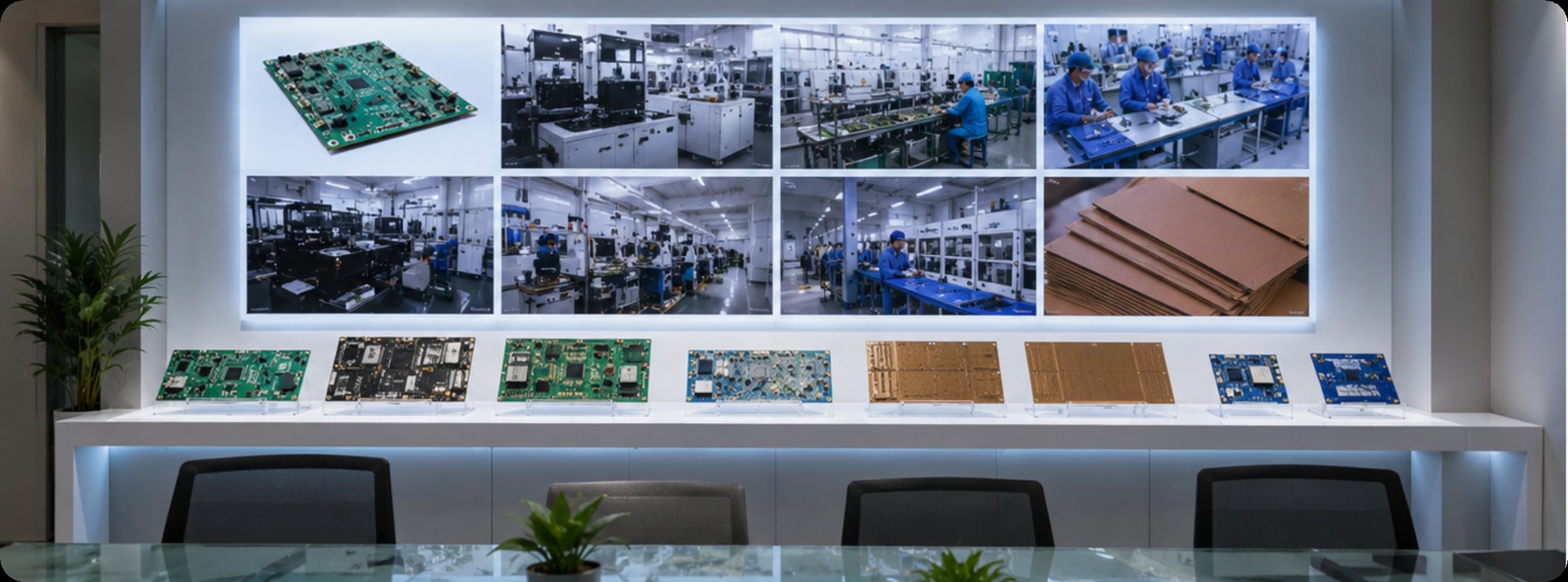
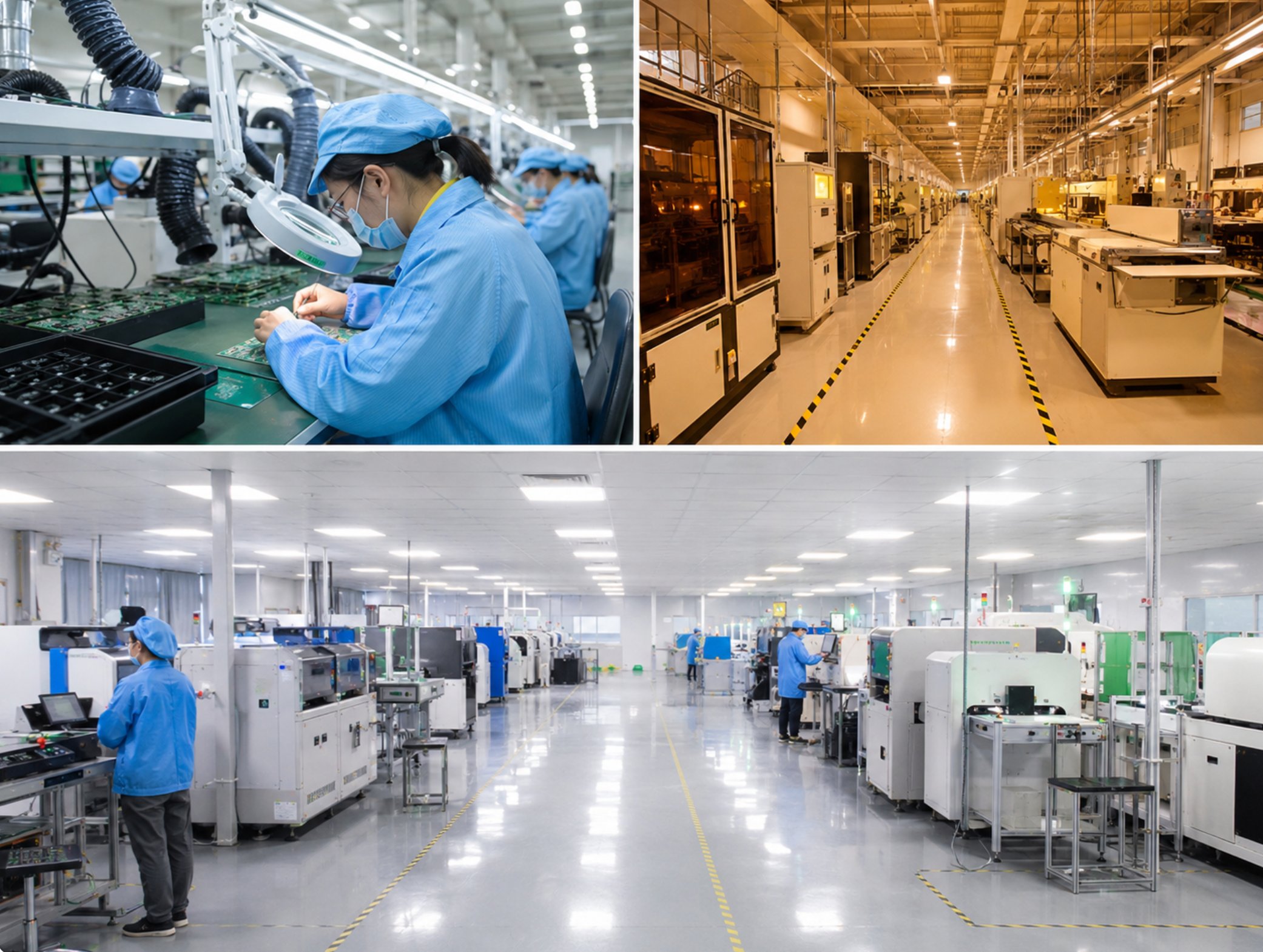
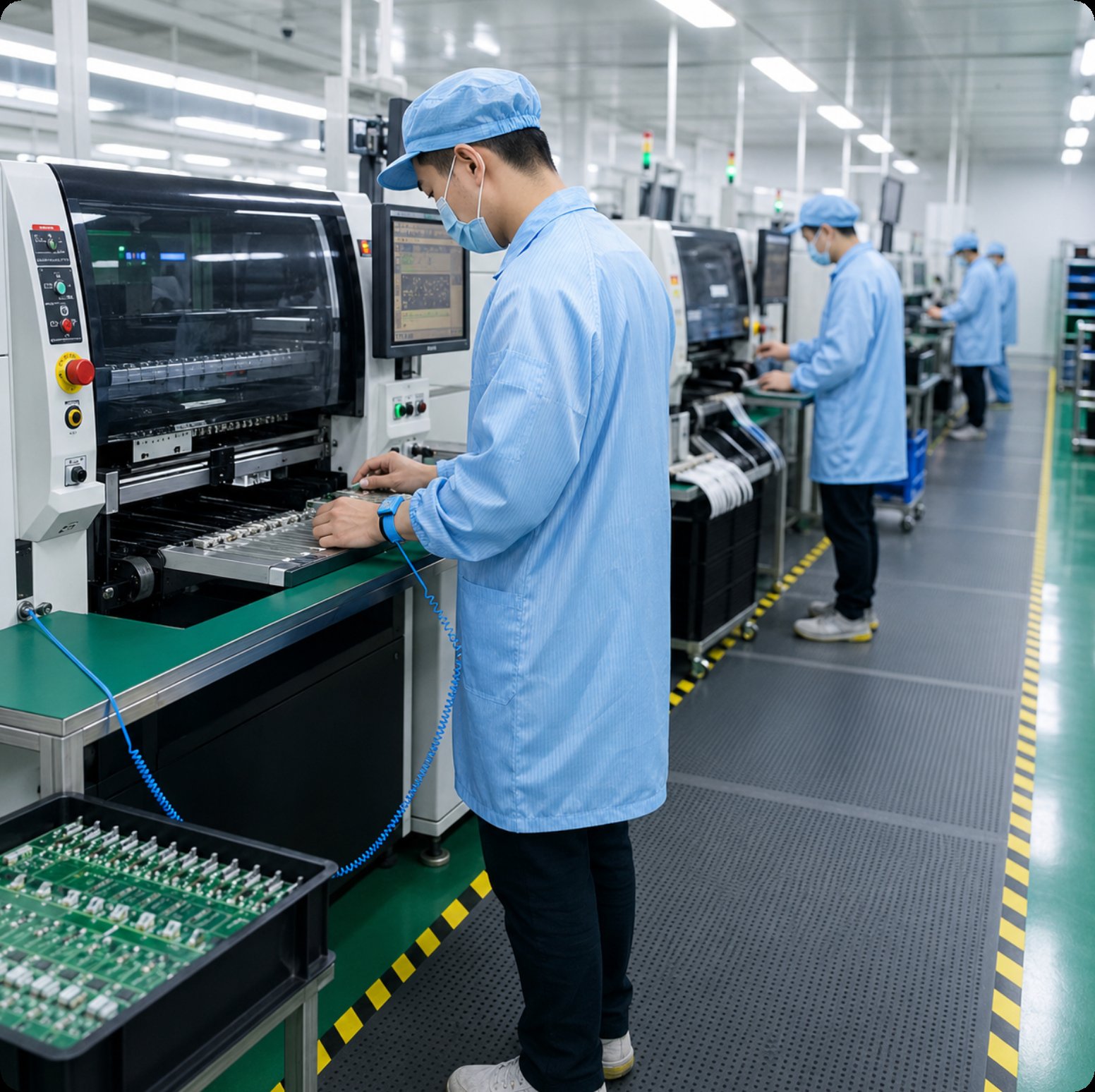
Electrostatic discharge isn’t just a manufacturing inconvenience; it’s a silent killer of reliability. In environments where PCB Assembly (PCBA), SMT Assembly, and PCB Fabrication converge, a single ungrounded workbench can introduce latent defects that slip past visual inspection. The medical OEM we’re discussing had been sourcing from a low-cost assembler that skipped basic ESD protocols. Their failure rate on medical motherboard FT-C4435U prototypes hit 12%—unacceptable for a device that monitors patient vitals.When they moved production to NEWEI, the first change was the environment. Every step of our SMT Assembly Services line operates under continuous ESD monitoring: conductive flooring, wrist-strap testers at every station, and ionized air blowers over open component trays. This isn’t just about compliance; it’s about preserving the electrical integrity of every IC, resistor, and connector before they ever see a reflow oven.
2. From Incoming Inspection to Conformal Coating: A Full Static-Control Workflow
The OEM’s journey started with a root-cause audit. NEWEI’s quality team traced the failures back to static damage during component handling at the original supplier. We immediately implemented a multi-layer defense that begins with incoming quality control (IQC). Every reel of chips is stored in ESD-safe cabinets with humidity control, and our dedicated esd protection solutions extend through the entire production cycle.
2.1 SMT and SPI: The First Line of Defense
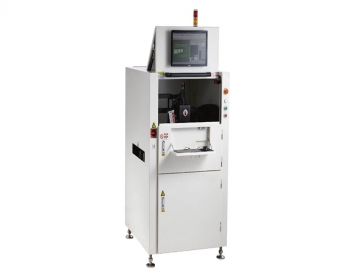
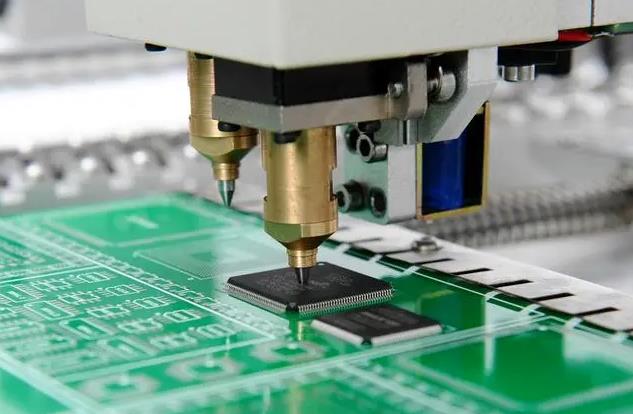
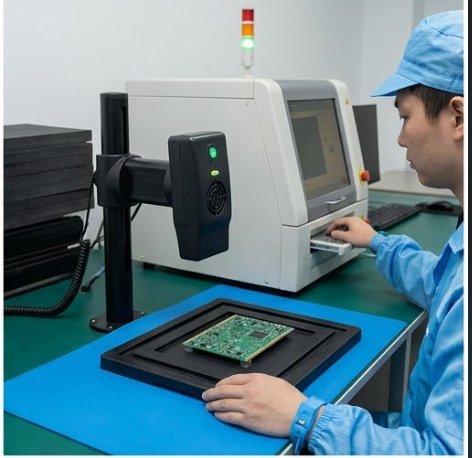
During SMT Assembly, static-sensitive boards move on ESD-safe carriers. Our solder paste inspection (SPI) machines verify print quality while operators wear grounded wrist straps at all times. The result? The client’s first pilot run of 500 boards showed zero ESD-related failures. Compare that to their previous 12% defect rate, and the ROI of proper static control becomes undeniable.
2.2 Three-Proofing Paint for Long-Term Reliability
After assembly, the boards receive a conformal coating to protect against moisture, dust, and chemical contaminants. But here’s the catch: applying conformal coating in a non-ESD environment can trap static charges under the film. NEWEI’s PCBA Three-Proofing Paint service is performed in a dedicated, ionized spray booth that eliminates this risk. For the OEM’s smart electric toothbrush PCBA board—a product that handles both motor control and Bluetooth communication—this step was critical to prevent field failures.
3. Multi-Product Synergy: Combining Industrial and Consumer PCBA with Unified ESD Standards
One of the most impressive outcomes from this partnership was how NEWEI applied the same ESD rigor across two very different product lines: a high-reliability Industrial Mini PC & Embedded Motherboards for factory automation and a portable projector PCBA for consumer electronics. Both products share the same assembly line—but each has unique static sensitivity profiles.
| Product Type | ESD Sensitivity | Key Protection Step |
|---|---|---|
| Industrial Mini PC Motherboard | High (BGA chips, fine pitch) | Ionized air during reflow |
| Portable Projector PCBA | Medium (LED drivers, connectors) | Conductive tote boxes for transport |
By standardizing ESD protocols across both high-volume consumer runs and low-volume industrial batches, NEWEI reduced changeover time by 30% while maintaining zero ESD defects. This is the kind of operational efficiency that only comes from a deeply integrated EMS Electronic Manufacturing Services partner.
4. Real-World Applications: Where Static Control Makes or Breaks the Product
The lessons from this case study apply far beyond medical devices. Here are five scenarios where proper ESD management in PCB Assembly (PCBA) is non-negotiable:
Automotive electronics: Engine control units must survive 15-year lifespans. A static-damaged capacitor can cause intermittent misfires.
Smart home gateways: Devices like the smart bracelet PCBA board rely on low-power RF chips that are extremely ESD-sensitive.
Industrial sensors: Pressure transmitters in oil rigs need conformal coating applied under strict ESD conditions to avoid corrosion failures.
Portable medical monitors: Patient-connected devices must meet IEC 60601 for ESD immunity; poor assembly practices void compliance.
Consumer wearables: The Bluetooth headset PCBA board has tiny 0201 components that can be lifted by a static discharge during handling.
5. Conclusion: Why You Need an ESD-Aware Manufacturing Partner
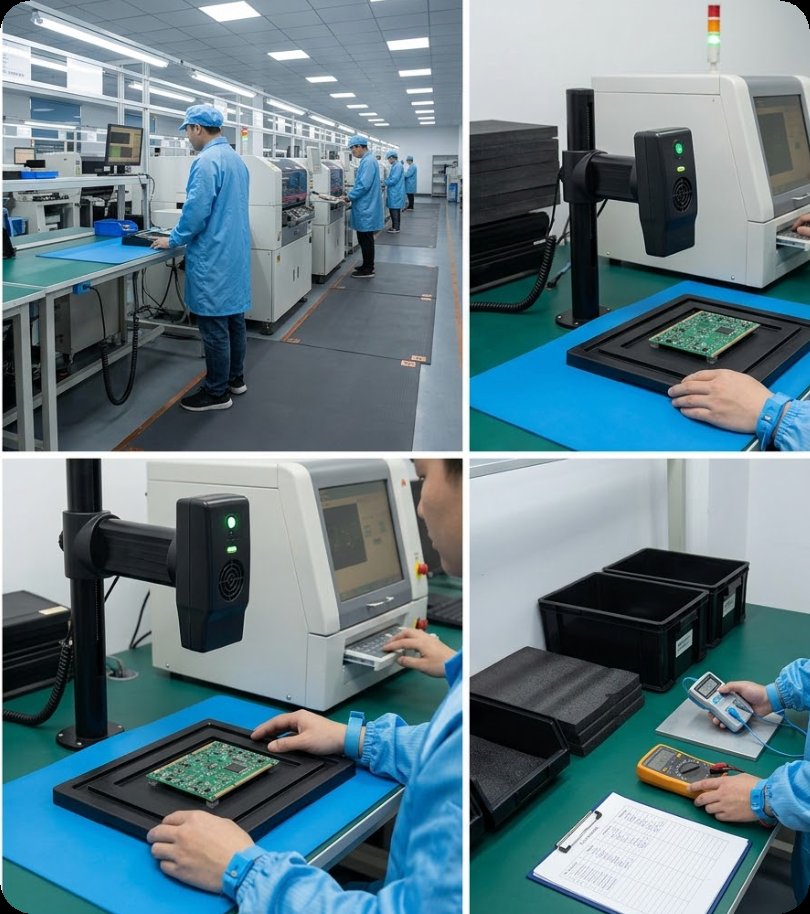
The OEM we worked with didn’t just reduce defects—they eliminated an entire failure mode. Their field return rate dropped to below 0.1%, and they gained the confidence to ramp production from 1,000 to 50,000 units per month within a year. That kind of scalability is only possible when your PCB Assembly (PCBA) partner treats static control as a core competency, not an afterthought.Whether you’re building a FT-J6412 V11 IPC for a factory floor or a custom IoT sensor for a smart building, the principles are the same: start with an ESD-safe environment, maintain it through every process step, and verify it with rigorous testing. If you want to learn more about our manufacturing capabilities, reach out to our engineering team today. We’ll help you design a production plan that keeps static where it belongs—nowhere near your electronics.Ready to eliminate ESD failures from your next project? Contact NEWEI for a free consultation and quote. From prototype to mass production, we deliver ISO-certified PCB Assembly (PCBA) with worldwide shipping and a dedicated project manager.
Tags: PCBA /SMT assembly /ESD control /case study /electronics /
Prev: Why Your Custom PCBA Project Needs a Real ROI Analysis Before You Commit
Next: PCB Packaging and Delivery: Benchmark Data on PCBA Outbound Quality Control and Shipping