
An electronics manufacturing quote often arrives as a single bundled number, yet the work behind it follows three distinct schedules. Enclosure tooling is paid for upfront before production boards are built; DIP assembly scales with batch setups, lot splits, and component mix changes; and conformal coating applies board by board through spraying, inspection, and curing. Treating all three costs as one flat per-unit expense distorts ROI models and hides where design revisions truly add cost.
This breakdown examines an SMT-driven build alongside three supporting processes: Plastic & Metal Enclosure Injection Mold Manufacturing, DIP Through Hole Assembly & Wave Soldering, and PCBA Conformal Coating & Three-Proofing Services. Because actual pricing depends on BOM details, Gerber files, and current material markets, the focus here stays on operational schedules, process capacities, and how engineering changes hit each cost clock.
Enclosure Tooling: Locked In Before the First Production Board
Plastic & Metal Enclosure Injection Mold Manufacturing sets its cost structure early in the program. Covering mechanical design, 3D sampling, small-batch trial verification, and volume injection molding across materials such as polypropylene, nylon, polyetherimide, and stainless steel, tooling does not repeat per board once steel is cut and approved. Any late dimensional change after mold completion requires tool rework, extra trial shots, and re-qualification rather than faster SMT line throughput.
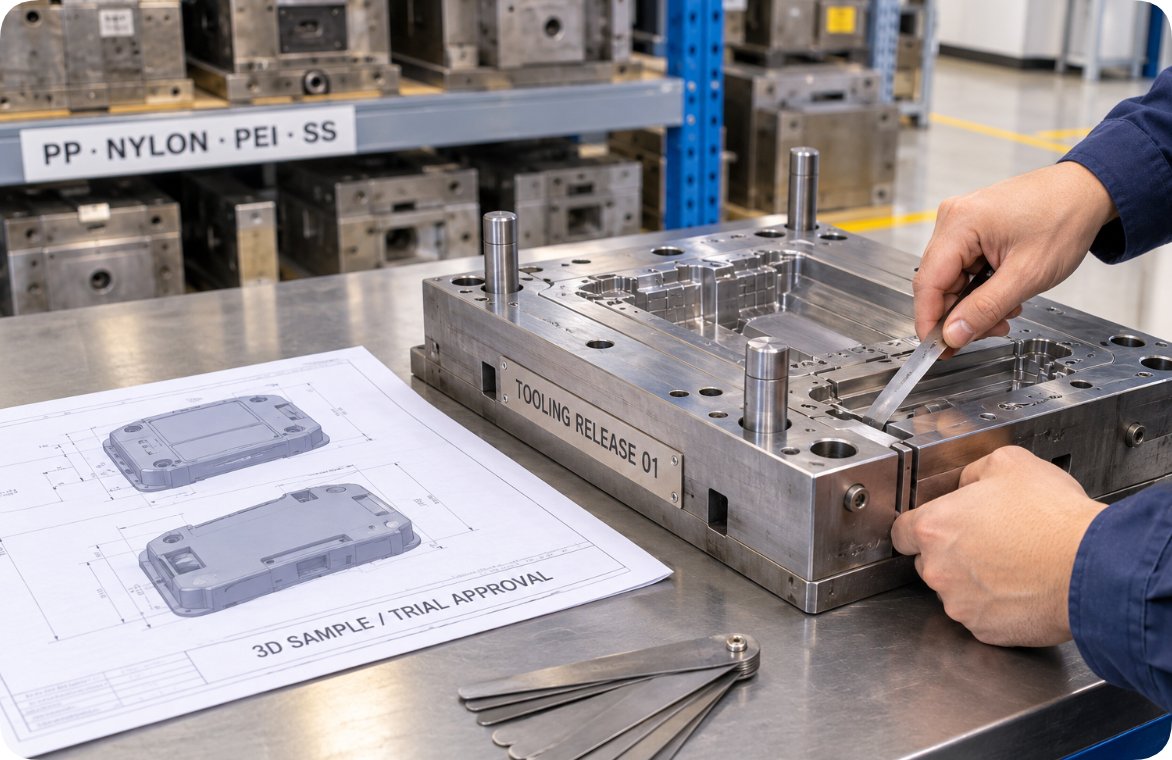
Amortizing a fixed mold investment across optimistic volume forecasts creates misleading unit economics if shipments ramp slowly. Tracking tooling as a separate upfront commitment clarifies how many housings must ship before mold cost stops dominating total unit spend, keeping commercial projections realistic across product revisions.
DIP Through Hole Assembly: Driven by Mix Changes and Lot Structure
DIP Through Hole Assembly & Wave Soldering runs alongside surface-mount assembly with heavier manual handling, station changeover work, and batch-level inspection. Operational resources for this process include plug-in AOI checks for missing, wrong, or reversed parts, four wave soldering machines, four washing machines, fifty-six rear soldering stations, and segregated staging for plug-in, rework, IPQC, and QA lots so boards stay separated.
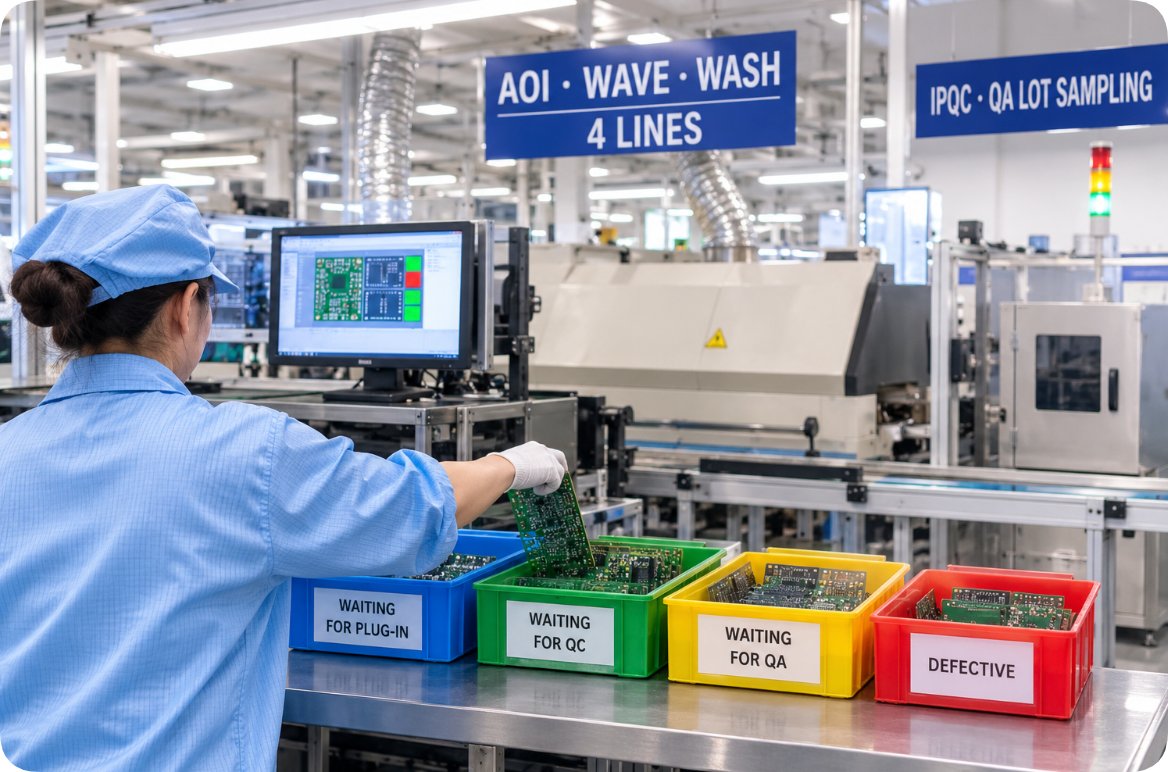
Shared stations mean component mix changes affect more than BOM line items. Frequent changeovers between mixed orders add setup time, verification steps, and wave-solder queues, whereas repeat runs with stable parts move through established stations with far less friction.
Lot planning directly affects inspection workload as well. Operating under ISO9001:2015 and ISO13485 quality frameworks with IPQC and QA lot sampling means splitting a build into more lots adds sampling checkpoints, while combining lots where traceability rules permit reduces repetitive inspection overhead.
Conformal Coating: A Per-Board Cycle That Multiplies on Rework
PCBA Conformal Coating & Three-Proofing Services applies to every individual assembly rather than once per tool or once per batch. The line uses two spraying machines, UV inspection, and curing ovens with fan and needle spray modes, double-sided processing, selective masking for connectors, antennas, WiFi modules, and heat sinks, fixtures for boards up to 550 mm by 470 mm, and an automated spray time of roughly 0.5 to 3 minutes per board.
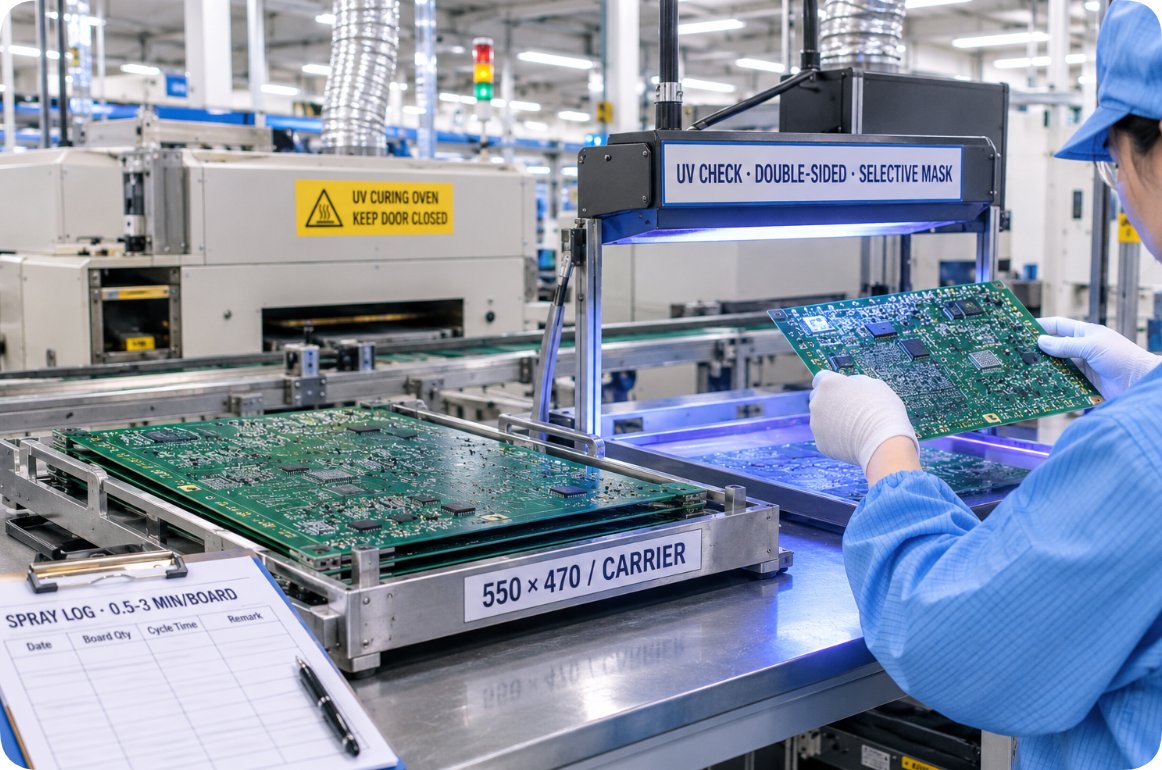
Because every board passes through the line, forecast accuracy is straightforward on clean runs—and risky when rework happens. Automated spraying avoids manual brush inconsistencies such as uneven film build, contamination, or coating reaching connectors and displays, yet any board returned for component repair or mask correction must go through the per-board cycle again.
Published Process Facts vs. Unquoted Variables
Strong engineering and financial reviews separate documented process capabilities from unquoted commercial variables. The matrix below summarizes only details stated on the service pages and leaves unpublished commercial terms open rather than inventing numbers, alongside related workflows such as Quick Turn PCB Prototyping & Board Manufacturing once BOM and Gerber files are finalized.
| Process Area | Cost Schedule | Published Process Details | Variables Requiring Quote |
|---|---|---|---|
| Enclosure Injection Mold | Upfront per tool | Design, 3D sampling, small-batch trial verification, volume molding; polypropylene, nylon, polyetherimide, stainless steel | Tooling quote, cavity layout, mold lifespan |
| DIP & Wave Soldering | Per batch / per lot | Plug-in AOI, 4 wave solder lines, 4 washing units, 56 rear soldering stations, IPQC/QA lot sampling, ISO9001:2015 & ISO13485 | Batch pricing, lot quantities, station cycle times |
| Conformal Coating | Per board pass | 2 spray machines, UV inspection & baking, double-sided coating, boards up to 550 mm x 470 mm, ~0.5–3 min/board spray time | Per-board rate, target film thickness, rework rate |
💰 Where ROI Models Fail in Practice
ROI spreadsheets usually break down for three practical reasons:
Unbacked volume assumptions: Spreading mold tooling across unverified sales forecasts makes early unit costs look artificially low.
Ignored lot and setup overhead: Treating four small batches as equal to one consolidated run overlooks extra setup and QA sampling touchpoints.
Single-pass coating math: Budgeting one coating pass per board misses repeat spraying, masking, and baking when rework occurs.
Cash timing also differs across stages. Tooling cash leaves before shipments begin, while DIP and coating costs track production volume over time—even when coordinated alongside High Precision SMT Assembly Lines Factory on the main assembly floor.
Structuring Reviews and Engineering Changes Across All Three Clocks
Program leads get clearer cost control by separating mold commitments, batch/lot overhead, and per-board coating counts (including rework allowances) in budget reviews. Each team can then evaluate the levers it controls—sales volume on tooling, lot scheduling and component mix on DIP, and masking or rework discipline on coating.
In real programs, the impact of a revision depends on which schedule it hits. A late housing geometry change affects mold tooling; a new through-hole connector shifts DIP setup, AOI inspection, and lot handling; and additional keep-out zones or connectors affect masking and cycle time on the coating line. For how mid-build component changes affect procurement and SMT placement, see When a Customer Changes the BOM Mid-Build: What the Industrial PC and PCBA Lines Freeze First.
To see how enclosure tooling, board assembly, and finishing fit together across a single build program, review Turnkey EMS Electronic Manufacturing Services and map every design change against the specific cost clock it affects.