
Shell Mold, Smart Home PCBA and PCB Fabrication: The Part That Decides What the Board Can Still Change
My view after ten years on the shop floor: buyers almost always treat the housing drawing as the last document in the pack. In practice it is the first costing decision. Once the cavity is cut, every dimension inside that shell becomes someone else's constraint, and the board is usually the one that pays for it.
Most project teams sequence the work the way the budget sheet is laid out: electronics first, enclosure later. That order looks efficient because the board is what carries the function. It becomes expensive the moment a wall thickness moves by half a millimetre and the connector no longer clears the opening.
What follows is not a price list. It is an account of which of the three bills that arrive from one shell drawing can still be reduced, and which of them are already fixed by the time you ask.
One Bill Falls With Volume and Two Do Not
Tooling is the only line on a housing quote that behaves like a one-time charge. The steel is cut once, and whatever it cost is divided across every part you will ever run, which is why a small first order carries a tooling figure that looks absurd per piece and a mature order carries almost none. Nothing else in the shell follows that shape. Plastic is bought by weight, and the machine time that forms it is counted in seconds per part, so neither of those two lines cares how large the order is. Our own shell mold solutions are quoted with no minimum order for exactly this reason: the customer should be able to see the tooling line separately instead of discovering it inside a unit price.
Three Costs That Start From a Single Drawing
A shell drawing is unusual because it commits three different kinds of money at once, and each one is released by a different event later on.
| What the drawing fixes | How it is charged | What moves it afterwards |
|---|---|---|
| Cavity, core and parting line | One-time tooling | A new tool, or a welded and re-cut insert |
| Wall sections and internal clearances | Per part, through material weight and cooling time | A parameter pass and a fresh trial shot |
| Mounting points and opening positions | Per part, through assembly minutes | Re-made fixtures, stencils and a re-test cycle |
The third row is the one that surprises people. It is charged as assembly time, but it is caused by a housing dimension, and the cost lands on the electronics side of the project rather than the plastics side.
What a Late Wall Thickness Change Moves Downstream
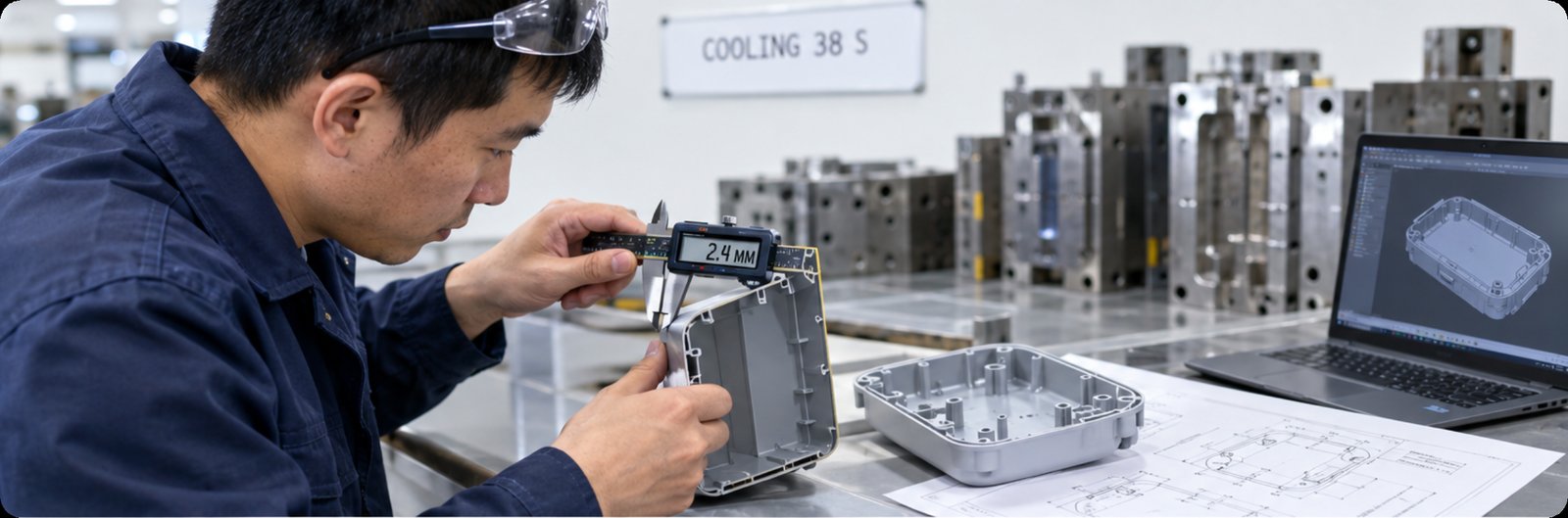
Thicker walls take longer to cool, and longer cooling is longer cycle time, which is a direct addition to the piece price. That part of the arithmetic is at least visible on a quote. The part that is not visible is the space the wall took away from the interior. A section that grows inward eats the gap that a connector, a battery or a board edge was relying on, and the electronics have to absorb the difference.
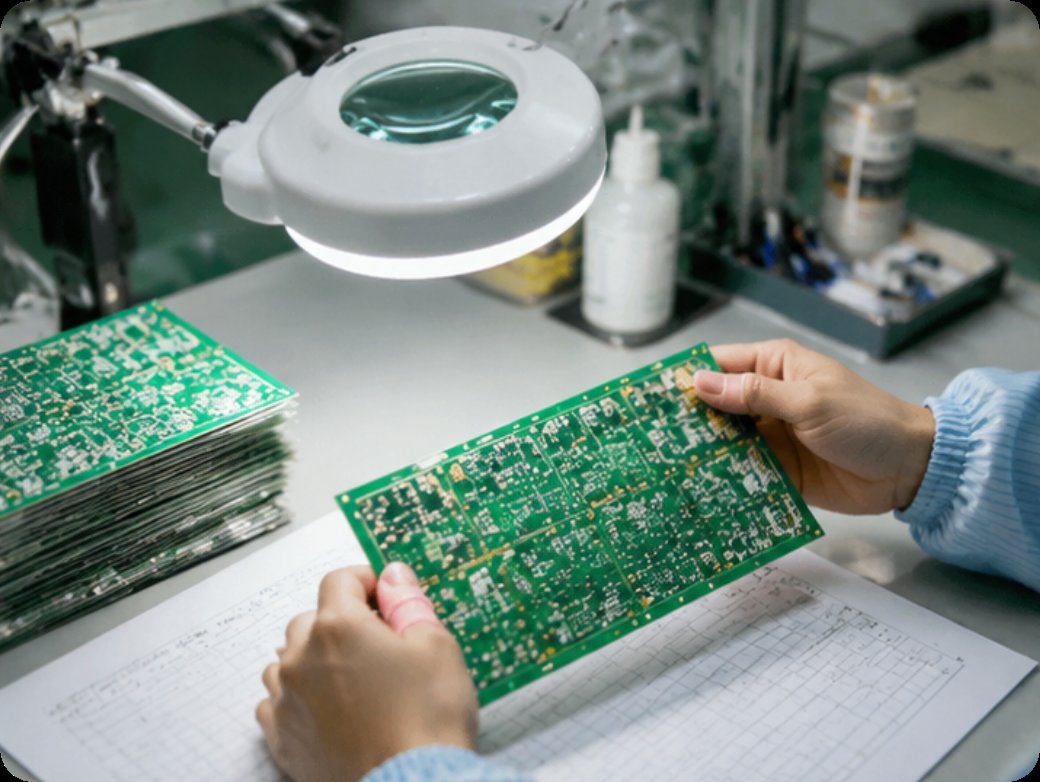
Absorbing it is rarely free. Our PCB fabrication services hold line width and spacing down to 0.065mm, and that precision is not the constraint here; the constraint is that a board which has already been through sampling now needs its outline, its mounting holes and possibly its layer stack reworked. Sampling itself is quick, with a 24-hour fast-turn option and a separate panel for every board rather than a shared cut, but re-sampling a design you had already approved still costs a schedule slot.
Where the Parting Line Reaches Into the Board Outline
The parting line is usually discussed as a cosmetic matter, because it is the line you can see on the finished part. It is also a physical boundary that decides where the shell can open, and openings are how cables, buttons and sensors reach the outside world. Move that line to hide it better, and the openings move with it, and the components that were aimed at the old positions have to be re-aimed.
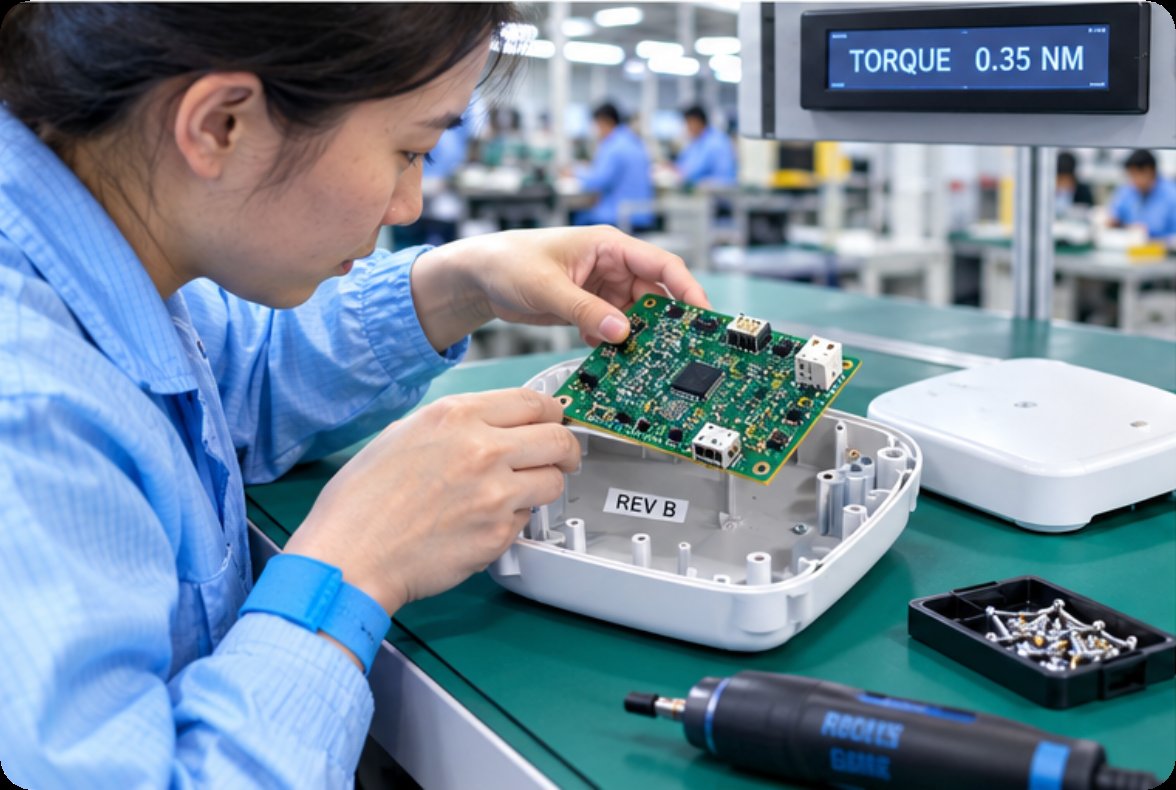
Boards are laid out against a mechanical envelope that somebody drew months earlier, and the openings in that envelope are what the layout is actually aiming at. When the line moves, the aim moves too. A connector that sat centered in an opening can end up pressed against a wall, and the correction is a board revision rather than a shell revision, because by that stage the shell is the more expensive of the two objects to change.
Materials That Behave Differently in the Same Tool
A single tool can run more than one material, but it will not run them identically. Polypropylene, nylon and polyetherimide fill and shrink at different rates, and metal injection molding starts from a completely different feedstock in which fine powder is bound and then driven into the cavity, letting air escape through fine vents so the part fills instead of trapping voids. Where a thermoset resin is used instead of a molten thermoplastic, the mix triggers the reaction inside the tool itself and the lower viscosity allows larger parts than a thermoplastic would hold.
Each of those routes has its own trial cycle. A material swap that keeps the tool unchanged still costs a parameter pass and a fresh moulding trial, and that work sits on the tooling side of the budget even though the tool did not move.
Why a Second Tool Costs More Than the First
It is tempting to assume that a second cavity set is simply the first one repeated. It is not. The first tool is built once from a drawing, and the second has to match a physical part that already exists, which means the benchmark is no longer the drawing but the plastic that came out of it. Any dimension that was quietly tuned during trial has to be measured and copied, and the two tools then have to agree with each other for as long as both run.
What the Shipping Volume Has to Cover First
The tooling line is recovered before anything else is. That single fact sets the shape of a programme more than any negotiation does, because a design that keeps the shell unchanged across several product revisions lets one tool amortise over a much longer run than a design that revisits the housing every cycle. Allowing part design to iterate quickly is worth paying for, provided the iteration happens in the tool and not in a fresh set of steel.
How to Read the Tooling Charge Before Comparing Quotes
When three suppliers return different unit prices, the difference is often the tooling line hidden inside them. One supplier spreads the steel across the first batch and reports a high piece price, another reports a low piece price and an itemised tool that arrives as a separate invoice. Comparing the two totals is the only fair test, and it has to be run at the volume you actually expect rather than the volume you hope for.
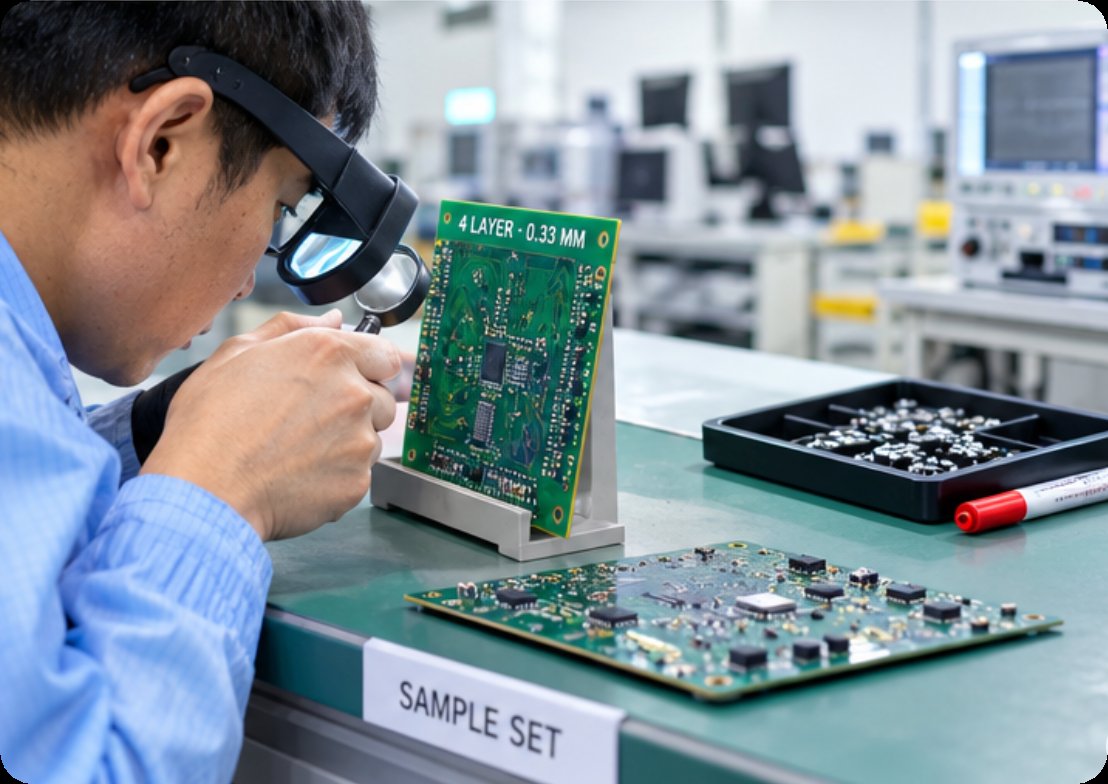
The same reading applies to the electronics. Gerber files and a bill of materials go out together and a first quotation can come back within an hour, with design-for-manufacture findings and process notes supplied at no charge. Those findings are where a clearance problem shows up, and they are far cheaper to act on than a modification after the shell exists.
Where This Shows Up in Practice
The pattern repeats across very different products. A smart home appliance that hides its board inside a moulded shell, a wearable that has to survive a wrist every day, a medical monitor whose housing carries the connector, and an industrial panel that mounts a board behind a sealed front are all the same problem in different clothing. Our Custom Smart Home Products PCB work and our Custom Electronic Devices PCBA programmes both start from the mechanical envelope for that reason, and both end in product assembly services where the shell and the board finally meet.
Handled together, those steps sit inside one electronics manufacturing services programme with a single project manager, which matters most at the point where a tolerance has to be renegotiated between two suppliers who have never spoken to each other.
If you are about to release a housing drawing, send it across before the steel is ordered. A short review of wall sections and opening positions against your board outline costs nothing at that stage and is the last free decision in the programme.
Tags:
Prev: PCB Assembly, Aging Test and SMT Assembly: Four Sets of Figures for One Purchase
Next: No more...