
PCBA Three-Proofing Paint and Product Assembly: Compared Across the Last Mile
The last mile of an electronics build is where a lot of programs quietly lose money. Boards that passed electrical test arrive at packing, and the questions shift from whether the circuit works to whether the unit survives the warehouse, the truck, and the customer's environment. Most programs answer those questions with three separate vendors: a coating shop for protection, an assembly partner for the build, and a packer for the box. NEWEI answers them as one build, and that difference is what this comparison is about. We look at how PCBA three-proofing paint, electronics manufacturing services, and product assembly behave when they are run by one partner against the same scope, and where the segmented model still makes sense.
What Each Service Actually Controls at the End of a Build
A useful comparison starts with what each service controls. Three-proofing paint controls the board's resistance to moisture, salt, and mold, and it decides whether a unit that passes bench test also passes six months in a coastal warehouse. Electronics manufacturing services control the component sourcing, the board assembly, and the test strategy, which is where most yield and lead-time outcomes are set. Product assembly controls the mechanical build, the harness routing, the enclosure fit, and the pack-out, which is what the customer actually receives. In a segmented program those three controls sit with three companies, each optimizing its own step. In an integrated program they sit with one team that has to make the whole unit work, which changes the decisions at every boundary.
🎯 Coating Choices That Decide Field Survival
The coating step is the clearest example of how integration changes an outcome. A coating shop working to a print will apply the specified material at the specified thickness and stop there. That is a correct execution of a narrow scope, but it does not ask whether the specified thickness survives the enclosure the board will be screwed into, or whether the keep-out areas match the connector that gets mated after coating. When the coating step sits inside the same build, those questions get asked before the first board is coated: the mask is designed against the final assembly drawing, the thickness is chosen against the actual enclosure environment, and the cure schedule is set against the pack-out date rather than the coating shop's queue. The measurable result is fewer field returns for moisture and fewer reworked connectors at final assembly.

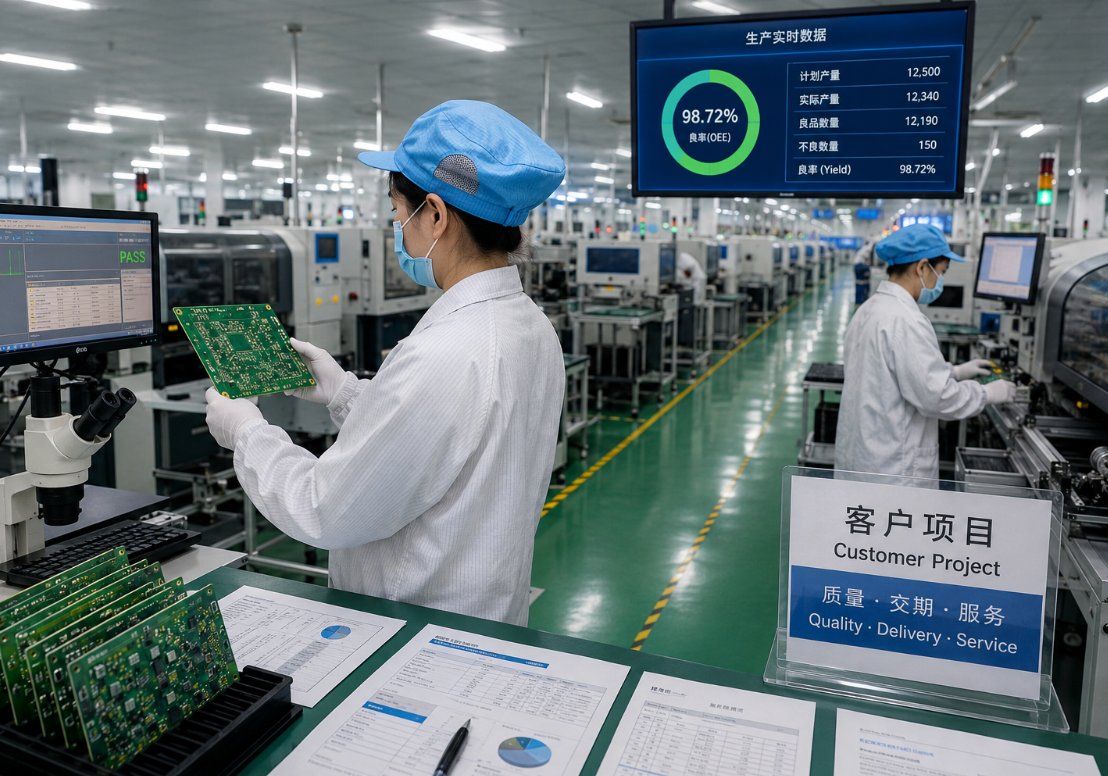
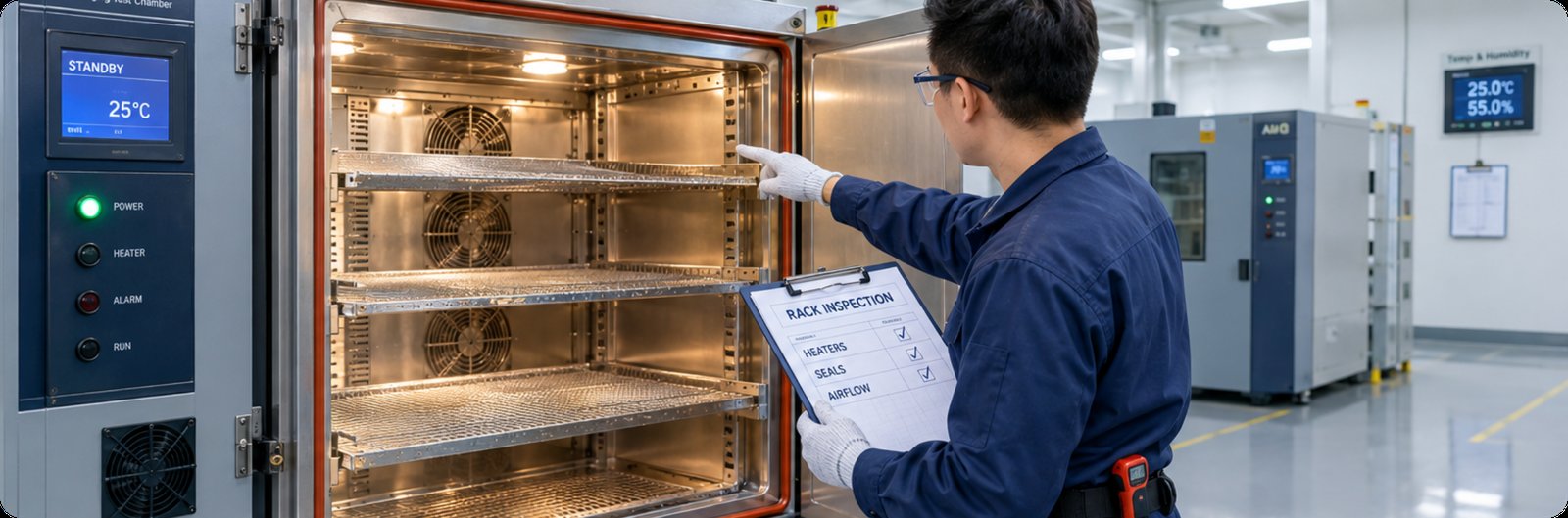
The coating station above shows the mask and thickness decisions being made against the final enclosure rather than against a standalone print. When the coating step sits inside the full build, the keep-out areas are designed with the mating connector in mind, which is what removes most of the rework that a segmented program absorbs at final assembly.
Sourcing and Test Strategy Under One Roof
The second comparison is sourcing and test, which is where the segmented model usually costs the most time. A standalone EMS partner quotes against a bill of materials it did not help choose, and when a part goes unavailable the change order travels back to the customer, then to the coating shop, then to the assembler, each with its own queue. An integrated build resolves the same event in one review: the substitute part is qualified against the coating, the assembly fit, and the pack-out in a single decision. Test strategy improves the same way, because the team that owns the board test also owns the final functional test and can move a check earlier where it is cheaper to catch. Across a typical program this removes two to three weeks of change-order travel and surfaces defects at the board stage instead of the box stage.

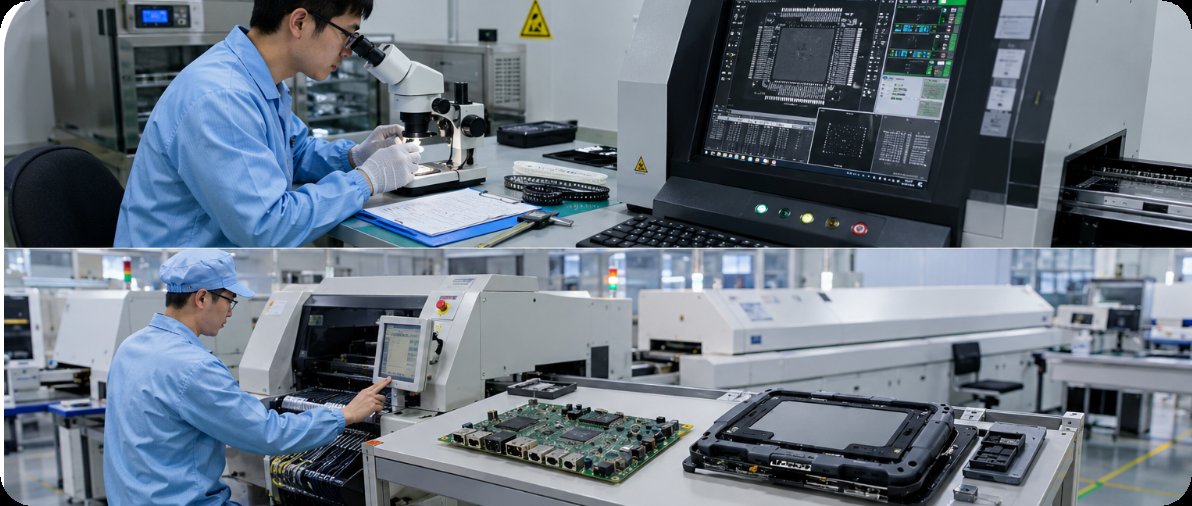
The board line and test stations above are where an integrated build moves a check earlier. Because the same team owns board test and final functional test, a defect that would otherwise be found after packing is caught while the board is still accessible, which is the cheapest possible place to find it.

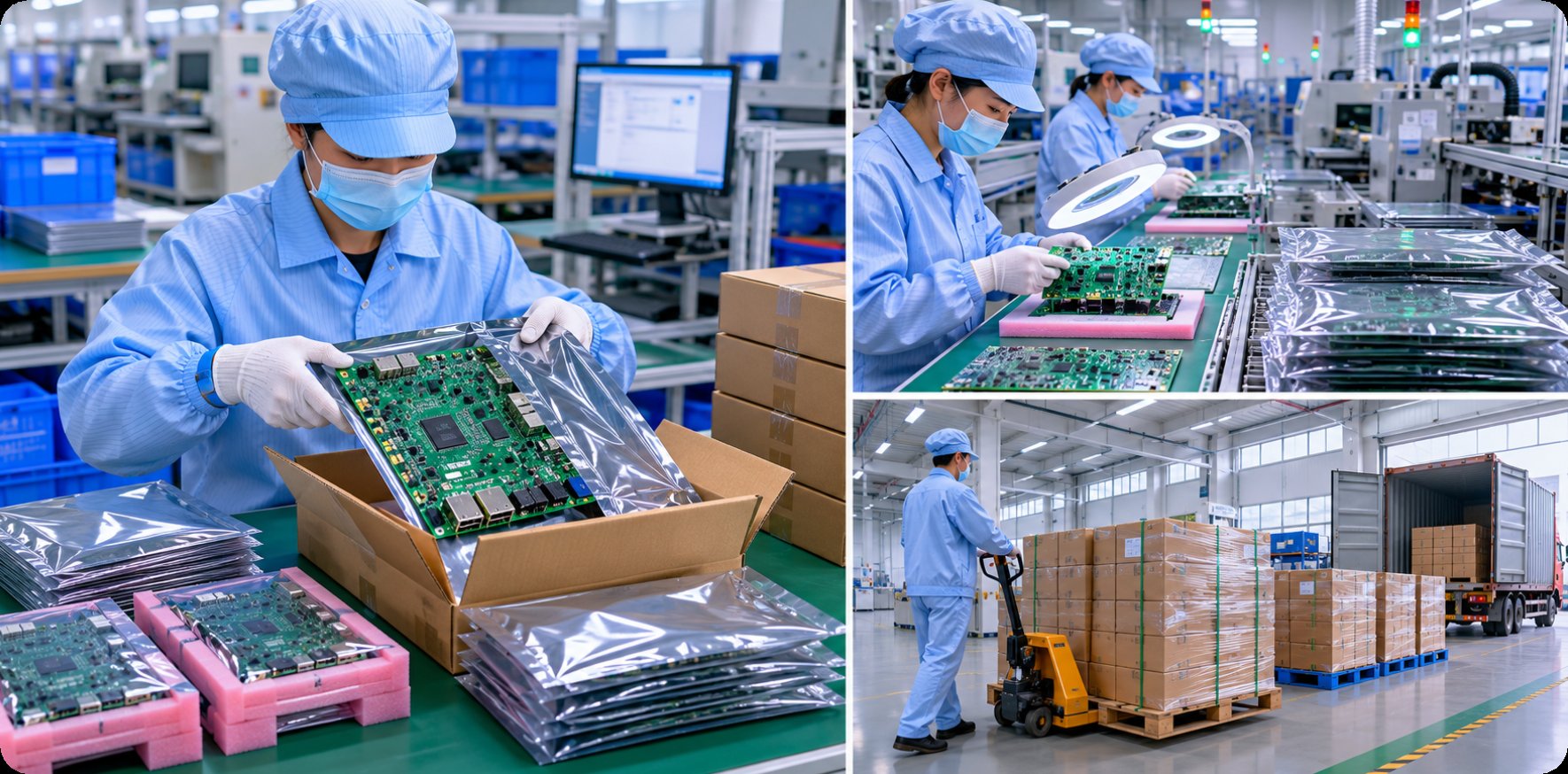
The pack-out line above is where the three services meet: coated boards arriving from the coating step, mechanical assembly, and the final pack in one controlled sequence. Keeping the three steps in one facility removes the ship-and-receive intervals that a segmented program pays for at every boundary.
Mechanical Build and the Pack-Out
The mechanical build is where the last mile is won or lost in the customer's hands. Product assembly controls harness routing, torque on the enclosure screws, gasket compression, and the pack-out that protects the unit in transit, and each of those is a place where a small deviation becomes a field failure. An integrated assembler works from the same drawings as the coating and board teams, so a harness that must clear a coated connector does, and a gasket that must compress to a specific value is compressed to that value rather than to whoever's torque driver was on the line that day. The pack-out is specified against the actual transit profile rather than a generic carton, which is the difference between units that arrive sealed and units that arrive working.
Where the Segmented Model Still Wins
The integrated build is not the right answer for every program, and an honest comparison says so. A customer with a very high-volume, single-board product that never sees a harsh environment may get a better price from a coating specialist running one material all day, and a program that is already locked into a qualified assembler with a validated line may gain more from keeping that line than from consolidating. The segmented model also wins when the customer's own engineers want to hold each vendor's process data separately for a regulated filing. The value of integration rises with the number of boundaries in the program: the more the coating, board, and enclosure decisions interact, the more a single owner is worth.
A Side-by-Side View of the Two Models
The table below puts the two models against the decisions that matter at the end of a build, using the numbers a typical mid-volume program sees when it consolidates. The point is not that one model is universally cheaper; it is that the integrated model moves cost out of the boundaries between vendors and into the build itself, where it is visible and controllable.
| Decision point | Segmented vendors | Integrated build at NEWEI |
|---|---|---|
| Coating mask design | Per print, from customer drawing | Against final assembly drawing |
| Part substitution | Change order across 3 vendors | Single review, qualified across all steps |
| Connector rework at assembly | Common, from uncoordinated keep-outs | Designed out before first board |
| Board test to final test | Separate fixtures and owners | One strategy, checks moved earlier |
| Change-order travel time | 2-3 weeks typical | Days |
| Pack-out spec | Generic carton | Matched to transit profile |
⚖️ How a Program Actually Moves Between the Models
Moving from three vendors to one partner is usually staged rather than switched. Most customers start by consolidating the two steps that interact most, commonly coating and product assembly, and leave the board assembly where it is until a natural revision point. That first consolidation alone tends to remove the connector rework and the pack-out surprises, which is where most of the visible damage happens. The second stage brings the board build across once the current program's qualification is complete, because moving an in-flight qualified assembly is rarely worth the risk. A customer that stages the move this way gets most of the boundary savings in the first stage and keeps its qualification schedule intact.
For a program weighing the same decision, the useful first step is to list every place the coating, board, and enclosure decisions interact, because that list is the real cost of the segmented model. PCB manufacturing is where the board itself starts, and industrial PC motherboards show what an integrated build looks like at the higher-complexity end of the same range. A related validation report on coating and sealed enclosures gives the measured version of how these decisions behave under test.
Tags: EMS /three-proofing / assembly / packaging /
Prev: Custom Automotive Electronics and Shell Mold: Reliability Data from a Sealed-Build Validation
Next: Industrial PC ODM, Smart Home PCB and PCB Fabrication: What Through-Hole Work Returns