
Why Material Control and Supply Chain Management Determine Your PCBA Quality
Why Material Control and Supply Chain Management Determine Your PCBA Quality
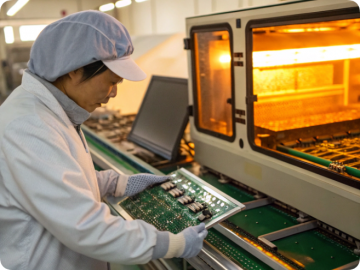
When people talk about PCBA quality, the conversation almost always drifts to SMT placement precision. That is a mistake I have seen repeated across dozens of factories. The hard truth is that roughly 70% of all quality issues in PCB assembly originate not from the soldering process, but from the components and bare boards that arrive at the loading dock. If you want to build reliable electronics—especially for demanding applications like industrial motherboards or custom PC PCBA—you need to start with rigorous incoming quality control and disciplined supply chain management. At NEWEI, our Custom PCB Assembly Services are built on this principle. We do not skip the gate. In this article, I will walk you through why material control is the single most overlooked factor in PCBA quality, and how it directly impacts your product's field performance.
The Incoming Quality Control Process: The First and Most Critical Gate
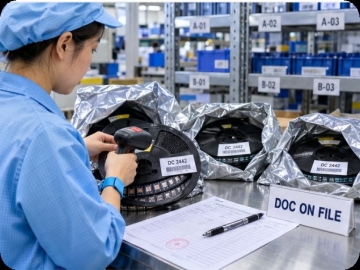
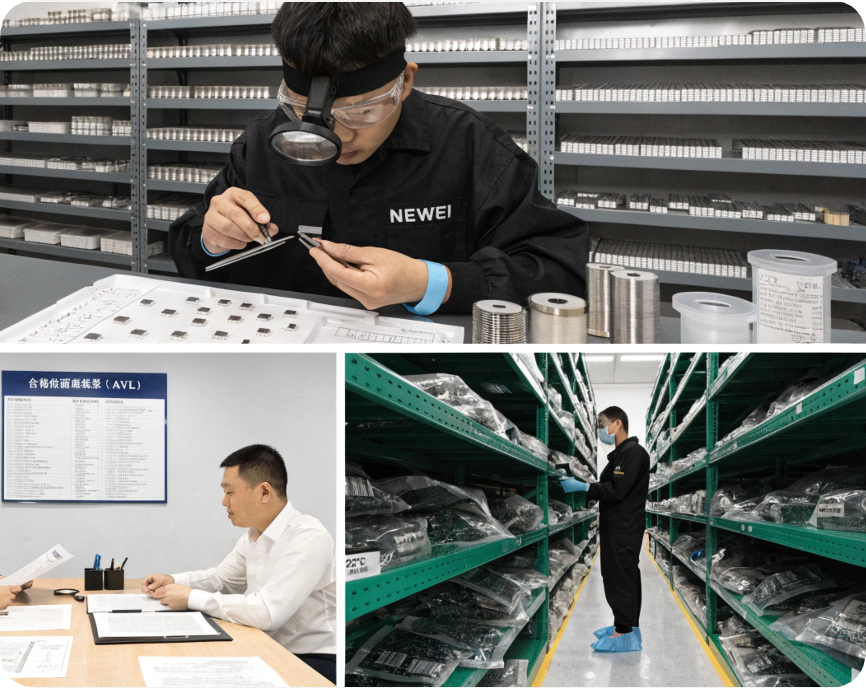
Incoming quality control is not a checkbox exercise. It is a forensic process. We start by verifying every silk screen marking against the component datasheet. We check IC authenticity by examining lot codes, surface markings, and package integrity. For bare PCBs, we measure copper thickness, check for warpage beyond IPC standards, and test solderability with a wetting balance. A factory that rushes or skips these steps is inviting counterfeit components, wrong resistor values, and hidden defects into the production line. The consequences are not academic: a batch of capacitors with slightly off tolerance can cause power rail instability in an industrial control board. A PCB with insufficient copper thickness can delaminate under thermal cycling. This is especially critical for custom industrial PC PCBA, where boards must operate reliably in environments ranging from -40°C to 85°C. Our Electronic Component Procurement Services include full IQC procedures for every reel and panel before they ever reach the SMT line. We do not cut corners here because we know the cost of a field failure is far higher than the cost of inspection.
Supplier Management: Building a Trusted Approved Vendor List
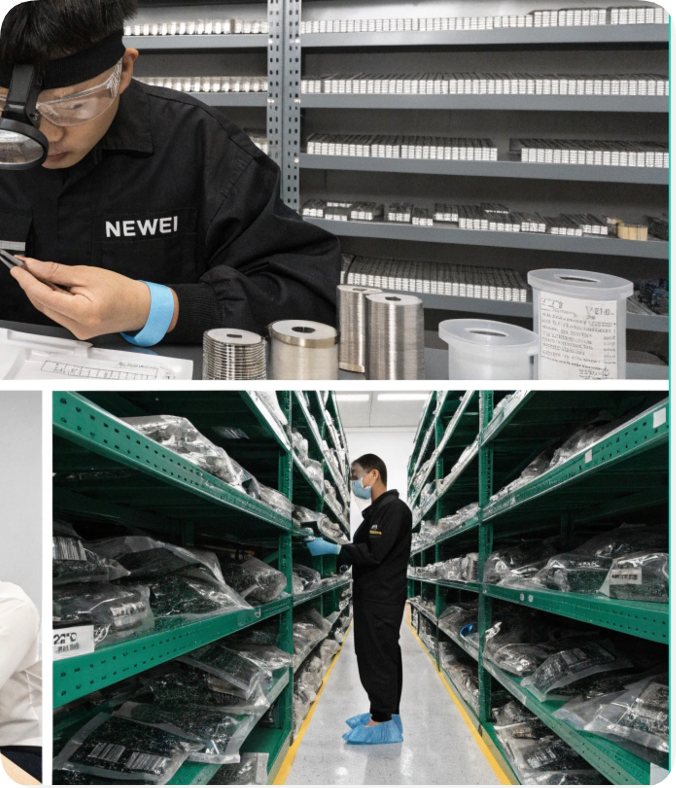
Even the best IQC process cannot catch every problem if your supplier is unreliable. That is why a robust Approved Vendor List (AVL) is non-negotiable. We qualify suppliers through a combination of on-site audits, historical performance data, and third-party certifications like ISO 9001 and IATF 16949. We conduct both announced and unannounced audits to verify that suppliers maintain consistent quality over time. This approach prevents counterfeit and substandard parts from entering our supply chain. For custom industrial PC PCBA, where components like industrial-grade CPUs and memory must meet extended temperature ranges and high-reliability specifications, a trusted supplier base is the difference between a board that works for years and one that fails in the first quarter. Our Custom Industrial PC PCBA ODM service relies on this disciplined supplier management to deliver boards that perform reliably in factory automation, edge computing, and harsh environment applications.
Storage Environment Control: Temperature, ESD, and FIFO
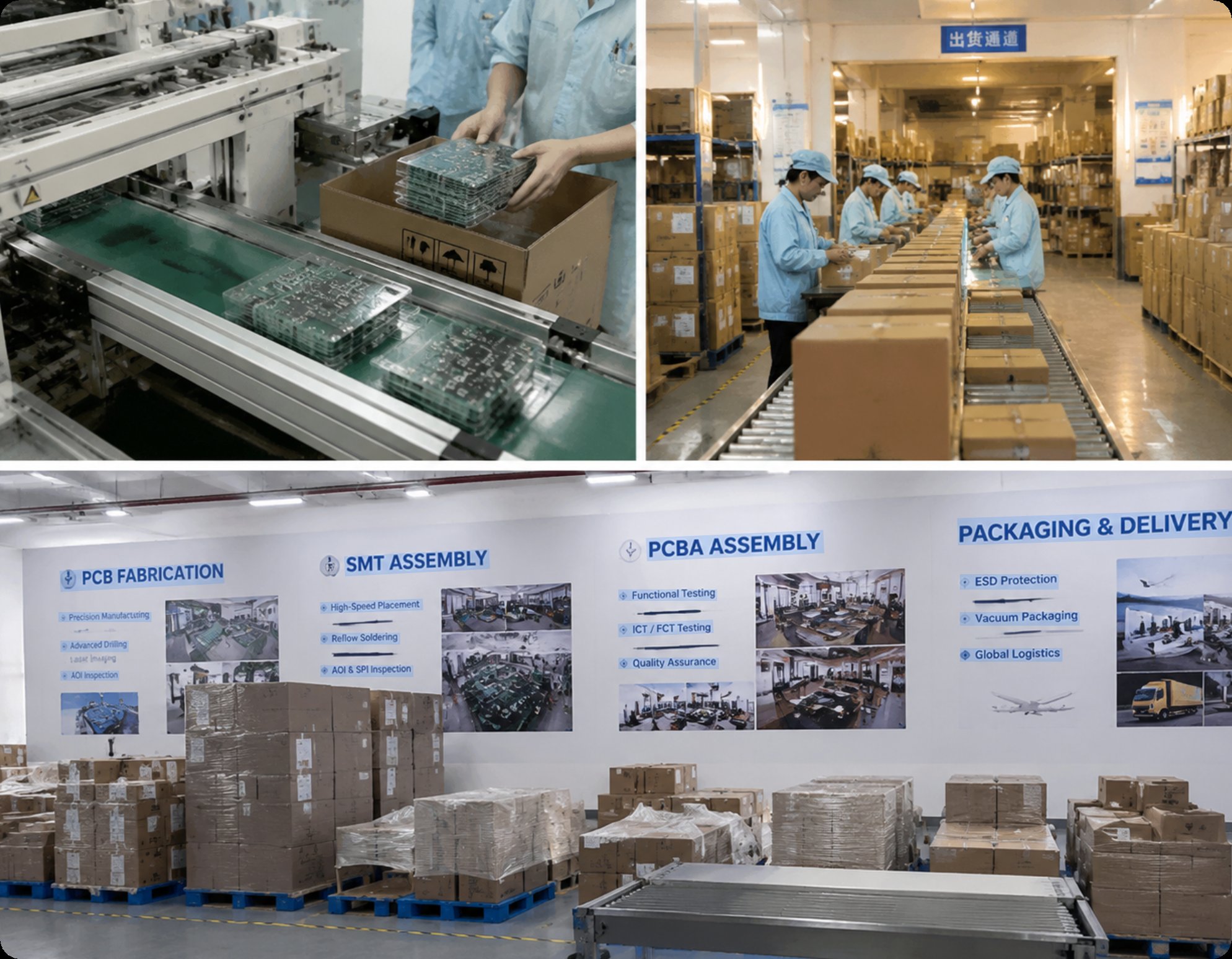
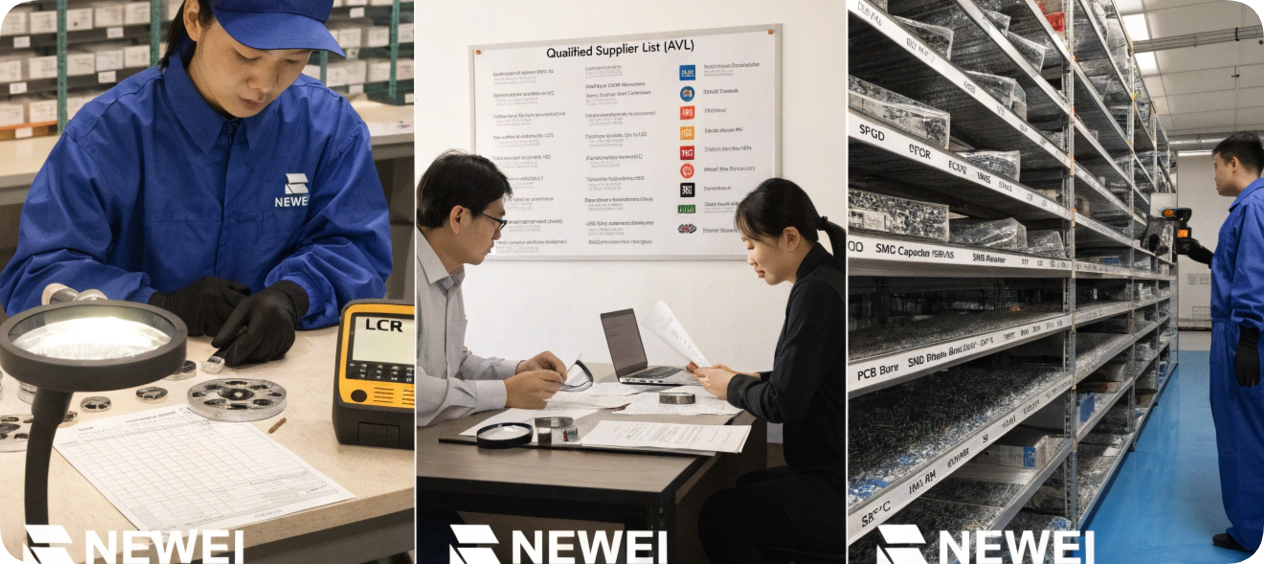
Once materials pass IQC, the way they are stored directly impacts assembly yield and long-term reliability. Moisture-sensitive devices—BGAs, connectors, and certain ICs—must be stored in a dry environment with controlled temperature and humidity. Anti-static (ESD) storage racks and packaging are essential to prevent electrostatic damage, which is invisible but can destroy semiconductor junctions. First-in-first-out (FIFO) management ensures that older stock is used before newer stock, preventing solderability degradation from long-term storage. For industrial motherboards that must operate in environments from -40°C to 85°C, maintaining correct storage conditions is even more critical. Our SMT Assembly Services are supported by a state-of-the-art ESD warehouse that maintains a constant 22°C and 45% relative humidity, with full traceability for every reel and tray. Every component that enters our facility is logged, tracked, and stored according to its specific requirements.
Real-World Comparison: IQC Discipline vs. Skipping the Gate
To illustrate the difference, consider two factories assembling the same industrial control board design. Factory A follows strict IQC procedures, maintains an audited AVL, and controls storage with ESD and FIFO discipline. Factory B skips IQC to save time and cost, relying on supplier claims without verification. After six months of field operation, the failure rates tell a clear story.
| Parameter | Factory A (Full IQC & Supply Chain Control) | Factory B (Skipped IQC) |
|---|---|---|
| Incoming defect rate | 0.3% | 4.7% |
| Six-month field failure rate | 0.8% | 8.2% |
| Common failure modes | None dominant | Capacitor leakage, counterfeit ICs, PCB delamination |
| Customer return rate | 0.2% | 6.5% |
| Estimated cost of failures (per 1000 units) | $2,500 | $38,000 |
This data is not theoretical. It reflects what we see in the industry when material control is taken seriously versus when it is ignored. For custom PC builds, where end users expect zero defects out of the box, the difference is even more pronounced. Our Custom Electronic Devices PCB Assembly service is built on the discipline of Factory A, ensuring that every board that leaves our facility has the best possible start. The cost of skipping IQC is not just financial—it is reputational. A single field failure can destroy customer trust and lead to lost contracts.
Conclusion: Quality Begins Before the First Solder Joint
If you are sourcing PCBA for industrial motherboards, custom PCs, or any mission-critical electronics, do not underestimate the importance of material control and supply chain management. The 70% rule is real: most quality problems originate from the materials, not the assembly process. By choosing a partner like NEWEI, which enforces strict IQC, maintains an audited AVL, and controls storage environments with ESD and FIFO discipline, you protect your product from the inside out. Contact us today to discuss your next project and learn how our Custom Industrial PC PCBA ODM or Custom Electronic Devices PCB Assembly services can bring your design to life with the highest quality standards. Request a sample run or a consultation to see the difference firsthand.
Tags: NEWEI /PCBA quality /IQC /supply chain management /industrial PCBA /custom PCBA /
Prev: Why Component Quality Control and Supplier Management Make or Break Your PCB Assembly Project
Next: Beyond the Basics: How Precision SMT, BGA Soldering, and DIP Assembly Define PCBA Quality at NEWEI