
Why Component Quality Control and Supplier Management Make or Break Your PCB Assembly Project
The Hidden 70%: Why Material Control and Supply Chain Management Define PCB Assembly Quality
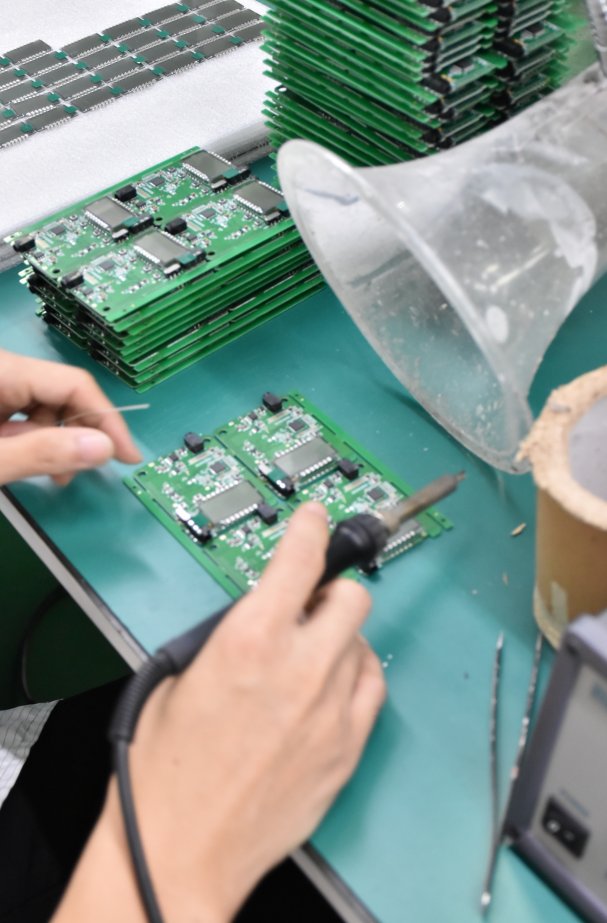
When people ask me what determines the final quality of a PCBA, they often point to the SMT pick-and-place machines. They assume that if the solder paste is perfect and the placement is accurate, the board will work. In my experience, that is only part of the story. A full 70% of quality problems in PCB assembly trace back to the incoming materials. The best soldering process in the world cannot fix a counterfeit IC or a delaminated PCB. That is why at NEWEI, we treat incoming quality control (IQC) as the first and most critical line of defense. If you are looking for true reliability in your electronics, you need a partner that starts with material integrity. That is the foundation of our Custom PCB Assembly Services.
The First Line of Defense: How IQC Prevents Defects Before They Happen
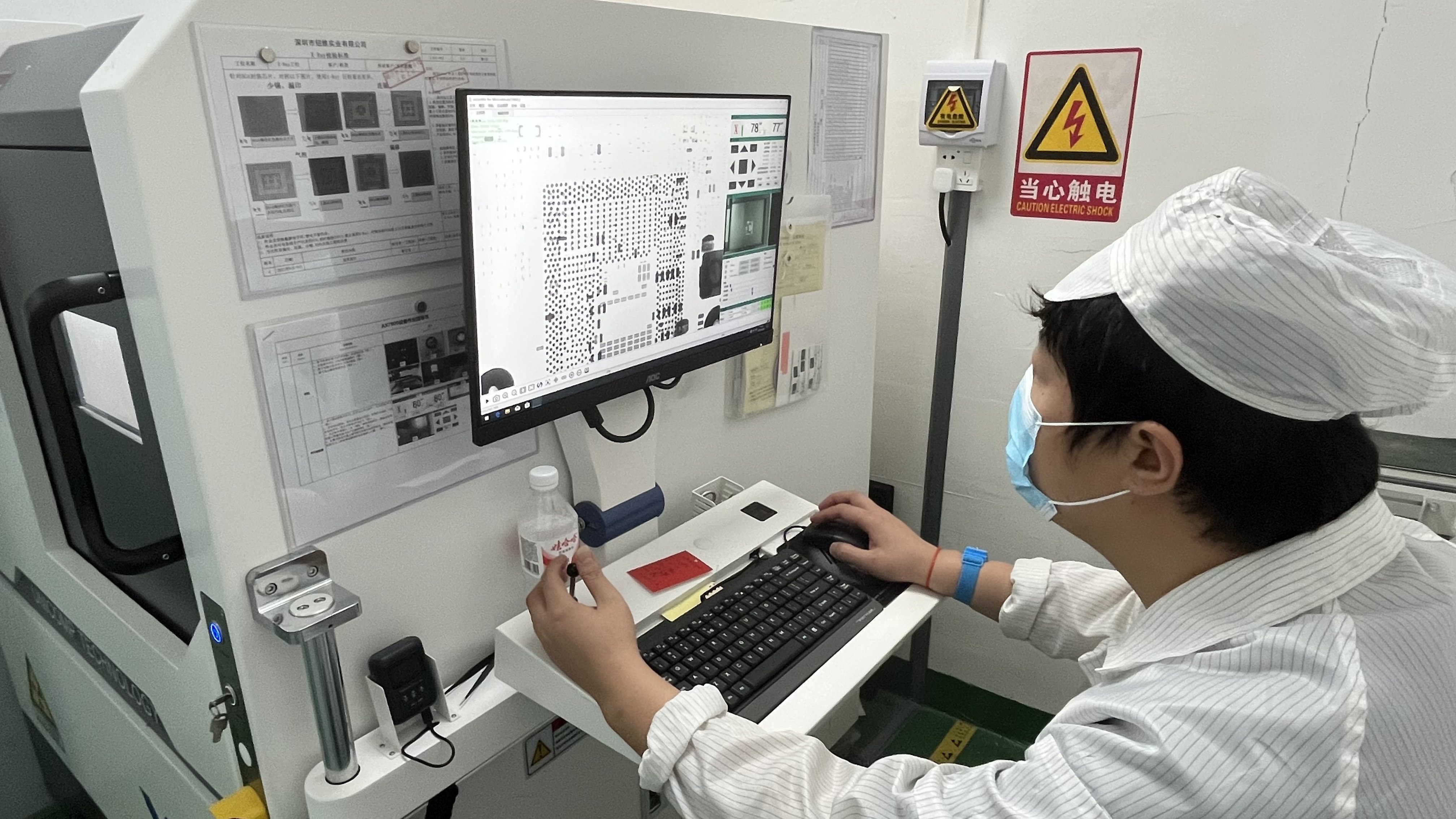
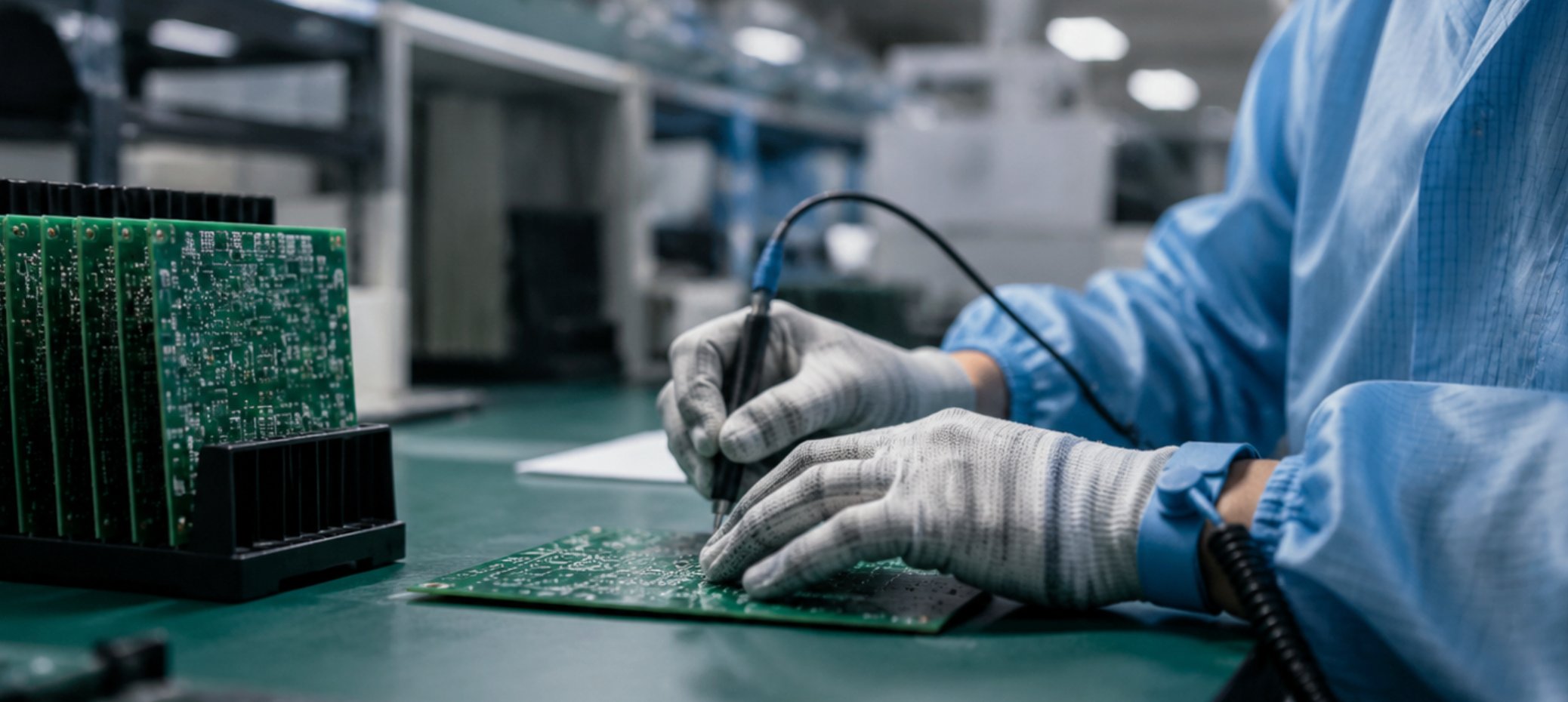
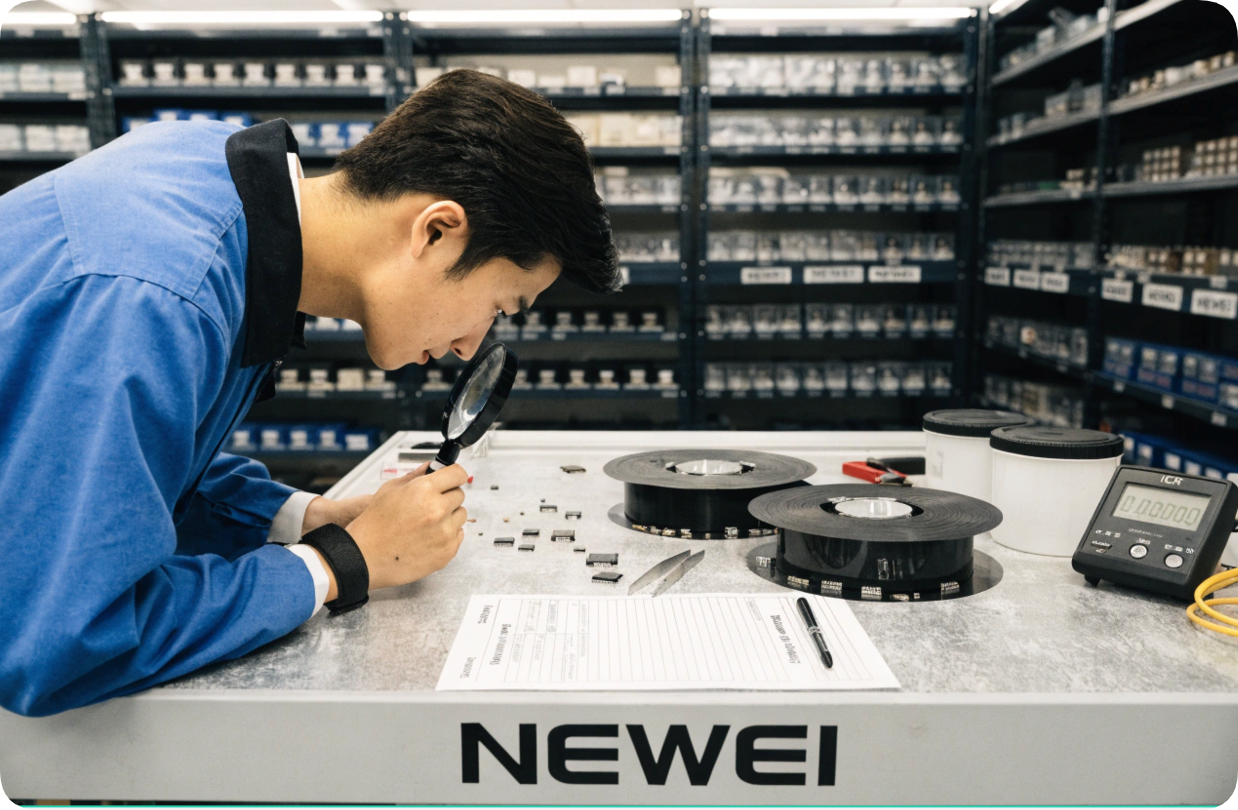
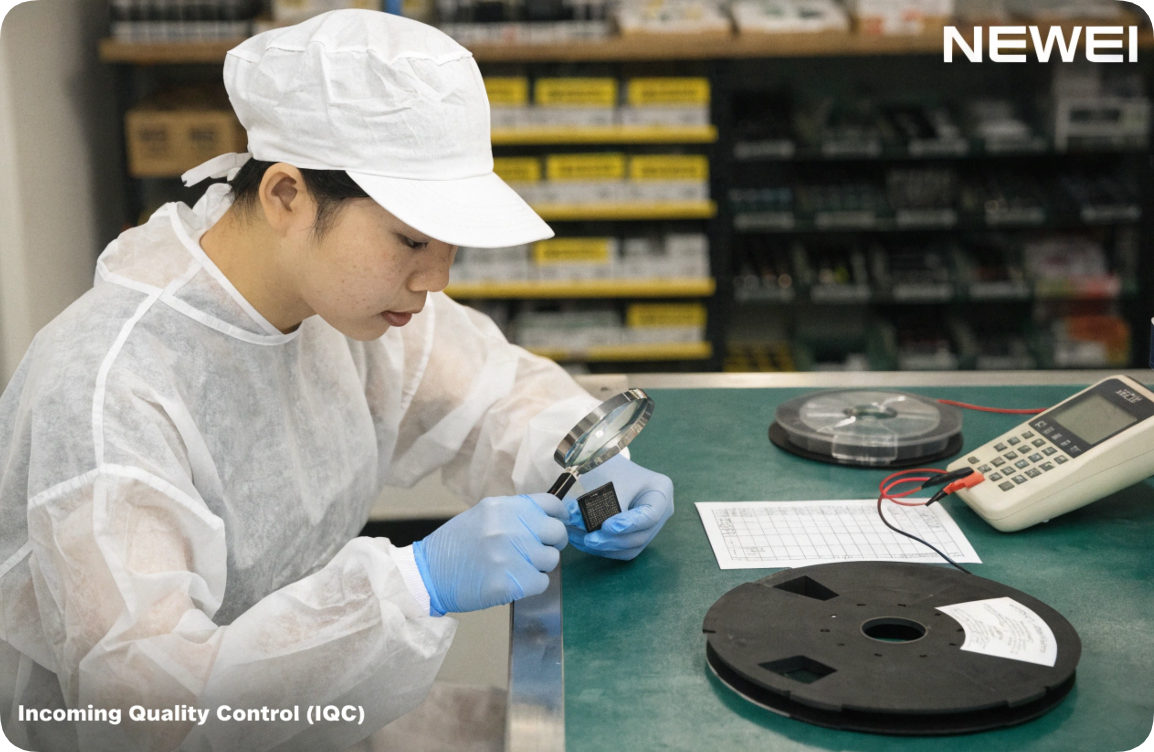
Many people think IQC is just a visual check. In reality, it is a rigorous process that catches defects that would otherwise cause catastrophic field failures. Our IQC engineers start by verifying the part marking against the manufacturer's datasheet. A tiny font change or a missing dot on an IC can indicate a counterfeit or a re-badged component. We then use LCR meters and semiconductor testers to verify electrical parameters. For PCB laminates, we check thickness, bow, twist, and surface cleanliness. Some factories skip these steps to save time. The result is a ticking time bomb on the production line. A single batch of substandard capacitors can cause a power supply to fail after just a few thermal cycles. For a custom industrial PC PCBA, where the board must run 24/7 in a factory floor environment, that failure is not just a warranty return—it is a production shutdown.
Supplier Management: The Approved Vendor List as a Quality Shield
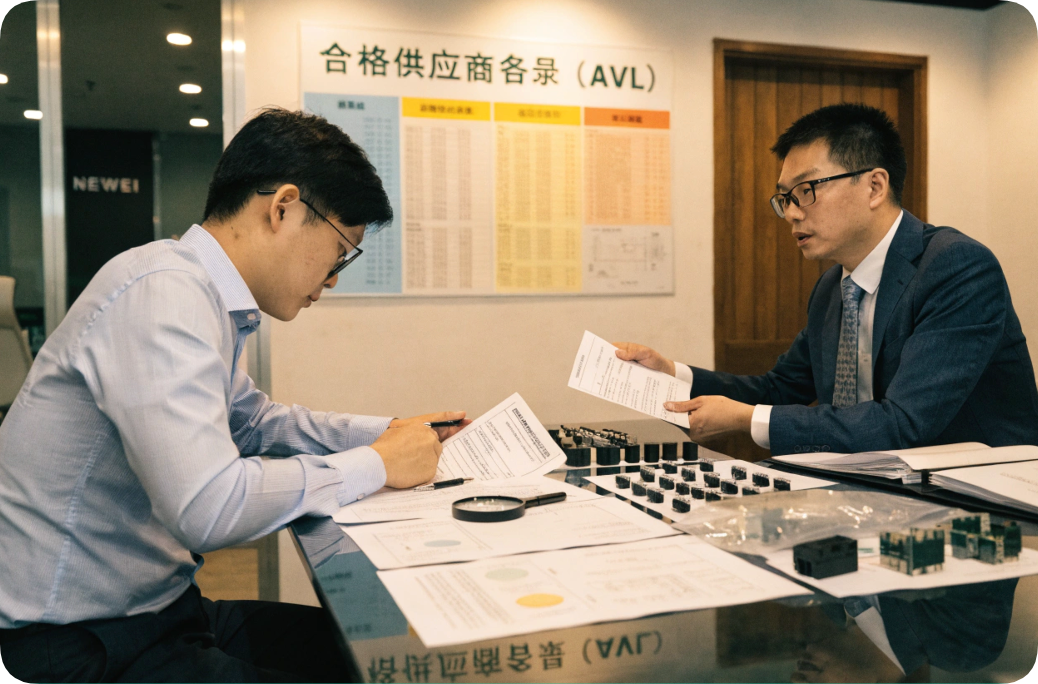
IQC alone is not enough. You need a system that prevents bad parts from ever arriving at your dock. That is where supplier management becomes critical. At NEWEI, we maintain a strict Approved Vendor List (AVL). We do not simply buy from the cheapest distributor. Every component supplier must pass an initial audit, including verification of their sourcing channels, storage conditions, and traceability records. We then conduct periodic on-site and remote audits to ensure they maintain these standards. This process is especially vital for hard-to-find or end-of-life components, which are common in industrial PC projects. Counterfeiters often target these parts because genuine stock is scarce. By controlling the supply chain from the source, we eliminate the risk of fake components entering our inventory. Our Electronic Component Procurement Services are designed around this principle, giving our clients full visibility and confidence in every part we source.
Warehouse Environment: ESD, Temperature, and FIFO Discipline
Even the best components can degrade if stored improperly. Moisture-sensitive devices (MSDs) like BGA packages and fine-pitch connectors absorb humidity from the air. If they are not stored in a dry, temperature-controlled environment, the soldering process can cause internal cracks—a defect called popcorn delamination. Our ESD warehouse is maintained at a consistent 22°C and 45% relative humidity. All sensitive components are stored in dry cabinets with desiccant packs. We also enforce strict FIFO (First In, First Out) inventory management. Every reel and tray is scanned upon receipt, and the system ensures the oldest stock is used first. This prevents components from sitting on the shelf past their solderability date. For industrial PCBA projects, which often use industrial-grade components rated for -40°C to +85°C, proper storage is non-negotiable. A component that has been stored in a hot warehouse for six months will not perform to its datasheet specifications.
Real-World Comparison: The Cost of Skipping IQC
To illustrate the impact, let us compare two hypothetical factories producing the same industrial control board. Factory A has a robust IQC process, a managed AVL, and an ESD-controlled warehouse. Factory B skips incoming inspection, buys from the cheapest spot market, and stores components in a standard office environment. Here is the failure rate data after six months of field operation:
| Parameter | Factory A (Strict Material Control) | Factory B (No IQC) |
|---|---|---|
| Initial production yield | 98.5% | 92.0% |
| Field failure rate (6 months) | 0.8% | 7.2% |
| Primary failure cause | Random component wear | Counterfeit ICs, solderability failure |
| Warranty return cost per 1000 units | $1,200 | $12,800 |
The numbers speak for themselves. Factory B saves a few cents per component but pays ten times more in warranty costs. For a Custom Industrial PC PCBA ODM project, where the board must survive years of industrial use, that difference is the line between a successful product and a reputation-damaging failure.
From Material Control to Final Assembly: A Complete Ecosystem
Material control does not stop at the warehouse door. It extends into the entire manufacturing process. When we move a board from IQC to the SMT line, we know exactly which lot of components went into it. If a field issue ever arises, we can trace it back to the original manufacturer batch number. This level of traceability is what separates a true EMS partner from a simple assembler. Our SMT Assembly Services are designed to work hand-in-hand with our procurement and IQC teams. We do not treat material control as a separate department—it is integrated into every step of the process. For clients developing custom electronic devices, this integration ensures that the first prototype runs on the same quality components as the final production run.
Conclusion: Make Material Control Your Competitive Advantage
If you are sourcing PCB assembly, do not assume that quality starts at the SMT line. It starts with the components you buy and how you handle them. A factory that invests in IQC, supplier management, and ESD storage is a factory that delivers reliable products. At NEWEI, we have built our entire manufacturing system around this principle. We invite you to see the difference for yourself. Whether you need a prototype or a high-volume production run, our team is ready to discuss your project. Contact us today to start your next Custom Electronic Devices PCB Assembly project with confidence.
Tags: NEWEI /IQC inspection /supplier management /ESD storage /PCBA quality /
Prev: Advanced SMT Assembly Techniques for High-Reliability Industrial Motherboards
Next: Why Material Control and Supply Chain Management Determine Your PCBA Quality