
PCB Fabrication, Automotive Electronics and Electronic Component Procurement: Three Exits for a Batch on Hold
A reel of capacitors lands on a Tuesday morning. The certificates match the purchase order, and the reel labels match the outer boxes. Yet, by Wednesday, after the first board off the SMT line reads high on a power rail, that entire component batch sits on a quarantine shelf under a red hold tag. No final disposition has been made. What unfolds over the next 48 to 72 hours is a critical process buyers rarely see: a structured quality investigation, formal sign-offs, and one of three distinct material exits. A contract manufacturer with tight quality control makes this process look routine. A factory that improvises will likely ship field failures later.
At NEWEI, incoming quality gates sit at the front of our Turnkey EMS Electronic Manufacturing Services. The quarantine hold shelf is far more than warehouse storage—it is the primary control point for every downstream operation, from SMT placement and wave soldering to final box-build assembly. This guide covers how held component batches are processed, who signs off on each disposition exit, and where automotive electronics quality standards introduce mandatory steps consumer products do not require.
Why Incoming Material Isolation Protects Production Schedules
The material hold shelf functions as a physical firewall. Its purpose is simple: isolate questionable component lots while quality engineers verify the data on paper. Once a first-article inspection (FAI) or in-process electrical check falls outside established tolerances, the material stops moving immediately. Mainline SMT production continues using verified stock while quality engineering evaluates the variance. This physical quarantine prevents suspect parts from reaching solder stencils, reflow ovens, or final customer enclosures.
How Quality Engineers Evaluate Non-Conforming Components
Material dispositions rely on objective data comparison. Quality inspectors measure physical or electrical parameters and evaluate them directly against the component drawing, engineering specs, and agreed receiving inspection limits. This is why thorough BOM Electronic Component Sourcing & Procurement is essential long before parts hit the receiving dock. Sourcing documentation establishes the governing baseline. If manufacturer datasheets, internal customer drawings, and PO notes conflict, the lot remains on hold until engineering resolves the discrepancy in writing. (For insights into lot sampling anomalies, read our analysis on why only part of a batch fails during incoming inspection).
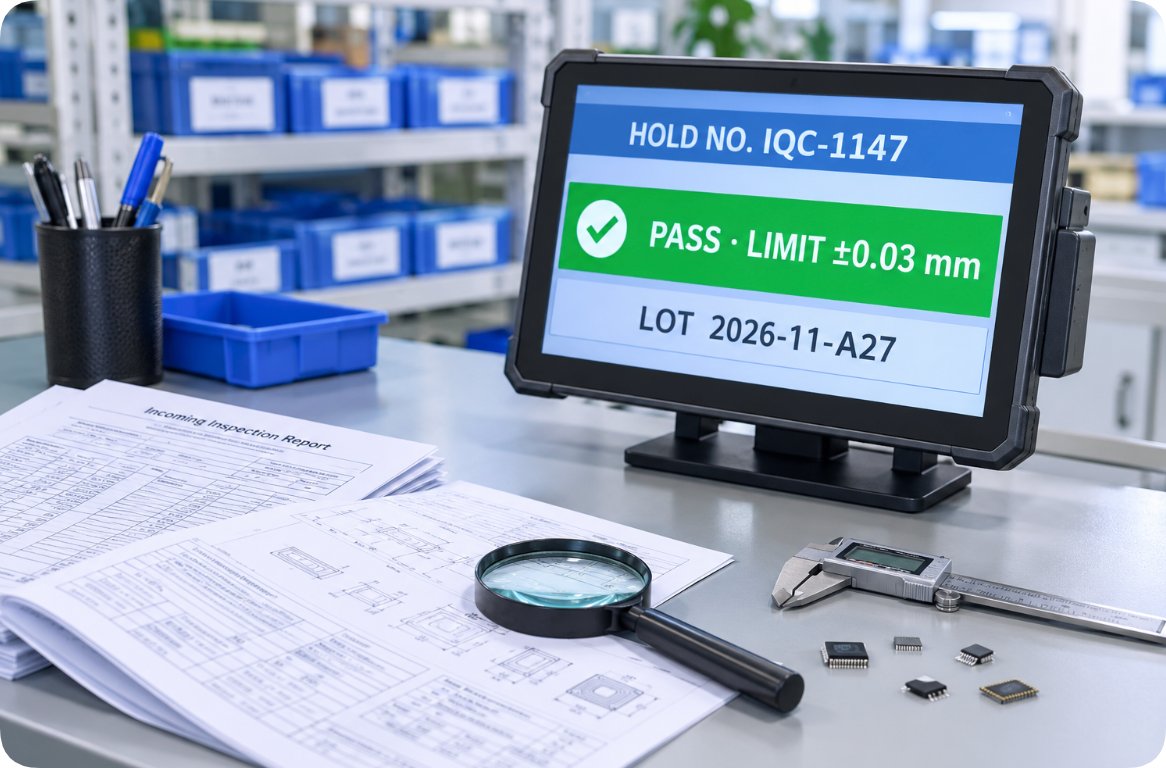
Every material disposition call requires reviewing three primary documents: the supplier's Certificate of Analysis (CoA), physical bench test measurements, and the part's Quality Assurance (QA) inspection plan. When test results align with specifications, the hold tag is cleared and the material enters active inventory. If test data strays outside tolerance limits, the batch is assigned a unique Non-Conformance Report (NCR) number, locking its history into the quality management system (QMS).
Exit Route 1: Return to Vendor (RTV) with Corrective Action Requests
The first exit returns non-conforming parts directly to the component manufacturer or distributor. A formal Return Material Authorization (RMA) includes far more than shipped freight; it carries a Corrective Action Request (CAR) detailing out-of-spec test values, failing sample photos, and reference standards. In circuit board fabrication, when bare boards fail surface finish or copper plating thickness checks, the lot returns to the Quick Turn PCB Prototyping & Board Manufacturing plant alongside detailed lab reports. The fabricator must supply both replacement panels and an official 8D root-cause analysis report.

RTV documentation divides into outbound and internal files. The supplier receives the formal rejection notice and requested physical samples. Internally, quality teams log the NCR hold tag, track replacement delivery dates, and flag the supplier's quality record for upcoming vendor audits. When replacement components arrive, they do not bypass receiving—they undergo complete re-inspection through incoming quality control before the NCR ticket closes.
Exit Route 2: Controlled Engineering Use Under Formal Concession
The second exit route releases material as-is under a engineering concession or variance approval. This applies when minor deviations do not impact assembly reliability, fit, or electrical performance. Examples include non-critical cosmetic flaws outside primary viewing areas, minor dimensional variations within operational tolerances, or faint component laser markings. A concession requires formal signatures from Quality Assurance and Engineering leads, creating a clear audit trail tied directly to the production lot number.
Strict engineering controls govern material concessions. Concessions are strictly limited to one specific lot number, one defined defect, and one scheduled production run. They never alter baseline engineering drawings, nor do they grant automatic approval for future deliveries. If a supplier repeatedly requests concessions for the same parameter variance, the issue escalates to procurement engineering for permanent corrective action or vendor re-sourcing.
Exit Route 3: Component Rework or Material Scrap
The third exit keeps components in-house for rework or immediate scrapping. Rework addresses corrective modifications: re-forming through-hole component leads on the DIP Through Hole Assembly & Wave Soldering line, correcting lead pitch variations, or removing oxidation from component terminals. Conversely, material is scrapped when repair costs exceed component value or compromise structural integrity—such as cracked ceramic chip capacitors or damaged PCB substrates.
Reworked components must undergo complete re-inspection. Once modified, parts return to incoming inspection quality gates to repeat all failed test protocols. High-reliability assemblies move directly to our PCBA Aging Test & Reliability Testing Service for thermal cycling and burn-in verification. Final disposition records document both the initial failure metrics and post-rework qualification test data.
IATF 16949 Automotive Quality Protocols for Held Material
While standard commercial electronics follow robust quality controls, automotive builds require additional compliance layers. Manufacturing under Automotive Grade Electronics PCBA Manufacturing and IATF 16949 management standards treats non-conforming lots as critical quality events requiring extended traceability. Internal factory authorization alone cannot grant a concession on automotive components; formal, written customer approval (PPAP variance) is mandatory before releasing material to SMT lines.
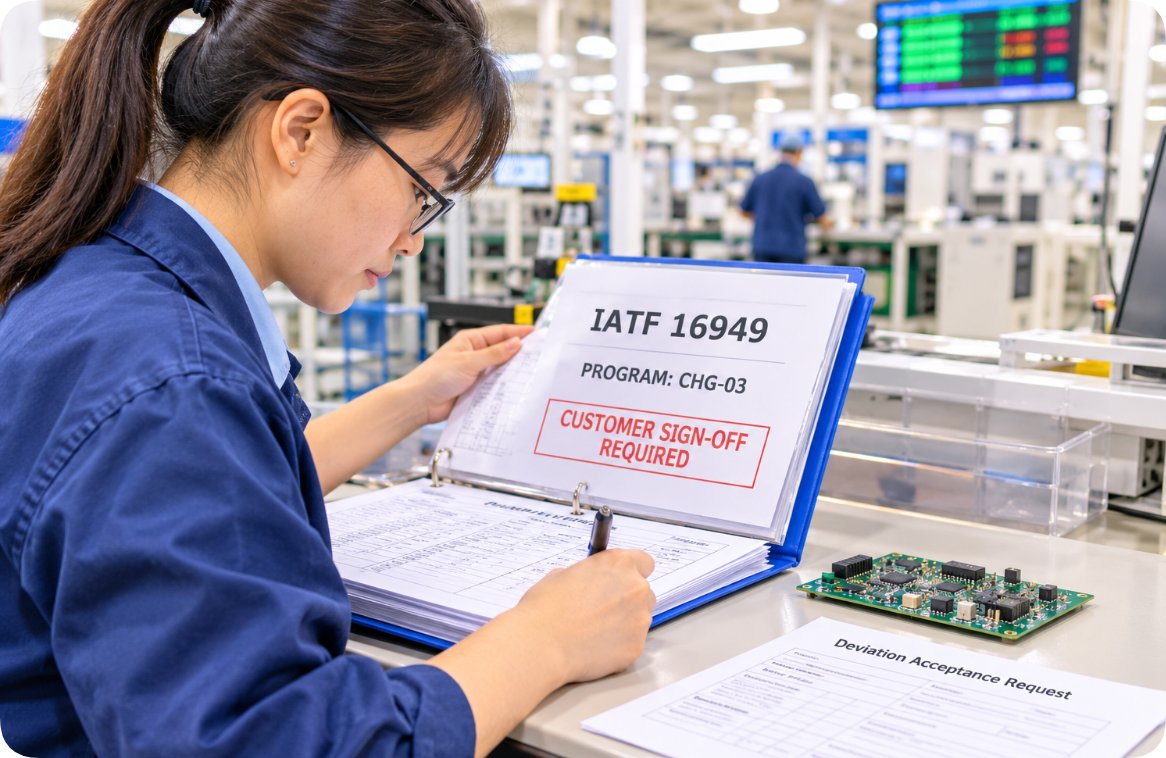
Documentation requirements differ significantly between commercial and automotive dispositions. Commercial returns require a standard vendor RMA and CAR. Automotive returns require comprehensive serial number tracking, vehicle/system application mapping, and updated Production Part Approval Process (PPAP) submissions before replacement lots can be cleared for active production.
Summary Matrix: Material Disposition Routes & Authority
| Exit Route | Approval & Sign-Off Authority | Accompanying Quality Documentation | Mandatory Automotive (IATF 16949) Requirements |
|---|---|---|---|
| Return to Supplier (RTV) | IQC Lead & Sourcing Procurement Manager | Corrective Action Request (CAR/8D), Bench Measurement Logs, Defect Samples | Traceability logs by program/VIN range; customer PPAP dossier update prior to lot release |
| Use As-Is (Concession) | Quality Director & Lead Systems Engineer; Customer Engineering (if required) | Signed Engineering Concession Form tied to specific lot and build order | Mandatory written customer engineering sign-off prior to material line release |
| Rework & Re-Test | Manufacturing Process Engineer & QA Lead | Approved Rework Instruction Sheet (SOP) & Re-Inspection Verification Report | Full re-qualification protocol with customer-visible reliability test verification |
| Material Scrap | Quality Assurance Authority against Engineering Specifications | Scrap Disposition Certificate & Inventory Adjustment Log | Formal trend reporting on recurring defect patterns for continuous improvement review |
Standardized disposition procedures ensure full accountability across all manufacturing lines. Every quarantined batch requires documented engineering sign-offs before moving off the hold shelf. Whether manufacturing quick-turn PCB prototypes or full-scale automotive electronics, maintaining rigid material control gates ensures end-product quality and long-term field reliability.
Frequently Asked Questions
1. Who holds signature authority for engineering concessions on non-conforming batches?
For commercial and industrial electronics, the factory's Quality Assurance Director and Lead Process Engineer hold sign-off authority, with customer approval required when specified by contract. For automotive electronics under IATF 16949 standards, formal written sign-off from the customer's engineering team is mandatory. Verbal approvals are strictly invalid. Signed concession forms are logged into the Quality Management System (QMS) under the designated NCR control number.
2. Are reworked component lots subjected to incoming quality inspection again?
Yes. Because component rework introduces new processing variables, the entire batch must return to incoming quality control. Parts undergo full re-inspection using original Acceptable Quality Limit (AQL) standards. Inspection records capture both the initial non-conformance metrics and post-rework pass data. If re-inspection fails, the lot is routed for return to vendor or scrapped.
3. What quality documentation must accompany material returned to suppliers?
Outbound supplier returns must include an official Return Material Authorization (RMA), a formal Corrective Action Request (CAR/8D), bench inspection logs, and marked defect samples. Internal QMS records retain the NCR control number, target replacement delivery dates, and vendor scorecard updates for future procurement audits.
4. How do automotive component hold procedures differ from standard commercial builds?
While physical quarantine areas remain similar, automotive programs under IATF 16949 enforce strict documentation requirements. Quarantined automotive lots require trace-back logging to specific program builds or VIN ranges, mandatory customer sign-off on all concessions, and formal PPAP document re-submissions before replacement material can be released to active SMT assembly.
Tags: component procurement / automotive PCBA / hold tag /
Prev: Shell Mold and Aging Test: Why Only Part of a Batch Fails
Next: No more...