
How NEWEI Ensures Delivery Quality for Projector and Rugged Tablet Production
When selecting a Custom PCB Assembly Services partner for projector manufacturing and rugged tablet production, the ultimate test is not just how well a product is assembled but how reliably it reaches the customer. I have seen many factories that can produce a functional prototype, but the real benchmark of a world-class PCBA factory is its ability to deliver defect-free units on time, every time. Quality delivery is the bridge between excellent design and customer satisfaction. A single delay or a damaged unit in transit can erode months of engineering work. Therefore, I prioritize partners who demonstrate a closed-loop system from SMT assembly through to final logistics, ensuring that every unit, whether a precision optical projector or a ruggedized tablet, arrives ready for mission-critical use. This requires a deep integration of SMT Assembly Services with rigorous packaging and shipment protocols.

Precision Manufacturing: Projector Optics and Rugged Tablet Sealing
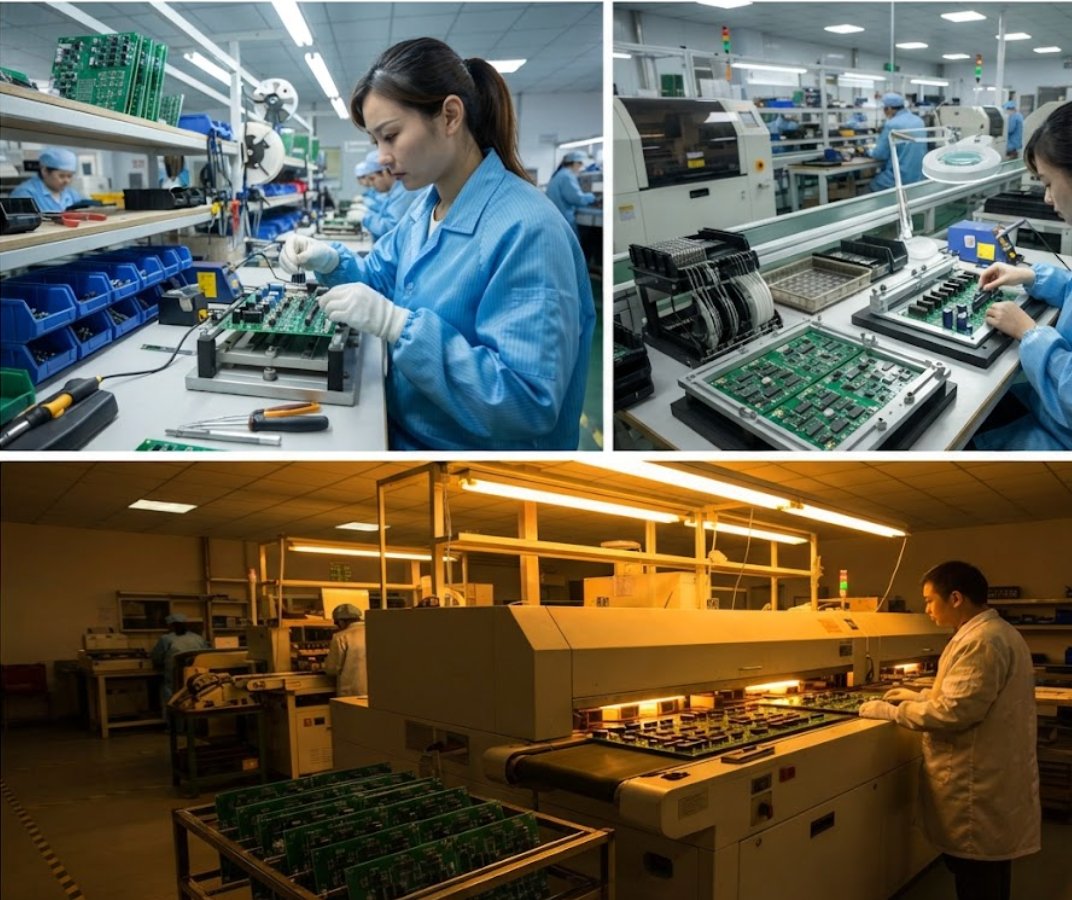
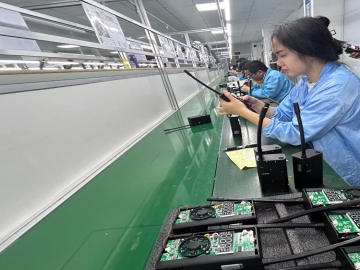
The foundation of reliable delivery begins on the production floor. For projector manufacturing, the SMT assembly of the optical control board is a zero-tolerance operation. The high-speed chip mounters must place tiny passive components and sensitive driver ICs with micron-level accuracy. Any misalignment here can cause flickering or color distortion in the final projection. We handle this by maintaining a Class 10,000 cleanroom environment and using nitrogen reflow soldering to prevent oxidation on the delicate optical sensor pads. The process is complemented by Product Assembly Services that meticulously align the DLP chip and lens barrel to the mainboard.
Conversely, rugged tablet production demands a different but equally challenging skill set: hermetic sealing. After the mainboard is populated via SMT, the tablet chassis undergoes a multi-stage sealing process. This includes applying a conformal coating to the PCBA for moisture resistance, followed by precision placement of IP-rated gaskets and the installation of reinforced glass. The final assembly step uses a vacuum lamination press to bond the touch panel to the display, eliminating air gaps that could cause delamination under pressure. This phase is critical for achieving the IP68 and MIL-STD-810G standards our clients require.

Final QC, Anti-Static Packaging, and Barcode Tracking
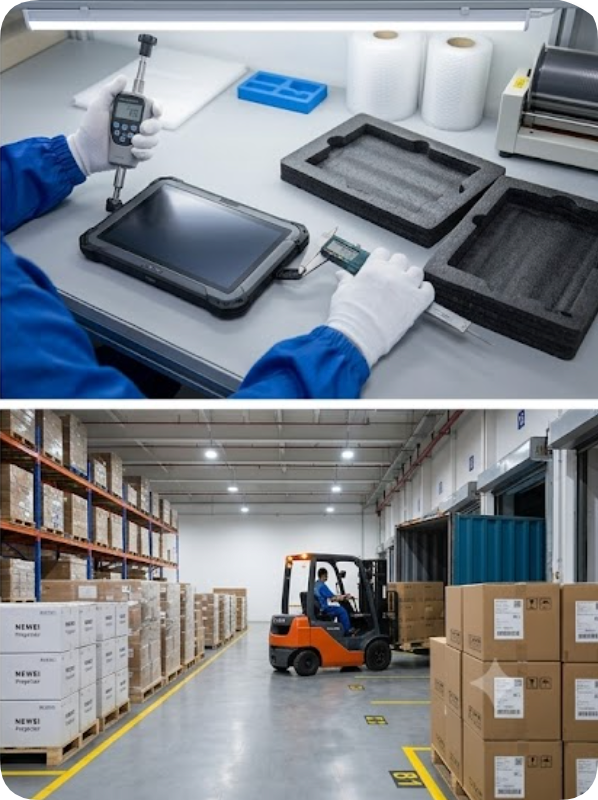
Once the units pass functional tests, the packaging and outbound process begins. Every projector and rugged tablet must pass a Final Quality Control (FQC) inspection. For projectors, this involves a 100% optical output test using a calibrated light meter and a grid pattern check for dead pixels. For rugged tablets, the FQC includes a submersion test (for sample units) and a full tactile check of all buttons and port covers. Only after these checks are the units released for packaging. We use anti-static and shock-absorbing materials specifically designed for each product. Projectors are placed in custom-cut EVA foam trays that cradle the lens, while tablets are sealed in anti-static bags and then inserted into double-walled boxes with honeycomb paper cushioning. Each box receives a unique barcode that links to our WMS, enabling full traceability from the SMT line to the carrier handover.
This traceability is the backbone of our EMS Electronic Manufacturing Services. The barcode on each shipping carton contains data on the specific batch of components used, the operator who performed the final assembly, and the exact date and time of the FQC pass. This allows our logistics team to prioritize shipments based on real-time inventory and customer delivery windows. The final step is palletizing with corner protectors and stretch wrap, followed by loading onto temperature-controlled trucks to prevent condensation damage during transit.
Comparison Table: Projector vs. Rugged Tablet Packaging and Outbound Standards
| Parameter | Projector (Optical Device) | Rugged Tablet (Field Device) |
|---|---|---|
| Final QC Focus | Optical alignment, lumen output, color uniformity, lens clarity, no dead pixels. | IP seal integrity, touch sensitivity, button force, battery seal, screen pressure test. |
| Anti-Static Protection | ESD conductive foam inserts for optical engine and mainboard. | Anti-static shielding bag with moisture barrier for entire unit. |
| Shock Packaging | Custom die-cut EVA foam mold holding lens and chassis in rigid box. | Double-wall corrugated box with honeycomb corrugated pads and corner locks. |
| Environmental Seal | Desiccant pouch inside box for humidity control. | Vacuum-sealed anti-static bag with humidity indicator card. |
| Labeling & Tracking | Barcode with serial number, firmware version, and calibration date. | Barcode with IMEI, MAC address, and battery certification mark. |
| Outbound Handling | Individual test report packed in protective sleeve, fragile stickers applied. | Bulk packed in master cartons with Mil-Spec handling labels, shockwatch indicators. |
Commitment to Reliable Delivery
From the first solder joint on the SMT line to the final barcode scan at the shipping dock, our commitment is to deliver products that perform flawlessly in the field. Whether you need high-volume projector manufacturing with stringent optical tolerances or rugged tablet production that withstands extreme environments, we have the processes and quality systems in place. Do not let inconsistent packaging or poor logistics compromise your product launch. Contact us today to discuss how our integrated product assembly, EMS manufacturing, and SMT assembly services can ensure your next project is delivered with the highest standards of quality and reliability.
Tags: SMT assembly /quality delivery /projector manufacturing /rugged tablet /
Prev: Why Quality Delivery Defines the Best Custom PC Manufacturing Partner
Next: Why HDI Multilayer PCB Capability Defines Your Industrial Motherboard & Mini PC Success