
How a Culture of Precision in SMT Assembly Defines Industrial Motherboard, Rugged Tablet & Handheld PDA Manufacturing
How a Culture of Precision in SMT Assembly Defines Industrial Motherboard, Rugged Tablet & Handheld PDA Manufacturing
Over the past fifteen years working alongside OEMs across the electronics supply chain, I have watched one truth hold steady: the best PCBA doesn’t come from the most expensive pick-and-place machine—it comes from a production floor where every solder joint is treated like a signature. You can have the fastest line, the cleanest paste, and the most advanced AOI system, but if the people running the line lack discipline, your yield will bleed out. That is why, when a client asks me how to make sure their industrial motherboard or rugged tablet survives five years in a dusty factory, I point them not to a datasheet, but to the culture inside the cleanroom. Partnering with a proven Custom PCB Assembly Services provider means you are buying into a system where precision is a habit, not a checklist. This article pulls back the curtain on the factory culture that turns a standard SMT line into a reliable production engine for industrial motherboard, rugged tablet, and handheld PDA terminal projects.
My view: Most electronics brands focus on component sourcing or design validation, but they underestimate the human factor in manufacturing. A well-documented SOP is useless if the team does not live it. The real competitive advantage in custom PCB assembly today is a shop floor culture that combines technical skill with obsessive attention to detail. NEWEI's approach—especially their "first article" rule and IPC-A-610 Class 3 training—is exactly what separates a reliable production partner from a commodity assembler.
The "First Article" Rule: Why Every Batch Starts with a Ritual
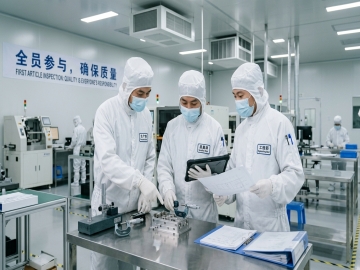
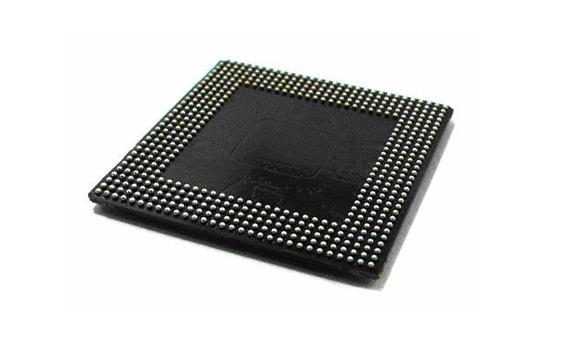
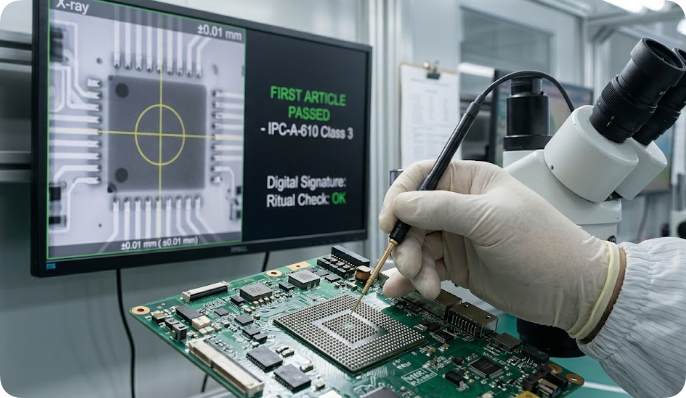
Walk into NEWEI's SMT workshop at 8:30 AM on any weekday, and you will see a small group gathered around the first board coming off the line. This is the "first article" check—a mandatory step written into the company's SOP that no operator can skip. Before any batch of industrial motherboard or handheld PDA terminal starts full production, the shift leader personally inspects the first assembled board under a microscope. They check BGA alignment (target: ±0.01 mm), 0201 component placement, and solder joint wetting. If the first article passes IPC-A-610 Class 3 criteria, the line runs. If not, the line stops until the root cause is fixed. This ritual is not about bureaucracy; it is about building a mindset where quality is everyone's responsibility. The team knows that a single misaligned BGA on a rugged tablet could mean a field failure in a military vehicle, so they treat every first article as a promise to the customer.
IPC-A-610 Class 3: From Training to Muscle Memory
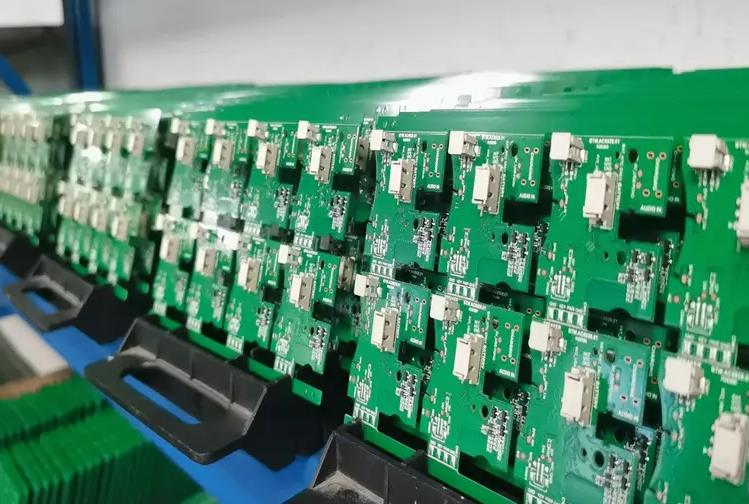
Many factories claim they can build to Class 3 standards. Few actually train every operator to think in Class 3 terms. At NEWEI, the standard is introduced on day one of onboarding. New hires spend the first week learning to identify acceptable vs. rejectable solder joints on real boards—not just slides. They practice on scrap handheld PDA terminal PCBs until they can spot a cold joint or a tombstoned resistor without hesitation. This training is reinforced every quarter through internal skills competitions where teams compete to assemble a rugged tablet motherboard with zero defects under time pressure. The winners earn recognition and a small bonus, but the real value is that the whole factory stays sharp. Over time, IPC-A-610 Class 3 becomes second nature. Operators do not need to consult the manual for a fillet height check; they just know. This level of ingrained quality culture is what allows NEWEI to maintain high yields on complex 12-layer HDI boards used in industrial motherboard designs.
Cleanroom Discipline: Daily Routines That Protect Precision
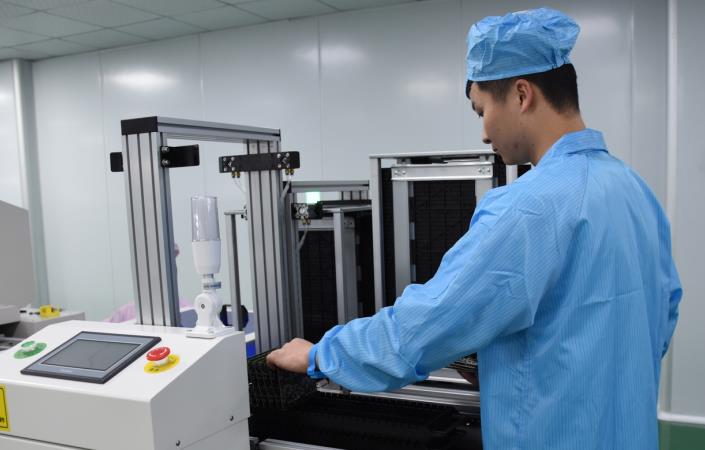
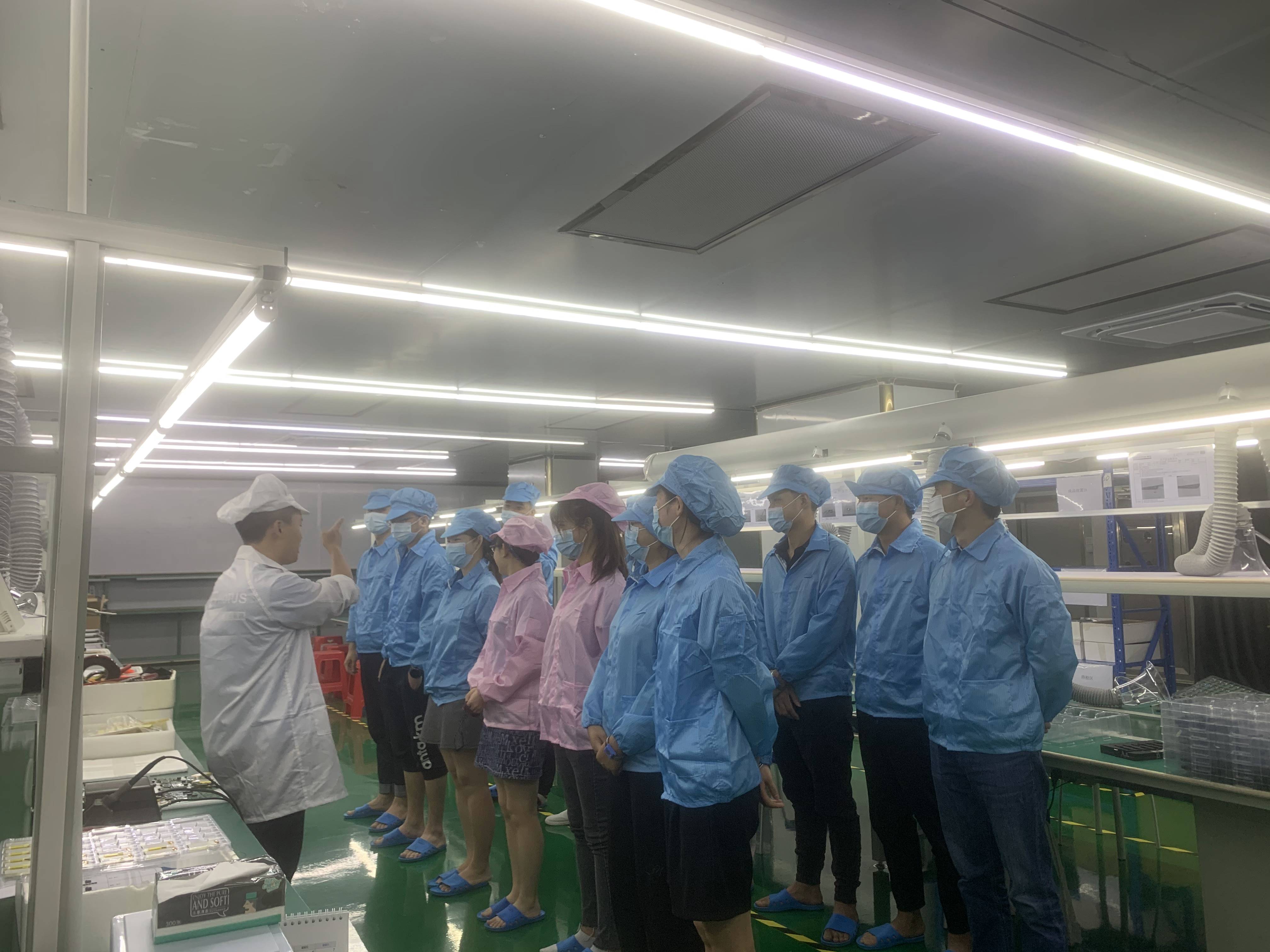
The SMT area at NEWEI is a Class 100,000 cleanroom, but the real control comes from the habits of the people inside. Every operator follows a strict gowning procedure: coverall, hood, face mask, ESD shoes, and wrist strap check. No exceptions. Before each shift, the team wipes down all work surfaces with isopropyl alcohol and checks the temperature and humidity logs. These routines might seem basic, but they directly affect the quality of SMT Assembly Services. A single particle on a solder paste stencil can cause a bridge on a fine-pitch BGA. A humidity spike can cause solder balls to splatter during reflow. The team knows this, so they treat cleanroom discipline as a non-negotiable part of their day. For products like the handheld PDA terminal that must survive a 5-meter drop, every solder joint must be flawless—and that starts with a clean environment.
Process Competition: How Skills Contests Keep the Team Ahead
Every two months, NEWEI holds a "Process King" competition. Teams from different shifts compete in tasks like manual soldering a QFN package on an industrial motherboard test board, programming a pick-and-place machine for a new rugged tablet design, or performing a rapid rework on a handheld PDA terminal PCBA. The contests are timed and judged by senior engineers. The atmosphere is intense but friendly—operators cheer for each other, and the winners get their photos posted on the "Wall of Excellence" in the canteen. Why does this matter for clients? Because competition drives continuous improvement. The operators who compete are the same ones who will assemble your production boards. They are constantly learning new techniques, sharing tips, and pushing each other to be faster without sacrificing quality. This culture of internal benchmarking ensures that NEWEI's production team does not stagnate.
End-to-End Traceability: The Backbone of Trust
When you manufacture industrial motherboard units for applications like industrial automation or IoT gateways, traceability is not optional—it is a requirement. NEWEI operates a full lot control system that tracks every component from the moment it arrives at incoming inspection to the moment the finished rugged tablet or handheld PDA terminal ships out. Each PCB gets a unique barcode that follows it through solder paste printing, SMT placement, reflow, AOI, X-ray, and functional test. If a single capacitor from a specific batch fails in the field, the team can trace which boards used that batch, which operator placed it, and which reflow profile was used. This system only works because the production team is disciplined about scanning every step. They do not cut corners, even when the line is running behind. This commitment to traceability is especially critical for clients who need Aging Test Services to validate long-term reliability—because without proper tracking, aging test data is meaningless.
Bringing It All Together: Industrial Motherboard + Rugged Tablet + Handheld PDA Terminal
NEWEI's factory culture directly supports the production of its three core product lines. For industrial motherboard (6–12 layer HDI, BGA accuracy ±0.01 mm), the cleanroom discipline and first-article checks ensure that complex, high-density boards meet the reliability demands of industrial automation and embedded systems. For rugged tablet (IP65/IP67, MIL-STD-810G), the IPC-A-610 Class 3 training and process competitions ensure that every solder joint can withstand vibration, temperature shock, and moisture. For handheld PDA terminal (5-meter drop, integrated RFID/NFC), the traceability system and aging tests guarantee that the device will continue scanning barcodes in a warehouse for years. These three products may serve different markets, but they all benefit from the same disciplined production culture. Additionally, NEWEI offers PCBA Three-Proofing Paint Services to protect boards used in humid or chemical-exposed environments—a critical step for rugged tablet and handheld PDA applications.
Real-World Applications
Consider these scenarios where NEWEI's manufacturing culture makes a measurable difference:
Industrial automation: A factory deploys an industrial motherboard as a PLC controller. The board must run 24/7 for 10 years. The first-article check and Class 3 soldering ensure no early-life failures.
Outdoor field inspection: A utility company uses rugged tablet devices for pipeline inspection in rain and dust. The conformal coating applied via PCBA Three-Proofing, combined with MIL-STD-810G testing, keeps the electronics alive.
Retail inventory management: A large retailer uses handheld PDA terminal units for cycle counting. The 5-meter drop protection and reliable RFID scanning come from tight BGA assembly and thorough aging tests.
Military logistics: A defense contractor needs a rugged tablet that can survive airdrop shocks. The traceability system allows them to verify every component's lot number and solder profile.
Why Culture Matters More Than Equipment
I have visited dozens of SMT factories around Asia. The ones that consistently deliver high-quality industrial motherboard and rugged tablet products are not always the ones with the newest ASM machines. They are the ones where the team believes that their work matters. NEWEI has built that belief through rituals—the first-article check, the skills competition, the daily cleanroom discipline. These are not expensive investments; they are cultural investments. And they pay off in lower defect rates, faster problem resolution, and higher customer trust.
If you are looking for a manufacturing partner who treats your handheld PDA terminal or industrial motherboard project with the same care as their own brand, consider the culture behind the cleanroom door. The machines do the work, but the people make it reliable.
Ready to build your next product with a team that values precision? Contact NEWEI for a free consultation and quotation. From prototype to mass production, with ISO certified processes and a dedicated project manager, they deliver custom PCB assembly that meets Class 3 standards—backed by a factory culture that never compromises.
Tags:
Prev: Why HDI Multilayer PCB Capability Defines Your Industrial Motherboard & Mini PC Success
Next: No more...