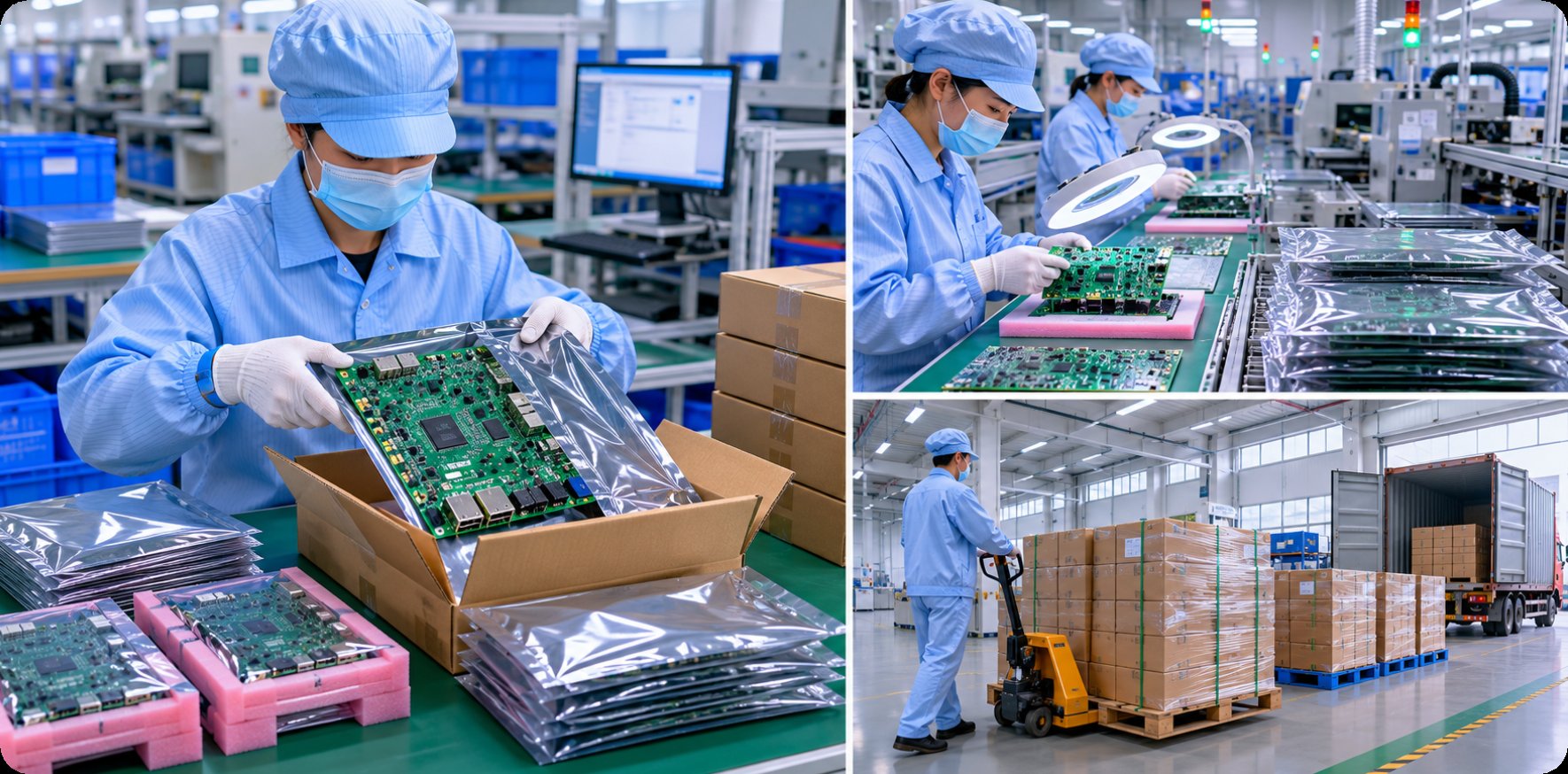

How One-Stop Engineering Manufacturing Helped Deliver a Customs-Grade Biometric Verification Kiosk from First Article Inspection to High-Volume Production
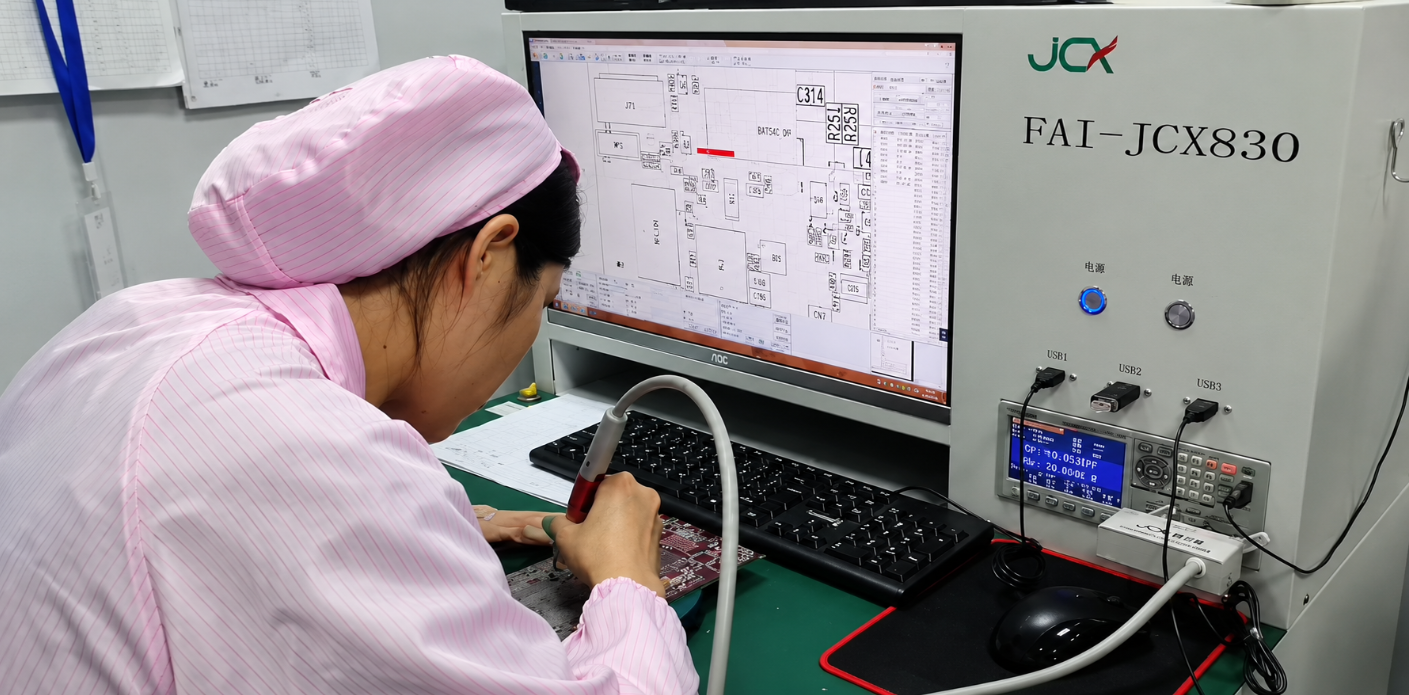
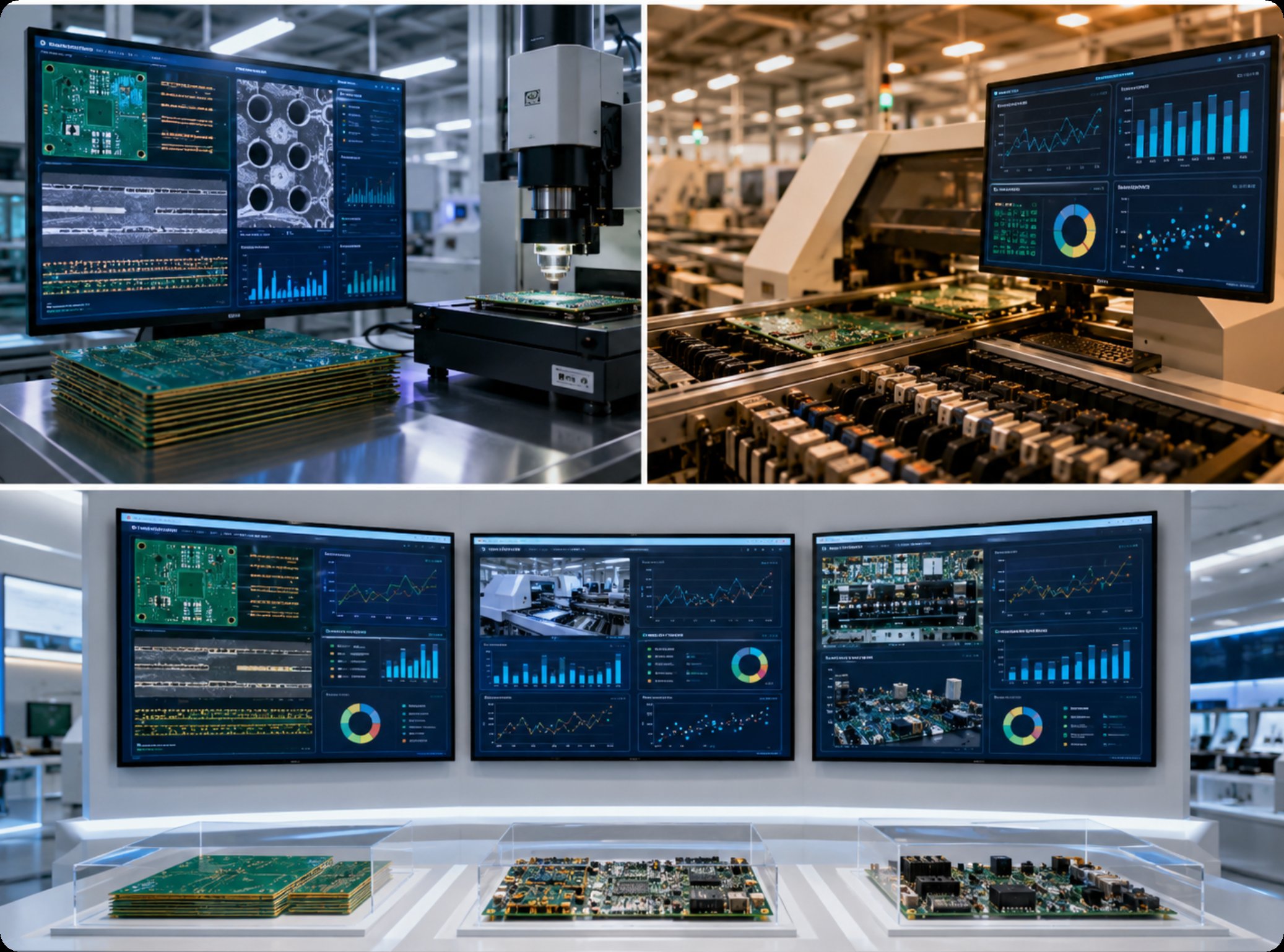
Fig 1 – Engineers perform first article inspection (FAI) on a biometric border control kiosk, validating PCB alignment, camera positioning, secure element installation, and system connectivity before pilot production begins.
Industry Insight: In government electronics manufacturing, passing prototype validation is only the beginning. The real challenge starts when a design moves into scalable production. Border control kiosks, biometric authentication terminals, and customs verification systems must survive continuous public use, temperature swings, network instability, and strict regulatory audits. That requires far more than PCB assembly. It requires a complete manufacturing ecosystem with traceability, process control, environmental testing, firmware validation, and documented inspection records at every stage.
How One-Stop Engineering Manufacturing Helped Deliver a Customs-Grade Biometric Verification Kiosk from First Article Inspection to High-Volume Production
By NEWEI Industrial | Smart Border Control & Embedded Hardware Manufacturing | 2026
Global demand for biometric border control systems continues to accelerate as airports, customs agencies, and immigration authorities modernize passenger processing infrastructure. Automated e-gate terminals, facial recognition kiosks, and document authentication stations are now essential components of modern transportation hubs.
Unlike consumer self-service kiosks, customs-grade identity verification systems operate in highly regulated environments where uptime, data security, and hardware stability directly impact national infrastructure. A single hardware failure at an airport checkpoint can delay passenger flow, create long queues, and trigger operational disruption across an entire terminal.
For this reason, government procurement teams increasingly prioritize manufacturing partners capable of handling the complete lifecycle of embedded hardware development — from DFM optimization and pilot assembly to burn-in testing, firmware validation, and long-term traceability management.
This project demonstrates how NEWEI transformed a successful biometric verification prototype into a scalable production platform suitable for customs deployment across multiple transportation checkpoints.
First Article Inspection: Building Production Confidence from Day One
Before production scaling began, the engineering team completed a comprehensive DFM (Design for Manufacturing) and DFT (Design for Test) review covering mechanical integration, thermal management, EMC compatibility, and assembly workflow optimization.
The biometric kiosk platform integrated several mission-critical modules:
- Dual-camera biometric capture system (visible + infrared)
- e-Passport RFID reading module
- Industrial touchscreen display assembly
- Embedded access control mainboard
- Encrypted secure element for identity authentication
- Industrial communication interfaces and power protection circuits
NEWEI’s quality engineering team generated a detailed First Article Inspection (FAI) report covering:
- PCB solder joint verification
- Critical mechanical dimensions
- Optical camera alignment accuracy
- Power stability validation
- Connector retention force testing
- Functional verification checkpoints
- X-RAY inspection for hidden BGA solder structures
Advanced SMT production equipment combined with automated optical inspection (AOI) enabled the engineering team to validate component placement consistency before reflow soldering. Hidden solder structures beneath high-density processors were verified using X-RAY analysis to eliminate potential long-term reliability risks.
The customs client approved the first article inspection after the initial validation cycle with zero requested mechanical deviation corrections — significantly reducing the project’s time-to-production timeline.
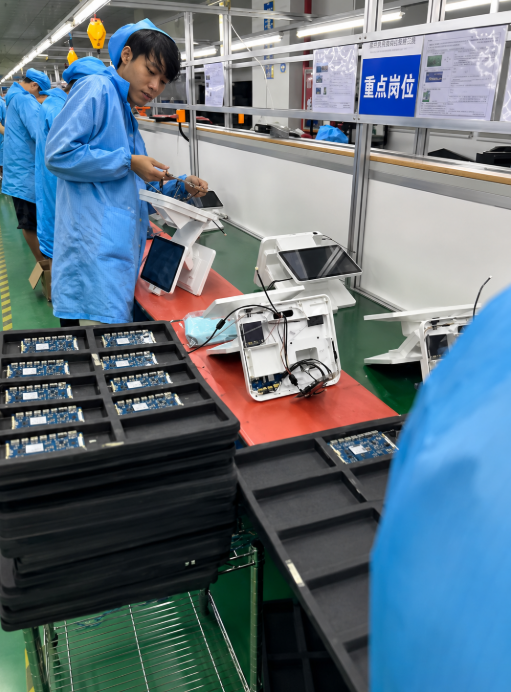
Fig 2 – Precision assembly area for biometric kiosk integration including optical bonding, infrared camera calibration, secure module installation, and touchscreen verification.
Pilot Assembly with Full Manufacturing Traceability
After FAI approval, the project transitioned into pilot production. Each kiosk was assembled through a digitally controlled workflow combining MES tracking, barcode serialization, and operator accountability.
Every major sub-assembly received a unique serial identity linked to:
- Component batch information
- SMT production records
- Assembly workstation history
- Firmware version control
- Inspection personnel logs
- Environmental test results
Industrial handheld terminals and rugged tablets were used across assembly stations to scan and validate module pairing during production. This prevented unauthorized component substitution and ensured that every completed kiosk maintained complete lifecycle traceability.
During camera module installation, technicians used semi-automated calibration fixtures to align infrared and visible-light imaging systems with micron-level precision. Calibration software running on industrial Windows platforms automatically blocked progression if alignment tolerance exceeded the predefined threshold.
As a result, the pilot production run achieved a 99.2% first-pass yield rate, significantly outperforming common industry averages for complex biometric hardware assembly.
Burn-In Testing and Environmental Reliability Validation
Border control hardware must operate continuously in demanding public environments including airports, ports, transportation terminals, and outdoor checkpoints. Long-term stability therefore became a major focus during production validation.
NEWEI established a dedicated burn-in and environmental simulation area capable of simultaneously testing dozens of fully assembled kiosks under continuous operating load.
The reliability testing cycle included:
- 72-hour continuous system burn-in
- Temperature cycling from -10°C to +55°C
- Humidity fluctuation testing
- Repeated biometric authentication simulation
- RFID document reading loops
- Continuous touchscreen interaction testing
- Power interruption recovery verification
Internal testing data showed that many intermittent electronic failures only emerged after extended thermal cycling. By extending burn-in duration beyond common industry practice, the engineering team identified several edge-case reliability risks before shipment, including:
- Camera white-balance drift during prolonged operation
- Touch controller firmware instability
- Connector retention weakness under vibration conditions
Resolving these issues during pilot production prevented potential field failures after deployment.
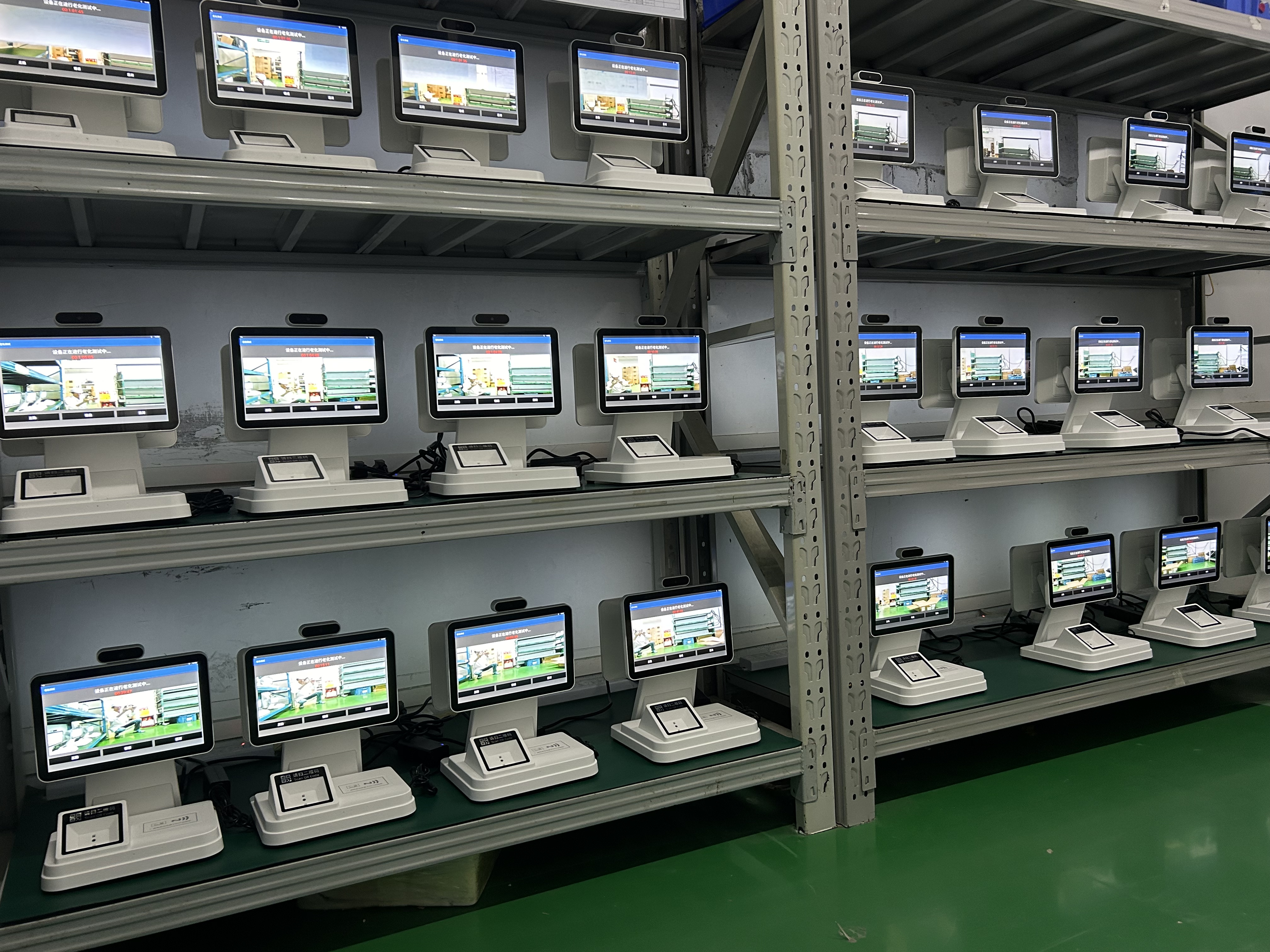
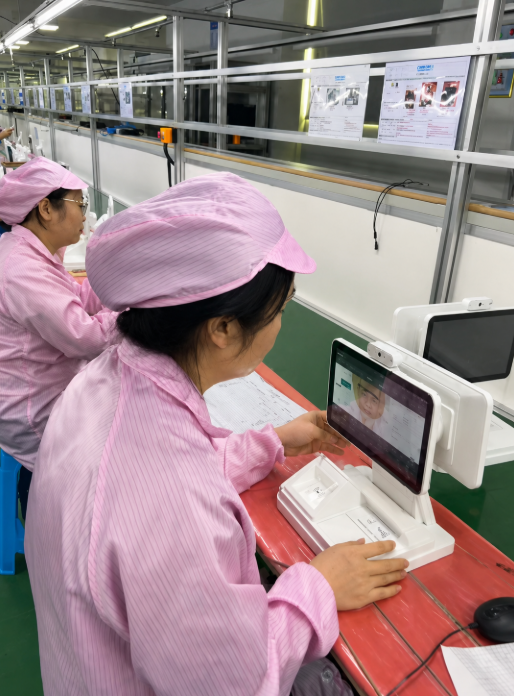
Fig 3 – Environmental burn-in chamber for customs kiosks performing 72-hour operational reliability testing under controlled temperature and humidity conditions.
Scaling to Mass Production for National Border Infrastructure
Following successful pilot validation, the customs authority approved full-scale production deployment.
NEWEI coordinated:
- Supply chain scheduling
- Industrial packaging design
- Firmware image management
- Regional logistics coordination
- Spare parts preparation
- Long-term maintenance support planning
More than 1,500 biometric verification kiosks were subsequently deployed across airport terminals and land border crossings.
After 18 months of field operation, the hardware platform maintained an exceptionally low field return rate of 0.48%, validating the effectiveness of the engineering, testing, and production workflow established during the project.
The customs authority later expanded the deployment scope and designated the kiosk series as a strategic infrastructure platform for future border modernization projects.
Why One-Stop Manufacturing Matters for Government Electronics Projects
Large-scale government electronics programs cannot rely on fragmented outsourcing chains with disconnected suppliers. Certification complexity, cybersecurity requirements, and long-term service obligations require unified engineering control from prototype through mass production.
NEWEI provides integrated capabilities including:
- Embedded hardware engineering
- PCB layout and SMT manufacturing
- Mechanical integration
- Optical bonding
- Injection molding support
- Firmware validation
- System aging and burn-in testing
- Industrial assembly
- Global shipment coordination
For customers building biometric terminals, industrial kiosks, access control systems, medical devices, or embedded AI hardware, the ability to manage the complete manufacturing lifecycle through one engineering partner significantly reduces deployment risk and accelerates product commercialization.
Contact NEWEI Industrial to discuss biometric kiosk manufacturing, embedded system assembly, SMT production, pilot build validation, or complete one-stop OEM/ODM engineering services for government and industrial electronics projects.
Tags: SMT assembly China / industrial Android PDA / rugged Windows tablet /
Prev: From the “Flying Thermos” Drone to Global Innovation: The Power of China’s PCBA Manufacturing